Tiny parasites aren't just disgusting - they're manipulating your thoughts, behaviors, and society itself. Kathleen McAuliffe's mind-bending exploration (3.98/5 stars) reveals how these microscopic puppeteers shape everything from your personality to political views. Harvard's Edward Wilson calls it "fascinating" - and disturbingly true.
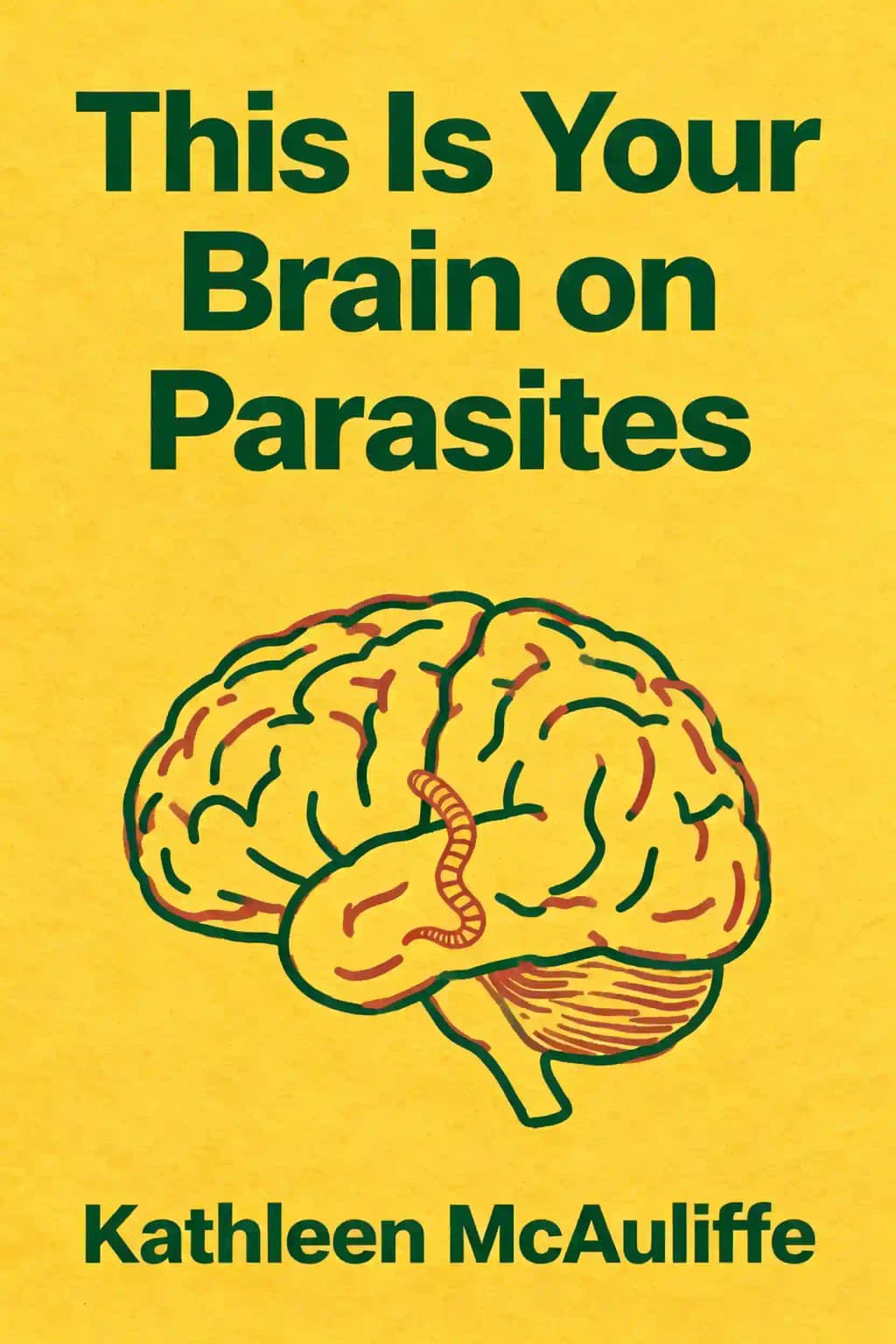
Kathleen McAuliffe, bestselling author of This Is Your Brain on Parasites: How Tiny Creatures Manipulate Our Behavior and Shape Society, is a renowned science journalist specializing in microbiology and neurobiology.
Her book blends investigative journalism with cutting-edge science, exploring parasites' profound influence on human behavior and ecosystems. This theme is informed by her decades of reporting on evolutionary biology and her role as an adjunct professor teaching microbiome studies at the University of Miami.
McAuliffe’s award-winning articles have graced cover stories for The Atlantic, The New York Times, and Discover, with her 2012 viral piece on toxoplasmosis temporarily crashing The Atlantic’s website. A TED speaker and Alicia Patterson Journalism Fellow, she has contributed to NPR and PBS programs while co-authoring early works like Life for Sale on genetic engineering.
Translated into six languages, This Is Your Brain on Parasites became a microbiology bestseller, cementing her reputation for transforming complex science into gripping narratives.
This Is Your Brain on Parasites explores how parasites manipulate host behavior, including humans, to ensure their survival. Kathleen McAuliffe links microbial influence to mental health, cultural norms, and societal divisions, arguing that parasites subtly shape human evolution and decision-making. Examples range from Toxoplasma gondii altering risk-taking behavior to gut bacteria impacting emotions.
This book is ideal for readers interested in microbiology, evolutionary psychology, or science’s societal impacts. McAuliffe’s accessible style caters to both science enthusiasts and general audiences curious about how invisible organisms affect human behavior, mental health, and cultural practices.
Yes—the book offers groundbreaking insights into parasite-host dynamics, blending scientific rigor with engaging storytelling. While some critics note speculative sections, its exploration of parasites’ role in anxiety, car accidents, and societal biases makes it a compelling read.
Parasites like Toxoplasma gondii may increase risk-taking or schizophrenia susceptibility, while gut microbes affect mood and decision-making. McAuliffe details how pathogens hijack neural pathways, alter hormone levels, and even promote altruism in hosts to ensure their transmission.
The book cites studies linking parasites to conditions like schizophrenia, OCD, and anxiety. For example, Toxoplasma gondii correlates with slower reaction times and higher accident rates, while certain gut bacteria may exacerbate depression.
McAuliffe argues that subconscious germ aversion influences social hierarchies, political views, and prejudice. This “behavioral immune system” drove historical stigmatization of marginalized groups and persists in modern cultural divides.
Like Guns, Germs, and Steel, it connects biology to societal development but focuses on microscopic influences. McAuliffe’s blend of parasitology and psychology offers a unique lens akin to Oliver Sacks’ neurological explorations.
“Parasites may have been the first puppet masters of evolution.” This underscores their role in driving behavioral adaptations. “Our gut microbes are like a second brain.” Highlights the enteric nervous system’s impact on emotions.
Some scientists argue McAuliffe oversimplifies complex host-parasite interactions or extrapolates too broadly from animal studies to humans. However, she clarifies these are hypotheses needing further research.
With increased focus on pandemics and microbiome research, the book’s themes about unseen biological influences remain timely. Its insights apply to public health strategies and understanding post-pandemic societal shifts.
Educators use its case studies (e.g., trematode-infected ants) to teach parasitology, neurobiology, and evolutionary theory. McAuliffe’s clear explanations make complex concepts accessible for university courses.
McAuliffe explains how gut bacteria produce neurotransmitters like serotonin, influence stress responses, and may correlate with autism spectrum traits. Dietary changes to alter microbial balance are discussed as potential mood regulators.
The book suggests practical steps:
Почувствуйте книгу через голос автора
Превратите знания в увлекательные, богатые примерами идеи
Захватите ключевые идеи мгновенно для быстрого обучения
Наслаждайтесь книгой в весёлой и увлекательной форме
Parasites may influence everything from our personality traits to our political views.
Parasites weren't just passive hitchhikers but active manipulators.
Parasites don't just crudely control their hosts.
Some parasites don't just influence their hosts—they completely transform them.
The zombified roach loses all will to escape.
Разбейте ключевые идеи This Is Your Brain on Parasites на понятные тезисы, чтобы понять, как инновационные команды создают, сотрудничают и растут.
Выделите из This Is Your Brain on Parasites быстрые подсказки для запоминания, подчёркивающие ключевые принципы открытости, командной работы и творческой устойчивости.

Погрузитесь в This Is Your Brain on Parasites через яркие истории, превращающие уроки инноваций в запоминающиеся и применимые моменты.
Задавайте любые вопросы, выбирайте голос и совместно создавайте идеи, которые действительно находят у вас отклик.

Создано выпускниками Колумбийского университета в Сан-Франциско
"Instead of endless scrolling, I just hit play on BeFreed. It saves me so much time."
"I never knew where to start with nonfiction—BeFreed’s book lists turned into podcasts gave me a clear path."
"Perfect balance between learning and entertainment. Finished ‘Thinking, Fast and Slow’ on my commute this week."
"Crazy how much I learned while walking the dog. BeFreed = small habits → big gains."
"Reading used to feel like a chore. Now it’s just part of my lifestyle."
"Feels effortless compared to reading. I’ve finished 6 books this month already."
"BeFreed turned my guilty doomscrolling into something that feels productive and inspiring."
"BeFreed turned my commute into learning time. 20-min podcasts are perfect for finishing books I never had time for."
"BeFreed replaced my podcast queue. Imagine Spotify for books — that’s it. 🙌"
"It is great for me to learn something from the book without reading it."
"The themed book list podcasts help me connect ideas across authors—like a guided audio journey."
"Makes me feel smarter every time before going to work"
Создано выпускниками Колумбийского университета в Сан-Франциско

Получите резюме книги «This Is Your Brain on Parasites» в формате PDF или EPUB бесплатно. Распечатайте или читайте офлайн в любое время.
Imagine discovering that your thoughts, behaviors, and even your personality might be partly controlled by microscopic organisms living inside you. This isn't science fiction-it's the startling reality explored in "This Is Your Brain on Parasites." The natural world is filled with mind-controlling parasites that hijack their hosts' nervous systems with surgical precision. From ants forced to climb grass blades to be eaten by sheep, to rats that lose their fear of cats, these manipulations aren't random accidents but carefully orchestrated behavioral modifications that ensure parasites' survival. What's most unsettling? Humans aren't immune to this manipulation. These invisible puppeteers may be influencing everything from our daily decisions to our cultural institutions, challenging our most fundamental assumptions about free will and identity.