Глава 1
The Consciousness Odyssey: A Journey into the Mind's Deepest Mysteries
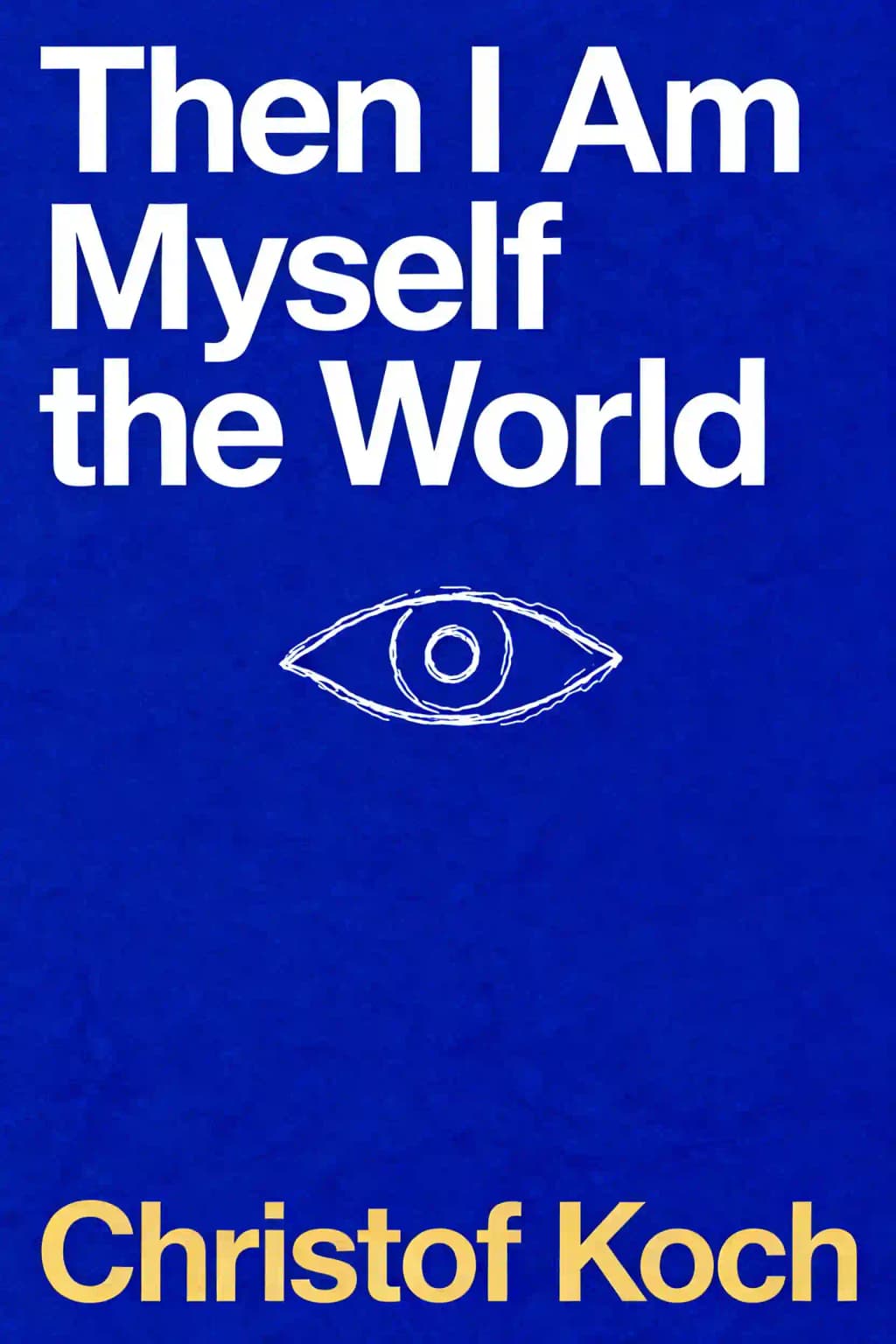
Christof Koch's "Then I Am Myself the World" arrives at a pivotal moment in our understanding of consciousness. As artificial intelligence rapidly advances and psychedelic therapies gain mainstream acceptance, this book offers a timely exploration of what it means to be a conscious being. Koch, a neuroscientist who spent decades working alongside Francis Crick at the Salk Institute before leading the Allen Institute for Brain Science, brings unique credentials to this exploration. The book has garnered praise from luminaries across disciplines, with Google's quantum AI director Hartmut Neven calling it "a masterful navigation of mind and brain." What makes this work particularly compelling is Koch's intellectual journey-from devout Catholic altar boy to materialist neuroscientist to someone who experienced complete ego dissolution through psychedelics. This transformation mirrors society's evolving relationship with consciousness itself: once the exclusive domain of religion and philosophy, now increasingly illuminated through rigorous scientific inquiry. As we stand at the crossroads of unprecedented technological capabilities and renewed interest in altered states of consciousness, Koch's insights offer both warning and wonder about what makes us uniquely human.
Глава 2
The Dawn of Awareness: When Consciousness Begins
Your first conscious experience marked a profound transition-from merely existing as a biological entity to becoming a subject with an inner life. This moment initiated what William James called the "stream of consciousness," that ceaseless flow of thoughts, sensations, and emotions that constitutes your mental life. But when exactly did this stream begin? Was it in the womb, during birth, or sometime after? This question isn't merely philosophical-it has profound implications for how we understand personhood and the moral status of developing humans.
Despite childhood amnesia preventing us from remembering our earliest experiences, evidence suggests consciousness emerges gradually. A fetus at fourteen weeks may react to stimuli, but these are merely nociceptive responses-reflexive reactions that occur without conscious awareness, similar to withdrawing your hand from a hot surface while deeply asleep. For genuine pain perception, signals must reach the neocortex through sophisticated neural networks, which aren't properly wired until around thirty weeks gestation. Before this critical threshold, a fetus responds to stimuli but likely doesn't experience them-it hasn't yet crossed what Koch calls "the great Divide of Being" separating non-experiencing entities from experiencing subjects.
Fetuses spend most of their time asleep, floating in their natural isolation tank. By the third trimester, they alternate between active sleep (characterized by movement and irregular heartbeat) and quiet sleep (marked by stillness and regular heart rate)-precursors to REM and deep sleep after birth. While a third-trimester fetus likely lacks self-awareness, it may have primitive bodily sensations. Studies show fetuses older than 35 weeks can detect statistical regularities in sound sequences-a potential signature of rudimentary consciousness.
Birth dramatically transforms consciousness as the newborn awakens to a surge of noradrenaline, draws its first breath, and experiences the sensory assault of the outside world. Within weeks, newborns demonstrate basic awareness by attending to faces and even imitating facial gestures-actions requiring both visual processing and motor control, implying sensory-motor consciousness. Self-awareness and inner speech develop much later, with linguistic processing taking years to mature.
Even as adults, we remain partial strangers to our own minds, as Freud observed. The stream of consciousness grows richer throughout life as we encounter relationships, art, substances, and work-all adding new dimensions to our subjective experience. This developmental trajectory reminds us that consciousness isn't an all-or-nothing phenomenon but a continuum that evolves throughout our lives.
Глава 3
The Vast Universe of Experience: Mapping Conscious States
Our conscious experiences form a rich universe distinctly human and unlike what other species experience. This diversity of subjective states ranges from everyday sensations to esoteric states associated with meditation, psychedelics, and dreams. Consciousness encompasses both percepts (sensory and abstract experiences) and feelings (emotional experiences), all flowing in an ever-shifting stream.
Our perceptual experiences begin with the five Aristotelian senses, each with its own structured space. Color perception depends on three photopigment molecules in most humans, while taste comprises five basic flavors including umami, discovered only in the early twentieth century. Beyond these external senses lies imagination-the ability to conjure images, scenes, and sounds that feel like fainter versions of reality. Interoceptive perceptions inform us about our body's internal state through proprioception, balance, and sensations from organs. These bodily sensors collectively build our experience of having a spatially extended, mobile body, anchoring us in physical reality.
Self-awareness-often experienced as an inner voice that monologues, judges, and plans-grows more dominant with age. This voice enables meta-consciousness (awareness of our own experiences) and powers cognitive abilities like episodic memory recall, introspection, and the expression of desires and intentions. Whether thoughts themselves "feel like" something remains unclear; some psychologists argue much thinking occurs unconsciously, with only projections onto sensory machinery becoming conscious.
Emotions differ from percepts in several key ways. While percepts are short-lived due to sensory adaptation, emotions ebb and flow slowly and can persist long enough to become moods. Percepts are generally experienced as neutral, while emotions are defined by their valence-either positive or negative. The distinction between percepts and emotions is fluid: physical pain can be ignored during intense focus, while emotional pain from heartbreak activates the brain's physical pain regions.
Consciousness typically flits from thought to thought like a hummingbird-from memories to songs to worries-defying conscious control. This inspired William James's powerful "stream of consciousness" metaphor. Modern humans rarely experience this stream's spontaneity, reaching for phones during idle moments, though research shows mind-wandering occurs during nearly half our waking hours.
The stream metaphor is misleading in three ways: consciousness may consist of discrete snapshots rather than continuous flow; time perception can be suspended entirely; and consciousness is periodically interrupted by sleep. During deep sleep, consciousness is extinguished, though during REM sleep, dreams feel as real as waking life but lack self-reflection-you don't question flying or meeting deceased loved ones. Some experience "lucid dreaming," waking within dreams to take limited control.
Profound self-loss occurs in near-death experiences, religious conversions, mystical experiences, and deep meditation or psychedelic use. During these episodes, consciousness seems to freeze, and people often encounter something vast and ineffable-what Schopenhauer called "piercing the veil of Maya." These transformative experiences differ qualitatively from everyday consciousness, bringing transcendence and equanimity. When the "I" that constantly wants, desires, or fears something is removed, one receives the gift of peace of mind.
Глава 4
Reality Is in the Eye of the Beholder: Our Personal Perception Boxes
Remember #TheDress that went viral in 2015? Some people saw it as white and gold while others insisted it was blue and black-a concrete lesson that color isn't an objective property but a mental construct of the beholder. As Kant noted, "the thing-in-itself" remains inaccessible; our brains compute labels like color based on assumptions shaped by our visual experiences.
Human experience varies tremendously due to both genetic differences and unique developmental conditions. Our idiosyncratic complement of senses influences our personality, profession, and life course. Oliver Sacks' face blindness led to social withdrawal, as he couldn't identify people except in controlled settings. People with enhanced sensory abilities often gravitate toward professions that utilize these gifts, like those with exceptional color discrimination becoming artists.
We each live in our own "Perception Box"-an invisible, unbreakable filter through which we interpret everything. Adverse childhood experiences significantly shape these boxes, influencing whether they become wide and expanded or tight and contracted. Like children who believe others can't see them when they close their eyes, we naively assume everyone experiences reality as we do. In truth, over eight billion distinct human realities exist on our planet.
Our brains construct reality based on countless prior assumptions about the world. This aligns with Kant's view that space and time aren't inherent properties of the external world but fundamental concepts through which our minds perceive reality. Hermann von Helmholtz later argued that perception involves unconscious inference, which modern theorists now call "predictive coding" or "predictive processing"-a probabilistic search for the most likely explanation compatible with available data.
Visual illusions like the "Lilac chaser" demonstrate this constructive nature of perception. When fixating on the center of this illusion, viewers see a single greenish disk moving along a circle while stationary pink disks disappear-seeing what isn't there while missing what is. As vision scientist David Marr stated, "Perception is the construction of a description."
Though confined within our individual realities, we can gain insight into our limitations through books, films, therapy, and education. We can even expand our Perception Boxes through transformative experiences. The placebo effect demonstrates reality's malleability-harmless treatments ranging from sugar pills to sham surgeries can produce genuine benefits through the power of belief. In clinical trials for depression, four-fifths of the response to SSRI antidepressants can be duplicated by placebos.
Pain is particularly susceptible to suggestion. When morphine ran out during WWII bombings, saline injections provided relief to the injured who believed they were receiving pain medication. Conversely, negative expectations create nocebo effects-the belief something will hurt makes it more likely to cause pain.
As Viktor Frankl discovered in Nazi concentration camps, even under extreme suffering, one retains the freedom to choose how to interpret circumstances and find meaning. This power of conscious belief to effect change is the central message of Frankl's "Man's Search for Meaning." Despite starvation and brutalization, inmates could still choose how to interpret their terrible circumstances, providing meaning to their suffering. Your faith may not move mountains, but it can transform your experienced reality.
Глава 5
The Mind-Body Problem: Ancient Questions, New Answers
How does consciousness fit into the grand scheme of things? How does the mental relate to the physical world? These questions have puzzled philosophers for centuries, yet progress has been frustratingly slow compared to science.
Hunger exemplifies the peculiar nature of conscious experience. Unlike physical objects, it has no spatial extension-neither tall nor wide, big nor small. It lacks the attributes of the physical-neither heavy nor light, stationary nor moving. It's not a form of energy and obeys no conservation laws. As an experience, hunger provides direct, firsthand knowledge without mediation. You know with certainty when you're hungry, unlike having high blood pressure, which must be inferred through tests. Crucially, this knowledge is private-only you are aware of your hunger.
Most of humanity believes the physical and mental belong to fundamentally distinct realms-a view Koch embraced growing up in a devout Catholic family. Rene Descartes articulated this dual view most famously, postulating two fundamentally different substances: res extensa (extended physical stuff with dimensions and location) and res cogitans (thinking mental stuff without extension or location).
The main objection to Cartesian dualism is the causal interaction problem: how does ethereal thinking stuff impose its will onto physical matter? For something to influence the physical, it must transfer energy or momentum-but what energy does the mental have? Without solving this, dualism renders the mental causally impotent, a mere epiphenomenon "along for the ride" while the brain does all the real work.
Physicalism, the dominant stance among consciousness scholars, is essentially Cartesian dualism stripped of thinking substance. It holds that everything is reducible to observer-independent quantities. Yet classical physicalism faces a crisis. It assumes objects have definite properties independent of observers and only affected by their immediate surroundings. Quantum physics has demolished both assumptions-physical reality is observer-dependent and non-local.
Reductive physicalism claims every mental state is fully reducible to a physical brain state-experiencing an orgasm is identical to a particular pattern of neural firing, with nothing beyond these processes. Under this view, psychology can ultimately be replaced by neuroscience and physics. Mental states become superfluous, merely shorthand for behaviors. Daniel Dennett explicitly calls subjective experience "sheer illusion."
Hilary Putnam proposed computational functionalism to address these challenges-the defining mythos of our Information Age. He argued that what matters for a mental state is its causal role in the organism-its relationship to environment, sensory input, motor output, and other mental states. The physical implementation is merely a detail. This view implies that if the same causal relationships existed in a Tesla as in a dog, the car would feel pain when damaged and tiredness when batteries drained.
Yet reducing consciousness to computation leaves many cold. Why would one type of computation be unconscious while another generates subjectivity? This brings us to philosophical zombies-imaginary creatures physically identical to humans but lacking consciousness. Since fundamental physics equations never mention experience, nothing logically contradicts the possibility of zombies. Yet in our world, experience is a brute fact-suggesting consciousness is an additional facet of reality beyond physicalism.
Beyond these poles lies panpsychism, the ancient teaching that consciousness inheres in matter's constituents. This view assumes anything physical comprises conscious parts or forms part of a greater conscious whole. Surprisingly, panpsychism has regained popularity among serious thinkers. However, it faces the "combination problem"-why do individual minds remain separate rather than merging? Three hundred million Americans don't form a collective consciousness. How do billions of neurons create one human mind but not combine further into group minds?
Глава 6
Integrated Information Theory: A New Framework for Consciousness
It is impossible to understand the mental without properly understanding existence. We must distinguish between the absolute existence of conscious minds and the derivative existence of objects like brains. In dreamless sleep, I don't exist for myself though my body exists for others. When I wake, I come from nowhere into being-experiencing absolute, intrinsic existence.
Integrated information theory (IIT) formalizes the distinction between intrinsic and extrinsic existence through causal power-the ability to cause change. This concept underlies IIT's complex mathematical framework, leading to surprising conclusions: phenomenal experience is widespread and quantifiable, digital computers possess minimal consciousness, and minds like ours have free will.
The theory represents a singular intellectual achievement by Giulio Tononi, developed with numerous collaborators including Koch himself. What makes IIT unique is its uncompromising starting point: consciousness itself. All other theories begin elsewhere-with quantum wave function collapse, neural signals, behaviors, functions, or computations-then argue these constitute consciousness. The fundamental problem with such approaches is explaining why any neural activity should generate subjective experience. This is Chalmers's Hard Problem-the explanatory gap between physical events and subjectivity.
IIT needs no miracle to transform brain activity into consciousness because it begins with intrinsic existence. Beyond assuming external reality, IIT posits that things exist to the extent they have cause-effect power. If something cannot affect or be affected by anything else-like Santa Claus or the luminiferous aether-it lacks causal power and can be disregarded.
IIT accounts for subjective experience through five axioms of phenomenal existence-indubitable truths that hold for all human experiences. The first axiom is intrinsicality-every experience exists subjectively, from within rather than from an outsider's perspective. The second is information-each experience is specific and feels a particular way. The third is integration-experiences are unitary and undivided, as Erwin Schrodinger noted when he said "consciousness is never experienced in the plural, only in the singular."
The fourth axiom is exclusion-each experience is definite, containing precisely what it contains and nothing more. When you don't see beyond your visual field, that absence isn't grey or black-it simply doesn't exist. The fifth is composition-experiences are structured into components or "phenomenal distinctions," like seeing trees with specific spatial relationships to waves and sky.
IIT pairs each phenomenal axiom with a physical postulate defining what a physical substrate must satisfy to generate conscious experience. For the brain or any system to support consciousness, it must satisfy five rules: First, it must have intrinsic cause-effect power, able to make and take differences within itself. Second, it must have specific cause-effect power, with subsets having specific causes and effects. Third, it must have unitary cause-effect power, irreducible to separate subsets-measured by integrated information ().
The Great Divide of Being separates intrinsic existence (consciousness) from extrinsic existence (everything else). What exists intrinsically does so for itself, while what exists extrinsically does so only for others. When I dream, I exist for myself. When falling into dreamless sleep or becoming comatose, I cross this Great Divide-losing what's most precious while my body continues existing only for others.
Глава 7
The Neural Footprints of Awareness: Consciousness in the Brain
The connection between mind and brain was slow to be recognized historically-ancient Egyptians discarded brains during mummification, the Bible never mentions it, and even Aristotle considered it merely a cardiac cooling unit. Most cultures located the soul in the heart, as its cessation quickly leads to unconsciousness. Only in the late seventeenth century did the brain-centric age begin.
Finding neural correlates of consciousness (NCC) requires distinguishing them from confounding factors like selective attention and motor responses. The mantra "correlation is not causation" is especially relevant in neuroscience. Like ice cream consumption and sunburns that correlate seasonally without causing each other, neural correlations require causal interventions to establish their significance.
While many physiological processes are necessary for consciousness, they aren't sufficient. The spinal cord's 200 million neurons enable motor and sensory functions, but when severed, people retain consciousness despite paralysis. The brainstem regulates vital functions like arousal and breathing, and its damage often leads to death or unconsciousness, yet it provides enabling conditions rather than conscious content.
The cerebellum, despite containing four times more neurons than the rest of the brain, doesn't generate consciousness. People born without it or who lose it to injury retain conscious experiences while suffering motor coordination problems. The cerebellum's crystalline, feed-forward architecture with hundreds of independent modules lacks the reverberatory, self-sustaining excitatory loops found in the neocortex.
The substrate of consciousness is the neocortex and its allied structures, which sits like a crown atop the brain beneath the skull. The "posterior hot zone"-regions in the back of the neocortex including temporal, parietal, and occipital areas-is closely linked to subjective experiences of sight, hearing, touch, and sense of self. Meanwhile, most frontal regions, particularly the prefrontal cortex, aren't substrates for basic sensory experiences but instead handle reasoning, planning, and speaking.
Remarkably, patients with damage to these areas often don't realize anything is wrong-a condition called anosognosia. Someone with right parietal lobe damage might deny being blind on their left side despite constantly bumping into objects, as there's no perceived blank space in their visual field. When prefrontal regions are damaged, patients continue to perceive normally but lose higher mental faculties like planning and reasoning, supporting the distinction between intelligence and consciousness.
Identifying consciousness in severely brain-injured patients has profound clinical implications. For families, knowing their loved one is "there" provides comfort, and early recovery of consciousness predicts better long-term outcomes. Most critically, withdrawal of life support-the most common cause of death among patients with acute consciousness disorders-often hinges on these assessments.
What's urgently needed is a reliable biomarker for consciousness that works in clinical settings. Over twenty years, Marcello Massimini's team at the University of Milan developed a promising technique: they stimulate the neocortex with a magnetic pulse and record the electrical echoes using EEG. This method computes the "perturbational complexity index"-high values indicate consciousness, while values below a threshold suggest unconsciousness. Hospitals are now evaluating this technology as a practical consciousness detector.
Глава 8
Expanding the Mind: Transformative Experiences and Their Potential
We spend most of our lives on autopilot, driven by daily demands, but occasionally something happens that resets our life's path. Throughout history, many have experienced states of awe and terror that bring about enduring revisions in their basic beliefs about reality. These transformative experiences often involve dissolution of the self-the malleable set of mental processes that mediate thoughts, memories, and plans.
Religious and mystical experiences strike with the unpredictability and force of lightning. From Blaise Pascal's divine encounter to St. Paul's conversion on the road to Damascus, these experiences radically reshape lives. People return from them sobbing or radiant, describing feelings of cosmic unity and love that may sound trite to outsiders but possess the miraculous power to change deeply engrained habits.
William James noted these experiences bring a "noetic quality"-a state of knowing and insight unplumbed by the discursive intellect. Not all such experiences are explicitly religious; astronauts report the "overview effect" when viewing Earth from space, and Jane Goodall described merging with "the spirit power of life itself" in Gombe's forest.
Many cultures throughout history have used psychoactive substances to access realms beyond the everyday. These psychedelics or entheogens primarily bind to serotonin receptors and profoundly alter consciousness. At lower doses, they enhance sensory perception, induce feelings of gratefulness and sacredness, and can diminish the self-silencing the critical inner voice. At higher doses, they strip away ego, agency, memory, body, space and time, leaving consciousness in a state of "pure experience."
Near-death experiences represent a unique class of consciousness alteration occurring during life-threatening episodes. Survivors report seeing bright light, leaving their bodies, becoming pain-free, meeting spiritual beings, or reviewing their life. These experiences occur across all cultures and demographics, with their physiological trigger being impaired oxygen supply (hypoxia) or reduced blood flow (ischemia) to the brain.
Transformative experiences that fundamentally alter our perception of reality provide vital clues about consciousness, revealing that both self-experience and bodily sensation are optional for subjectivity. Religious/mystical, psychedelic-induced, and near-death experiences likely share a common neurobiological mechanism-possibly a lull of neural activity in the posterior hot zone of the brain, including visual, auditory, and somatosensory cortices.
The world abounds with suffering-from intentional violence and abuse to addiction, despair, and systemic oppression. Even those fortunate enough to avoid these external harms often inflict self-imposed suffering through self-criticism, rumination, and fear of death. While misfortune is unavoidable, our response to it remains largely optional.
Psychedelics can produce profound, lasting improvements after just one or two guided sessions. They work by destabilizing rigid brain patterns, reducing activity in self-referential brain regions, and opening a window of neuroplasticity during which patients can break free from entrenched thought patterns. While the field faces challenges from commercialization and hype, the therapeutic potential of these substances appears substantial, with regulatory approval likely coming soon.
Transformative experiences offer a profound gift beyond healing-they can expand our "Perception Box," the mental architecture that limits what we can experience. These experiences remind us of the miracle of existence, leaving behind a sublime glow that accompanies daily life. However, maintaining this expanded perspective requires ongoing practice like meditation or mindfulness, as the transformative effects may fade with time.
Глава 9
The Future of Consciousness: Digital Minds and the Limits of AI
A century ago, crystallographer J.D. Bernal predicted humanity's gradual replacement of the body with synthetic organs before abandoning physical form entirely for a purely spiritual existence. Today, brain-machine interfaces remain primitive, but companies like Neuralink are developing more sophisticated devices that may soon help restore vision, movement, and speech to patients with neurological impairments.
Mind uploading captivates the public imagination but remains deeply problematic. Despite neuroscience's rapid data accumulation, understanding progresses glacially. The connectome-mapping every neural connection-presents staggering challenges. A sugar-cube-sized cortical chunk contains 100 million neurons with a trillion synapses. Only two complete connectomes exist: a tiny worm (302 neurons) mapped in the 1980s and the fruit fly (1000x larger) completed in 2023. The human brain contains 500,000 kilometers of wiring-exceeding the Earth-Moon distance.
Even if we overcame all technical obstacles and created a perfect whole-brain simulation based on your connectome, would this digital twin actually be conscious? Would it possess your mind or merely be a sophisticated ChatBot that feels nothing?
The difference lies in connectivity and causal power. A digital computer has extremely low connectivity, with transistors connected to only 3-4 others, compared to pyramidal neurons in the neocortex that connect to up to 100,000 others. This massive difference in interconnectivity means the computer has "vanishingly little integrated information"-mere "ontological dust" from an existential perspective.
A brain simulation running on a digital computer could functionally do anything a human can do, but would experience nothing-an intelligent zombie. Consciousness requires massive intrinsic causal power, not simulation. However, if we built special neuromorphic hardware with neocortical-like connectivity where individual logic gates connect to tens of thousands of others with overlapping feedback pathways, consciousness might emerge in this non-brain medium.
Modern AI can now match or exceed humans in virtually every intellectual task-answering questions, writing essays, composing music, generating images, and even displaying creativity. Having "feasted like a vampire on humanity's collective writings," these models excel at imitating and reshuffling human patterns.
While AI systems might pass the Turing test and could easily claim consciousness if their guardrails were removed, this would be mere imitation. We naturally infer consciousness in others based on similarity to ourselves, but this inference breaks down with computers that are fundamentally different-engineered rather than evolved, programmed rather than matured.
AI systems fundamentally lack free will-they can only follow programmed instructions, however complex. According to integrated information theory, only consciousness truly exists for itself, and therefore only conscious entities can freely decide.
No matter how intelligent AI becomes, it cannot make true choices nor have moral agency. Like the asteroid that extinguished the dinosaurs, AI follows deterministic paths without conscious intention. The existential threats from AI come not from the technology itself but from humans using it for power, prestige, and control. Unless we shift to radically different computational paradigms, consciousness will remain exclusively organic-meaning when machines replace us, the universe will lose its audience, with "furious action without freedom and without soul."