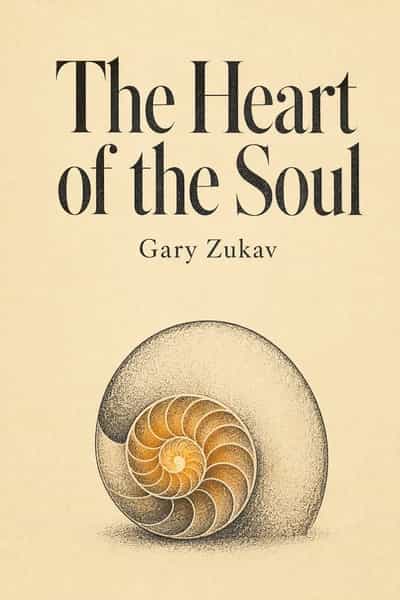
In "The Soul of the World," philosopher Roger Scruton challenges science's limits in explaining human existence. This profound meditation on transcendence has captivated Cambridge intellectuals by asking: Can our deepest experiences - love, music, faith - reveal truths that science simply cannot touch?
Почувствуйте книгу через голос автора
Превратите знания в увлекательные, богатые примерами идеи
Захватите ключевые идеи мгновенно для быстрого обучения
Наслаждайтесь книгой в весёлой и увлекательной форме
Stand at the edge of a cliff and watch the sun set. Physics can tell you why the sky turns orange-light scattering through atmospheric particles. Biology explains why your heart rate slows as you relax. Neuroscience maps the dopamine release in your brain. But none of these answers the question that actually matters: Why does this moment feel sacred? Why does beauty pierce us? Why do we sense we're standing before something that demands reverence rather than measurement? We've become experts at explaining everything and understanding nothing. Evolutionary psychology has become our era's favorite hammer, and suddenly every human experience looks like a nail. Religion? Just a survival strategy for group cohesion. Art? A peacock's tail for attracting mates. Love? Chemical reactions optimizing reproductive success. Morality? Social contracts disguised as universal truths. This reductionist impulse promises to demystify human existence, yet it creates a peculiar paradox: if our brains evolved merely for survival rather than truth, why should we trust evolutionary theory itself? Here's the central insight: we can understand the world in two complete yet incompatible ways. Science explains through causes-tracking physical processes, identifying mechanisms, predicting outcomes. Personal understanding interprets through reasons-grasping intentions, recognizing meanings, appreciating purposes. Neither perspective is wrong; they're simply incommensurable, like trying to see both the duck and the rabbit in that famous optical illusion simultaneously. This isn't metaphysical dualism-the claim that minds and bodies are separate substances. It's cognitive dualism: one reality, two ways of knowing.
Разбейте ключевые идеи The Soul of the World на понятные тезисы, чтобы понять, как инновационные команды создают, сотрудничают и растут.
Выделите из The Soul of the World быстрые подсказки для запоминания, подчёркивающие ключевые принципы открытости, командной работы и творческой устойчивости.

Погрузитесь в The Soul of the World через яркие истории, превращающие уроки инноваций в запоминающиеся и применимые моменты.
Задавайте любые вопросы, выбирайте голос и совместно создавайте идеи, которые действительно находят у вас отклик.

Создано выпускниками Колумбийского университета в Сан-Франциско
"Instead of endless scrolling, I just hit play on BeFreed. It saves me so much time."
"I never knew where to start with nonfiction—BeFreed’s book lists turned into podcasts gave me a clear path."
"Perfect balance between learning and entertainment. Finished ‘Thinking, Fast and Slow’ on my commute this week."
"Crazy how much I learned while walking the dog. BeFreed = small habits → big gains."
"Reading used to feel like a chore. Now it’s just part of my lifestyle."
"Feels effortless compared to reading. I’ve finished 6 books this month already."
"BeFreed turned my guilty doomscrolling into something that feels productive and inspiring."
"BeFreed turned my commute into learning time. 20-min podcasts are perfect for finishing books I never had time for."
"BeFreed replaced my podcast queue. Imagine Spotify for books — that’s it. 🙌"
"It is great for me to learn something from the book without reading it."
"The themed book list podcasts help me connect ideas across authors—like a guided audio journey."
"Makes me feel smarter every time before going to work"
Создано выпускниками Колумбийского университета в Сан-Франциско

Получите резюме книги «The Soul of the World» в формате PDF или EPUB бесплатно. Распечатайте или читайте офлайн в любое время.