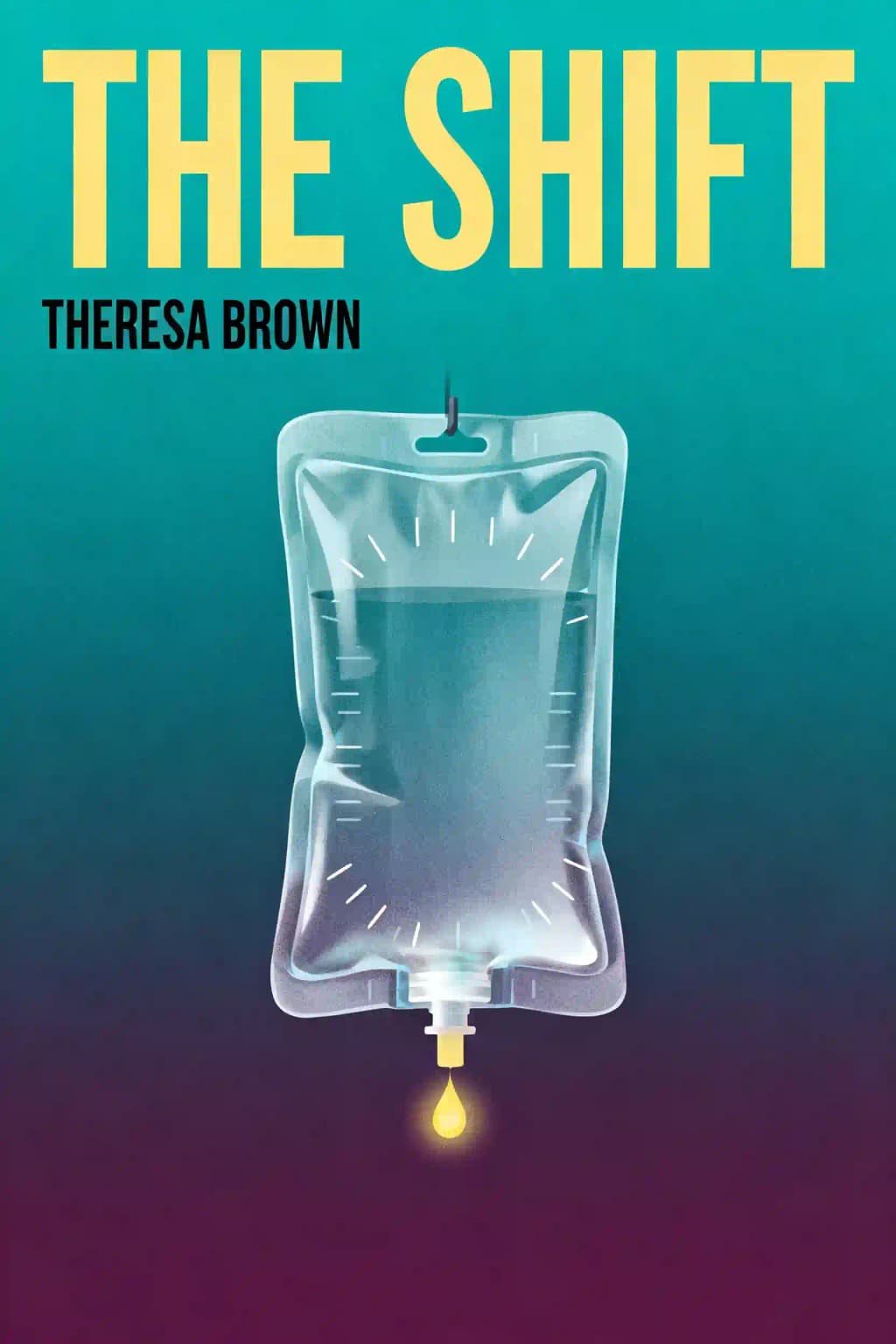
Theresa Brown, a former English professor turned nurse, invites you into medicine's frontlines in this NYT bestseller. What happens when one nurse juggles four lives during a single 12-hour shift? The Wall Street Journal calls it "an engrossing human drama" every healthcare professional needs.
Theresa Brown, RN, PhD, is the New York Times bestselling author of The Shift: One Nurse, Twelve Hours, Four Patients' Lives and a prominent voice in healthcare journalism.
A practicing oncology nurse with a BSN from the University of Pittsburgh and a PhD in English from the University of Chicago, Brown combines clinical expertise with literary skill to deliver an intimate portrait of hospital nursing. Her unique background enables her to translate the complex realities of cancer care into compelling narrative, revealing the human drama that unfolds during a single twelve-hour shift.
Brown is also a New York Times columnist and author of Critical Care and Healing, which explores her own breast cancer journey. She has appeared on NPR's Fresh Air, C-SPAN After Words, and ABC News 20/20.
Named one of the top ten most influential voices about nursing from 2000-2009, Brown's work has shaped public understanding of the profession. The Shift became a New York Times bestseller and remains essential reading for understanding modern American healthcare from the nurse's perspective.
The Shift by Theresa Brown chronicles a single 12-hour nursing shift in an oncology unit at an urban teaching hospital. The book follows Brown as she cares for four cancer patients—including those receiving high-risk treatments and stem cell transplants—while navigating the emotional, physical, and administrative demands of modern hospital nursing. It provides an unprecedented, real-time view into both individual patient struggles and systemic healthcare challenges.
Theresa Brown is a registered nurse, New York Times columnist, and former English professor with a Ph.D. in English who transitioned to nursing. She wrote The Shift to illuminate what nurses experience during their demanding shifts and help people understand the emotional rollercoaster, cognitive multitasking, and advocacy work that nursing requires. Brown's literary background informs her writing style, incorporating poetry and philosophy while providing authentic insights from her firsthand oncology nursing experience.
The Shift is essential reading for aspiring nurses, nursing students, and healthcare professionals seeking realistic insight into hospital nursing. It's equally valuable for patients, families, and non-nurse colleagues who want to understand what nurses actually do beyond distributing medications. Anyone interested in healthcare system issues, medical humanities, or the human side of cancer care will find Brown's perspective enlightening and deeply moving.
The Shift receives overwhelmingly positive reviews for its honest, insightful portrayal of nursing realities. Readers praise Brown's ability to balance emotional depth with practical details, creating an "engrossing human drama" that's both eye-opening and riveting. The book stands out for combining meticulous medical accuracy with literary quality, making it accessible to general audiences while remaining authentic enough that practicing nurses find it relatable and validating.
The Shift focuses on four distinct patients during Brown's 12-hour shift. Mr. Hampton is a lymphoma patient receiving a potentially life-threatening but potentially curative drug treatment. Candace is an anxious returning patient awaiting stem cell transplant who arrives with her own disinfectant wipes and specific demands. Sheila faces a potentially dangerous misdiagnosis, while Dorothy prepares for discharge after six weeks hospitalized.
Theresa Brown presents nursing as cognitively demanding work requiring constant multitasking, priority reordering, and emotional labor. She portrays nurses as patient advocates who navigate between doctors, families, and administrative systems while managing their own emotions. The Shift reveals both rewarding and challenging aspects—showing nurses juggling medical tasks, patient care, administrative duties, and twelve-hour shifts that are physically and emotionally exhausting. Brown emphasizes that nursing demands adaptability, quick thinking, and emotional resilience.
The Shift highlights multiple nursing challenges including:
Empathy and human connection are central themes throughout The Shift, which Brown emphasizes as essential to patient care and recovery. The book illustrates how nurses use empathy to build trust and rapport with patients, directly aiding the healing process. Brown demonstrates that compassionate connection benefits not only patients but also nurses, providing emotional support and camaraderie in demanding work environments. She advocates that empathy can positively impact patient outcomes and the overall healthcare experience.
The Shift critiques systemic healthcare inefficiencies including understaffing, excessive paperwork, and economic pressures that prioritize "heads in beds" for revenue over quality care. Brown illustrates how modern healthcare lacks adequate compassion for patients while showing pathways to restore it. The book highlights decision-making challenges where nurses and doctors must act with incomplete information under time pressure. Brown advocates for systemic changes to better support nurses and improve patient outcomes.
The Shift uniquely combines clinical nursing expertise with literary sophistication, as Brown incorporates poetry from William Blake, William Carlos Williams, and references to Abraham Verghese and Rudyard Kipling. Unlike typical nursing memoirs, it unfolds in real-time during a single twelve-hour shift, creating immersive intensity. Brown's background as an English professor elevates the writing quality with measured, calm prose that contrasts meaningfully with the chaotic oncology environment she describes.
The Shift explores hope, healing, and humanity amid life-and-death hospital realities. Major themes include:
The Shift emphasizes that patient outcomes remain unpredictable even with excellent medical interventions, as lives can be lost or transformed within twelve hours. Brown highlights how nurses and doctors must make critical decisions with incomplete information under severe time pressure. The book stresses that healthcare requires constant adaptability and quick thinking as situations change rapidly throughout a shift. Brown discusses the emotional resilience nurses need to cope with this unpredictability while maintaining compassionate, effective patient care.
Почувствуйте книгу через голос автора
Превратите знания в увлекательные, богатые примерами идеи
Захватите ключевые идеи мгновенно для быстрого обучения
Наслаждайтесь книгой в весёлой и увлекательной форме
Having only three patients means I can provide proper care rather than treating them as "human to-do lists."
Doctors remain our "shadow bosses."
I wonder if I'll kill or heal him today.
Sleep knits up the raveled sleeve of care.
I blame myself for missing the signs.
Разбейте ключевые идеи Shift на понятные тезисы, чтобы понять, как инновационные команды создают, сотрудничают и растут.
Выделите из Shift быстрые подсказки для запоминания, подчёркивающие ключевые принципы открытости, командной работы и творческой устойчивости.

Погрузитесь в Shift через яркие истории, превращающие уроки инноваций в запоминающиеся и применимые моменты.
Задавайте любые вопросы, выбирайте голос и совместно создавайте идеи, которые действительно находят у вас отклик.

Создано выпускниками Колумбийского университета в Сан-Франциско
"Instead of endless scrolling, I just hit play on BeFreed. It saves me so much time."
"I never knew where to start with nonfiction—BeFreed’s book lists turned into podcasts gave me a clear path."
"Perfect balance between learning and entertainment. Finished ‘Thinking, Fast and Slow’ on my commute this week."
"Crazy how much I learned while walking the dog. BeFreed = small habits → big gains."
"Reading used to feel like a chore. Now it’s just part of my lifestyle."
"Feels effortless compared to reading. I’ve finished 6 books this month already."
"BeFreed turned my guilty doomscrolling into something that feels productive and inspiring."
"BeFreed turned my commute into learning time. 20-min podcasts are perfect for finishing books I never had time for."
"BeFreed replaced my podcast queue. Imagine Spotify for books — that’s it. 🙌"
"It is great for me to learn something from the book without reading it."
"The themed book list podcasts help me connect ideas across authors—like a guided audio journey."
"Makes me feel smarter every time before going to work"
Создано выпускниками Колумбийского университета в Сан-Франциско

Получите резюме книги «Shift» в формате PDF или EPUB бесплатно. Распечатайте или читайте офлайн в любое время.
The buzz of the alarm at 6 a.m. jolts me awake, fear fluttering in my stomach-memories of a patient who coughed up blood and died despite our best efforts. I dress in riding tights and my "Ride Like a Girl" sweater, putting on the silver heart necklace from my husband. Biking the two miles to the hospital through the cold November morning, I worry about the constant nursing dilemma: sounding alarms too soon or too late. Like Hemingway's middle-aged waiter who keeps a cafe open for those needing sanctuary, the hospital serves as "a clean, well-lighted place" offering shelter from life's storms. The floor is quiet as I arrive three minutes late, my small act of rebellion. Night-shift nurses cluster at the station, exhausted but alert. I learn about an ICU transfer overnight and devastating news: Ray Mason, a 25-year-old firefighter and musician I'd had coffee with last month, has relapsed with leukemia. Today I'm assigned three patients: Richard Hampton, an elderly lymphoma patient; Dorothy Sooth, a cheerful leukemia patient nearing the end of her six-week stay; and Sheila Field, a woman with a blood clotting disorder. Having only three patients means I can provide proper care rather than treating them as "human to-do lists"-a rare luxury in a system where overloaded nurses lead to preventable deaths.