Глава 1
Revolutionizing Fitness: The Hidden Power of Resistance Training
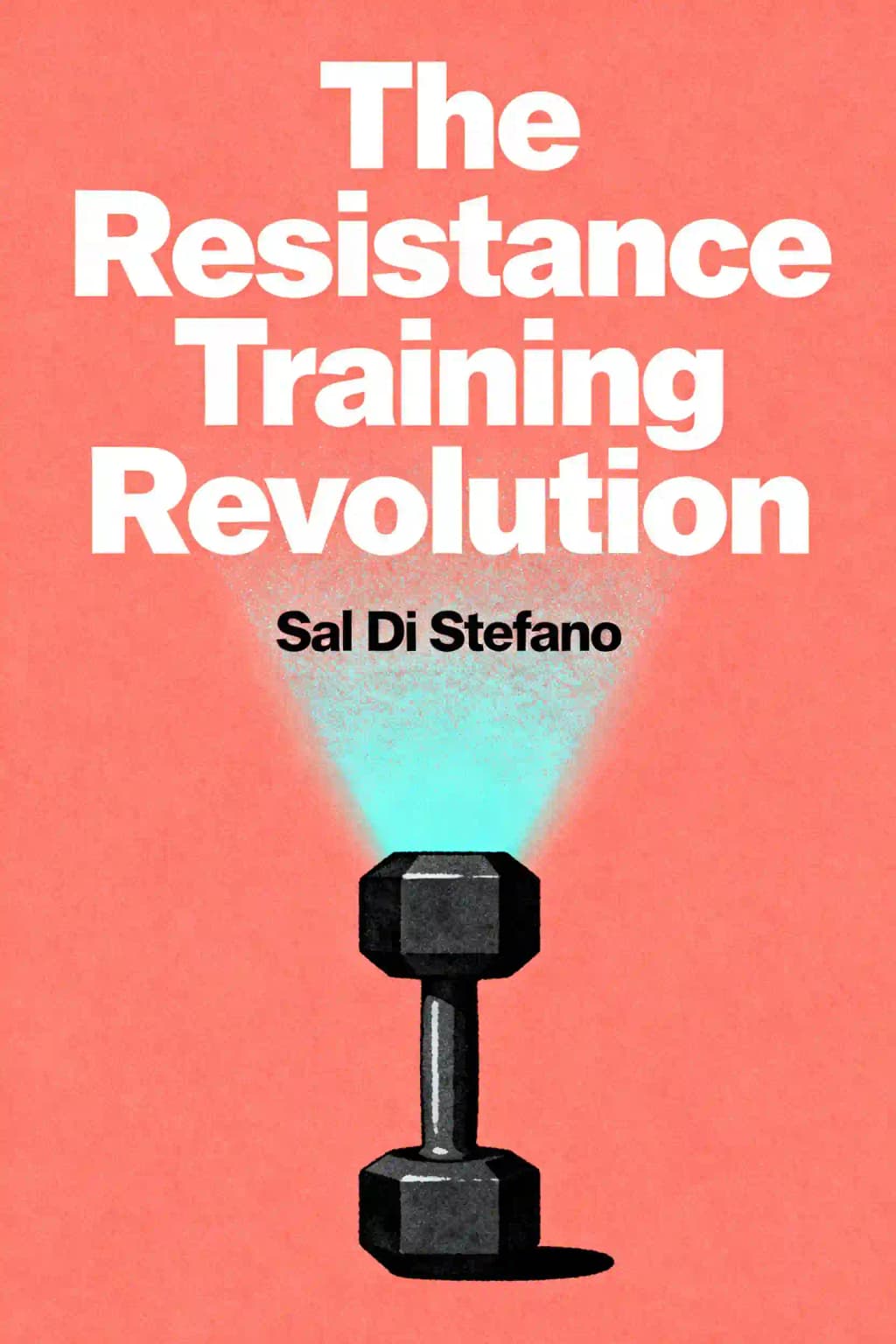
When 60 percent of American adults are missing out on the single most effective activity for preventing obesity, diabetes, osteoporosis, chronic pain, premature aging, depression, and anxiety, we have a serious problem. That activity isn't running marathons or spending hours on elliptical machines-it's resistance training. After 23 years as a personal trainer, Sal Di Stefano discovered that the fitness industry has been leading us down the wrong path. His book "The Resistance Training Revolution" has become a phenomenon, endorsed by celebrities like Joe Rogan and Tim Ferriss, and has transformed how millions approach fitness. The revolutionary concept? Focusing on building muscle rather than endless cardio is the true key to sustainable fat loss, longevity, and overall health. This counterintuitive approach has helped thousands of Di Stefano's clients break free from the frustrating cycle of temporary weight loss followed by inevitable regain-creating lasting transformations with just 2-3 short weekly sessions.
Глава 2
The Cardio Trap: Why Running Makes You Fatter
The modern fitness industry has created a fundamental misunderstanding about how our bodies work. When most people want to lose weight, their first instinct is to start jogging and cut calories. This approach is precisely backward for our modern environment and often leads to frustrating plateaus and potential health complications.
Our hunter-gatherer ancestors needed efficient metabolisms to survive food scarcity-their bodies became experts at conserving energy during long periods without reliable food sources. This evolutionary adaptation helped them survive seasonal variations in food availability and long hunting expeditions. Today, we face the opposite problem: sedentary lifestyles combined with constant access to highly palatable, processed foods designed to override our satiety signals. Studies show people naturally consume about 500 extra calories daily when eating processed foods, primarily due to their hyperpalatable nature and altered reward mechanisms in the brain. The same 2,000 calories that would be impossible to consume as plain boiled potatoes can be easily devoured as potato chips in minutes. This phenomenon, known as "passive overconsumption," is amplified by modern food engineering that combines precise ratios of salt, sugar, and fat.
Cardio exercise actually makes this situation worse by teaching your body to become more efficient-meaning it learns to burn fewer calories while doing the same work. Your body responds to cardio by signaling: "become good at this activity." Being "good" at cardio means using less energy while doing it. This adaptation process sacrifices metabolism-boosting muscle tissue, making your body more efficient at storing calories and burning fewer of them. Research shows that regular long-distance runners can experience up to a 30% reduction in their resting metabolic rate over time.
This explains why jogging works initially for weight loss but progress eventually stalls, often around 8-12 weeks into a new running routine. Your body adapts to burn fewer calories during the same activity-exactly the opposite of what you want for sustainable fat loss. This metabolic adaptation is evident in studies of the Hadza hunter-gatherers of Tanzania who, despite walking an average of 7.5 miles daily and living an extremely active lifestyle, burn a similar amount of calories as sedentary Americans and Europeans.
Even more concerning, excessive cardio can cause serious health problems. Research published in the Mayo Clinic Proceedings found that people exercising three times the recommended amount (450 minutes weekly of moderate cardio) had a 27% higher risk of developing coronary artery calcification. The Copenhagen City Heart Study revealed that strenuous joggers had nine times higher risk of dying early compared to light joggers. Additional studies have shown that endurance athletes often experience elevated cortisol levels, compromised immune function, and increased inflammation markers.
The solution isn't to avoid exercise-it's to choose the right kind that works with your body's natural processes rather than against them. This includes incorporating resistance training, high-intensity interval training (HIIT), and maintaining moderate amounts of low-intensity movement throughout the day. These approaches help preserve muscle mass, maintain metabolic flexibility, and avoid the negative adaptations associated with excessive steady-state cardio.
Глава 3
Muscle: Your Metabolic Engine for Automatic Fat Loss
If cardio is the worst choice for fat loss, what's the best? The answer is whatever builds muscle. Muscle tissue is metabolically active, burning calories just to maintain itself. Without proper signals, your body will deconstruct unused muscle, resulting in more body fat, weak bones, and a flabby physique.
Resistance training-whether with weights, bands, or bodyweight-provides the right signal to build and maintain muscle. This training creates two crucial adaptations: central nervous system (CNS) strength adaptation and muscle fiber growth. Larger muscles require more energy, nutrients, and calories just to exist, potentially burning an extra 500 calories daily-equivalent to an hour of vigorous cardio, but automatic.
Unlike cardio where your body adapts to burn fewer calories, resistance training keeps your metabolism elevated 24/7. Even adding just a few pounds of muscle can dramatically change your metabolism-I've had clients who could eat 500 more calories daily while still getting leaner after gaining only a small amount of muscle.
Resistance training is also the only exercise that lets you truly reshape your body. While cardio only gives you a smaller version of your shapeless self (a smaller apple or pear), resistance training lets you actually change your proportions. Want more shape to your butt? Do more glute exercises. Want sculpted arms? Focus on arm exercises.
Beyond aesthetics, resistance training builds bones by creating stress that signals bone cells to multiply and produce more bone density. Research comparing bodybuilders to runners, swimmers, and non-exercisers found that bodybuilders had significantly greater bone density across the board.
Perhaps most surprising are the hormonal benefits. Resistance training optimizes growth hormone function, which plays key roles in metabolism, muscle growth, and cellular repair. For testosterone, resistance training raises levels in all men regardless of their baseline, while cardio can actually decrease testosterone when done excessively. In women with low testosterone, resistance training brings levels up without causing excessive increases. For insulin sensitivity, resistance training makes muscle cells more receptive to insulin, helping prevent dangerous blood sugar buildup and protecting against diabetes-studies show moderate muscle mass provides 32% lower risk of type 2 diabetes.
Глава 4
The Mind-Body Connection: Mental Benefits of Strength Training
Clients consistently report improved mental clarity and cognitive function from resistance training, with many describing a notable enhancement in focus and decision-making abilities within weeks of starting a program. Exercise increases brain-derived neurotrophic factor (BDNF), a brain "fertilizer" that promotes tissue growth and protects against cognitive decline. Research shows BDNF levels can increase by up to 30% following resistance training sessions, with effects lasting 24-36 hours.
Uniquely, resistance training has been shown in groundbreaking University of Sydney research to protect the hippocampus and associated regions from degeneration in people at high risk for Alzheimer's-the first intervention shown to halt brain deterioration. The study demonstrated that participants who engaged in regular resistance training showed a 2% increase in hippocampal volume, while the control group experienced a 3% decline. The proprioceptive demands of resistance training provide exceptional brain training through countless movement variations, from basic compound lifts to complex multi-joint exercises that challenge spatial awareness and motor control.
For mental health, resistance training effectively treats mild to moderate depression and anxiety, performing as well as antidepressants in studies, with success rates of 60-80% among participants. Unlike walking or running where the mind can wander to stressful thoughts, resistance training demands presence and focus on form and technique, creating a mindful practice that improves mood. The requirement to concentrate on breathing patterns, muscle engagement, and proper alignment serves as a form of moving meditation.
This mental benefit extends particularly well to new mothers experiencing postpartum depression, with studies showing symptom reduction in 85% of participants. Resistance training offers four key benefits: First, it's time-efficient, requiring just 90 minutes weekly while boosting metabolism to burn 300-500 extra calories daily through increased muscle mass and post-exercise oxygen consumption. Second, it resolves joint pain by counteracting the effects of relaxin hormone, which creates excessive flexibility without strength, particularly in the pelvis and lower back. Third, it helps restore pre-pregnancy body shape, improving body image and self-confidence through measurable strength gains and muscle definition. Finally, it balances hormones by releasing dopamine, norepinephrine, serotonin and endorphins while boosting growth hormone by up to 200%, improving insulin sensitivity by 20-30%, restoring estrogen-progesterone balance, and reducing cortisol by up to 25%-creating a powerful anti-depression effect.
The best part? An effective resistance training program requires only two to three weekly sessions of 45-60 minutes each, making it accessible even for busy schedules. Most of my clients achieved excellent results with just two sessions per week, complemented by daily walks of 20-30 minutes and increased general activity rather than structured daily cardio. This minimalist approach ensures high compliance rates, with 80% of clients maintaining their program for over a year, compared to just 30% adherence for daily exercise requirements.
Глава 5
The Forgotten Factors: Mobility, Posture, and Movement Quality
Before diving into resistance training, it's essential to assess several often overlooked aspects of fitness: mobility, posture, strength, core stability, and body fat distribution. These "forgotten factors" establish your starting point and help measure progress. Without addressing these foundational elements, even the most dedicated training program may yield suboptimal results or lead to injury.
Mobility-your ability to move freely with control and stability-is the most important yet undervalued fitness factor. Though it lacks the marketing appeal of muscle building or fat burning, mobility directly impacts both. Improving mobility increases your range of motion during exercises, allowing you to get more benefit from every rep. For example, better ankle mobility enables deeper squats, while improved shoulder mobility allows for safer overhead pressing. Good mobility also prevents injury by ensuring proper muscle recruitment patterns and can heal chronic pain. Daily mobility work, even just 10-15 minutes, can dramatically improve movement quality and exercise effectiveness.
Our modern lifestyle creates "forward shoulders" posture with rounded shoulders and jutting head, forcing neck and shoulder muscles to overwork supporting head weight. This typical "desk worker" posture can add up to 30 additional pounds of stress on the cervical spine. This causes tension, strain, headaches, stiff neck, and midback pain while interfering with breathing and digestion. When starting resistance training with poor posture, you risk putting bad alignment under heavy loads, amplifying injury risk. Simple postural exercises like wall slides, band pull-aparts, and thoracic mobility work can help correct these issues.
Core strength is another critical factor. Your core functions like a corset, connecting upper and lower body with muscles crucial for performance and function. This includes not just the visible abs, but also the deeper transverse abdominis, multifidus, and pelvic floor muscles. A stable core prevents back pain by properly activating muscles around the spine, reducing stress on the vertebrae and maintaining safe positioning during loaded exercises. Core stability should be trained through anti-movement exercises like planks, dead bugs, and Pallof presses, rather than just traditional crunches.
Approximately 80 percent of our population suffers from low back pain, stemming from three main causes. First, overactive hip flexors and weak core muscles-our seated lifestyle keeps hip flexors shortened, creating tightness. When core muscles are weak, the psoas compensates, becoming tight and pulling on the spine. Second, tight hips force the lower back to compensate during movement, particularly during walking and running. Third, surprisingly, an inflammatory diet high in foods people are commonly intolerant to (such as gluten, dairy, and processed foods) can increase overall body inflammation, exacerbating joint and back pain.
Beyond physical factors, lifestyle elements like sleep quality, gut health, and stress management significantly impact fitness success. Poor sleep dramatically undermines fat loss-research shows it can make up to a 50% difference in results, even with identical calorie intake. Just one night of poor sleep can reduce insulin sensitivity by 25%, making fat loss more difficult. Sleep deprivation increases cortisol (stress hormone), which triggers ghrelin (hunger hormone) release, stimulating appetite and specifically increasing cravings for high-calorie, processed foods. Maintaining consistent sleep patterns, managing stress through meditation or breathing exercises, and supporting gut health through proper nutrition create the foundation for successful physical transformation.
Глава 6
The Secret Weapons of Effective Resistance Training
Resistance training has specific techniques that might seem overwhelming to newcomers. Understanding these concepts creates a faster metabolism, stronger muscles, better mobility, and increased lean muscle mass.
A repetition or "rep" is one complete movement sequence of an exercise, such as squatting down and coming back up. For developing muscle and strength, the ideal range is between 5 and 30 reps. Exceeding 30 reps shifts the exercise toward cardio benefits rather than muscle-building effects.
Despite popular belief, lifting "to failure" (continuing until you physically cannot perform another rep) is counterproductive for most people. Training to failure causes excessive damage that prioritizes recovery over adaptation. Instead, stop when you feel you could still perform 2-3 more reps before failing. This approach yields faster, more consistent progress.
Rest between sets is essential because resistance training uses fast-burning energy sources like ATP that deplete quickly. Without adequate rest, your workout shifts toward endurance rather than strength, essentially becoming cardio instead of resistance training. The recommendation is about one minute of rest between sets.
Tempo refers to the speed of each repetition, including both lifting (concentric) and lowering (eccentric) phases. The recommended tempo is 2-4 seconds for the concentric phase and 3-4 seconds for the eccentric phase. This controlled pace allows full weight control without momentum, optimizing strength and muscle development while ensuring safety.
The fitness industry creates misleading terminology to market products, particularly to women. The term "toned" is a marketing invention-muscles don't actually "tone," they either build or shrink. What people call "toning" is simply muscle building. Programs marketed to women often promise to "sculpt" without building "huge muscles" by using light weights, short ranges of motion, and high reps-an ineffective approach. For an improved physique, lifting heavier resistance is far more efficient than these marketed "toning" workouts.
Home gyms offer major advantages over commercial facilities. The convenience eliminates travel time, allows flexibility with children, and sets a good example for family. While commercial gyms offer equipment variety, the most effective exercises use basic free weights like barbells and dumbbells. The top muscle-building, metabolism-boosting exercises-squats, deadlifts, bench presses, overhead presses-require minimal equipment and can be done at home, leading to more consistent workouts.
Глава 7
Building Discipline: The Psychology of Sustainable Fitness
What truly keeps people engaged in fitness long-term? After years of watching gym-goers start enthusiastically only to disappear months later, I've discovered the crucial difference between those who quit and those who succeed.
Motivation is merely a feeling-temporary and unreliable. When motivated, we overestimate our abilities and make unrealistic commitments. But motivation inevitably fades. Discipline, however, is a skill-consistent, self-perpetuating, and developable. The key is starting with one challenging but realistic goal that's failproof. Rather than committing to five gym days weekly, start with one or two. Build discipline gradually by setting small, attainable goals that become habits.
Setting massive goals during motivation surges is a recipe for failure. Instead, ask yourself: "What can I start now that I know I can maintain forever?" Be brutally honest. No goal is too small if it's more than you're doing now. One workout weekly is better than none. Once your initial small goal becomes consistent behavior, repeat the process with another small, challenging but realistic goal. These small permanent changes compound into dramatic transformations over time-and they stick.
"I don't have time" is the most common excuse for not exercising. Rather than giving motivational speeches about prioritizing health (which only works short-term), I created time-efficient workouts totaling just 90 minutes weekly-either three 30-minute sessions or six 15-minute sessions. Research shows even burning just 1,000 calories weekly through exercise reduces premature death risk. The key is making workouts effective, not necessarily difficult, and convenient enough to maintain.
Training from self-hate is ultimately self-defeating. Those who hate their bodies often punish themselves with extreme workouts, then eventually rebel against this self-tyranny. The breakthrough comes when clients learn to train from self-love instead-working out because they care about their body, not because they despise it. Remember: loving your body doesn't necessarily mean liking its current state; it means caring enough to improve it.
If exercise did nothing for appearance but still provided all health benefits, gyms would lose 70-80% of their members. Yet the secret to long-term success lies with the minority who would continue regardless. Consistency is the ultimate key-even a mediocre program done consistently outperforms the perfect program done sporadically. When you prioritize health over appearance, you naturally achieve better aesthetic results. A healthy body looks good; an unhealthy body does not.
Глава 8
Intuitive Eating: The Only Diet Strategy You'll Ever Need
Traditional diets fail because they're unsustainable, restrictive, and don't address individual needs. Whether low-carb, high-fat, plant-based, or animal-focused, most diets limit variety and quantity without teaching smarter food choices. The solution is intuitive eating-a personalized approach where you reject rigid food rules, honor hunger signals, make peace with food, and respect your body.
Becoming an intuitive eater involves progressing through four stages. First is unconscious incompetence, where you don't know what you don't know about nutrition. Second is conscious incompetence, where you're learning basics like macronutrients with tools like food trackers. Third is conscious competence, where you're mindful of food choices and their effects but must deliberately track calories and macros. The final stage is unconscious competence-true intuitive eating where nutritious choices become automatic.
Starting intuitive eating begins with resistance training, which naturally inspires healthier food choices. A Stanford study found that 80% of college students who began exercising automatically started eating more nutritious foods without conscious effort. To eat with awareness, check if you're truly hungry versus emotionally hungry, and choose foods that nourish you physically, mentally, and emotionally. Eat in a quiet place without distractions, appreciating your food's taste and texture.
The most crucial rule for intuitive eating is avoiding heavily processed foods-those boxed items with long shelf lives due to preservatives and additives. Research shows these foods cause people to consume 500 more calories daily and eat 17 calories more per minute. Processed foods are engineered to override natural satiety signals through carefully designed taste, texture, smell, visual appeal, and even packaging. After avoiding these foods for about a month while eating whole, natural foods, your brain adapts, processed foods lose their appeal, and your natural hunger signals normalize.
To lose body fat effectively, build your metabolism through consistent resistance training before focusing on diet. Calculate your baseline calorie intake by tracking food for two weeks without making changes. Then reduce your daily calories by 200-600 (starting at the lower end) and monitor changes for 3-4 weeks, making further reductions if needed. Ensure adequate protein intake (0.5-1.0g per pound of bodyweight, or goal weight if you have significant weight to lose). Be intuitive about fat and carb intake while staying within your calorie range-some people do better on low-carb/higher-fat plans while others thrive on higher-carb/lower-fat approaches.
Глава 9
The Longevity Blueprint: Living Well Beyond 100
Living to 100 isn't just possible-it's increasingly likely as human lifespans continue to extend. But the goal shouldn't just be longevity; it should be quality of life. I've witnessed firsthand how resistance training and active lifestyles keep people vibrant into their 80s and beyond. From Caroline, my 80-something client who dated using apps, to James with his 20-year-old testosterone levels at age 69, to fitness legend Jack LaLanne doing one-arm push-ups in his 70s-these examples prove we can thrive, not just survive, in our later years.
Physical strength directly predicts longevity. Research shows people with low muscle strength are 50 percent more likely to die earlier. One study measured hand grip strength (less than 39kg for men and 22kg for women indicated weakness) and found 46 percent of the sample population was considered weak. Prioritize strength-building regardless of age-it improves balance, prevents falls, and keeps your body able. Longevity-based resistance training requires just two days weekly to maintain youthfulness throughout life.
Beyond twice-weekly resistance training, daily movement is crucial. Walk, bike, hike, or swim-just don't sit! Studies show prolonged sitting increases odds of early death from all causes, even among regular exercisers. Walking briskly is especially effective-overweight people who walk quickly live 15-20 years longer than slow walkers.
Processed foods accelerate aging through chronic inflammation, attacking healthy cells, blood vessels, and tissues. The "Blue Zones"-regions with the longest-lived populations-share two dietary commonalities despite cultural differences: they eat natural, whole foods with nothing processed, and they don't overeat.
Social isolation reduces longevity more than twice as much as heavy drinking and three times more than obesity. Loneliness is as physically dangerous as smoking 15 cigarettes daily and contributes to cognitive decline. For a long, happy life, invest in relationships-stay connected with family, participate in community organizations, volunteer, and surround yourself with supportive people.
Whether through organized religion, meditation, nature connection, or prayer, spiritual practices provide purpose and help navigate life's challenges. Studies show people with spiritual lives experience less depression, suicide, and substance abuse, while enjoying greater happiness, meaning, and optimism. Spirituality correlates with better immunity, cardiovascular health, lower blood pressure, reduced disease risk, and adds approximately seven years to lifespan.
The resistance training revolution isn't just about looking better-it's about fundamentally transforming how we approach health, aging, and quality of life. With just two to three short weekly sessions, you can build a body that burns fat automatically, stays strong and mobile throughout life, and resists the diseases and decline that many consider inevitable with aging. The revolution is waiting-will you join it?