Глава 1
When Brain Science Meets Spiritual Transformation
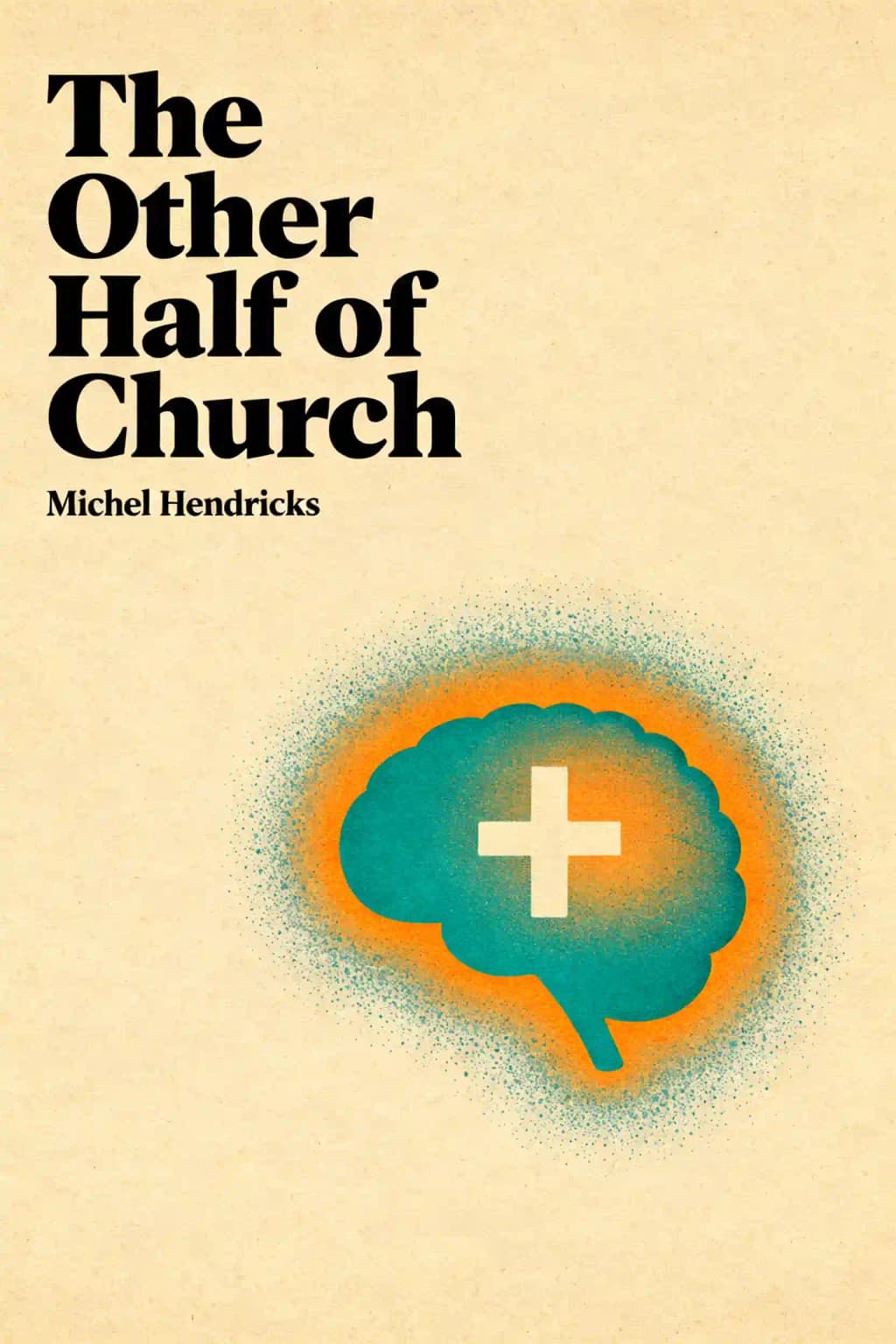
Have you ever felt stuck in your spiritual growth? You're not alone. Despite decades of church attendance, Bible studies, and prayer, many Christians find their character development plateauing mysteriously. What if the problem isn't your dedication or sincerity, but that you've been using only half your brain? This groundbreaking book, beloved by pastors and psychologists alike, has become a quiet revolution in Christian formation circles. Oprah included it in her "Books That Help Me Through" collection, and therapists frequently recommend it to clients struggling with spiritual disconnection. The book's central insight-that Western Christianity has neglected the right-brain aspects of spiritual formation-explains why so many sincere believers experience transformation that starts strong but fizzles over time.
Глава 2
The Half-Brain Problem in Christian Growth
When Michel Hendricks left his position as a discipleship pastor at a megachurch, he felt deeply unsettled. Despite years of ministry experience, advanced theological education, and countless hours invested in discipleship programs, something fundamental was missing in how Christians approached spiritual growth. The methods he'd been taught and had taught others worked inconsistently at best. While his garden tomatoes flourished predictably with proper care, sunlight, and water, the people he discipled showed wildly varying results despite receiving the same spiritual nurture and biblical instruction.
During a pivotal lunch with church leader friends who shared similar frustrations about their congregants' sporadic spiritual development, he was introduced to Jim Wilder, a pioneering "neurotheologian" with advanced degrees in both theology and psychology. Though initially skeptical of mixing neuroscience with spiritual formation, Michel was desperate enough for answers to listen. Using a plastic brain model split into halves, Jim revealed why Michel - and most Western Christians - were practicing what he termed "half-brained Christianity."
Our brain isn't a single processing unit but a sophisticated dual processor with distinct yet complementary functions. The right hemisphere processes our surroundings at lightning speed (six times per second) before the left side even becomes aware of what's happening. This "preconscious thought" means our character - our instantaneous reactions to life's challenges - forms primarily in the right brain, not the left. The right brain governs our entire relational life: who we love, how we handle emotions, self-regulation, our capacity for joy, and our identity both individually and in community. It's where we process trauma, form attachments, and develop emotional resilience.
Meanwhile, the left brain handles what we commonly consider "thinking": logical reasoning, problem-solving, language processing, theological analysis, and strategic planning. It runs at the slower "speed of words" rather than the right brain's "speed of joy." While both hemispheres are essential for healthy spiritual formation, the right brain is designed to lead the left, providing the relational foundation necessary for whole-brain function. This hierarchy mirrors God's design, where relationship precedes rules and love precedes law.
The problem? Most Western Christian practices focus almost exclusively on left-brain strategies: teaching biblical truths, memorizing scripture, making better choices, and trusting the Holy Spirit for change. This approach emphasizes beliefs, doctrine, and willpower while neglecting crucial right-brain elements like loving attachments, joy, emotional development, and identity formation. The result is Christians who intellectually believe in God's love but struggle to experience it daily, especially during distress. They can recite scripture about peace but panic in crisis. They know what they should do but lack the neural pathways to actually do it.
This half-brained approach explains why spiritual disciplines sometimes work and sometimes don't - they're being planted in depleted relational soil lacking essential nutrients for consistent growth. Traditional practices like Bible study and prayer, while vital, often bypass the right brain's crucial role in character formation. Even more troubling, this environment creates ideal conditions for narcissism to flourish while hindering Christlike character development, as intellectual knowledge becomes divorced from emotional and relational maturity.
Глава 3
Joy: The Essential Fuel for Spiritual Growth
Michel's spiritual journey began with an encounter with Jesus that filled him with hope, excitement, and what he later recognized as joy-the sensation of feeling someone's delight in being with you. This experience aligned with 2 Corinthians 4:6 about God's light shining in hearts through Christ's face. At university, Michel found community with fellow believers where this joy multiplied through relationships, transforming his character without conscious effort.
Years later, Michel learned that our brains are designed to run on joy like cars run on fuel. Studying Scripture with fresh eyes, he found joy everywhere, particularly in passages about God's face shining upon people (Numbers 6:24-26). He discovered that many Bible translations obscure this physical reality, changing references to "God's face" into more abstract terms like "God's presence," diminishing the visceral sensation that comes from facial recognition-something God hardwired into our brains.
Brain science reveals that joy is primarily transmitted through faces and eyes, is inherently relational, and is deeply important to both God and humans. Modern Christianity often neglects these bodily sensations, translating visceral biblical terms into cerebral concepts. This disconnection between body and spiritual experience is a direct consequence of half-brained Christianity.
The benefits of joy are profound. When Jim applied joy principles to his counseling practice, hospitalization rates for trauma patients plummeted to nearly zero. Joy helps regulate emotions and enables us to endure suffering while staying relationally connected. Jesus never lost touch with His Father's face shining on Him during crucifixion-His joy sustained Him through suffering.
Joy isn't merely an emotion but a "supra-emotion" that can combine with other feelings. When experiencing sadness, fear, or anger while simultaneously feeling God's presence, we're both distressed and joyful. Joy forms our identity, removes fear from our relationship with God, and gives us freedom to live without masks.
To increase joy capacity, Michel learned to practice "nonverbal gratitude"-a right-brain exercise of reliving grateful memories while noticing bodily sensations and connection with God. Unlike blood pressure, joy cannot be directly controlled but must be regulated indirectly through relationships and practices.
When joy runs low from lack of faces shining upon us, we become vulnerable to "pseudo-joys"-non-relational substitutes that temporarily relieve emotional pain but ultimately leave us unsatisfied. These include seemingly innocent activities like social media and shopping, or more obvious substitutes like alcohol, drugs, and pornography.
Churches and families often experience "joy leaks" that must be identified and plugged. Major leaks include undeveloped emotional pathways, unresolved trauma, excessive screen time, and narcissists in the community. Building joy-filled communities requires intentional changes to church structures that often prioritize left-brain activities.
Глава 4
Hesed: The Relational Glue of Transformation
Michel's college Christian community created spontaneous, loving bonds that transformed his values and character without deliberate effort. Unlike his previous communities based on shared interests, this spiritual family was glued together by love. Thirty years later, their reunion still evoked powerful emotions, demonstrating the enduring nature of these attachments.
This powerful force is the Hebrew concept of hesed-what neuroscientists call attachment. While commonly translated as "steadfast love" or "loyal kindness," hesed represents an enduring connection that brings life into relationships. This concept appears throughout Scripture, paralleling the Greek agape but carrying deeper relational implications. Attachment is the strongest force in the human brain, creating bonds that have no natural mechanism for dissolution, like contact cement that permanently binds.
Brain research reveals that identity develops through attachments, with joyful, secure attachments building "good brains" while fearful or weak attachments create problematic identity centers. The prefrontal cortex forms neurological circuits representing three faces engaged with each other, reminiscent of the Trinity. When churches have fear-based attachments or weak bonds, spiritual development becomes stunted.
The Enlightenment model of transformation (truth + good choices + power) has influenced churches but fatally omits love as the primary mover of character. Without hesed at the center, transformation fails to occur despite solid teaching and doctrine.
Scripture powerfully confirms what neuroscience reveals about hesed. Jesus declared love of God and neighbor as the greatest commandments, with all other laws flowing from these. Using the vine and branch metaphor, Jesus illustrated how divine love flows through our attachment to Him and into our relationships with others. John emphasized that love comes from God and proves His presence in us, while Paul celebrated the unbreakable strength of our attachment to Christ.
Many churches operate with depleted hesed, functioning more like efficient religious institutions than families. Despite friendly atmospheres and ambitious plans, these communities lack the deep attachments that drive transformation. Jesus' rebuke to the Ephesian church in Revelation 2 illustrates this problem perfectly-they had good doctrine, perseverance, and hard work, but had "forsaken the love they had at first." Without hesed, Jesus threatened to remove their lampstand, declaring that a church without love ceases to be a church at all.
Low-hesed churches develop transactional cultures where relationships are performance-based rather than familial. People are valued only while they contribute, becoming invisible when they no longer perform. Modern churches often neglect imitation as a primary vehicle for character formation, despite our right brain being designed to shape character through observation of mature believers.
To build hesed in a community, incorporate it into mission statements and emphasize it in every ministry. Joy and hesed mutually reinforce each other in a cycle of magnification, forming the foundation of healthy relational soil. Sharing food and drink intentionally builds bonds-Jesus often taught at dinner tables and even offered reconciliation through shared meals in Revelation. Equally important is sharing weakness, as concealed weakness leads to shallow hesed.
Глава 5
Group Identity: The Power of "Our People"
Group identity plays a crucial but overlooked role in spiritual transformation. While Western culture emphasizes individualistic identity, our brains are designed to develop character through group attachments. Around age twelve, our brains undergo structural changes that balance individual identity with group identity.
Jesus introduced a new kingdom identity, proclaiming "Repent, for the kingdom of heaven is at hand." He taught his followers to see themselves as citizens of God's kingdom with distinctive values and behaviors. Peter later described Christians as "a chosen people, a royal priesthood, a holy nation, God's special possession." The Sermon on the Mount provides a rich description of this group identity, answering the fundamental questions: What kind of people are we? How do the people of God act?
Our brains are designed to respond to group identity, with the right orbital prefrontal cortex constantly asking "Who am I? How do my people act now?" every sixth of a second. When functioning properly, this integrates our circumstances with our identity, allowing us to act spontaneously with joy and peace. Without a high-joy hesed community with strong group identity, we lack the neural framework to change non-Christian behaviors.
Character-our embedded automatic responses that happen faster than conscious thought-cannot be changed through willpower alone. Rather, our instantaneous reactions are transformed through participation in joyful hesed communities with Jesus-centered group identities. This explains why merely trying harder to follow Jesus' teachings often fails.
Many Christian communities have poorly developed group identities, failing to engage the brain's transformation mechanisms. Modern society's fragmentation weakens identity development as we no longer live in multigenerational communities that reinforce who we are. Churches often define themselves by doctrine (Reformed, charismatic), activities (liturgical, inner-city), or around pastoral personalities rather than Christ's character. These shallow identities don't reach deep enough to transform our automatic behaviors.
Group identity can become toxic when corrupted, as Paul addressed in Corinth where believers divided themselves by which leader they followed. When we identify with a leader's fame or personality rather than Christ, our identity becomes distorted. Similarly, defining ourselves by our struggles ("I am an alcoholic") rather than our identity in Christ creates harmful self-perception.
Healthy Christian communities build their identity around Jesus' character, not personalities. Leaders must develop robust identity practices that permeate community life. Regular reminders of "what kind of people we are" help embed this identity, similar to how some traditions recite doctrinal statements. Our group identity must reflect Jesus' multifaceted character, not a dull two-dimensional version.
Глава 6
Healthy Correction: The Missing Ingredient
Even with joy, hesed, and strong group identity, we sometimes fail to act according to Jesus' character. Correction becomes necessary, but must be done properly to be effective. Character forms at the intersection of identity and values in the prefrontal cortex. Our brain draws from two libraries: our observed responses from past experiences and the values of "our people." The prefrontal cortex scans both libraries to form spontaneous behavior, eliminating options contrary to our values.
The author challenges common misconceptions about shame, distinguishing between toxic and healthy forms. Toxic shame communicates "you are bad" with no solution, often through verbal messages that leave people isolated. Healthy shame, however, is a nonverbal reaction to someone's disappointment, communicating "I love you but believe you stopped acting like yourself." Unlike toxic shame, healthy shame maintains relational connection and is essential for character formation.
The key difference between toxic and healthy correction is whether the relationship is affirmed. Toxic shame isolates people in their failure, like a coach yelling at a player and then walking away. Healthy shame affirms the relationship first, addresses the problem, and reminds people of their true identity. It says, "You have forgotten who you are. Let me remind you who we are."
Without shame-the sense that we are displeasing people-our character has zero motivation to change. Shame is a hardwired signal in our brain indicating "I'm not bringing you joy," and handling it properly protects the joy in our community.
For churches to be transformational environments, we must distinguish between toxic and healthy shame. Condemnation-satanically tainted shame-must be firmly rejected. Paul writes, "Therefore, there is now no condemnation for those who are in Christ Jesus" (Romans 8:1). Our discipleship practices should develop resistance to condemnation, teaching us to shelter ourselves from it rather than internalizing toxic messages.
When correction comes through loving attachment (hesed) from a properly trained and mature person, it feels painful and loving simultaneously. The corrector knows how to be careful with shame-kind but firm, without condemnation or contempt. If a community has developed a group identity around the importance of correction ("We are the kind of people who eagerly accept correction"), character formation happens naturally.
Jesus perfectly modeled healthy correction. When His disciples returned joyful that "even the demons submit to us," Jesus first affirmed their relationship by entering their joy, then gently redirected: "Do not rejoice that the spirits submit to you, but rejoice that your names are written in heaven" (Luke 10:20). Similarly, when Martha complained about Mary not helping with meal preparation, Jesus began with "Martha, Martha"-affirming His loving attachment before delivering His correction about priorities.
The main barrier to receiving healthy correction is self-justification. When we respond to correction by trying to justify ourselves, the Bible calls this being "stiff-necked." King Saul exemplifies this when he disobeyed Samuel's instructions and then blamed Samuel for being late. Self-justification shields us from correction, making character change impossible. In healthy communities, members compete not for the "best self-justifier" trophy but for the "fastest to humble myself" trophy.
Глава 7
Narcissism: The Relational Infection
The church suffers from both a culture problem and an infection. Even with antibiotics, the infection would recur until the culture changes. The depleted soil of half-brained Christianity not only stunts spiritual formation but creates conditions where narcissism thrives, especially in leadership positions. Simply removing narcissistic leaders won't solve the problem if the soil remains poor.
During training sessions, discussions about narcissism in church leadership resonated deeply. Many had encountered troubling leadership behaviors but lacked language to describe it. The group realized narcissism was becoming normalized in Christian churches, with narcissists often mistaken for strong leaders when the opposite is true. From a brain science perspective, narcissism isn't just self-centeredness but an inability to metabolize shame relationally.
Our brains are designed to metabolize emotions, including shame. In healthy individuals, shame is processed through relational attachments (hesed). When someone lovingly corrects our character flaws, we feel momentary shame that's quickly displaced by peace and relief. Narcissists, however, metabolize shame non-relationally, seeing correction as a threat and turning interactions into arguments they must win. They reject healthy correction while skillfully wielding toxic shame against others.
Narcissistic individuals often seek leadership positions in churches and organizations because these roles feed their sense of specialness and provide power they're reluctant to relinquish. Christian communities with low joy, weak hesed, and poor group identity create perfect conditions for narcissism to spread. Without addressing the relational soil that nourishes narcissistic behavior, churches often replace one narcissistic leader with another.
Self-justification is the narcissist's primary weapon against correction. When confronted, narcissists reflexively defend themselves rather than humbly listening. People often mistake this self-justification for confidence, which is why narcissists frequently rise to leadership.
When our relational circuits shut down, we enter "Enemy Mode" where people feel like enemies to defeat rather than friends to connect with. Narcissists operate in Predatory Enemy Mode, tracking others' weaknesses not for compassion but for advantage. They evaluate people based on usefulness: "How can I use this person? What can they do for me?" Communities ignorant of Enemy Mode mistake it for strong leadership.
Communities with healthy relational soil resist narcissistic influence. When we're deeply bonded in joyful love, our joy tanks remain full, enabling us to handle distress. Our hesed community suffers together and shares weaknesses, making narcissistic criticism ineffective. With strong group identity, we immediately recognize when leaders use condemnation or self-justification.
Глава 8
Cultivating Whole-Brained Christianity
Jesus desires a church with healthy soil that prioritizes relationships. Each soil ingredient is fundamentally relational: joy comes from sensing others are happy to be with us, hesed represents family attachment, group identity forms our corporate map as God's children, and correction culture ensures no one is left behind. By building this relational foundation, we create an environment where transformation naturally occurs.
Unlike most leaders, the relational pastor intentionally stays small. In a healthy church, people talk about Jesus, not the pastor. These leaders focus on creating environments that foster transformation rather than obsessing over attendance numbers. Like unknown drill sergeants who trained war heroes, relational pastors remain largely anonymous beyond their flock. They reject the world's definition of greatness, embracing Jesus's upside-down kingdom where "whoever takes the lowly position of this child is the greatest."
Full-brained discipleship begins with healthy relational soil but doesn't end there. It requires intentional training to develop Christlike character. This training includes exercises to experience God's presence even in distracting environments-something Jesus did well. The process starts with increasing joy capacity through gratitude practices and nonverbal facial joy. Disciples learn to quiet their nervous systems through breathing, tapping, and other techniques that help digest emotional experiences.
The results of full-brained training are profound and personal. We feel more connected to our bodies and experience God's love viscerally. Our minds become less cluttered, and experiences that once triggered emotional avalanches no longer have the same power. We can better regulate emotions and understand our own malfunctions rather than being puzzled by them. When we do get stuck, we eagerly bring weaknesses to our community for collaborative growth.
Full-brained worship recovers the New Testament practice of using music relationally. Paul writes that we teach and admonish one another "with psalms, hymns, and songs from the Spirit" (Col. 3:16). Modern worship often focuses on singing to God while neglecting singing to each other. When we sing together, sensory input enters our right brain-facial expressions, melody, and relational tone create joy and identity-while lyrics travel to the left hemisphere for interpretation.
Many pastors run frantically like hamsters in wheels just to maintain church machinery, quickly burning out. A full-brained church decentralizes responsibility, functioning as an interdependent network of equals-like a family. Elders distribute responsibilities to ensure everyone grows through participation. Paul describes this model in 1 Corinthians 14:26: "When you come together, each of you has a hymn, or a word of instruction, a revelation, a tongue or an interpretation."
Maturity is far more complex than we realize. We often mistakenly define it as absence of visible sin or knowledge of Scripture. But maturity has many dimensions-spiritual, emotional, relational-with distinct developmental stages. The full-brained church maintains a robust definition of maturity and intentional processes to develop it. In community, members assess their maturity levels together, identify gaps in their relational skills, and help each other develop.
A full-brained community is uniquely equipped to handle narcissism, which stems from infant-level maturity gaps in processing shame. Since narcissism requires character correction rather than mere teaching, a hesed community provides the perfect environment for healing by treating shame kindly and building pathways between shame and joy. The community gently corrects narcissistic behaviors without enabling them, refusing to form protective bubbles around leaders with character flaws.
The qualities that make a community resistant to narcissism also make it a vibrant witness in our world. When we combine hesed with strong identity, we develop a clear picture of who we are that stands out in our fragmented culture. Our community nurtures a "culture of correction" where we constantly scan for opportunities to mold character, while refusing self-justification. Our crowning achievement is learning to love our enemies-the perfect practice for making communities resistant to narcissism.
We're living in a time of unprecedented opportunity, with insights into brain function that previous generations lacked. The ingredients of healthy relational soil aren't human inventions but based on neurological circuits God designed, taught in Scripture and modeled by Jesus. These mysteries of love, applied to how the brain learns, offer hope for overcoming spiritual stagnation and becoming whole-brained Christians.