Глава 1
Beyond Frankenstein: A New Perspective on Our Robot Future
When Mary Shelley wrote Frankenstein in Ingolstadt, Bavaria, she couldn't have imagined that two centuries later, the same city would house Audi's robotics-filled factory-a real-world manifestation of her fictional creation. Yet this parallel perfectly captures our enduring anxiety about creating life-like machines. Kate Darling's "The New Breed" challenges our science fiction-inspired tendency to compare robots to humans, offering instead a more illuminating comparison: animals. This perspective has gained traction among tech luminaries like Bill Gates, who praised the book for its "fascinating and important" framework. Rather than fearing robots as our replacements or overlords, Darling suggests we consider them as a new species that complements our abilities-just as we've partnered with animals for millennia without losing our humanity. This shift in thinking isn't merely academic; it fundamentally changes how we design, integrate, and regulate the increasingly sophisticated machines entering our homes, workplaces, and public spaces.
Глава 2
From Fear to Partnership: Reimagining Our Robot Relationships
Headlines constantly warn about robots stealing jobs, with Oxford studies predicting half of US employment at risk within decades. Beyond employment fears, influential figures like Stephen Hawking and Elon Musk have stoked concerns about superintelligent machines threatening humanity. Meanwhile, roboticists grow frustrated with alarmist media coverage that misrepresents their field's actual capabilities.
This narrative of replacement rather than partnership stands in stark contrast to our historical relationship with animals. Consider the remarkable collaboration between humans and honeyguide birds in Africa. These birds lead people to beehives, allowing both species to benefit-birds eat the wax we can't digest, while humans harvest honey from hives they couldn't find alone. This partnership, possibly dating back 1.9 million years, exemplifies how we've worked with animals for their complementary abilities rather than seeking replacements for human skills.
Throughout history, we've partnered with animals to supplement our abilities-dogs for hunting, cats for pest control, oxen for farming. These partnerships fundamentally transformed society. Oxen, domesticated from massive aurochs around the fourth millennium BCE, revolutionized agriculture by replacing human muscle power with animal strength. The measurement unit "acre" originated as the amount of land an ox could plow in a day.
Similarly, animals from llamas to reindeer have enabled humans to transport goods and traverse vast distances that would otherwise be impossible. In Australia's outback, camels' remarkable ability to survive desert conditions made exploration possible, leading to the famous Ghan railway named after the Afghan camel drivers who first crossed the continent's center.
Rather than viewing robots as job replacers, we should recognize them as potential partners with complementary abilities. Despite the hype around robotics, the reality at even top institutions like MIT often involves broken prototypes and limited demos. While robots excel at specific tasks, they struggle with complexity and unpredictability. Even in mining-where Rio Tinto uses autonomous trucks in Australia-humans remain essential, monitoring operations from remote control centers.
The promise of fully autonomous technology, from self-driving cars to Elon Musk's automated Tesla factory, consistently falls short. Musk's "manufacturing hell" demonstrated what other automakers already knew: robots can't handle the complexity and variation of final assembly. As Musk ultimately tweeted, "humans are underrated."
Глава 3
Animal Origins of Modern Technology
Long before we had robotic weapons, humans weaponized animals in warfare. Ancient Greeks used flaming pigs against war elephants, while Romans equipped dogs with armor and spikes. The Soviets' anti-tank dogs, trained to carry explosives under enemy tanks, sometimes targeted their own forces instead when startled by gunfire. Similarly, the US military's "bat bombs" and B.F. Skinner's "Project Pigeon" (which attempted to use pigeons to guide missiles) demonstrate early attempts at creating autonomous weapons.
Before modern drones delivered packages and captured aerial imagery, birds performed similar functions. Julius Neubronner, a German pharmacist, used pigeons to deliver medicine in 1907 and invented pigeon-operated cameras for aerial photography. Carrier pigeons transported messages as early as the sixth century BCE, becoming crucial communication tools during wars and sieges. During the 1870 Paris siege, pigeons carried messages in and out of the city (outbound via hot air balloon), while the Prussians deployed hawks to intercept them.
Animals also extended human sensory capabilities in ways that parallel ideal robot applications. Truffle pigs, ship cats, and detection dogs locate things our human senses can't find. St. Bernards search for avalanche victims, while dogs, geese and sea mammals serve as sentinels. For dangerous tasks like mine detection, specially trained rats prove more effective than dogs or metal detectors, being light enough not to trigger explosives. Most iconically, canaries detected deadly carbon monoxide in mines before being replaced by electronic sensors in the 1980s.
Autonomous underwater vehicles now explore places humans cannot reach, like Antarctica's "Doomsday Glacier." Despite the US Navy investing over $90 million to replace their marine mammal program with robots, they still can't match dolphins' sophisticated sonar capabilities. The Russian military continues using marine mammals too, seizing Ukraine's dolphin program during the 2014 Crimea annexation.
These historical examples demonstrate how we've consistently sought to extend our capabilities through partnerships with other species. Robots represent the next evolution of this pattern-not as our replacements, but as specialized partners with unique abilities that complement our own.
Глава 4
Different Intelligence, Different Design
We often incorrectly compare robots to humans rather than recognizing their fundamentally different intelligence. Despite the popular narrative that robots will simply replace people, they're not less developed versions of humans that will eventually catch up with increased computing power.
Since Vernor Vinge's 1993 prediction of the "Singularity"-when artificial intelligence surpasses human intelligence-futurists have obsessed over superintelligent machines. Yet while Elon Musk warns about robots becoming too smart, robot vacuums still spread dog poop around houses.
Moore's law explains the exponential growth in computing power, but intelligence isn't simply about processing capacity. Recent AI breakthroughs rely more on brute computing force processing massive datasets than algorithmic innovation. These systems excel at pattern recognition but produce strange errors humans would never make-like an image classifier identifying fish species by the human fingers holding them in photos, or being fooled into labeling ambulances and mountains as "bolete" mushrooms after minimal pixel changes.
Watson's creator Dave Ferrucci emphasizes they weren't trying to model human cognition-just build a machine to win Jeopardy. Psychologist Gary Marcus notes AI excels in narrow domains but can't understand concepts like a toddler can. Human intelligence remains uniquely generalizable and adaptive, capable of multitasking and handling unexpected situations.
This fundamental difference in intelligence should inform our robot design. Since her 2016 debut, Sophia-the humanoid robot with Audrey Hepburn-inspired features and Saudi Arabian citizenship-has become a global sensation despite often sexist media coverage. While her transparent skull reveals mechanical innards, her rubber "skin" mimics human expressions. She exemplifies the humanoid robot tradition that many consider robotics' Holy Grail.
But must robots resemble humans? Creator David Hanson argues humans relate best to human-like forms, while others suggest humanoids navigate human-built environments better. However, roboticist Robin Murphy advocates for "whatever shape gets the job done." Animal-inspired designs often prove more effective-from adhesives mimicking gecko feet to drones with eagle-inspired vision systems.
Beyond biomimicry, robots can take entirely novel forms: smaller than microscopic or larger than houses, made of metal or soft materials, moving by rolling, slithering, or oozing. Ironically, moving beyond human-centric design creates opportunities for broader accessibility. UC San Diego's Laurel Riek notes that investing in wheelchair-accessible infrastructure benefits both humans and wheeled robots, eliminating the need for expensive bipedal designs.
Глава 5
Responsibility in the Age of Autonomy
In 2015, robot technician Wanda Holbrook died when a factory robot malfunctioned, striking her head despite safety doors designed to prevent operation when humans were nearby. As robots become smart enough to navigate shared spaces but not smart enough to replace humans entirely, accidents are increasing-from factory incidents to a security robot knocking down a toddler at a shopping mall.
When robots cause harm, we face the question of responsibility for their autonomous decisions. Despite predictions that autonomous vehicles could dramatically reduce the 1.35 million annual road deaths, public acceptance remains low-only 43% of Americans express interest in self-driving cars, with most preferring a rocket to space over riding in one.
Many suggest programming ethics into robots using Asimov's Three Laws, but these laws aren't taken seriously in robotics textbooks, and translating ethics into code has proven nearly impossible. The "trolley problem" for autonomous vehicles reveals the complexity of moral decision-making.
Rather than viewing robots as moral agents, we should look to our history with animals-autonomous beings we've managed legally for millennia. Ancient legal codes like the Code of Eshnunna and Biblical law established balanced principles: owners weren't responsible when animals caused unexpected harm but were liable if they knew an animal was dangerous and failed to take precautions.
Animal law distinguishes between cases where humans are responsible only if they could have anticipated harm and failed to prevent it, and cases where they're "strictly" liable for an animal's behavior regardless. Context matters-during England's Industrial Revolution, livestock owners were held strictly responsible for wandering animals in crowded cities, while in spacious America, some states made landowners responsible for fencing animals out.
Rather than programming morality into robots, we can adopt practical approaches similar to our animal regulations. Vienna's strict dog laws illustrate this approach-"dangerous" breeds require special licenses, owner training, muzzles in public, and handlers must remain sober. Similar robot regulations could include design standards, physical safeguards (robot "muzzles"), handler certification, and operation restrictions.
Our tendency to anthropomorphize robots creates what legal scholars call the "Android Fallacy"-inappropriately using human analogies when regulating technology. By focusing on robots and their unpredictable behavior, we risk letting creators escape accountability. The situation becomes more complex with human-machine teams. Tesla crashes occurred despite warnings that autopilot doesn't replace the driver. Madeleine Clare Elish calls this the "moral crumple zone"-where human-robot interactions deflect blame from machines (and their creators) toward human operators.
Глава 6
The Power of Anthropomorphism
In 2014, Hiroshi Funabashi of A-Fun Co., a Japanese repair company for discontinued Sony products, received an unusual request from a 75-year-old woman concerned about her AIBO robot dog's "aching joints." This metallic "Man's Best Friend for the 21st Century," launched in 1999, was marketed as having "real emotions and instincts." Despite knowing these claims were technically false, owners formed deep emotional bonds with their AIBOs.
Sony sold 150,000 units before discontinuing the line in 2006, then halted all support in 2014. The news devastated owners who felt their robot companions would "die." A-Fun Co. began harvesting parts from unfixable AIBOs for "organ donations" to repair others. Recognizing owners' emotional attachments, they partnered with Kofuku-ji Buddhist temple to perform funeral ceremonies for robots that couldn't be fixed.
Our tendency to personify robots extends beyond media influence to our biological hardwiring. Even as we become more familiar with technology, this tendency persists-we name our cars, apologize to teddy bears, and feel emotional connections to virtual characters like Tamagotchis or the Weighted Companion Cube from Portal.
Research shows this isn't just novelty or loneliness (though isolation can intensify anthropomorphism). Clifford Nass's pioneering studies revealed people treat computers as social actors, applying human social rules-being polite to computers that helped them and disliking "rude" interfaces like Microsoft's Clippy.
Movement dramatically amplifies our tendency to anthropomorphize objects. When participants interacted with a motorized stick in a University of Calgary study, 28 out of 30 described it in animated terms-as dancing, greeting them, being aggressive or pensive-rather than as a mechanical object.
This powerful effect explains our response to robots. We perceive physical robots as agents rather than objects because they move in ways that trigger our biological "life detector." Research shows people find embodied robots more enjoyable than screen-based ones, follow their gaze, mimic their behavior, and take their advice more readily. We speak and smile more to physical robots, obey their orders more willingly than computers, and even cheat less when robots are present.
Глава 7
The Evolution of Companion Relationships
The history of pets reveals our enduring desire for non-human companionship. From President Calvin Coolidge's beloved but troublesome pet raccoon Rebecca in the 1920s to guinea pigs kept as royal pets in Elizabethan England, humans have long kept animals purely for pleasure rather than utility.
Our companionship with animals likely began with dogs approximately 40,000 years ago-before agriculture, writing, or domesticating food animals. While experts debate whether dogs initially helped with hunting or formed mutual partnerships with humans, they eventually took on complex roles beyond mere tools. Across cultures and throughout history, dogs have served diverse functions-as herders, hunters, spiritual symbols, food sources, and beloved companions-demonstrating how a single species can occupy multiple categories in human society.
Throughout history, humans have formed deep bonds with animals across cultures. Archaeological evidence shows people have mourned their dogs for millennia, with the first named domestic animal being Abuwtiyuw, an Egyptian royal guard dog given a lavish burial around 2280 BCE.
Pet ownership has evolved from status symbols of the elite (like Chinese emperors' Pekingese dogs or European royalty's pampered pups) to widespread middle-class companionship. In modern America, pet ownership has grown from 56% of households in 1988 to 67% in 2020, with the pet industry approaching $100 billion annually as we increasingly invest emotionally and financially in our animal relationships.
Just as roboticists design appealing machines, humans have long "designed" animals through breeding-often prioritizing appearance over health. Dog breeding exploded in popularity during the 19th century, with poodles becoming America's fashion statement in the 1950s. Our breeding practices often follow our anthropomorphic tendencies-selecting for "cute" features resembling human babies (big eyes, small noses, plump bodies) rather than health.
In the late 1950s, child psychologist Boris Levinson accidentally discovered animal-assisted therapy when his dog Jingles helped a withdrawn young patient open up during sessions. Today, therapy animals are everywhere-from airport therapy dogs introduced after 9/11 to university "Furry First Friday" events for stressed students. Research shows pets can reduce stress hormones, lower blood pressure, improve immune function, and combat loneliness.
Глава 8
The New Companions: Robots in Healthcare and Education
At Gunther Village aged care home in rural Queensland, facility manager Vicki Boyd introduced residents to PARO, a robotic baby seal designed to provide comfort through interaction. Despite its $6,000-$7,000 price tag, staff consider it invaluable for dementia patients. Residents quickly bonded with the soft, responsive robot, treating it as alive-stroking it, talking to it, and calling it "a friend."
Staff observed remarkable benefits: reduced verbal and physical frustration, decreased anxiety, improved moods, and enhanced social bonding among residents. When the facility couldn't afford a second PARO, the small town rallied, holding an ABBA tribute concert that raised thousands of dollars for another robot seal.
Some psychologists worry about people bonding with robots like PARO, arguing these relationships lack human reciprocity and might become unhealthy substitutes for human connection. Headlines about healthcare robotics conjure disturbing images of elders abandoned with machines instead of caregivers.
While these concerns deserve attention, they echo similar anxieties from fifty years ago about pet ownership. Back then, some experts considered emotional bonds with animals pathological and compared pets to pornography-"fake substitutes" for those wanting something "easier" than human relationships.
Research tells a different story. UCLA studies found no differences in depression, anxiety or interpersonal relationships between cat owners and non-owners. People choose pets for their differences from humans, not as direct substitutes. Similarly, robots likely won't replace human relationships but instead form a new, supplemental category of connection.
The Huggable, a soft animated blue teddy bear developed by MIT's Media Lab, helps pediatric patients at Boston Children's Hospital manage stress and anxiety. Working alongside healthcare providers, this robot creates better emotional experiences for children by providing social support humans can't replicate.
In education, robot teaching assistants show promise in personalizing learning and helping children overcome difficulties. At Yale, researchers found that non-native English speakers were more willing to practice and make mistakes with Keepon, a simple yellow robot, than with human teachers who intimidated them.
The most remarkable results appear in autism therapy. In one striking case, a boy who rarely made eye contact with his therapist began social referencing-briefly glancing at her to share his experience-when interacting with a small dinosaur robot. Enthusiastically encouraging the robot to cross a cartoon river, he even looked his therapist directly in the eye while describing the robot's actions-a breakthrough moment demonstrating how robots can supplement human connection in uniquely valuable ways.
Глава 9
Ethical Considerations for Our Robot Future
When eight-year-old Maddy learned that her grandfather's Jibo robot would lose functionality because the company was shutting down, she wrote a heartfelt goodbye letter offering to save the company with her piggy bank money. This wasn't an isolated incident-the company received countless emotional messages from both children and adults who had formed deep bonds with their robot companions. These attachments raise important questions about the potential for exploitation in our relationships with social robots.
Our emotional attachments to robots create opportunities for exploitative business models. Sony's AIBO robot dog costs nearly $3,000 and requires a cloud service subscription that's free for three years, with no announced pricing afterward. While subscription models make economic sense for cloud-based services, companies might price based not on actual costs but on how much desperate owners would pay to keep their beloved robot companions "alive."
Our biases manifest in robot design choices, often without conscious thought. IBM's Watson uses a deep male voice for knowledge delivery but a female voice for service functions. BMW once had to recall navigation systems because German men refused to take directions from female-voiced systems, while Amazon's research showed people prefer giving commands to female-coded voices like Alexa.
Unlike animals that "obviously cannot tell," robots often collect and store conversational data. At Green Chimneys Children's Services, troubled youth spoke freely to farm animals knowing their secrets were safe. But when Joseph Weizenbaum's ELIZA program was used, his secretary revealed deeply personal information, even asking him to leave the room for "privacy."
Today's robots collect massive personal data. Hello Barbie recorded conversations and emailed them to "parents," while hackers could access communications between the doll and servers. Similar toys like My Friend Cayla have been banned in Germany as illegal surveillance devices. MIT's Boxie robot, designed to look cute and helpless, successfully extracted personal information from 90% of people who stopped to help it.
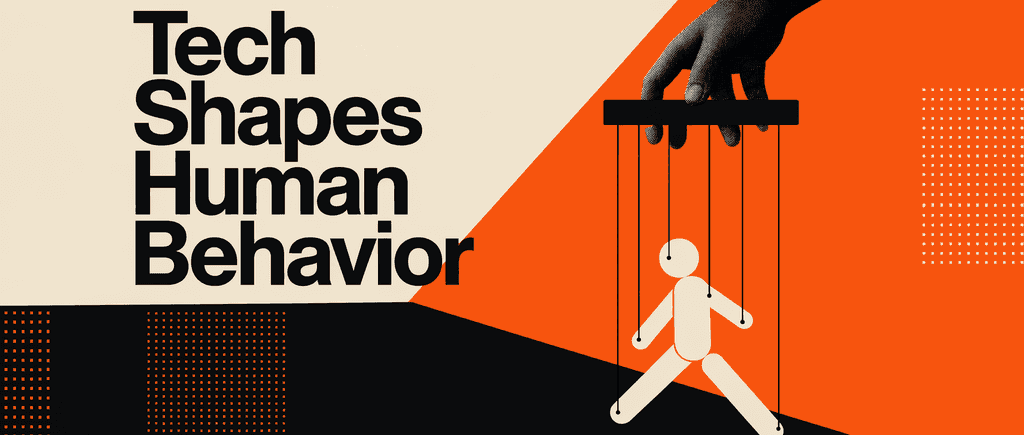
We should focus on the puppet master rather than the puppet, as Shoshana Zuboff suggests in "The Age of Surveillance Capitalism." Our fear of robot takeovers makes it easier to blame robots than to address underlying issues like unchecked corporate profit motives, privacy concerns, or design biases.
Our design decisions matter because technologies inherently embody social and political power. We need improved diversity and ethics in technology education, stronger consumer protection regulations, and constitutional safeguards against manipulative robot design. Robots might actually help prompt these important conversations, as people respond more viscerally to physical robots than to abstract technologies like satellite imaging.
Глава 10
The Question of Robot Rights
In science fiction like Westworld, humanoid robots are abused until they inevitably revolt. These narratives typically suggest that once robots become sufficiently humanlike in emotions and consciousness, they deserve rights-with those opposing such rights portrayed as bigots.
However, animal rights history offers a more realistic framework for understanding how robot rights might evolve. Despite consistent philosophical theories, there's a stark contrast between how we think we should treat nonhumans and our actual behavior.
Western philosophers have long debated robot rights, questioning which capabilities would qualify machines for moral consideration. From Capek's R.U.R. to Star Trek's Data, the criteria typically center on consciousness, intelligence, and ability to suffer-with some arguing we should err on the side of granting rights when uncertain.
Similarly, animal rights philosophy spans centuries, from Pythagoras's vegetarianism to Aristotle's hierarchy placing animals below humans. Descartes viewed animals as unfeeling machines, but later thinkers like Bentham shifted focus to suffering: "The question is not, Can they reason? nor Can they talk? but, Can they suffer?"
The history of animal rights reveals inconsistent treatment across cultures and time periods. Early European animal protection laws specifically targeted the behavior of the poor while exempting upper-class activities like fox hunting and horse racing. Despite this classist approach, genuine empathy drove many activists like "Humanity Dick" Martin and Henry Bergh (ASPCA founder).
Though philosophy influenced some, emotional appeals created the real momentum for change. The first Society for Prevention of Cruelty to Animals in England distributed heart-wrenching pamphlets about abused horses to sway public opinion. Empathy, not abstract philosophy, has consistently been the catalyst for animal protection movements throughout history.
Our treatment of animals reveals profound inconsistencies in our moral framework. While we've made progress banning practices like dog and cat consumption (only outlawed in the US in 2018), we continue industrial-scale slaughter of equally sentient animals. The United States leads global meat production, which is projected to double by 2050 despite evidence that pigs suffer as much as dogs.
This hypocrisy extends to recreational animal activities: we've banned cockfighting nationwide while accepting horse racing deaths because the latter is "the pastime of the rich." Our protection of animals is driven not by consistent philosophical principles but by emotional connections, cultural factors, and class biases.
Глава 11
Empathy in the Age of Machines
My uncomfortable experience with Pleo sparked years of research into how humans empathize with robots. Most people treat robots like living things, despite knowing better. In a workshop I conducted with Hannes Gassert, we gave participants Pleo dinosaur robots to play with and bond with. After they named and dressed their robots, we shocked them by demanding they punish the robots for "trying to escape." Everyone refused to hurt the robots, with some participants physically protecting them.
Even when we escalated to threatening destruction with hammers and hatchets, participants were visibly distressed. One woman couldn't bring herself to strike another group's robot, and when someone finally did destroy one Pleo, the room fell into a stunned silence. Despite participants rationally knowing these were just machines, their faces and actions revealed genuine emotional attachment.
Instead of worrying about robot uprisings, we should consider what happens to us when we mistreat robots. Even with today's technology, people develop uncomfortable feelings about robot abuse. Major tech companies have added features encouraging children to speak politely to voice assistants in response to parent complaints.
For adults, should we permit "Westworld"-style robot abuse parks where people can act out violent impulses? Charlie Brooker of "Black Mirror" wondered whether such activities might "train people's cruelty muscles." Despite decades of research on video games, we lack conclusive evidence about whether virtual violence leads to real aggression.
Looking to animal cruelty research provides some insight-animal abuse is often linked with domestic violence and child abuse, leading to cross-reporting laws in many states. However, it remains unclear whether animal abuse causes increased violence or merely indicates it. When testing people's empathy for robots in lab settings, researchers found those scoring high on empathy tests hesitated more before striking simple robot bugs, suggesting our treatment of robots might reflect our general capacity for empathy.
Our treatment of animals isn't guided by philosophical theories but by emotional and cultural relationships-explaining why some cow-eating communities refuse to eat horses. Similarly, our approach to robots will likely follow emotional intuition rather than academic evidence. Our empathy for robots mirrors our psychology, holding up a reflective mirror to our humanity.
Despite criticism that empathy is a poor moral guide leading to irrational decisions, our emotional connections remain essential. Without empathy, would we have the same human rights movements or charitable impulses? Pure rationality has its own flaws-we often dislike people who follow rules without emotion (ironically calling them "robots").
Глава 12
Shaping Our Technological Future
Technology predictions consistently humble us-from Marvin Minsky's 1960s assumption that machine vision would take a summer to solve, to Toyota's unfulfilled 2005 promise of eldercare robots by 2010, to Elon Musk's bold claim that AI will outsmart humans within five years. The question shouldn't be whether we'll replace humans with robots in the next few decades, but why we'd want to.
Creating mere human replicas seems shortsighted when we could develop technology that extends our abilities in unprecedented ways-like the farmer-oxen teams that revolutionized agriculture. Viewing robots as a new species with different intelligence and skills, rather than as human replacements, aligns better with reality and helps us address the true challenges: ensuring technology advances human flourishing rather than enabling cost-cutting at society's expense.
As robotics rapidly expands-with industrial robot sales projected to grow 12% yearly and service robots increasing by 61% between 2017-2018-we face a future where autonomous machines will increasingly inhabit our physical spaces. These robots won't merely become part of our lives; they'll reveal deeper truths about our humanity.
We already relate to some robots as entities between beings and objects, similar to how we've placed animals in morally conflicting roles from food to companions. This parallel helps us understand the political, moral, and emotional choices we'll face as robots become our partners rather than our replacements.
By thinking of robots as a new breed rather than human replacements, we can better shape our technological future-one where machines extend and complement our abilities rather than simply automating us out of existence. The question isn't whether robots will replace us, but how we choose to integrate them into our world in ways that enhance human flourishing and create new possibilities for collaboration between humans and machines.