Глава 1
A Perfect Storm of Secrets in the Scottish Highlands
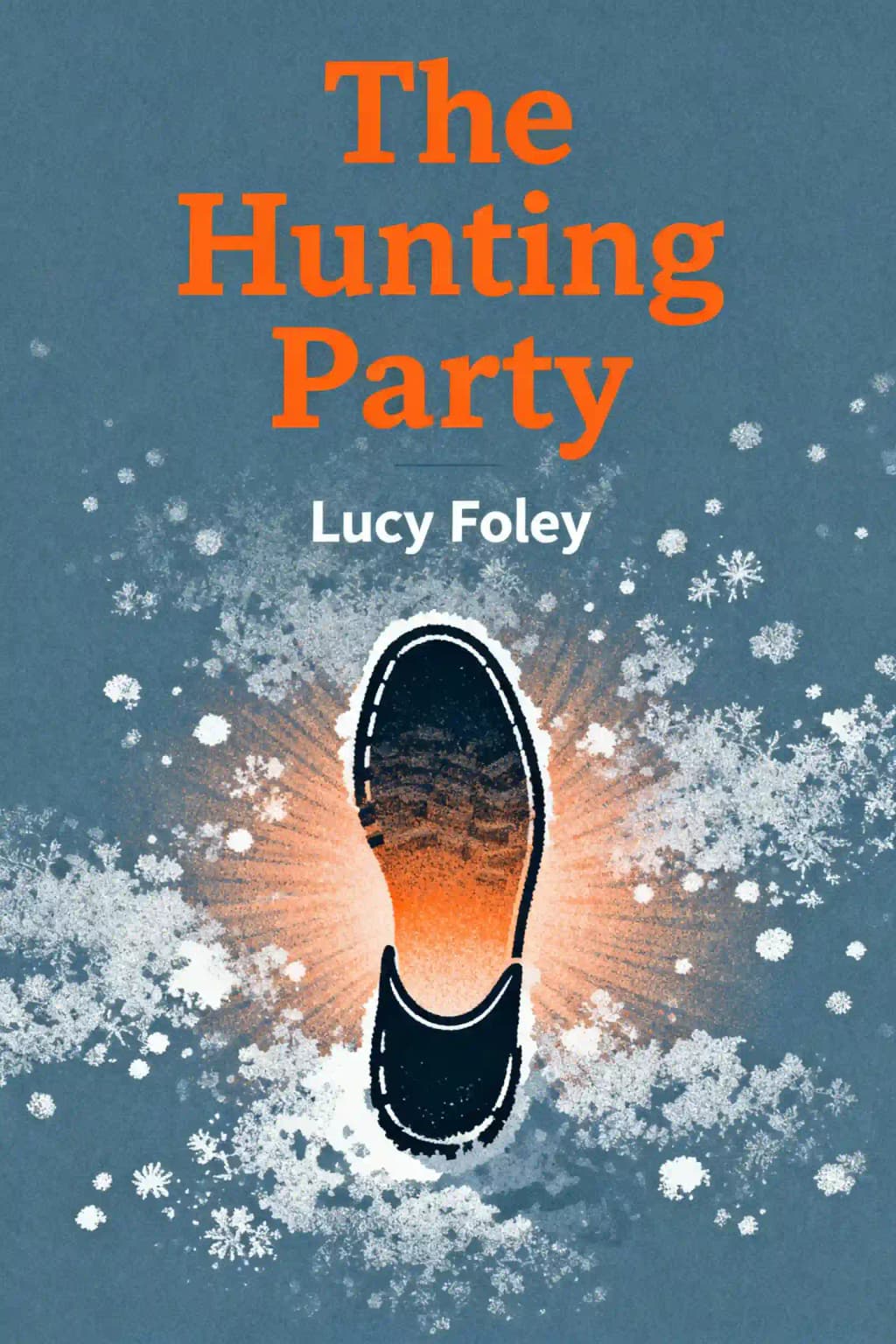
Lucy Foley's "The Hunting Party" has become a cultural phenomenon since its release, with celebrities like Reese Witherspoon and Stephen King praising its tightly wound suspense. This atmospheric thriller has been likened to Agatha Christie meets "The Secret History" - a modern locked-room mystery that explores how well we truly know our closest friends. The novel's popularity surged during the pandemic when readers craved escapist thrillers, and its success paved the way for Foley's subsequent bestseller "The Guest List." What makes this book particularly compelling is how it transforms a familiar premise - friends gathered in an isolated location where tensions rise and secrets emerge - into something fresh and psychologically astute. As you settle in for this journey into the Scottish Highlands, prepare for a masterclass in misdirection where everyone has something to hide.
Глава 2
A Deadly New Year's Reunion
The story begins with a chilling discovery - a body found in the snow near an exclusive Highland wilderness retreat called Loch Corrin. Heather, the lodge manager, is informed by Doug, the gamekeeper, that one of the guests has been found dead under suspicious circumstances. The narrative then rewinds three days to reveal the events leading up to this grim discovery.
A group of Oxford University friends has gathered for their annual New Year's celebration at this remote Scottish lodge. Emma, who meticulously planned the trip a year in advance, is determined to create the perfect holiday experience with Highland dinners and New Year's feasts. The group includes Miranda and Julien (the golden couple), Nick and his American boyfriend Bo, Samira and Giles with their baby Priya, Mark and Emma, and Katie, the only single member of the group.
From the moment they arrive at the isolated estate - accessible only by a single track that could easily become impassable in heavy snow - there's a sense of unease. The gamekeeper Doug, a taciturn former Marine with wild dark hair, drives them to the lodge, making it clear how truly remote they are: "an hour's drive to the nearest road in good weather, longer in poor conditions." The modernist glass lodge sits like "a spaceship landed on the loch bank," creating an unsettling fishbowl effect where the bright interior contrasts with the dark wilderness outside.
The friends quickly fall into familiar patterns, with the men resuming their Oxford camaraderie while drinking heavily. But beneath the surface of their reunion lies a web of tensions and secrets. Miranda flirts openly with Doug, Nick and his boyfriend keep to themselves, and Katie seems unusually withdrawn. When Heather mentions there will be other guests - an Icelandic couple staying in the bunkhouse - Emma is visibly upset, having been promised exclusive use of the property.
As they settle in, Heather warns them about two important safety issues: the rapidly changing weather conditions that make hiking dangerous, and the presence of poachers with hunting rifles. These warnings foreshadow the danger to come, establishing the isolation and vulnerability of their situation. Despite these ominous notes, the friends raise their glasses in celebration, unaware that for one of them, this New Year's gathering will be their last.
Глава 3
The Facade of Friendship
As the narrative unfolds, we discover that beneath the veneer of camaraderie lies a complex web of resentments, jealousies, and betrayals that have festered for years. Miranda, the magnetic center of the group, maintains a carefully curated image of perfection while harboring deep insecurities. She treats Emma as a reliable companion who never challenges her, noting that "Emma's become my reliable companion-always up for cinema, shopping, or drinks. I choose the venue, she agrees." This dynamic gives Miranda "a delicious sense of power," revealing how their friendship is built on an unhealthy power imbalance.
Miranda's relationship with Katie is even more complicated. They've been friends since school days in Sussex, where Miranda was "the golden girl with money" who inexplicably chose mousey Katie as her friend. Katie reflects that Miranda "could have had anyone" and wonders if she "liked challenging expectations." Their friendship has always been unbalanced, with Katie playing "the introvert to Miranda's extrovert," the "understudy" to the star.
The relationship between Miranda and Samira has also deteriorated since Samira became a mother. Miranda treats Samira with dismissive indifference, wounding her visibly with her lack of interest in baby Priya. Katie observes that "Miranda's indifference to the baby" might mask "personal pain" related to her own fertility struggles with Julien.
The men's relationships are equally fraught. Mark harbors an obsession with Miranda that dates back to their university days, when he would wait "outside her room for hours" and stare "intensely at her during a barbecue." Julien, Miranda's husband, maintains a facade of charm that masks his own secrets and insecurities about his humble background. Nick resents Miranda for outing him to his parents during their university years, believing she did it deliberately "to cause trouble" between him and Katie.
As they gather for dinner on their first night, they seem "like actors performing friendship-laughing too hard, drinking too much, watching each other warily." Their interactions are performative rather than genuine, revealing how time and circumstances have eroded the foundations of their once-close relationships. The arrival of the Icelandic couple creates additional tension, disrupting the closed ecosystem of their group dynamic and forcing them to maintain their performance for outsiders.
This facade begins to crack during a New Year's Eve game of Truth or Dare, when Miranda reveals she slept with someone from university, causing Giles visible distress. Later, Emma overhears Miranda and Giles arguing about this revelation, with Giles worried that his wife Samira might figure out it was him. Their heated exchange reveals that Miranda and Giles had a past relationship that they've kept secret from the group, adding another layer to the deception that permeates their friendships.
Глава 4
Dark Histories and Hidden Traumas
Each character in "The Hunting Party" carries a burden from their past that shapes their present behavior and contributes to the mounting tension at the lodge. Doug, the gamekeeper, is haunted by his military service and a violent incident that led to his isolation in the Highlands. After surviving a Taliban attack under "murky circumstances" where he was the only survivor of his regiment, Doug struggled with undiagnosed PTSD. Three months after returning from Afghanistan, he nearly strangled a man in a Glasgow bar who called him a "coward." Though he received community service rather than jail time due to extenuating circumstances, the incident left him deeply scarred.
Doug now lives a spartan existence in his remote cottage, plagued by insomnia and occasional "fugue states" where he wakes far from home with no memory of how he got there. He chose this isolated posting because "someone like him has a duty to stay away" from normal society. He sees himself as "a catastrophe" who might harm others if he allows himself to get close to them.
Heather, the lodge manager, is similarly escaping a traumatic past. After losing her partner of fifteen years, Jamie, a firefighter who died from smoke inhalation, she retreated to this remote location where "the landscape suits [her] loneliness." In the city, everything reminded her of him - "our apartment, cafes, bookshops" - while in the Highlands, she can "howl [her] misery at the mountains and the loch." She reveals that coming to the lodge was "almost like dying, but more palatable than the pills and bridge jump" she had contemplated after Jamie's death.
Miranda carries the trauma of being stalked for years, something she's transformed into a "dinner party routine" but which still haunts her. Her stalker knew intimate details about her life, including her shoplifting habit at Oxford and a pregnancy scare after cheating on Julien. Though the stalking apparently stopped years ago, she still experiences "that prickling feeling of being watched" and has "nightmares when Julien is away."
Emma's dark history is perhaps the most disturbing. She reveals that she never felt like "a real person" and developed a habit of "collecting personalities rather than developing her own." After being removed from multiple schools for stalking classmates, she became obsessed with Miranda during Oxford interviews, seeing her as "the perfect 'host' for Emma's parasitic personality." This revelation casts her meticulous planning of the New Year's gathering and her eagerness to please Miranda in a sinister light.
Even Katie, who appears to be the most straightforward character, harbors secrets. Her unexpected pregnancy and affair with Julien have created a web of deception that threatens to unravel the entire group. Her complicated feelings toward Miranda - "sometimes hating her but always loving her" - reveal the ambivalence at the heart of their friendship.
These dark histories converge at the isolated lodge, creating a pressure cooker environment where past traumas inevitably resurface. As Heather observes, Jamie's theory about the "lizard brain" proves true: stress reveals the animal nature beneath the civilized veneer, exposing the characters' most primal instincts and dangerous capabilities.
Глава 5
The Primal Hunt
The deer stalking expedition becomes a pivotal moment in the narrative, awakening something primitive in the group that foreshadows the violence to come. As they prepare for the hunt, Doug outfits them with waterproof gear and rifles from a barn secured with a modern keypad lock. The presence of "ten lethal-looking rifles" introduces a Chekhov's gun element to the story - we know one of these weapons will eventually be used for murder.
During target practice, the men become "absurdly competitive," their civilized facades giving way to more aggressive instincts. Julien's "jaw tightens with each shot," Mark wears "a snarl," and even "mild-mannered Giles seems transformed." The women respond differently: Katie "barely tries," Samira shows "intense focus reminiscent of her rowing days," and Emma surprisingly "excels," earning Doug's praise about women being "more accurate, more deadly" - an observation that becomes chillingly prophetic.
As they trek through the "brutal cold and boggy heather," Doug notices a change in the group that began with the rifles. At first they "flinched at each shot, but quickly grew comfortable, even competitive." He recognizes that "something primeval has been awakened" - what hunters call "buck fever." Doug understands that "they don't understand how killing will change them, how an innocence they didn't know they possessed will be forsaken."
The hunt culminates with Emma shooting an old, limping doe. After the "thunderclap of noise," the doe staggers, "her chest suddenly a mass of red." Doug approaches the dying animal, makes eye contact, then delivers "the merciful knife thrust to the base of her skull." Following tradition, he dips his fingers in the wound and anoints Emma's forehead and cheeks with the blood - a ritual that marks her transformation and foreshadows her later violence.
The aftermath of the hunt reveals how deeply affected the group is by this brush with death. Katie feels queasy at dinner as "bloody juices seep out" of the venison Wellington, thinking of "the deer staggering to its knees." The experience has stripped away another layer of civilization, bringing them closer to their primal instincts. Doug observes that the "harsh landscape has made them edgy, revealing how isolated they truly are."
This hunting expedition serves as both literal and metaphorical preparation for the human hunt that will follow. The friends have been stalking each other for years through subtle aggressions and manipulations. Now, in this remote wilderness where the normal rules of society feel distant, those hunting instincts are directed at each other with deadly consequences.
Глава 6
Betrayal in the Wilderness
The New Year's Eve celebration marks the point where long-simmering tensions finally erupt into open conflict. As midnight approaches, the atmosphere grows increasingly chaotic. Julien, Giles, and Mark crash through a glass coffee table, "sending shards skidding everywhere." The countdown to midnight feels "ominous, like waiting for a bomb to explode," and when fireworks erupt, they sound like "a scream-like sound, reflected in a thousand tiny fragments on the water."
The traditional New Year's kisses reveal the fractures in the group's relationships. Miranda deliberately avoids Mark's lips, "catching his flash of anger," and feels Julien is "suddenly a stranger," turning slightly so her kiss "lands on the corner of his mouth." Nick's cryptic comment - "I think you know the answer to that" when Miranda asks why they've never been better friends - leaves her feeling cold and isolated.
The ultimate betrayal is revealed on New Year's Day, when Miranda discovers her husband Julien and her oldest friend Katie in the sauna together, with "her husband Julien with his head between Katie's legs, her oldest friend completely nude." This moment of discovery is devastating not just for the sexual betrayal, but because it involves her closest friend. The betrayal is compounded when Miranda realizes Katie is pregnant, which feels like "an even greater theft than the affair, as if Katie has stolen what should have been Miranda's baby."
In the confrontation that follows, Miranda threatens to expose Julien's insider trading crimes, which could send him to prison. Despite his protests that it would "ruin them both financially," Miranda is determined to have her revenge, declaring, "You're welcome to each other." Later, when Julien follows Miranda outside wearing only a towel, he pathetically tries to blame Katie, claiming she "seduced" him, then accidentally reveals they'd also slept together years earlier in Ibiza "while Miranda was at her grandmother's funeral."
The layers of betrayal extend beyond the central love triangle. We learn that Mark knew about Julien's affair with Katie and didn't tell Miranda, despite his supposed obsession with her. Giles and Miranda had a past relationship that they've kept secret from Samira and the rest of the group. Even Emma, who presents herself as Miranda's loyal friend, harbors resentment and obsession beneath her supportive exterior.
In this isolated wilderness setting, far from the social constraints of their London lives, these betrayals can no longer be contained or ignored. The remote location strips away their ability to retreat to separate corners or distract themselves with work and routine. Forced to confront the reality of their fractured relationships, the characters reach a breaking point that leads to violence.
Глава 7
The Perfect Murder
As the narrative approaches its climax, the pieces of the murder mystery fall into place with shocking clarity. After discovering Julien and Katie's betrayal, Miranda writes a note to Julien, her hand "shaking violently" as she tears "through the paper twice." Her intention is clear - "to destroy him completely, just as he has destroyed everything she thought she knew."
In her distress, Miranda visits Emma's cabin, finding it "meticulously neat" - a stark contrast to her own messy cabin. Emma welcomes her without questions and offers whisky, which Miranda gratefully accepts. What seems like an act of friendship is revealed to be something far more sinister when Emma confesses her disturbing obsession with Miranda. Horrified by this revelation, Miranda flees the cabin with Emma pursuing her.
Later that night, desperate and drunk, Miranda knocks on Doug's door at 4 AM, forcing her way inside with champagne. When he rejects her sexual advances, she taunts him, calling him a "fucking coward" - words that trigger his PTSD and unleash "the red flood of his anger." This encounter initially seems to implicate Doug in Miranda's murder, creating a red herring that distracts from the true killer.
The truth is finally revealed when Emma steals the rifle from the storeroom, having memorized Doug's passcode. When she confronts Katie by the snow-covered loch, she blames Katie and Julien's affair for upsetting Miranda and "causing everything that happened." As Katie realizes Emma killed Miranda, Emma raises the rifle and shoots her in the chest. The murder is witnessed by Doug and Heather, who arrive just in time for Heather to knock Katie out of the way, taking the bullet herself.
Emma's trial is described as "a travesty." She transforms herself into "a meek, contrite figure with mousy hair and modest clothing," claiming Miranda's death was an accident during self-defense. Despite overwhelming evidence, the jury can't convict "this well-spoken woman of murder," resulting in just a four-year manslaughter sentence.
The perfect murder, in this case, isn't just about the physical act but about the psychological manipulation that preceded and followed it. Emma's obsession with Miranda, her careful cultivation of a harmless persona, and her ability to transform herself for the trial all demonstrate her calculating nature. She killed not out of passion or fear, but out of a twisted desire to possess Miranda completely - if not in life, then in death, by becoming the center of the narrative about her.
Глава 8
The Loch as Witness
Throughout the novel, the loch serves as both a literal setting and a powerful metaphor for the hidden depths of the characters' psyches. When the friends first arrive, they sit on the jetty, "subdued despite the champagne, perhaps awed by their surroundings-vast black peaks, enormous night sky, and pervasive quiet." The loch appears as a "silver loch framed by black trees," creating a stark contrast between light and dark that mirrors the duality within each character.
For Heather, the loch holds profound spiritual significance. She describes it as her "sanctuary," her "church"-normally "a perfect mirror reflecting the mountains and trees," but on the day of the murder, its surface is "clouded and scarred by ice." This change in the loch's appearance parallels the disruption of Heather's newfound peace by the violence that has invaded her refuge.
Heather reveals that when she first arrived at Loch Corrin, she "waded into its freezing depths with no intention of returning." But something happened-"some essential survival instinct took over as the cold gripped me. I discovered life inside me, powerful and insuperable." Now she swims every morning, especially when it's below freezing and she must "break the ice." The shocking cold "squeezes all thoughts from my mind, making me feel truly alive without the weight of everything upon me."
The loch also witnesses key moments in the unfolding drama. It's by the loch that the friends celebrate New Year's Eve, with fireworks creating "a scream-like sound, reflected in a thousand tiny fragments on the water." It's along the loch path that Miranda flees from Emma after her disturbing confession. And ultimately, it's beside the loch that Emma confronts Katie with the rifle, leading to the final act of violence.
The body is discovered near a waterfall bridge overlooking a ravine, where the victim lies with "skin greyish-blue, hair spilling behind the head" and "a rust-colored halo of blood around the head." This grim tableau, with the natural beauty of the landscape contrasting with the ugliness of murder, encapsulates the novel's exploration of the darkness that lurks beneath beautiful surfaces.
Like the loch itself, which appears placid on the surface but contains hidden depths and dangerous currents, the characters present carefully constructed facades that conceal their true natures. The remote Highland setting, with its harsh beauty and isolation, strips away these pretenses, forcing the characters to confront both the darkness within themselves and the truth about their relationships.
Глава 9
The Aftermath of Tragedy
The novel's epilogue reveals the devastating impact of Miranda's murder on the once-tight group of friends. Katie, now weeks away from giving birth to a daughter, works "long hours as a distraction from her grief for Miranda." Despite their complicated friendship-"sometimes hating her but always loving her"-Katie mourns the "uniquely fierce friend who rescued her as a teenager."
The friend group has "disintegrated without Miranda as its center." Like planets that have lost their sun, they drift apart without the gravitational force that once held them together. Samira and Giles continue their "suburban life," Nick and Bo are "moving to New York," Mark has "found another Miranda-substitute," and Julien is "detoxing in Goa with a yoga instructor."
Katie, forever linked to Julien through their child, craves "friends who know her for who she is now, not who she used to be." She's cautiously beginning to socialize with colleagues, including "a promising litigation lawyer named Tom," suggesting the possibility of a new beginning after the tragedy.
Emma's light sentence-"just a four-year manslaughter sentence" despite the premeditated nature of her crime-adds another layer of injustice to the tragedy. Her ability to transform herself into "a meek, contrite figure" for the trial demonstrates her continuing talent for manipulation and performance, suggesting she remains dangerous despite being caught.
The aftermath reveals how fragile their friendships were all along. Without Miranda at the center, the carefully maintained illusion of closeness collapses completely. The annual New Year's gathering, once a cherished tradition that gave them "a tribal sense of affiliation," is now irreparably tainted by violence and betrayal.
The tragedy also exposes the dangers of not truly knowing those closest to us. None of the friends recognized Emma's dangerous obsession with Miranda or understood the depths of her capability for violence. Their failure to see beneath her carefully constructed persona had fatal consequences, raising the unsettling question of how well we can ever really know another person.
In the end, the hunting party's isolation in the Scottish Highlands served as both literal setting and metaphor for their emotional isolation from each other. Despite years of friendship, they remained strangers in fundamental ways, hunting each other with words and actions until one of them took that hunt to its deadly conclusion.
Глава 10
When the Mask Finally Slips
The most chilling aspect of "The Hunting Party" is how it reveals the gap between appearance and reality in human relationships. Emma, who seemed the most harmless and devoted member of the group, proves to be the most dangerous. Her confession to Miranda reveals the disturbing truth that she "never felt like 'a real person'" and developed a habit of "collecting personalities rather than developing her own."
Emma's obsession with Miranda began during their Oxford interviews, when she became "instantly obsessed with her magnetic personality and confidence." Miranda's self-absorption made her the perfect target, as she was "too self-absorbed to notice the void within Emma." This encounter marked "the beginning of Emma's long-term obsession with Miranda, setting the stage for years of calculated manipulation."
What makes Emma's character particularly disturbing is her awareness of her own emptiness. Unlike the other characters, who deceive themselves as much as others, Emma knows exactly what she is - or rather, what she isn't. Her meticulous planning of the New Year's gathering, her careful observation of the group's dynamics, and her ultimate violence all stem from this fundamental hollowness at her core.
The revelation of Emma as the killer forces us to reconsider every interaction we've witnessed through her perspective. Her concern about the ingredients for her elaborate meals, her distress over the broken glass coffee table, her apparent devotion to Miranda - all take on a sinister new meaning when we understand the obsession driving them. Even her excellence at shooting during the deer hunt appears in a new light - not as a surprising talent but as evidence of her capacity for calculated violence.
Emma's transformation during her trial - becoming "a meek, contrite figure with mousy hair and modest clothing" - demonstrates her continuing ability to adapt her persona to suit her needs. This chameleon-like quality makes her the most dangerous kind of predator - one who can blend seamlessly into any environment, showing others exactly what they expect to see.
In the end, "The Hunting Party" suggests that the most frightening monsters are not the obvious ones like Doug, with his history of violence and PTSD, but those hiding in plain sight, wearing the mask of friendship while harboring deadly obsessions. The true horror lies not in the isolated Highland wilderness with its brutal weather and physical dangers, but in the wilderness of the human heart, where dark currents flow beneath seemingly placid surfaces.
The novel leaves us with an unsettling question: How many Emmas might be in our own lives, watching and waiting, collecting personalities instead of developing their own, and harboring obsessions that could one day turn deadly? In this way, Foley transforms a classic locked-room mystery into a profound meditation on identity, friendship, and the unknowable nature of those we think we know best.