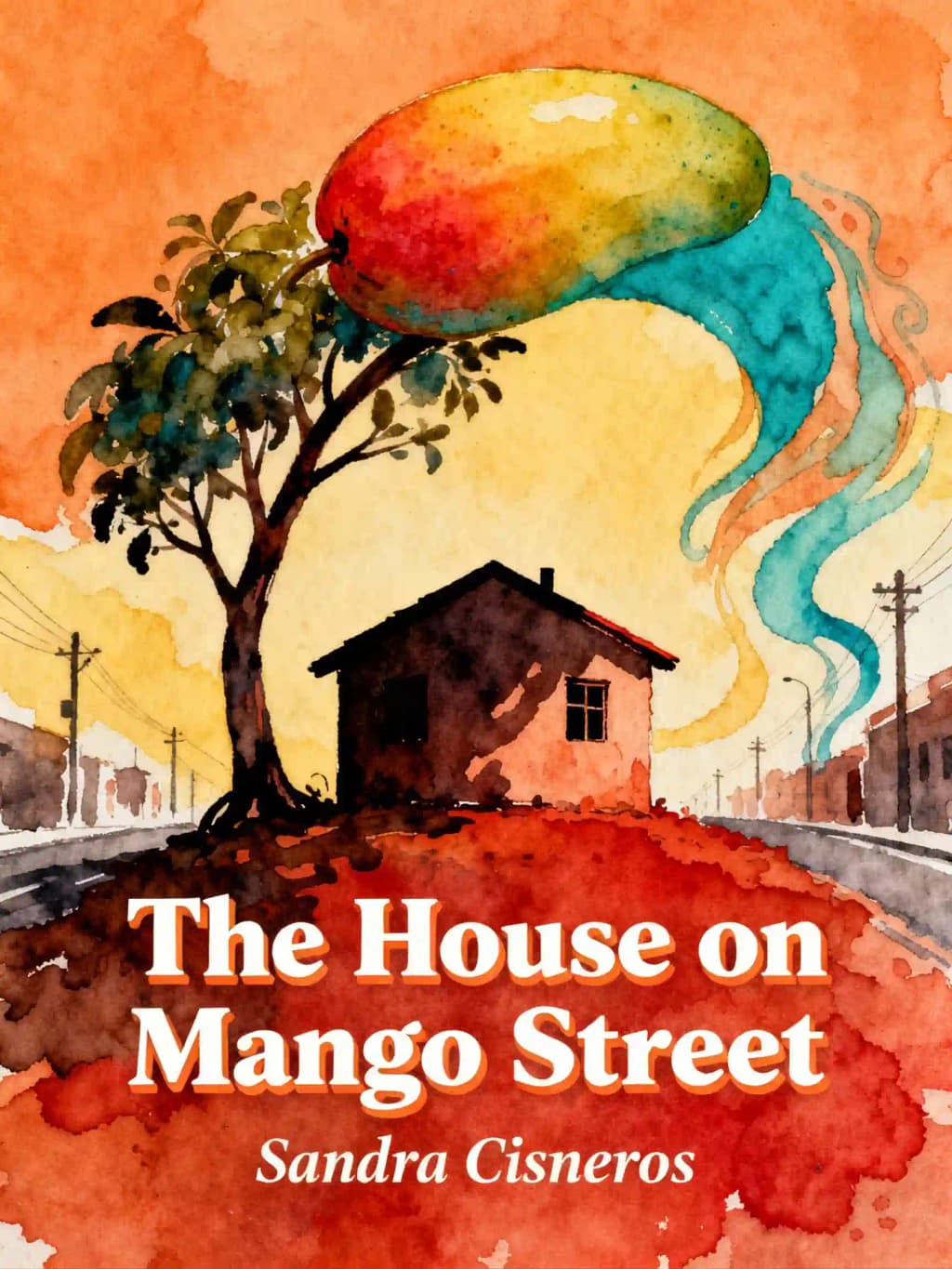
Cisneros' poetic vignettes of Latina girlhood have sold six million copies, inspiring a generation of Latinx writers. This 1985 American Book Award winner tackles identity, oppression, and belonging - required reading that transformed how we understand the Hispanic-American experience.
Sandra Cisneros is the acclaimed Chicana author of The House on Mango Street, a seminal work in contemporary Hispanic-American literature.
Born in 1954 in Chicago to a Mexican-American family, Cisneros draws on her experiences of cultural hybridity and economic hardship to craft narratives exploring identity, gender, and belonging.
Her groundbreaking novel, blending poetic vignettes with coming-of-age themes, reflects her upbringing as the only daughter among six brothers in a working-class neighborhood.
A recipient of the American Book Award and MacArthur "Genius Grant," Cisneros pioneered Latina voices in mainstream literature through works like Woman Hollering Creek and Other Stories and the generational saga Caramelo.
Her writing, celebrated for its lyrical bilingualism and feminist perspectives, has been translated into over 20 languages. The House on Mango Street remains a cornerstone of U.S. educational curricula, with millions of copies sold worldwide since its 1984 publication.
The House on Mango Street follows Esperanza Cordero, a 12-year-old Chicana girl navigating life in a marginalized Chicago neighborhood. Through vignettes, Sandra Cisneros explores themes of identity, cultural belonging, and gender inequality as Esperanza dreams of escaping poverty and societal constraints to forge her own path. The novel blends lyrical prose with raw depictions of Latina womanhood and systemic oppression.
This book appeals to readers interested in coming-of-age stories, feminist literature, and Chicano cultural experiences. Educators, students, and fans of experimental narrative styles (vignettes) will appreciate its poetic depth. It’s particularly resonant for those exploring themes of identity, autonomy, and the immigrant experience in America.
Yes—it’s a critically acclaimed modern classic celebrated for its innovative structure and emotional authenticity. The novel’s exploration of systemic inequality, female agency, and cultural hybridity remains culturally urgent. Its brevity (110 pages) and accessible language make it ideal for classrooms and casual readers alike.
Key themes include:
The racially segregated Chicago neighborhood reflects systemic marginalization. Mango Street’s dilapidated houses and crowded streets symbolize unfulfilled immigrant dreams, while its tight-knit Latino community highlights cultural resilience. The setting underscores Esperanza’s dual desire to escape yet remain connected to her roots.
Esperanza’s envisioned house represents autonomy, creative freedom, and escape from gendered oppression. Unlike her family’s cramped Mango Street home, her fantasy house symbolizes self-ownership—a space where she can write and redefine her identity beyond marriage or motherhood.
The 44 vignettes mirror fragmented memory and adolescent perception. This structure emphasizes episodic moments of trauma, joy, and revelation, creating a mosaic of community life. It also reflects Esperanza’s nonlinear journey toward self-discovery.
Women like Sally, Rafaela, and Marin exemplify constrained agency under patriarchy. Their stories of abuse, isolation, and unrealized potential contrast with Esperanza’s determination to avoid their fates. Alicia, who studies despite her father’s disapproval, models quiet resistance.
The novel portrays the Chicano experience through language blending (Spanglish), traditions, and intergenerational conflicts. Esperanza’s ambivalence toward her heritage—pride in her roots vs. shame about poverty—captures the complexity of bicultural identity.
Some critique its lack of plot progression and mature themes (domestic violence, sexual assault) in a YA-oriented narrative. Others argue its feminist message risks oversimplifying systemic change. However, most praise its emotional authenticity and stylistic innovation.
“Esperanza” means “hope” in Spanish, reflecting her role as a resilient dreamer. She rejects its association with tragic heroines, seeking to “baptize herself under a new name” through writing—a metaphor for self-reinvention beyond societal labels.
Its themes of intersectional identity, immigrant struggles, and gendered violence remain pressing in debates about race, equity, and feminism. The novel’s focus on silenced voices resonates in movements like #MeToo and immigrant rights activism.
Почувствуйте книгу через голос автора
Превратите знания в увлекательные, богатые примерами идеи
Захватите ключевые идеи мгновенно для быстрого обучения
Наслаждайтесь книгой в весёлой и увлекательной форме
I put it down on paper and then the ghost does not ache so much.
But I know how these things go.
You live there?
Not a daddy's, A house all my own.
Разбейте ключевые идеи The House on Mango Street на понятные тезисы, чтобы понять, как инновационные команды создают, сотрудничают и растут.
Выделите из The House on Mango Street быстрые подсказки для запоминания, подчёркивающие ключевые принципы открытости, командной работы и творческой устойчивости.

Погрузитесь в The House on Mango Street через яркие истории, превращающие уроки инноваций в запоминающиеся и применимые моменты.
Задавайте любые вопросы, выбирайте голос и совместно создавайте идеи, которые действительно находят у вас отклик.

Создано выпускниками Колумбийского университета в Сан-Франциско
"Instead of endless scrolling, I just hit play on BeFreed. It saves me so much time."
"I never knew where to start with nonfiction—BeFreed’s book lists turned into podcasts gave me a clear path."
"Perfect balance between learning and entertainment. Finished ‘Thinking, Fast and Slow’ on my commute this week."
"Crazy how much I learned while walking the dog. BeFreed = small habits → big gains."
"Reading used to feel like a chore. Now it’s just part of my lifestyle."
"Feels effortless compared to reading. I’ve finished 6 books this month already."
"BeFreed turned my guilty doomscrolling into something that feels productive and inspiring."
"BeFreed turned my commute into learning time. 20-min podcasts are perfect for finishing books I never had time for."
"BeFreed replaced my podcast queue. Imagine Spotify for books — that’s it. 🙌"
"It is great for me to learn something from the book without reading it."
"The themed book list podcasts help me connect ideas across authors—like a guided audio journey."
"Makes me feel smarter every time before going to work"
Создано выпускниками Колумбийского университета в Сан-Франциско

Получите резюме книги «The House on Mango Street» в формате PDF или EPUB бесплатно. Распечатайте или читайте офлайн в любое время.
What does home mean when it disappoints you from the moment you arrive? The house on Mango Street-small, red, with crumbling bricks and windows so narrow they seem to squint-represents both triumph and betrayal. It's the first house Esperanza's family owns, free from landlords and shared yards, yet nothing like the dream her parents promised. The stairs lean like angry eyebrows. The front door swells in rain. A nun once spotted young Esperanza playing outside their previous apartment and asked, "You live there?" Her tone made Esperanza feel like nothing. That moment crystallized a determination: one day, she'd have a house she could point to without shame. But houses are never just buildings in this narrative-they're symbols of identity, repositories of dreams, markers of social status. While her parents call Mango Street "temporary" and soften reality with promises of "someday," Esperanza knows better. She's seen too many temporary situations become permanent, too many dreams defer to necessity. This tension between gratitude and disappointment colors everything, creating a space where past and future struggle to coexist.