Глава 1
Unlocking Your Inner Greatness: Life Lessons from a Leadership Journey
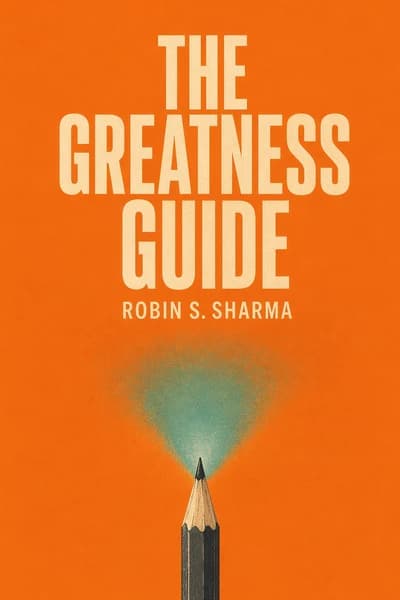
Have you ever wondered why some people seem to effortlessly achieve extraordinary success while others struggle to make an impact? Robin Sharma's "The Greatness Guide" offers a refreshing perspective that challenges conventional wisdom about leadership and personal excellence. This isn't your typical self-help book filled with abstract theories-it's a practical roadmap for unleashing your innate potential, regardless of your title or position.
Sharma's philosophy has attracted millions worldwide, including celebrities like Richard Branson and Fortune 500 executives who apply his principles to transform their organizations and lives. What makes this book particularly compelling is how it distills profound wisdom into bite-sized, actionable insights that feel like personal coaching sessions. In a world increasingly hungry for authentic leadership and meaningful success, Sharma's guide stands as a beacon for those ready to claim their greatness.
Глава 2
The Everyday Hero: Leadership Without a Title
Leadership isn't about your position, title, or office size-it's a mindset available to everyone. The most powerful leaders often operate without formal authority, demonstrating what Sharma calls "leadership without title." Consider the young woman at a luggage repair shop who, without hesitation, fixed the author's broken suitcase at no charge. She wasn't a manager or owner, yet she took full responsibility, made decisions on the spot, and delighted her customer. She embodied true leadership by becoming part of the solution rather than the problem. Similarly, a hospital janitor who takes the initiative to comfort worried families in waiting rooms, or a junior programmer who spots and prevents a critical error before it affects customers, exemplifies this principle in action.
This principle extends to every aspect of life. The street sweeper who performs so well "that all the hosts of heaven and earth will pause to say, 'here lived a great street sweeper who did his job well'" demonstrates leadership as powerfully as any CEO. A school cafeteria worker who learns students' names and dietary restrictions, creating a welcoming environment, is practicing leadership. The retail associate who goes beyond their job description to create innovative display solutions that boost sales embodies this same spirit. Leadership is about showing up fully, giving your complete brilliance, and playing full out-regardless of your role.
The most successful organizations understand this concept, creating what Sharma calls a "Culture of Leadership" where everyone thinks like an owner-entrepreneurial, proactive, solution-focused, and personally responsible for results. Companies like Ritz-Carlton empower every employee, from housekeepers to front desk staff, to spend up to $2,000 to solve guest problems without seeking approval. Southwest Airlines encourages flight attendants to use humor and creativity in their safety demonstrations, showing leadership through engagement. This doesn't mean everyone does the CEO's job (which would create chaos), but rather that everyone fully shows up in their role as a leader would, executing with an ownership mentality.
When you embrace leadership without title, you transform not just your workplace but your entire life. You stop waiting for permission to make a difference. You recognize that leadership begins with self-leadership-managing your thoughts, emotions, health, and time before attempting to influence others. This might mean starting a wellness initiative in your department without being asked, organizing community clean-up efforts in your neighborhood, or mentoring newer colleagues despite not having an official supervisory role. As Sharma puts it, "You can't help others breathe if you can't breathe yourself." This self-leadership extends to personal habits like maintaining a morning routine, continuous learning, and setting clear boundaries-all essential practices for leading effectively from any position.
Глава 3
The Power of Daily Disciplines: Small Actions, Extraordinary Results
Your days define your life in miniature. As you live your hours, so you create your years. What seems like insignificant daily choices-the books you read, the people you meet, the thoughts you entertain, even the small decisions about how you spend your first hour awake-compound over time to create your destiny. Success isn't about dramatic transformations but consistent application of fundamentals, much like how water shapes stone not through force but through persistent action.
Sharma emphasizes creating "Success Structures"-systems and rituals that consistently bring out your best performance. His personal practices include rising at 5 a.m. five times weekly (the "5 AM Club" method), a 60-minute "holy hour" divided into three 20-minute segments for exercise, reflection, and learning. He maintains five weekly workouts targeting different muscle groups, schedules weekly massage for recovery and stress management, follows a nutrition plan rich in whole foods and lean proteins, and practices daily journaling to process thoughts and track progress. His routine extends to reading across diverse genres for at least 30 minutes daily, reciting positive affirmations morning and evening, conducting detailed weekly planning sessions every Sunday, and deliberately seeking conversations with thought leaders and innovators in various fields.
The most successful people aren't necessarily more gifted than others-they simply take little steps each day toward their biggest life. They understand that extraordinary achievement always follows extraordinary effort, creating a compound effect over time. As Verizon CEO Ivan Seidenberg learned starting as a janitor, you must prove you're "worth it" through consistent dedication and improvement. Behind every remarkable accomplishment lies remarkable dedication-it's nature's law, just as a farmer must tend their crops daily for months before harvest.
Consider Michael Jordan, who became a basketball genius through relentless focus and daily improvement. He famously practiced his shots for hours before and after team practices, often arriving first and leaving last. His legendary "Breakfast Club" workouts began at 7 AM, where he combined strength training, skills practice, and conditioning. Or Thomas Edison, who registered 1,093 patents by concentrating on his inventions rather than scattering his efforts. He maintained strict working hours, often experimenting for 20 hours straight, taking only short naps between sessions. When Picasso was asked to do a quick sketch for a fan, he charged a million dollars, explaining: "It took me 30 years to do that masterpiece in 30 seconds." Each master had developed daily rituals that supported their genius.
The path to greatness isn't sexy or complicated-it's about working the basics of excellence with passionate consistency. Most people give up too early because their fears outweigh their faith, often abandoning their goals just before a breakthrough moment. But those who persist discover that days slip into weeks, weeks into months, and before they know it, they arrive at a place called Extraordinary. This journey requires what Sharma calls "the 1% Rule"-improving just one percent each day, which compounds to remarkable growth over time. Whether in business, athletics, arts, or personal development, the principle remains: small, consistent actions, performed with dedication and purpose, inevitably lead to extraordinary results.
Глава 4
Embracing Discomfort: Growth Happens at the Edges
Leadership begins on the extra mile-that space beyond what's required where few venture but where greatness is forged. It's shown by the salesperson making extra calls at day's end, the manager polishing a report beyond what's required, or the person who runs on frosty mornings not because it's fun but because it's wise.
True growth occurs when we leave our comfort zones. As Sharma notes, "Great achievement often happens when our backs are against the wall." Pressure enhances performance, and your true power emerges under heat. When explorer Hernando Cortes landed in Mexico in 1519, he ordered his lieutenant to "Burn our boats," eliminating retreat as an option. How differently would you show up each day if failure wasn't possible?
Many of us resist growth due to what Sharma calls the "Four F's Syndrome": FEAR (craving certainty), FAILURE (avoiding trying to avoid failing), FORGETTING (getting inspired but overwhelmed by daily demands), and FAITH (becoming cynical from past disappointments). Understanding these barriers helps overcome them, because awareness precedes success.
The most successful people don't just tolerate discomfort-they actively seek it out. They understand that challenges introduce us to our best, most brilliant selves. Easy times make us complacent; staying safe never made anyone bigger. As high-wire walker Papa Wallenda said: "Life is lived out on the wire. The rest is just waiting."
When you embrace discomfort, you discover that diamonds form under intense pressure, and remarkable human beings emerge when winning becomes the only option. The person who experiences most wins-so accelerate your learning by meeting interesting people, visiting new places, reading deep books, seizing opportunities, and failing often (which shows you're taking risks).
Глава 5
The Innovation Imperative: Challenge the Status Quo
"The enemy of the best is the good." This powerful mantra drives true innovators who relentlessly challenge the status quo and see the impossible as not just probable, but inevitable. They live from imagination, not memory, understanding that stagnation equals death while growth and continuous reinvention sustain life and create breakthrough opportunities.
Apple exemplifies this innovative mindset through their "insanely great" products, constantly improving rather than resting on success. From revolutionizing personal computing with the Macintosh to transforming mobile communications with the iPhone, they've consistently pushed boundaries. As Motorola CEO Ed Zander astutely observed, "At the height of success, 'break' your business." This principle extends beyond organizations to individuals - whether you're a CEO or entry-level employee, true leadership requires constant innovation in work approaches, relationship building, personal development, and worldview expansion.
Innovation demands the courage to be different and face criticism. If people aren't laughing at your ideas at least weekly, you're likely playing it too safe. History shows that most feared outcomes rarely materialize - Netflix was ridiculed for streaming when Blockbuster dominated, Tesla was mocked for electric cars in a gas-powered world, and Airbnb's concept of strangers staying in homes seemed absurd. Yet these companies thrived by running toward resistance and playing at life's edges. Great organizations create new benchmarks rather than merely following existing ones.
The marketplace doesn't need more copycats - it craves visionaries and revolutionaries who make us say "wow." As Tom's of Maine founder Tom Chappell emphasized: "Success means never letting the competition define you." Every genuine innovator faces initial skepticism - Columbus was derided for believing the world was round, the Wright Brothers were dismissed as crazy dreamers, BlackBerry's creators were told mobile email would never catch on, and Evian's founder was ridiculed for thinking people would pay for bottled water. Time validated their visions.
Roger Bannister's breaking of the four-minute mile in 1954 perfectly illustrates how "impossible" barriers are often mental constructs. Before his achievement, medical experts claimed it would cause death. Within weeks of his breakthrough, numerous runners replicated his feat - he had shattered not just a record, but a limiting belief. What's your personal four-minute mile? What assumptions are holding you back? Your mindset creates your reality; beliefs become self-fulfilling prophecies because they shape your actions and determine what you're willing to attempt.
Innovation requires maintaining a beginner's mind, staying curious, and questioning established norms. Companies like Amazon maintain their innovative edge through "Day 1" thinking - approaching each day as if it's the company's first, fighting bureaucracy and complacency. True innovators understand that today's success can become tomorrow's liability if it breeds complacency rather than continued experimentation and growth.
Глава 6
The Heart of Business: Relationships and Emotional Connection
Business isn't just about transactions-it's fundamentally about relationships and emotional connections. People do business with people they like, and customers don't buy with their heads but with their hearts. Today's marketplace competition isn't for war over customers' money but for their emotions and loyalty. Touch hearts and they'll return; engage emotions and they'll become raving fans who not only stay loyal but actively promote your business to others.
Consider Starbucks-I could get cheaper coffee elsewhere, but I love how Starbucks makes me feel. Their baristas learn regular customers' names, remember their usual orders, and create an atmosphere that feels like a comfortable third place between home and work. As neurologist Donald Calne explains, "Emotion leads to action while reason leads to conclusions." When customers merely like you, they'll leave for cheaper options, but when they love you, you become part of their family, earning loyalty even in tough times. Look at Apple's devoted following-their customers aren't just buying products; they're buying into a relationship with the brand and its values.
Building these connections requires genuine human interaction and consistent authenticity. The best performers in business don't hide behind desks or emails-they connect with people face-to-face whenever possible. When people like, know, and trust you, they'll help you succeed and stick with you through challenges. Top salespeople break bread with customers, remembering birthdays, asking about families, and showing genuine interest in their lives. They recognize that people don't buy products-they buy relationships and solutions to their problems.
Listening is perhaps the most powerful relationship-building tool, yet it's often the most underutilized. My mother wisely told me I was given two ears and one mouth for a reason: to listen twice as much as I speak. Listening intently to someone honors them and forges deep human connections. Most people's idea of listening is merely waiting for their turn to speak, rehearsing replies while others talk. True listening means being fully present, asking thoughtful follow-up questions, and remembering important details for future conversations.
Simple but powerful tactics for building human connections include: maintaining a consistently positive attitude even in difficult situations, speaking truthfully even when it's uncomfortable, being punctual to show you value others' time, using please and thank you genuinely, under-promising and over-delivering consistently, leaving people better than you found them through meaningful interactions, being friendly and caring beyond what's required, listening well without interrupting, becoming genuinely interested in others' lives and aspirations, and smiling often with authenticity. Most importantly, treat people with respect-always and in all circumstances. To get respect, give respect first and consistently.
Remember that every interaction, no matter how small, is an opportunity to strengthen or weaken a relationship. In the digital age, personal touches like handwritten notes, remembering personal details, and going the extra mile stand out even more. These emotional connections become your strongest competitive advantage because they can't be easily replicated by competitors or automated by technology.
Глава 7
Balancing Success and Significance: The Whole-Life Approach
True fulfillment comes from balancing success with significance-achieving your goals while making a meaningful difference in others' lives. Sharma calls this "The Mandela Balance," referring to Nelson Mandela's wisdom: "After climbing a great hill, one finds many more hills to climb. I've taken a moment to rest, to view the glorious vista, to look back on the distance I've come. But I can only rest for a moment... my long walk has not yet ended."
This balance involves savoring how far you've come and being grateful, while remembering your gifts come with responsibilities. Every human has a "duty to shine"-to serve others, realize more potential, and become better citizens. This drive is in our DNA.
Sharma identifies seven forms of wealth to develop for true fulfillment: INNER WEALTH (positive mindset, self-respect, spiritual connection); PHYSICAL WEALTH (health); FAMILY AND SOCIAL WEALTH (family happiness and deep connections); CAREER WEALTH (actualizing potential in your profession); ECONOMIC WEALTH (money to live well and give back); ADVENTURE WEALTH (mystery, challenge and creativity); and IMPACT WEALTH (making a difference).
The greatest regret of the wealthy clients Sharma has coached isn't insufficient money-it's losing their families while building their businesses. Put family and health at the top of your priority list. Being an extraordinary parent matters-kids grow up incredibly fast. Lead by example, actively develop your children through exposure to great experiences, and inspire them to see possibilities rather than limitations.
Your schedule reveals your actual priorities. If family time isn't in your schedule despite claiming it's a priority, then it's not truly your priority. The same applies to fitness, self-development, or any other value you profess. There can be no authentic success or lasting happiness when your schedule misaligns with your deepest values-what Sharma calls "The Integrity Gap."
Глава 8
Cultivating Self-Awareness: The Foundation of Growth
Extraordinary people are more reflective than most. They make time to think deeply, ask profound questions, and maintain awareness of their thoughts, emotions, and actions. One of Asia's top CEOs revealed his success secret to Sharma: "I make the time to think." Every morning, he spends at least 45 minutes in deep reflection-analyzing business challenges, considering new markets, contemplating life's meaning, or dreaming up growth opportunities.
Making time to think is a superb leadership strategy. Too many people focus solely on execution without ensuring they're climbing the right mountain. As Peter Drucker wisely noted: "There is nothing so useless as doing efficiently that which should not be done at all." Thoughtful reflection gives you clarity on priorities, makes your actions more deliberate, improves decision-making, reduces reactivity, and inspires big dreams.
Self-awareness also involves recognizing what's missing from your greatness. Awareness precedes choice, and choice precedes results-we cannot eliminate weaknesses we don't know about. One of our biggest deathbed regrets is not being reflective enough, not spending time in deep contemplation.
A powerful practice for maintaining perspective is what Sharma calls "dying daily"-connecting with your mortality each morning by asking, "How would I show up today if this day was my last?" As Steve Jobs observed, "Death is very likely the single best invention of life." Most people sleepwalk through existence, letting days slip into weeks, months into years, before realizing-too late-where the time went.
Reading great books is another essential practice for developing self-awareness. Reading allows brilliance to rub off on you. As Oliver Wendell Holmes observed: "A mind once stretched by a new idea can never return to its original dimensions." Sharma devotes at least an hour daily to reading, a habit that has transformed him. Remember, "Knowing how to read and not reading is almost the same as not knowing how to read."
Глава 9
The Courage to Be Authentic: Standing for Something Greater
In a world that often rewards conformity, true leadership requires the courage to be authentic-to stand for something greater than yourself and to live by your values even when it's difficult. As Sharma notes, "Being a leader isn't about being liked-it's about doing what's right."
Many leaders fear conflict, needing to be popular and cherished. They avoid ruffling feathers. But great leaders fearlessly make tough calls, speak their truth, and worry little about public opinion. While Sharma advocates treating people well and compassionately, being kind doesn't mean being weak. Extraordinary leadership balances tenderness with toughness, compassion with courage-part saint, part warrior.
This authenticity extends to finding your life's purpose-what Sharma calls "your Most Important To Do." An evangelist simply spreads good news-someone passionate about a big idea or cause who infects others with their enthusiasm. As children, we all had this passion for greatness, wanting to be superheroes or astronauts. But as we aged, fearful people mocked our dreams, disappointments accumulated, and we bought into the propaganda that we shouldn't think too big or love too much.
You are meant to shine and find a cause that moves you viscerally, getting you up at dawn with fire in your belly. Your mission might be developing people at work, innovating products, elevating communities, or helping those in need. When you find this purpose through reflection and soul-searching, you'll wake with that fire, unwilling to sleep, ready to move mountains.
Consider Dr. Garth Alfred Taylor, who embodied this authentic purpose. Born in Jamaica in 1944, this gifted eye surgeon lived by his motto: "I came into this world with nothing, and all I'm going to leave with is my conscience." For over 20 years, he traveled to developing nations restoring sight to thousands. His funeral church overflowed into the streets-a testament to a life of authentic purpose.
Глава 10
The Legacy Question: How Will You Be Remembered?
At life's end, we rarely regret not making more money. Instead, we regret places not visited, friendships not nurtured, risks not taken, and moments not spent with loved ones. Reading obituaries reveals what truly matters: family, friendships, community contribution, calculated risks, small acts of kindness, and love. No obituary mentions dying surrounded by lawyers and accountants-they speak of loved ones and impact.
To live on in the minds and hearts of future generations is to cheat death. Making a difference through your leadership and presence is finding immortality. Having lasting impact on human lives-whether as a champion at work, a great parent, or a community leader-means living forever. Impact and legacy are what matter most. Greatness comes from beginning something that outlasts you.
Consider these five questions as if today were your last: Did I dream richly? Did I live fully? Did I learn to let go? Did I love well? Did I leave the earth better? The best time to plant a tree was 20 years ago, but the second best time is today.
Each day presents a choice: blame what's not working or claim the gift hidden in adversity. The world needs more heroes who hunt for the best-in situations, in others, and in themselves. An extraordinary life isn't reserved for the chosen few with perfect teeth and royal pedigrees. We're all destined for greatness and spectacular lives-it's hardwired into our DNA.
But we must do our part, choice by choice and step by step. Small gains eventually yield giant results. Life wants us to win; we just need to participate in the process. So claim your greatness, mark your place under the sun, and stop being a prisoner of your past. It's never too late to become the person you've always dreamed of being.
As Archbishop Desmond Tutu said, no situation is untransformable, no person hopeless. Or as Mel Gibson's character in Braveheart put it: "Every one of us will die. But so few of us really live."