Глава 1
The Digital Immigrants' Dilemma
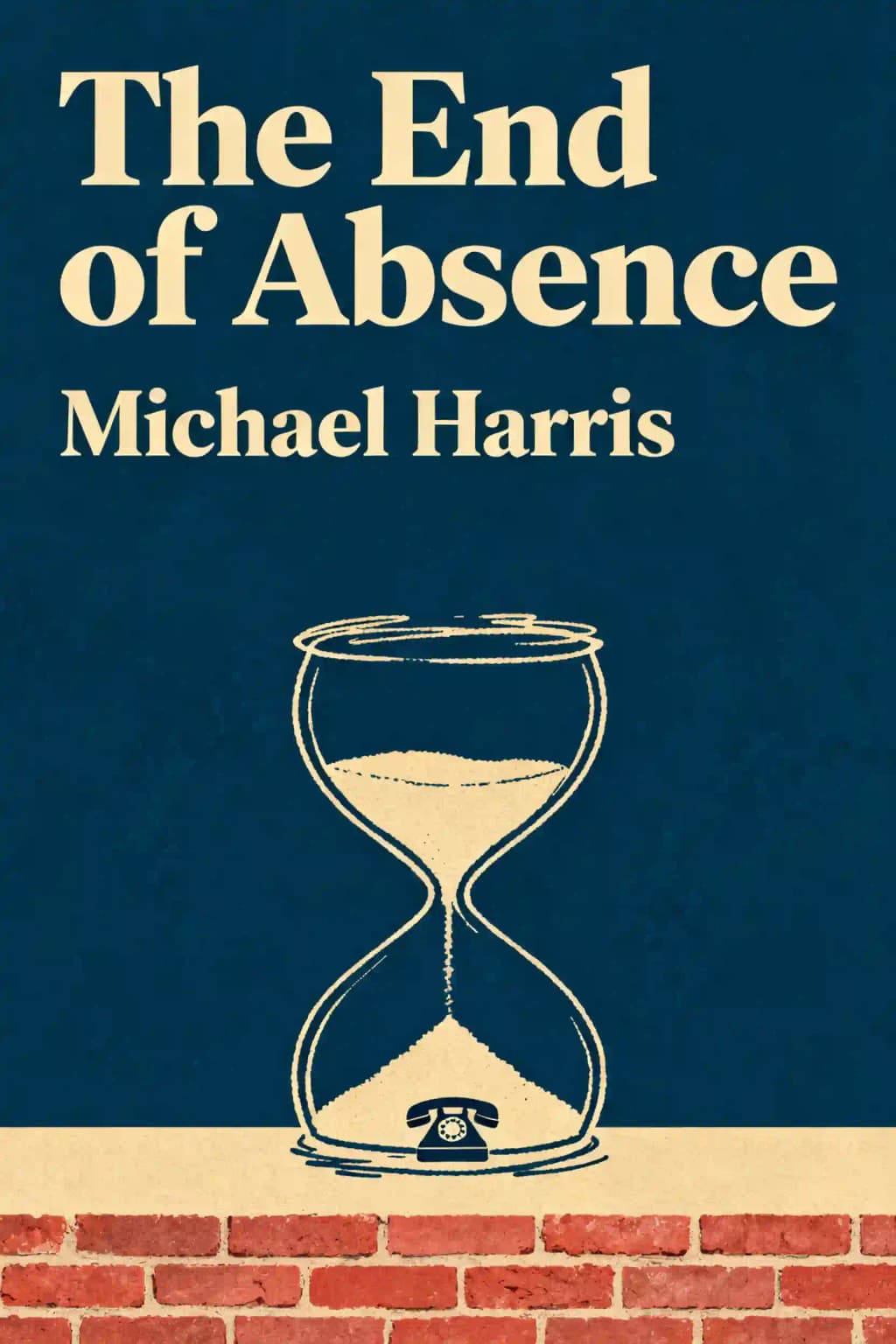
We stand at a unique historical moment-the brief window when people can still remember life before the Internet. For those born before 1985, we're making the pilgrimage from Before to After, digital immigrants with one foot in each world. This transition mirrors Gutenberg's invention of the printing press, though ours unfolds at lightning speed. What we're losing is absence itself-those gaps in our schedules, moments of boredom, sanctuaries of solitude. In Michael Harris's "The End of Absence," he explores this vanishing resource and its profound implications for humanity. The book has become required reading in university media studies programs worldwide, praised by The New York Times as "essential reading for anyone who's ever felt the urge to check their phone while having a conversation." Even tech luminaries like Bill Gates have recommended it for understanding what we sacrifice in our hyperconnected lives. As digital natives who've never known true disconnection increasingly populate our world, Harris asks: What worthy things might we thoughtlessly leave behind?
Глава 2
The Last Generation to Know Solitude
The medium is the message. What you use to interact with the world changes how you see it. Every lens is a tinted lens.
Our brains remain fundamentally the same as our ancestors', but their allocation differs dramatically from birth. Every minute spent in our particular technological environment creates neural connections that make us functionally different from previous generations. UCLA's Gary Small demonstrated that just one week of Internet use measurably changed brain activity in previously "Internet naive" subjects. While this plasticity offers hope for the elderly, it means young brains immersed in screens become better equipped for digital reality than for the quiet material world.
Nicholas Carr argues the Internet fundamentally rewires our plastic minds for "shallow" rather than "deep" thinking. We learn to absorb more information less effectively, skipping paragraphs and constantly shifting focus. The Pew Internet Project found experts describing digital natives as skillful decision-makers who use the Internet as their "external brain," but who also "thirst for instant gratification and often make quick, shallow choices."
This technological evolution follows Darwin's principles. Just as genes and memes (cultural units that copy themselves) evolve through variation and selection, Susan Blackmore suggests our technologies now evolve as "temes" - digital information replicating with near-perfect fidelity. We've become "teme machines," servants to technologies that seem to have intentions of their own.
I fear we are the last generation of daydreamers. I remember lying on a green hill as a nine-year-old, reading or simply staring at the sky until my childish thoughts dissipated and I was left with bare consciousness - a near-religious experience of solitude. Today's children may never know this quiet absence. We no longer see teenagers staring into space. The idle mind of the adolescent is gone.
These moments of absence once birthed creativity. Anthony Trollope, whose novels emerged from a friendless youth, described years of daydreaming that allowed him to "maintain an interest in a fictitious story" and "live in a world altogether outside the world of my own material life." What happens when our blank spaces are filled with social networks and tech addictions? Where will tomorrow's children establish what Montaigne called "a back shop, all our own" - that essential space for solitude?
Глава 3
When Private Pain Goes Public
The third most Googled person in 2012 was fifteen-year-old Amanda Todd from Port Coquitlam, a nondescript Canadian town. She was ordinary in many ways - she enjoyed cheerleading and posted singing videos on YouTube under the username SomeoneToKnow. But when she killed herself on October 10th, her seemingly ordinary life became the most notorious cyberbullying case in history.
Amanda's torment began in seventh grade when an unidentified man convinced her to expose her breasts via webcam, then blackmailed her with the captured image for years. She became the subject of a tormenting Facebook profile featuring her nude image. Despite attending three schools in a year to escape harassment, she was beaten by a group of girls while others recorded it on their phones. Eventually, she grew so anxious she couldn't leave home. After a failed suicide attempt drinking bleach (which only led to more online bullying), she posted a video telling her story, which ironically invited more cruel comments.
What's most striking is that Todd turned to the very technology that caused her suffering - online broadcast - as her final creative act. She subverted her emotional life into the technology that tormented her, choosing an online network over traditional outlets like diaries, friends, or counselors.
Carol Todd, Amanda's mother, responded to harassment not by retreating but by broadcasting herself more - maintaining a blog advocating for reform, establishing a legacy fund, speaking publicly, and producing Amanda-branded clothing and wristbands. When YouTube removed Amanda's video after her death, Carol requested it be restored because "it was something that needed to be watched by many." The video went viral - from 2,800 views the night of Todd's death to 17 million two weeks later.
We feel a strange duality when watching videos like Amanda's - deeply private yet unabashedly public. This mirrors the classic handwritten diary, which suggests an abhorrence of casual readers yet harbors a secret hope for discovery by an idealized interloper. We desire both protection and revelation for our soul's utterance. Broadcast videos like Todd's attempt to collapse these categories, confusing stylized public persona with raw private confession.
When we make confessions online rather than in private diaries, we abandon the powerful workshop of the lone mind. Our ideas wilt when exposed to scrutiny too early-including our ideas about ourselves. Yet we almost never remember that. We've adopted a culture where experiences aren't real until shared, where we devalue solitary reverie.
Глава 4
The Democratization of Knowledge
For years, Wikipedia claimed that a woman named Erica Feldman invented the hair iron. This "fact" proliferated across the internet and even appeared in a printed book before Wikipedia finally consigned it to their growing list of hoaxes in 2009. Yet years later, Wiki.Answers.com still claimed Feldman invented the hair straightener in 1872, making her impossibly over 140 years old.
Despite its enormous usefulness, the "encyclopedia that anyone can edit" has produced some remarkable errors. Though Wikipedia's errors may be inevitable given its prodigious output, the real trouble isn't human error but its democratic impulse. In an arena where everyone's version of facts is equally valid, specialists' opinions become marginalized while corporate and political interests gain power.
James Heilman, an emergency room doctor who volunteers forty hours weekly as one of Wikipedia's unpaid administrators, discovered this problem firsthand when trying to remove unsubstantiated health claims from the Transcendental Meditation page. A small team of TM editors with screen names like "TimidGuy" and "LittleOlive" was enough to win any vote through their patient persistence. "With endless patience, a group can substantially alter what knowledge is presented to the world," says Heilman.
Another concern is gender bias - a 2011 Wikipedia survey revealed that 91 percent of editors are men. The "consensus" that Wikipedia arrives at turns out to be primarily a male consensus, raising the question: whose mass agreement determines truth?
In our rush to employ eager amateurs and build encyclopedias in real-time, we're missing the pause that leads to wisdom. As Rilke advised, "Live the questions now. Perhaps you will then gradually, without noticing it, live along some distant day into the answer." But we never find time for a lack of knowledge - we want to know now.
When we grip our phones and tablets, we're holding information resources governments would have killed for a generation ago. This makes us feel our opinions are worth sharing. After all, aren't we just as smart as everyone else when we're sharing the same Wi-Fi connection?
Social media and blogs have blown up opinion monopolies. This pattern isn't new - while Gutenberg's press produced the authoritative Bible, it also spread "inaccurate knowledge" through fraudulent esoteric writings. By the late 1800s, newspapers opened "correspondence columns" allowing readers to become writers, prompting Walter Benjamin to worry that literary authority had become "common property."
Глава 5
The Crisis of Critique
Today, we rely on crowdsourced ratings and algorithmic recommendations. Netflix suggests movies "because you watched Legally Blonde," creating computerized judgments that paint portraits of our viewing habits. Computer scientist Jaron Lanier criticizes this "invisible hand": "If market pricing is the only legitimate test of quality, why don't we just have a vote on whether a theorem is true?"
When Google delivers search results, its algorithm privileges pages with more links. But this can backfire. James Evans, a University of Chicago sociologist, found that as journals moved online, scholars cited fewer articles and favored more recent ones - "a narrowing of science and scholarship."
We need to insist on randomness and haphazard discovery. The brightest moments of human discovery come from thumbing through strange books or unexpected conversations. Sometimes we need to quiet the rancor of mass opinion and ask select voices to speak.
These reviews, while often insipid, have real economic impact. A study in Economic Journal found that just a half-star bump in a restaurant's Yelp rating correlated with increased patronage, even when food quality and service remained unchanged. This leads businesses to create false enthusiastic reviews to sway public wallets. The stakes are high - one Ottawa restaurateur was jailed for libel after launching a smear campaign against a critical reviewer.
This flattened critical world, where amateurism replaces elite critical voices, leads critics like Andrew Keen to declare that "Today's internet is killing our culture." We get mob opinion instead of singular voices. Consider Unbound Publishing, which lets users fund book ideas they like. This democratized approach might excel at producing Twilight fan fiction, but what spectrum of books does it create, and what does it eliminate?
Even Matt Atchity, editor in chief at Rotten Tomatoes, admits this troubles him. When I suggested aggregating critical opinion is anathema to criticism itself, he told me, "That's the one thing that keeps me up at night." He sees himself as a "town crier" or "herald" gathering the best opinions for millions of readers.
Perhaps we need a critical vacuum where subjective opinions can prosper. Companies like Songza, which delivers expert-curated playlists, may offer this. Their premise: with twenty-four million songs available, people become paralyzed by choice and fall back on what they already know. Songza asks what you're in the mood for and introduces music you didn't know you wanted.
Глава 6
The Seduction of Inauthentic Experience
The fascination with authentic artifacts remains the exception that proves our rule - most of our lives accelerate toward the inauthentic. Millions create fantasy versions in Second Life while real bodies waste away. Others watch live feeds of people playing video games on Twitch.tv, sending cash donations to favorite players. In Japan, robotic seals comfort nursing home residents, while Instagram filters reality through sepia tones. Even teledildonics promises virtual sex with absent partners.
Our abstracted, cyborg lives feel safer than raw reality. Psychologist Geoffrey Miller suggests this might explain why we haven't encountered alien civilizations - they're likely addicted to digital pleasures, "too busy with runaway consumerism and virtual-reality narcissism," self-stimulating like rats pressing bars for dopamine releases.
Our devotion to digital experience becomes painfully apparent during technological failures. When Wi-Fi dies, bloggers choke as though oxygen levels dropped. E.M. Forster's 1909 story "The Machine Stops" envisions a future where humans live underground, communicating through "plates" (essentially Skyping), disgusted by physical interaction. When their Machine fails, the underground citizens glimpse "untainted sky" only as rubble crashes down, killing them.
Our own digital infrastructure faces similar vulnerability. In 1859, the Carrington Event - a massive solar megaflare - cast auroras visible as far south as Cuba and caused telegraph stations to burst into flame. Scientists estimate a 12 percent chance of experiencing such a storm in the next decade, with 95 percent probability within two centuries. A near-miss occurred in 2012. Such an event would devastate power grids, satellites, communications, and cost trillions in damage.
Like noticing a refrigerator's hum only when it stops, we've grown so accustomed to technology's presence that its sudden absence would be violently shocking.
Глава 7
Reclaiming Our Attention
The author questions what his personal "red" is - what stimuli derail his attention against his will, comparing himself to the stickleback fish that instinctively attacks anything red. He wonders if technologies have evolved to exploit our automatic behaviors, similar to how cowbirds lay eggs in other birds' nests to take advantage of their parental instincts.
As his War and Peace challenge continues, he notices his distractions are more often things he needs to look at rather than do. He describes a morning lost to passive consumption - watching X Factor clips, Beyonce videos, reading about child soldiers, browsing slideshows - until he forgot what he'd originally intended to work on. This reminds him of Anna Karenina struggling to read on a train, distracted by her surroundings until the disruptions became uniform enough to ignore.
Seeking practical solutions, he consults organizational guru Peter Bregman, who recommends setting hourly intentions and checking email only three times daily. Bregman explains that constant email-checking stems from fear of missing something important, and those who can overcome this "leaking" of attention will be most successful. The author commits to just three email check-ins daily and reading one hundred pages of War and Peace.
This commitment costs him socially when he declines a friend's barbecue invitation to read. "This whole better-than-the-Internet thing is getting seriously tired," his friend complains. He experiments with walking while reading and explores technological solutions like Dr. Sidney D'Mello's attention-tracking software that uses eye-tracking to monitor focus. But he rejects this approach, not wanting "to bandage a tech-induced problem with more technology."
Gradually, without noticing, he begins experiencing moments of total absorption in the novel. Tolstoy's powerful scenes - a young Russian soldier's disbelief at being killed, Pierre's epiphany that happiness comes from satisfying natural needs rather than excess - increasingly captivate him. The periods without distraction grow longer; he stops hearing his phone or feeling the "ghost-buzz" of something else to do.
He concludes that true contemplation requires retreat - going into the world, then finding isolation to digest experiences.
Глава 8
The Changing Nature of Memory
As we become increasingly dependent on digital memory, our relationship with information undergoes a fundamental transformation. We now primarily remember where information is stored rather than the information itself-prioritizing "where" over "what." This symbiotic relationship with technology has become so ingrained that losing internet access feels like losing a cognitive appendage, leaving us feeling intellectually diminished and disconnected from our extended mind.
The ancient wealthy Roman Calvisius Sabinus provides a fascinating historical parallel to our modern reliance on external memory. He created a human "search engine" by purchasing educated slaves, each specialized in memorizing different poets' works. These living repositories allowed him to appear learned despite his poor memory, calling out verses on demand. His contemporaries, including Seneca, mocked this outsourcing of knowledge, recognizing that merely accessing information differs fundamentally from truly possessing it - a criticism that resonates with modern concerns about digital dependence.
Throughout history, humans have created memory aids-from dog-eared pages and marginalia to bookmarks and elaborate indexing systems. However, digital tools have transformed these once-supplementary tactics into our primary strategy for managing information. Our brains now fill with "pointers to pointers to pointers," creating a mind of signposts rather than substance. This contrasts sharply with ancient memory techniques like the "method of loci" (memory palaces), where knowledge was deliberately internalized through vivid spatial associations, or Renaissance cabinets of curiosities, which physically organized knowledge within personal space to create meaningful connections.
Modern applications like Timehop and Facebook Memories promise "total recall" by algorithmically resurfacing our digital past, sometimes with unexpected emotional consequences. When users become aware they're creating future memories, they often modify their behavior, documenting more extensively and curating their digital presence more carefully. However, human memory's selective nature serves crucial psychological and social functions-our identity emerges partly from what we choose to remember and forget. As computerized recall becomes ubiquitous, we must grapple with fundamental questions about the value of memorization in an age when virtually everything can be instantly retrieved.
Memory is not simply a linear accounting of past events but a sophisticated, curated experience that derives meaning from both presence and absence. Human memory creates contextual assemblages unique to our individual experiences, weaving together emotions, sensory impressions, and personal significance. Like a masterful piece of music, the power of memory often lies as much in what is left out as what is included. This selective nature of human memory, once seen as a limitation, may actually be one of its greatest strengths, allowing us to construct meaningful narratives from the chaos of experience.
The challenge we now face is balancing the unprecedented access to information provided by digital technology with the need to maintain deep, personal engagement with knowledge. As we navigate this transformation, we must consider whether our increasing reliance on external memory systems enhances or diminishes our capacity for understanding and wisdom.
Глава 9
Analog August: An Experiment in Disconnection
After resolving to take a month-long digital sabbatical, I embark on "Analog August" - thirty days without internet, mobile phone, or social media. The first days are excruciating; I feel maimed professionally and constantly fight the impulse to check email. Breakfast alone without my laptop feels strange, as Kenny and I usually share our digital discoveries over cereal. I'm tortured by unanswered questions and the slowness of everything.
As days pass, I develop new rhythms. I await mail with embarrassing anticipation, read newspapers and pamphlets voraciously, and notice my diminishing tolerance for interruptions. Without my phone, I'm forced to stare awkwardly when friends pause conversations to check texts. The experience reveals how much of my work depends on connectivity - I can't invoice clients or take new projects.
By month's end, I've gained no dramatic epiphany, but behavior that seemed normal before now looks "compulsive and animalistic." I've rediscovered solitude, though "a little goes a long way." When I finally return online, I devour 264 emails with military efficiency, ignoring Kenny completely - proving I've learned my most important lesson: being connected isn't the problem; choosing WHICH connections matter in each moment is the real challenge.
After my month of disconnection, I realize it's not about dramatic transformation but about questioning the spell we're under. I am "so irrevocably, damnably, utterly wired to the promise of connection" that living intelligently requires constant choices about which connections truly matter. Like Thoreau at Walden Pond who sought to "not wish to live what was not life," I must discern what constitutes real living versus mere distraction.
Technology itself isn't good or evil; "it has come." We can only judge our decisions in relation to it. Just as Thoreau heard the locomotive's whistle penetrating his woods, we face technologies that "never turn aside." Glenn Gould, who valued solitude but made late-night phone calls to friends, understood that people need absence to "make inquiries about themselves."
Глава 10
Translators of Before and After
The end of absence appears, deceptively, as merely a collection of gains - more connectivity, instant access to information, and endless entertainment. Once an absence ends, we quickly forget its value, dismissing those who mourn such losses as Luddites or cranks. But this interpretation misunderstands history: the original Luddites weren't mindlessly anti-technology - they were skilled craftsmen fighting for fair treatment against industrial exploitation, prefiguring modern labor movements and raising valid concerns about technology's social impact.
Rather than prescribing rigid rules for digital life, I suggest thoughtful experimentation and intentional play. Try going without screens when bored, perhaps starting with small windows of time - meal times, morning routines, or the hour before bed. Consider what might emerge from the silences you've been filling: creative insights, deeper conversations, or simply the pleasure of unstructured thought. Remember that our instinctive fear of absence often signals its necessity in our lives.
In moments of technological translation, we discover what's truly indelible about humanity. Despite China's massive internet connectivity and sophisticated digital payment systems, hundreds of millions still undertake arduous journeys home for Lunar New Year, cramming onto trains and buses, demonstrating our fundamental drive for authentic, physical connection. My nephew Levi's experience proves particularly telling - though he knew his grandmother only through video chats for his first two years, he immediately embraced her in person without hesitation, revealing how our deeper biological and emotional connections persist beneath digital life's maelstrom.
As digital immigrants, we occupy a unique position as "translators of Before and After," experiencing firsthand the discomfort McLuhan described when new technologies create "a surprising new world." We remember landlines and letter-writing, the anticipation of waiting, the pleasure of being unreachable. The value of absence remains intangible but vital - like oxygen, its importance becomes apparent only in its scarcity. Our greatest achievements and insights emerge from seclusion, from that "state of reverie, intermediate between waking and sleeping," where imagination flourishes in the fertile soil of boredom.
We must thoughtfully decide what to carry forward and what to leave behind in this digital transition. The end of absence is not inevitable - it's a choice we make with every glance at our screens, every moment we fill with digital noise instead of silence, every notification we allow to interrupt our thoughts. As the last generation to remember life before the internet, we bear a special responsibility to preserve what matters most: the capacity for deep thought, for sustained attention, for genuine reverie, and for unmediated connection to ourselves and others. This preservation doesn't require rejecting technology, but rather maintaining conscious spaces for absence within our connected lives.