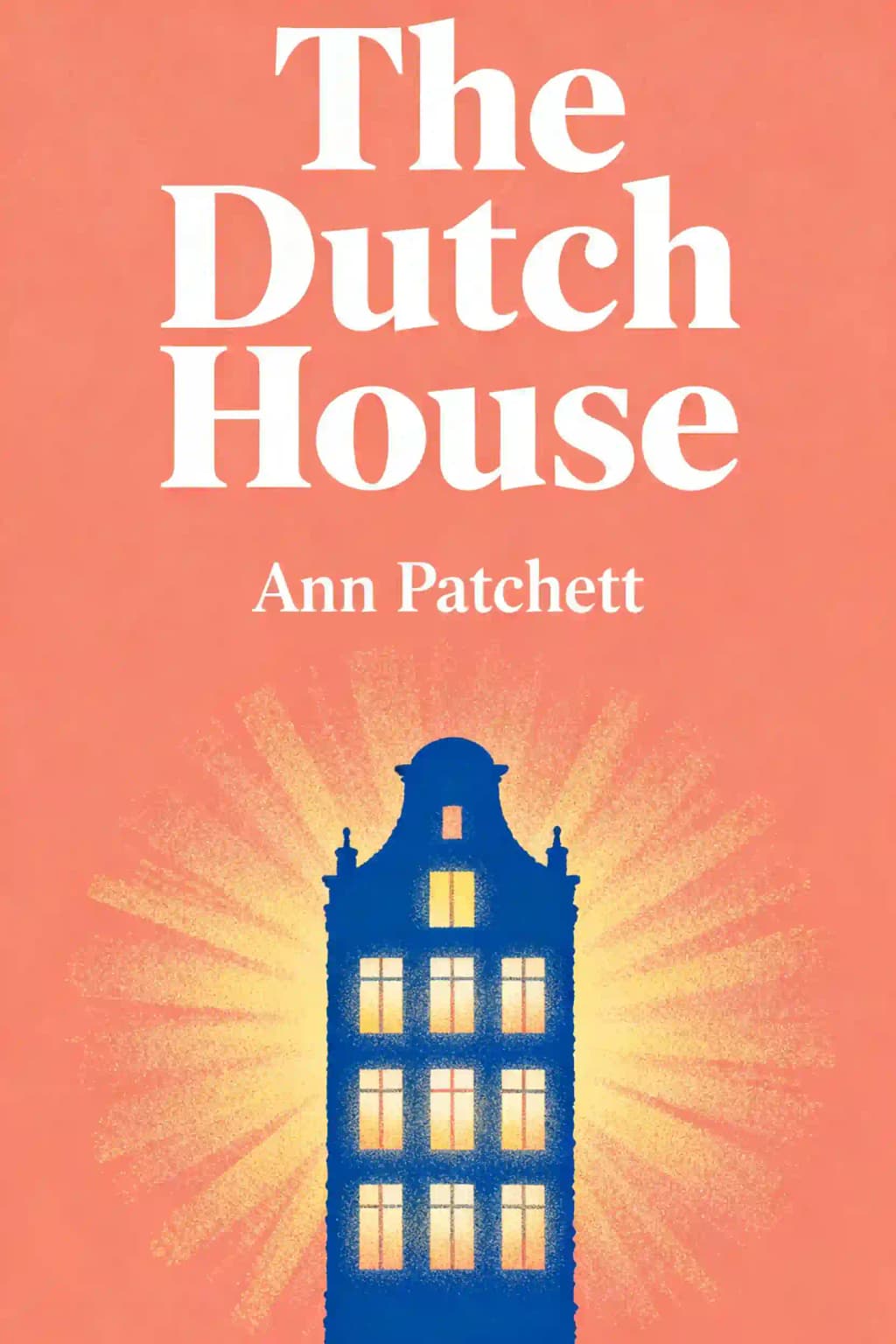
A Pulitzer finalist tracing siblings bound by a magnificent mansion that both defines and divides them. Oprah's pick, translated into 30+ languages, featuring a cover portrait mirroring the story's own pivotal artwork. What family secrets hide behind The Dutch House's gleaming windows?
Ann Patchett, born in 1963 in Los Angeles and raised in Nashville, is an acclaimed bestselling author of The Dutch House, a contemporary family saga that explores themes of belonging, sibling bonds, and the lasting impact of childhood trauma. With an M.F.A. from the prestigious University of Iowa Writers' Workshop, Patchett has built a celebrated literary career spanning nine novels and four nonfiction works, known for her nuanced exploration of complex family dynamics and human relationships.
Her breakthrough novel Bel Canto won both the PEN/Faulkner Award and the Women's Prize for Fiction. Other notable works include Commonwealth, State of Wonder, Tom Lake, and the memoir Truth & Beauty.
Beyond writing, Patchett co-owns Parnassus Books, an independent bookstore in Nashville, reflecting her deep commitment to the literary community. Her work has been translated into more than 30 languages, and Time magazine named her one of the 100 most influential people in the world.
The Dutch House by Ann Patchett follows siblings Danny and Maeve Conroy over five decades as they grapple with their childhood in a lavish Pennsylvania mansion. After their mother abandons them and their father remarries, the stepmother exiles them from their home following their father's death. The novel explores their unshakable sibling bond, obsession with their lost past, and eventual journey toward forgiveness and healing.
Ann Patchett is an acclaimed American author born in 1963 in Los Angeles and raised in Nashville, Tennessee. She has won the PEN/Faulkner Award and Women's Prize for Fiction for her novel Bel Canto. Patchett is known for exploring complex human relationships and emotional struggles across nine novels, including Commonwealth and The Dutch House. She also owns Parnassus Books in Nashville and was named one of Time magazine's 100 most influential people.
The Dutch House is ideal for readers who appreciate literary fiction exploring family dynamics, sibling relationships, and intergenerational trauma. It suits those drawn to character-driven narratives spanning decades, as well as fans of Ann Patchett's lyrical prose style. Readers interested in themes of forgiveness, loss, inheritance disputes, and how childhood homes shape our identities will find this story particularly compelling and emotionally resonant.
The Dutch House is widely considered worth reading for its poetic prose and profound exploration of sibling loyalty. Ann Patchett's melodic writing style and ability to capture universal truths about family and belonging have earned critical acclaim. The novel offers a compelling examination of how our past shapes our future, though some readers may find the characters' decades-long obsession with their childhood home frustrating rather than sympathetic.
The central theme of The Dutch House is the unbreakable bond between siblings and how it can both sustain and limit personal growth. Ann Patchett explores how childhood trauma, abandonment, and loss shape adult relationships. The novel examines forgiveness, the consequences of parental choices, grief, and our obsessive attachment to places that represent lost happiness, showing how Danny and Maeve's fixation on their past prevents them from fully embracing their futures.
The Dutch House represents everything the Conroy siblings lost—their childhood, security, mother, father, and sense of belonging. The lavish mansion becomes a physical manifestation of their grief and unresolved trauma. Their ritualistic visits to watch the house from the street symbolize their inability to move forward. For Danny and Maeve, reclaiming the house means reclaiming their identity, though Ann Patchett ultimately questions whether material possessions can truly heal emotional wounds.
Elna Conroy leaves her children Danny and Maeve because she feels overwhelmed by the Dutch House and their sudden wealth. She goes to India to become a missionary serving the poor, choosing to help strangers rather than her own family. Ann Patchett portrays this as a response to Elna's discomfort with material excess and her husband Cyril's obsession with real estate, though the abandonment deeply scars both children and shapes their entire lives.
Danny and Maeve's relationship is the emotional core of The Dutch House, creating an insular bond that sustains them through trauma but prevents deeper connections with others. Maeve protects and guides Danny throughout his life, even sacrificing her own happiness. Ann Patchett shows how their codependency becomes both their salvation and their limitation—neither sibling can form meaningful relationships with spouses or others because they remain emotionally tethered to each other and their shared past.
The Dutch House concludes with multiple deaths and eventual reconciliation. After Maeve dies following their mother Elna's return, Danny struggles with grief and partially blames his mother for his sister's death. Andrea, the stepmother, succumbs to dementia while Elna cares for her. The house ultimately returns to the Conroy family when Danny's daughter May, a successful actress, purchases it and uses it to entertain celebrities—transforming the symbol of childhood trauma into something joyful.
Critics of The Dutch House note that Danny and Maeve's thirty-year obsession with surveilling their former home can feel excessive and frustrating. Some readers find the characters' inability to move forward emotionally unrealistic or melodramatic. The "wicked stepmother" trope has been called predictable, resembling a fairy tale rather than nuanced literary fiction. Additionally, some argue Ann Patchett's resolution—particularly the mother's convenient return—feels somewhat contrived rather than earned through character development.
Ann Patchett's writing style in The Dutch House features melodic, lyrical prose with a poetic cadence that creates an immersive reading experience. She employs vivid sensory details and metaphorical language to capture emotional truths about family and memory. Her narrative unfolds across five decades, using Danny as the first-person narrator to examine how perspective shifts over time. Patchett balances intimate character moments with sweeping family saga elements, creating what she calls a "dark fairy tale" about people unable to escape their past.
The Dutch House spans approximately five decades, beginning shortly after World War II when Cyril Conroy builds his real estate empire and purchases the mansion. The narrative follows Danny from childhood through adulthood, covering major life milestones including his education at Choate Rosemary Hall, Columbia University, and Columbia Medical School, his marriage and divorce, and his eventual reconciliation with his past. Ann Patchett uses this extended timeline to show how childhood experiences echo throughout entire lifetimes.
Почувствуйте книгу через голос автора
Превратите знания в увлекательные, богатые примерами идеи
Захватите ключевые идеи мгновенно для быстрого обучения
Наслаждайтесь книгой в весёлой и увлекательной форме
A house can be both a blessing and a curse.
Andrea loved the house. The rest of us were just furniture she hadn't picked out herself.
This is my house.
We were a Hansel and Gretel of the soul.
It's me first, then you.
Разбейте ключевые идеи The Dutch House на понятные тезисы, чтобы понять, как инновационные команды создают, сотрудничают и растут.
Выделите из The Dutch House быстрые подсказки для запоминания, подчёркивающие ключевые принципы открытости, командной работы и творческой устойчивости.

Погрузитесь в The Dutch House через яркие истории, превращающие уроки инноваций в запоминающиеся и применимые моменты.
Задавайте любые вопросы, выбирайте голос и совместно создавайте идеи, которые действительно находят у вас отклик.

Создано выпускниками Колумбийского университета в Сан-Франциско
"Instead of endless scrolling, I just hit play on BeFreed. It saves me so much time."
"I never knew where to start with nonfiction—BeFreed’s book lists turned into podcasts gave me a clear path."
"Perfect balance between learning and entertainment. Finished ‘Thinking, Fast and Slow’ on my commute this week."
"Crazy how much I learned while walking the dog. BeFreed = small habits → big gains."
"Reading used to feel like a chore. Now it’s just part of my lifestyle."
"Feels effortless compared to reading. I’ve finished 6 books this month already."
"BeFreed turned my guilty doomscrolling into something that feels productive and inspiring."
"BeFreed turned my commute into learning time. 20-min podcasts are perfect for finishing books I never had time for."
"BeFreed replaced my podcast queue. Imagine Spotify for books — that’s it. 🙌"
"It is great for me to learn something from the book without reading it."
"The themed book list podcasts help me connect ideas across authors—like a guided audio journey."
"Makes me feel smarter every time before going to work"
Создано выпускниками Колумбийского университета в Сан-Франциско

Получите резюме книги «The Dutch House» в формате PDF или EPUB бесплатно. Распечатайте или читайте офлайн в любое время.
The magnificent Dutch House stands as both sanctuary and prison for the Conroy family. Built in 1922 for cigarette magnates, this limestone mansion with distinctive blue windows dominates suburban Pennsylvania like an architectural fairy tale. When Cyril Conroy purchases it in 1946, he believes he's securing his family's future. Instead, he sets in motion decades of heartbreak. For young Danny and his sister Maeve, the house becomes their entire world - from its hand-painted ceilings to the stern VanHoebeek portraits whose eyes follow visitors across rooms. But for their mother Elna, the extravagance is suffocating. How can she justify a dozen unused bedrooms while others sleep on Philadelphia's streets? The house represents something entirely different to Andrea, their future stepmother, whose fascination isn't with Cyril but with the Dutch House itself. "Andrea loved the house," the family housekeeper later explains, "The rest of us were just furniture she hadn't picked out herself." After Cyril's death, Andrea's true nature emerges with brutal efficiency as she expels Danny with chilling words: "This is my house." From that moment, the house transforms from home to obsession.