Глава 1
The Pleasure Paradox: How Our Brains Reward and Betray Us
What do a Bangkok sex worker, a Wall Street trader, and a Buddhist monk have in common? They're all engaging in activities that activate the same neural circuit in their brains-a collection of interconnected regions known as the medial forebrain pleasure circuit. This remarkable discovery forms the core of David J. Linden's fascinating exploration in "The Compass of Pleasure." As a Johns Hopkins neuroscientist, Linden takes us on a journey through the biology of pleasure that has profound implications for understanding everything from addiction to spirituality. The book has become required reading in neuroscience programs worldwide and was named one of the best science books of 2011 by The Guardian. With over 200,000 copies sold and translations in 19 languages, Linden's work reveals why we're hardwired to catch a pleasure buzz from experiences ranging from cocaine to charity-and why this matters for everyone from policymakers to parents.
Глава 2
Mashing the Pleasure Button: The Discovery of Brain Reward
In 1953, a fortunate laboratory accident led to one of neuroscience's most dramatic discoveries. While implanting electrodes in rat brains at McGill University, researchers Peter Milner and James Olds missed their intended target and instead hit the septum. When they tested a rat in a box with labeled corners, they noticed something extraordinary: electrical stimulation made the rat repeatedly return to the location where it had received stimulation.
They modified their experiment to allow rats to self-stimulate by pressing a lever. The results were astonishing-rats would press the lever up to 7,000 times per hour, ignoring food, water, and sex. Males would cross painful shock-delivering floors to reach the lever; females would abandon nursing pups. Some rats would self-stimulate continuously for 24 hours until they had to be disconnected to prevent death from starvation.
This discovery demolished the prevailing "drive-reduction hypothesis" that viewed behavior as merely avoiding pain. Olds and Milner proved that "behavior is pulled forward by pleasure as well as pushed forward by pain." Further mapping revealed not just a single pleasure spot but an interconnected reward circuit deep in the brain, including the ventral tegmental area (VTA), nucleus accumbens, and portions of the thalamus and hypothalamus.
What happens when a human's pleasure circuit is stimulated? Dr. Robert Heath's ethically problematic experiments at Tulane University from 1949-1980 provide disturbing answers. In his most notorious case, a 24-year-old homosexual man with depression ("Patient B-19") received electrodes in nine brain sites. Given control of the stimulator, B-19 pressed the button obsessively, experiencing "overwhelming euphoria" until forcibly disconnected. Similarly, a woman with a thalamic electrode for pain control neglected hygiene and family commitments to self-stimulate continuously.
The pleasure circuit's anatomy involves dopamine-releasing neurons in the VTA that send axons to the nucleus accumbens and other brain regions. When electrical signals reach axon terminals, they trigger dopamine release, creating the sensation of pleasure. Dopamine is crucial-drugs blocking dopamine transporters (like cocaine) enhance pleasure, while dopamine receptor blockers eliminate it. In Parkinson's disease, where dopamine neurons die, patients typically become introverted and uninterested in novel experiences-the opposite of addicts.
The pleasure circuit has ancient evolutionary origins-even the millimeter-long roundworm C. elegans with just 302 neurons has dopamine-containing neurons that mediate food attraction. In humans, this circuit activates not just for "vices" like orgasm or drugs, but also for "virtues" like exercise, meditation, and charitable giving-revealing a neural unity between virtue and vice.
Глава 3
Chemical Ecstasy: How Drugs Hijack Our Pleasure Systems
All cultures use psychoactive drugs, though attitudes about them vary widely. Societies typically embrace their own drugs while condemning those used by outsiders. This cultural bias persists today, with each society regarding its preferred substances as acceptable while viewing others' with horror.
Throughout history, we find fascinating examples of drug use across cultures. In Rome around AD 170, Emperor Marcus Aurelius-known for his Stoic philosophy-began each day with opium dissolved in wine. His physician Galen documented the emperor's addiction and withdrawal symptoms. By AD 312, Rome had 793 opium shops, with taxes on sales providing substantial imperial revenue.
In 1880s Ireland, following a powerful temperance movement where half the adult population had taken "The Pledge" of alcohol abstinence, many turned to ether as a loophole. Its volatility produced quick intoxication and equally rapid recovery with no hangover. Despite its popularity, ether drinking had serious downsides: terrible taste, excessive drooling, and flammable vapors that caused burns when belched near flames.
Intoxication isn't uniquely human-wild animals voluntarily consume psychoactive substances. Birds, elephants and monkeys seek naturally fermented fruits; African wildlife consumes hallucinogenic iboga plants; Ethiopian goats eat coffee berries for caffeine. The most compelling evidence comes from Siberian reindeer, who consume hallucinogenic Amanita muscaria mushrooms and eagerly lick urine containing the active compound muscimol.
Psychiatrist Ronald K. Siegel suggests that seeking intoxication is an innate drive across species, functioning like hunger or thirst. However, a drug's chemical action is significantly influenced by mental state and social context. People taking morphine for pain report less euphoria than recreational users taking identical doses. In one study, cannabis users told they were smoking exceptionally potent marijuana reported greater euphoria despite receiving identical substances.
Most psychoactive drugs activate the medial forebrain pleasure circuit. While stimulants like cocaine directly affect dopamine signaling by blocking reuptake, other drugs work differently. The discovery of morphine receptors led to identifying endorphins-the body's natural opioids. Similar patterns emerged with cannabis (THC activates CB1 receptors normally triggered by endocannabinoids) and nicotine (which activates acetylcholine receptors).
Not all psychoactive drugs activate the pleasure circuit equally. Those that strongly activate dopamine pathways (heroin, cocaine, amphetamines) carry substantial addiction risk, while those with weaker activation (alcohol, cannabis) have lower risk. Drugs that don't activate the circuit at all (LSD, benzodiazepines) carry minimal addiction risk.
Beyond pharmacology, addiction risk depends on sociocultural factors, availability, legality, and administration method. Rapid-onset delivery methods dramatically increase addiction potential-smoked cocaine is more addictive than snorted, and injected heroin more addictive than ingested opium. Cigarettes are particularly addictive because they deliver nicotine rapidly with each puff, creating about 200 small pleasure hits daily for a pack-a-day smoker.
Глава 4
The Neurobiology of Addiction: When Pleasure Becomes Pathology
Addiction develops in stages, beginning with euphoric pleasure that gradually gives way to tolerance (needing more drug for the same effect) and dependence (feeling bad without the drug). Later stages involve intense cravings often triggered by drug-associated stimuli like smells, sounds, or locations. As addiction progresses, the initial pleasure diminishes-liking becomes wanting.
In 1964, neurobiologists studying memory were frustrated by their inability to find lasting changes in synaptic transmission that could explain long-term memory. The breakthrough came when Terje Lmo and Tim Bliss discovered long-term potentiation (LTP)-a persistent strengthening of synapses that could last for hours following brief high-frequency stimulation. This discovery revealed how experience could write lasting changes into brain circuitry.
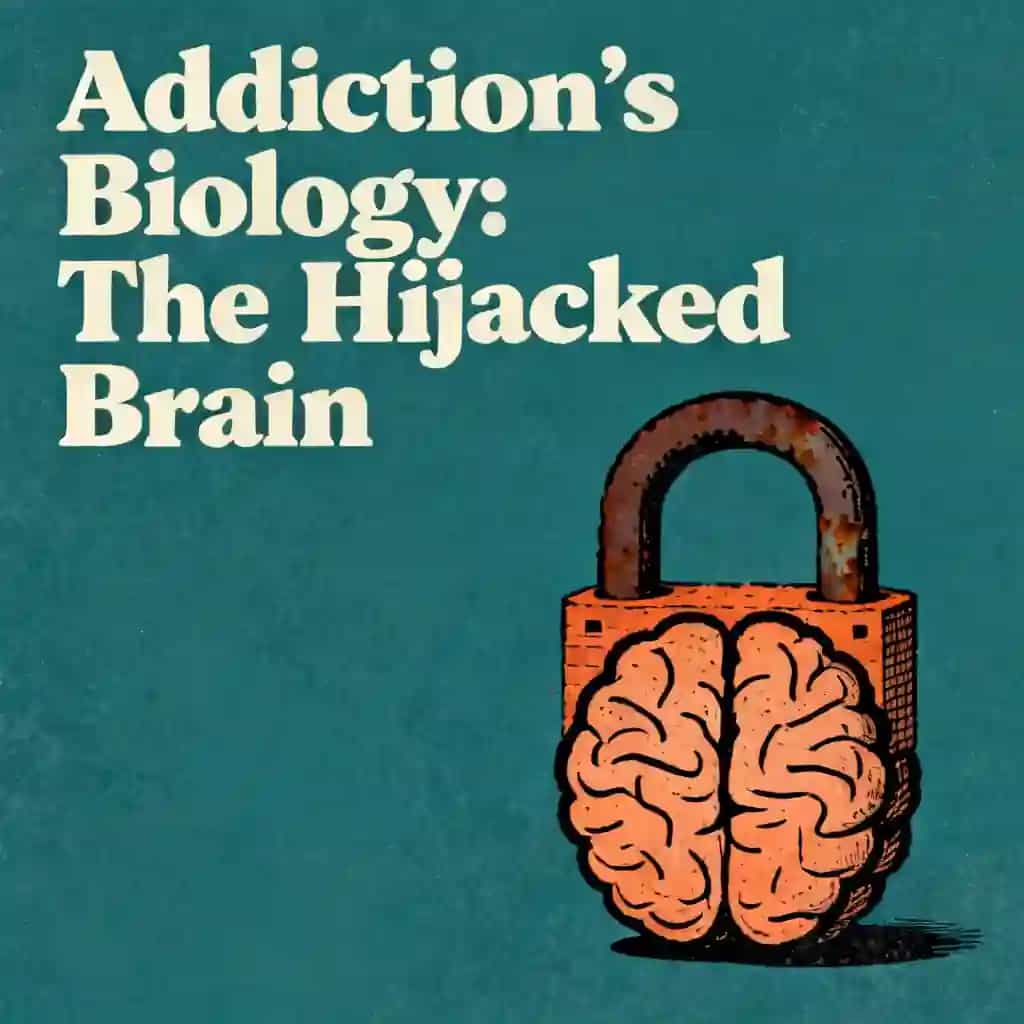
Addictive drugs produce persistent changes in the brain's pleasure circuitry through mechanisms similar to memory formation. A single dose of cocaine, amphetamines, morphine, nicotine, or alcohol produces robust LTP in the VTA's glutamate synapses that can persist for months. This strengthening makes VTA neurons more responsive to sensory cues and emotions, creating powerful associations between drug pleasure and environmental triggers.
Habitual drug use triggers cascading changes throughout the pleasure circuit. After repeated cocaine administration, the nucleus accumbens undergoes LTD (long-term depression) of glutamate synapses, dampening pleasure circuit activity. These changes explain tolerance and withdrawal symptoms. Following abstinence, neurons develop excessive dendritic spines, creating more surfaces for synaptic connections that overshoot their pre-drug state, producing drug sensitization-the neurobiological basis for relapse vulnerability.
Despite widespread acceptance of addiction as a disease, many still harbor suspicions that it's a weakness of will. However, given the right circumstances-high stress, early drug exposure, childhood abuse, poor social support, or genetic predisposition-anyone can become addicted. Genetic factors contribute 40-60% of addiction risk, with the D2 dopamine receptor gene variant significantly increasing vulnerability.
Crucially, while biological factors predispose addiction development, recovery remains the addict's responsibility. Talk therapy, twelve-step programs, meditation, and other interventions work by creating biological changes in pleasure circuitry to counteract addiction's rewiring-the neural basis of social and experiential therapy.
Глава 5
Hungry for More: How Our Brains Regulate Appetite and Weight
The brain's pleasure circuits play a crucial role in regulating appetite and weight. Despite consuming 1.2 million calories annually, most people maintain remarkably stable weight through precise homeostatic mechanisms. The hypothalamus receives signals about body weight and modulates appetite and energy expenditure accordingly, functioning like a thermostat for body mass.
In 1994, Jeffrey Friedman discovered leptin, a hormone secreted by fat cells that signals the brain about body fat levels. When weight increases, leptin levels rise, suppressing appetite and increasing energy expenditure; when weight decreases, reduced leptin triggers increased appetite and reduced energy use. Mutations affecting leptin or its receptor cause morbid obesity, though such genetic defects account for less than 1% of severe obesity cases.
While leptin regulates long-term weight, short-term appetite control works differently. Meal initiation rarely stems from blood glucose drops but typically responds to social and environmental factors. During eating, satiety signals from gut sensors detect both chemical properties (sugar, protein) and mechanical properties (stretch) of food. These signals reach the brain through gut hormones that either enter the bloodstream directly or activate neural pathways.
The mediobasal hypothalamus serves as the critical node in feeding control, with the arcuate nucleus receiving both fast neural signals from the gut and slow body weight signals from leptin. Different neuron types in this region produce opposing effects: POMC neurons inhibit hunger while NPY neurons promote it. This complex circuit creates a balance between hunger and satiety signals.
The idea that eating is primarily voluntary behavior misunderstands our biology. When we lose weight, fat mass decreases, leptin levels decline, and our homeostatic feeding circuits trigger both reduced metabolic rate and increased hunger drives. The more weight lost, the stronger these compensatory mechanisms become-explaining why substantial weight loss is so difficult to maintain long-term.
The brain's pleasure circuit activates naturally during eating, with VTA neurons firing when rats begin eating and releasing dopamine throughout the meal. Importantly, leptin inhibits VTA dopamine neurons, explaining why weight loss makes food more appealing-reduced leptin levels enhance food's pleasure value. Brain scans of leptin-deficient patients confirm this: food images trigger stronger pleasure responses before leptin treatment.
Since food and drugs activate overlapping pleasure circuits, there are behavioral interactions between them. Carriers of the TaqIA A1 genetic variant show both reduced pleasure response to food and greater weight gain over time. Cruelly, these individuals experience increased craving paired with decreased pleasure-a double-edged sword that may underlie many forms of addiction.
Another factor in obesity is the food industry's deliberate engineering of products that override our satiety signals. While our ancestors ate mostly vegetarian diets with little fat or sugar, modern food corporations exploit our evolutionary preference for energy-dense foods. We're hardwired to crave sugar, fat, and salt-with fat and sugar combinations being "superadditive" in activating dopamine release.
Глава 6
The Neuroscience of Love and Sex: Pleasure in Human Connection
Human sexuality differs fundamentally from other mammals in several key ways. Unlike most mammals, humans have concealed ovulation with no obvious fertility signals, engage primarily in recreational sex unrelated to fertility cycles, practice monogamy (at least within ovulatory cycles), and form lasting pair-bonds where males contribute to offspring care. This unique combination evolved largely due to our species' exceptionally long and helpless childhood-a consequence of our large brains requiring extensive postnatal development.
Intense romantic love appears to be a cross-cultural universal phenomenon, found in 147 of 166 surveyed societies. The experience is remarkably consistent: giddy pleasure, appetite suppression, distorted judgment about the beloved, obsession, and sexual desire. Brain imaging studies reveal that viewing a beloved's face activates the dopaminergic pleasure circuit (VTA and caudate nucleus)-similar to cocaine or heroin activation patterns. Simultaneously, deactivation occurs in prefrontal cortex judgment centers and regions involved in social cognition.
While intense romantic love typically lasts 9-24 months before transitioning to companionate love, some couples maintain this intensity for decades, showing continued VTA activation when viewing their partner's face years later.
Sexual arousal and romantic love activate overlapping but distinct neural patterns. Both involve the pleasure circuit, but sexual arousal doesn't deactivate judgment centers as love does. Instead, sexual images activate visual processing, attention, motor and somatosensory regions. Gender differences emerge during sexual arousal: men show stronger hypothalamus and amygdala activation than women when viewing erotic images.
Women's genital arousal patterns differ dramatically from men's. While men's physical responses closely match their subjective arousal and sexual orientation, women show genital responses to a much broader range of sexual stimuli regardless of their orientation. This disconnect between physical response and subjective feelings may serve an evolutionary purpose-reflexive vaginal lubrication could protect women from injury during rapid or nonconsensual sex.
Orgasm fundamentally occurs in the brain, not the genitals. While typically achieved through genital stimulation, some people can orgasm from stimulation of other body parts or even through thought alone. Brain scanning during orgasm reveals similar activation patterns in men and women, primarily in the dopamine-using pleasure circuit and cerebellar deep nuclei. Both sexes also show deactivation in frontal cortex judgment centers.
Beyond orgasm's intense pleasure lies the warm afterglow crucial for sexual pair-bonding, mediated by oxytocin release from the pituitary gland. Oxytocin nasal sprays have shown remarkable effects in social experiments. Subjects using these sprays demonstrate increased trust in strangers during cooperative games, even after betrayal, accompanied by deactivation of fear centers in the amygdala.
The neurobiological basis of monogamy versus promiscuity has been illuminated through studies of voles. Monogamous prairie voles form lifelong pair bonds, while promiscuous montane voles mate indiscriminately. The key difference lies in brain receptor distribution patterns, particularly the vasopressin V1a receptor. In male prairie voles, mating triggers vasopressin release, activating receptors in the ventral pallidum to form pair-bonds. While human sexual behavior is more complex than rodents', these findings suggest that variations in dopamine, vasopressin and oxytocin signaling might explain differences in human fidelity.
Глава 7
The Gambler's Brain: Risk, Reward, and Compulsion
Our modern lexicon has expanded "addiction" to encompass everything from methamphetamine to designer sheets. Yet compulsive behaviors like gambling and video gaming do meet formal psychological definitions of addiction, severely impacting lives. Biologically, evidence supports a broad definition of addiction encompassing drugs, sex, food, gambling, and video games, all involving activation and alteration of the medial forebrain pleasure circuit.
Bill Lee's memoir reveals the devastating trajectory of compulsive gambling. Despite professional success in Silicon Valley, his addiction destroyed two marriages and his finances. Like drug addiction, his experience featured tolerance, withdrawal, and relapse, eventually draining all pleasure from gambling while leaving only raw compulsion. In some ways, gambling addiction proves even more destructive, with exceptionally high suicide attempt rates (20-40%) among those seeking treatment.
What makes gambling addictive? Beyond the "early win" theory lies a more fundamental explanation: our brains are hardwired to find uncertainty pleasurable. Wolfram Schultz's experiments with monkeys revealed that dopamine neurons in the VTA respond not just to rewards but to reward prediction. When a blue light signaled a 50% chance of reward, dopamine firing gradually increased during the waiting period. This anticipatory pleasure during uncertainty explains gambling's appeal-the uncertain period while watching a slot machine spin creates inherent pleasure.
Though monkeys experience dopamine pleasure from uncertain syrup rewards, can this really apply to humans gambling with abstract money? Hans Breiter's team addressed this by adapting Schultz's protocols for human brain scanning. The results confirmed that even abstract monetary rewards activate the human pleasure circuit. VTA target regions were activated both during anticipation (while the pointer spun) and outcomes (when it stopped).
Our brains process gambling outcomes irrationally. We value a $0 outcome differently depending on context-as a loss on a "good" wheel but as a win on a "bad" wheel. Even more compelling are near misses-when a bet horse places second or two of three slot reels match. These near misses promote continued gambling, with slot machine manufacturers exploiting this by programming devices to increase near-miss rates above random levels.
Could gambling addiction, like drug and food addiction, result from blunted dopamine function? Christian Buchel's team tested this by scanning the brains of gambling addicts during a card-guessing game with monetary rewards. While both groups showed activation in pleasure centers when winning, gambling addicts showed significantly less activation-particularly in the right hemisphere. This supports the blunted dopamine hypothesis: gambling addicts may need more intense stimulation to achieve the same pleasure that non-addicts reach more easily.
If money activates the pleasure circuit because it represents the possibility of intrinsic rewards, can entirely arbitrary stimuli do the same? Allan Reiss's Stanford team investigated this using brain scans of subjects playing a simple territory-gaining video game. Remarkably, the game activated key pleasure circuit regions in all subjects, despite being completely unnatural and divorced from intrinsic reward. Men showed significantly stronger activation than women, though this might be specific to the territorial nature of the particular game.
Глава 8
Virtuous Pleasures: Exercise, Meditation, and Altruism
This chapter explores how seemingly virtuous activities like exercise can activate the pleasure circuit and become addictive. Jeff Tweedy, a musician who overcame substance addiction, later developed an exercise addiction resulting in stress fractures from excessive running-demonstrating how addiction patterns can transfer to healthier behaviors that still retain addictive qualities.
Sustained physical exercise provides numerous health benefits including improved cardiovascular function and mental health. Exercise also dramatically improves mental function, slows cognitive aging decline, reduces depression, and blunts the brain's stress response. It produces physical changes in the brain including new blood vessel growth, increased neuronal complexity, and biochemical changes like elevated BDNF (brain-derived neurotrophic factor).
Beyond long-term benefits, exercise produces short-term effects including increased pain threshold, reduced anxiety, and occasionally "runner's high"-a rare but intense euphoric state. Though popularly attributed to endorphins since the 1970s, the science is more complex. Henning Boecker's team used brain scanning to measure opioid release in runners' brains before and after a two-hour run. They found increased opioid activity, particularly in the prefrontal cortex and anterior cingulate cortex-with the highest levels corresponding to the greatest reported euphoria.
The evidence suggests intense exercise produces euphoria through brain opioids and endocannabinoids, which can indirectly activate dopamine cells in the VTA and stimulate the pleasure circuit. In rats, wheel-running causes dopamine release in the nucleus accumbens, and they'll work hard for access to running wheels.
Contrary to Jeremy Bentham's view of pain and pleasure as opposing masters, neurobiological evidence suggests they aren't two ends of a continuum. The opposite of pleasure isn't pain but rather indifference or lack of interest. Both pleasure and pain indicate salience-experiences deserving attention. Surprisingly, dopamine release from VTA neurons occurs not only with pleasure but also with painful stimuli. Jon-Kar Zubieta's research showed prolonged painful stimulation increased dopamine release in both the dorsal striatum and nucleus accumbens. This may explain why pain combined with pleasure creates super-salient experiences, potentially contributing to practices like sadomasochistic sex or spicy food consumption.
Meditation encompasses diverse practices sharing four criteria: a specific taught technique, progressive muscle relaxation, reduced logical processing, and self-induction without drugs or hypnosis. Hans Lou's research on Yoga Nidra meditation found significant dopamine release in practitioners' nucleus accumbens compared to controls, suggesting meditation may indeed activate the medial forebrain pleasure circuit.
William Harbaugh's research tested whether charitable giving activates the brain's pleasure centers. Using brain scans of women making anonymous financial decisions, the study revealed that both mandatory taxation and voluntary charitable giving activated overlapping regions in the nucleus accumbens, though charitable giving produced stronger activation. Individual differences were notable-about half the subjects showed more pleasure activation from receiving money, while the other half experienced more pleasure from giving.
Studies show that positive social interactions activate pleasure centers just as rejection activates pain centers. Sadato's research revealed that receiving positive social feedback (like being called "trustworthy") activated the same reward circuits as monetary rewards, suggesting a common neural currency for social and financial rewards.
Humans crave information-news, gossip, and especially knowledge about our future. Bromberg-Martin and Hikosaka's experiments with monkeys showed that they consistently chose targets that provided advance information about rewards, even when this information couldn't influence outcomes. Remarkably, the same dopamine neurons in the VTA that respond to water rewards also fired when monkeys merely anticipated receiving information. This revolutionary finding suggests that abstract knowledge can engage the pleasure circuitry, making ideas function like addictive drugs.
Глава 9
The Future of Pleasure: Technology, Ethics, and Human Nature
Ray Kurzweil, renowned futurist and inventor, eagerly anticipates brain-penetrating nanobots that would revolutionize our experience of pleasure. These microscopic devices, entering noninvasively through capillaries by the late 2020s, would create full-immersion virtual reality by intercepting and replacing sensory signals. Beyond mere sensory manipulation, these nanobots could precisely control every neuron in the brain-including those in the pleasure circuit-allowing unprecedented customization of pleasurable experiences.
Kurzweil predicts that by the late 2030s, we'll be able to scan brains with such molecular precision that we could "upload" entire mental processes into powerful computers. Once our mental selves exist in machine form, manipulating mental functions and experiences would become mere software adjustments. However, Linden takes issue with Kurzweil's timetables. While he agrees that enabling technologies follow exponential growth trajectories, Kurzweil wrongly assumes our understanding of neurobiology is also exponential. He conflates data collection with biological insight. The brain's physical structure poses insurmountable challenges for his proposed nanobots-neurons and glial cells are packed so tightly that any device would leave destruction in its wake.
One near-term development will be genetic screening to predict addiction risk. About 50% of variation in addiction susceptibility is hereditary, with genetic variations in the D2 dopamine receptor correlated with substance and behavioral addictions. Analyzing a group of genes involved in medial forebrain dopamine function will likely provide a better addiction risk profile than examining any single gene.
Current addiction treatments remain crude. Most approaches substitute one addictive substance for another, like nicotine patches or methadone, which reduce health risks but don't address underlying addiction. Newer drugs actually help blunt cravings in recovering addicts. Naltrexone significantly reduces relapse in alcoholics and heroin addicts by blocking opioid receptors. For nicotine addiction, bupropion targets dopamine transport while varenicline reduces nicotine receptor activation. Unfortunately, almost nothing exists for cocaine or amphetamine addiction.
Neurophysiologists dream of recording from and controlling all hundred billion neurons in the human brain. Current approaches using electrode arrays can record from about 50-200 neurons simultaneously. Non-invasive brain scanning (fMRI) measures blood flow changes rather than direct neural activity, with poor spatial resolution. Promising optical technologies like multiphoton microscopy can image through a glass window in the skull, using infrared laser pulses to excite fluorescent molecules in neurons.
In a distant future with precise neural control, we could directly stimulate the pleasure circuit to create sensations similar to heroin rushes or orgasms. With advanced technology, we could precisely control identified neurons, exploring an entire parameter space of artificial pleasure-mixing sexual feeling with risk sensation and food satiety, or adding a dash of pain. Such technology could potentially decouple pleasure from addiction by resetting synapses or ion channels after each session.
Yet the hardest challenge isn't technological but social-how would ubiquitous pleasure control be used, abused, commercialized, and regulated? If our inconsistent drug policies are any indication, we face a politically and commercially driven disaster. Most importantly, if pleasure becomes ubiquitous, what happens to our uniquely human ability to associate pleasure with abstract ideas, and what will we desire when pleasure is everywhere?