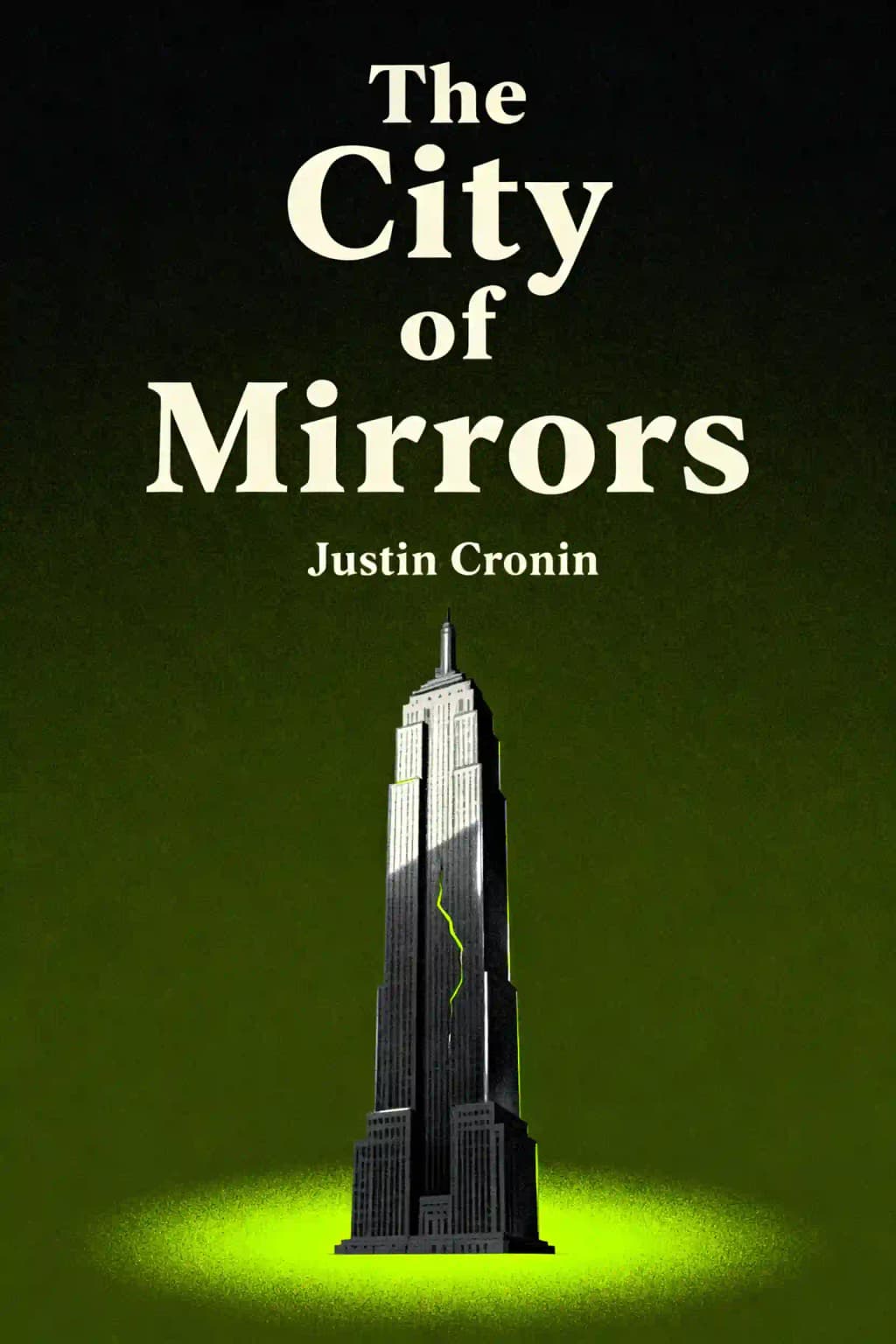
In Cronin's epic apocalyptic finale, humanity faces extinction as vampiric forces gather. Stephen King called the series "enthralling" - a rare literary horror that transcends genres. Adapted by Fox, this 602-page masterpiece proves hope survives even in darkness. What secrets await in The City?
Justin Cronin is the New York Times bestselling author of The City of Mirrors, the epic conclusion to his internationally acclaimed post-apocalyptic vampire trilogy. Born in 1962 and raised in New England, Cronin is a graduate of Harvard University and the Iowa Writers' Workshop.
His literary career began with Mary and O'Neil, which won the PEN/Hemingway Award and the Stephen Crane Prize, establishing him as a writer of literary fiction before he turned to the darker, genre-bending world of The Passage trilogy.
A Distinguished Faculty Fellow at Rice University, Cronin masterfully blends horror, science fiction, and fantasy to create what Stephen King called "one of the great achievements in American fantasy fiction." His work explores themes of survival, humanity, love, and redemption across sweeping narratives that span decades. Beyond the trilogy, Cronin has written The Summer Guest and the recent bestseller The Ferryman, a sci-fi thriller published in 2023.
The Passage trilogy has been translated into over 45 languages and adapted for television by Fox, with Ridley Scott as producer. The City of Mirrors debuted at #1 on the New York Times bestseller list and received starred reviews for its thrilling and emotionally resonant conclusion.
The City of Mirrors by Justin Cronin is the epic conclusion to The Passage trilogy, following humanity's final battle against viral creatures threatening their extinction. Set decades after The Twelve, the novel explores the origins of Zero/Tim Fanning, the first viral, while following survivors like Amy, Peter Jaxon, and Alicia Donadio as they fight to save the last 700 humans and rebuild civilization on a distant island.
The City of Mirrors is ideal for readers who love post-apocalyptic fiction blending horror, science fiction, and literary depth. Fans of Stephen King's epic narratives, complex character development spanning centuries, and philosophical explorations of humanity's resilience will appreciate Cronin's conclusion. This book specifically appeals to those who've read The Passage and The Twelve, as it completes character arcs and resolves the trilogy's central conflicts.
The City of Mirrors delivers a satisfying, emotionally resonant conclusion to Justin Cronin's ambitious trilogy. While some readers find the extended epilogue slow-paced, the novel excels in humanizing its villain, crafting poignant character endings, and exploring themes of sacrifice and redemption. The 1000-year narrative scope and literary prose elevate it beyond typical genre fiction, making it worthwhile for readers invested in the trilogy's fate.
Justin Cronin is a New York Times bestselling author and Distinguished Faculty Fellow at Rice University who won the PEN/Hemingway Award before writing The Passage trilogy. A graduate of Harvard and the Iowa Writers' Workshop, Cronin transitioned from literary fiction to genre-bending post-apocalyptic epics. The City of Mirrors represents his decade-long commitment to creating what Stephen King called "one of the great achievements in American fantasy fiction."
Amy transforms from viral creature back to human form after being submerged in water, mirroring Zero's earlier transformation. She leads the final battle against Zero's army alongside Anthony Carter, ultimately killing Zero to end the viral plague. Amy saves Peter from becoming a viral using her blood, then lives with him for centuries until his death. After 1000 years, ancient Amy greets humanity's descendants when they return to North America.
Zero, revealed as Tim Fanning, was a man who loved Jonas Lear's girlfriend Liz during college. When Lear's cancer research pulled him away, Fanning and Liz had a brief affair before she tragically died from cancer. Fanning's unrequited love and cruel fate drove him to join Lear's research, where he became the first viral (Subject Zero). His humanity-destroying mission stems from profound loss and heartbreak, making him a relatable, tragic villain.
The City of Mirrors ends with 700 human survivors escaping to a safe island aboard Michael's repaired ship, the Nautilus, after Zero's army destroys Kerrville. Amy kills Zero in New York City with Peter, Alicia, and Michael's help. Peter lives with viral Amy for centuries before dying of old age. After 1000 years—the time needed for virals to naturally die off—humanity's descendants return to North America and find ancient Amy, who shares her story.
The City of Mirrors shifts from The Passage's outbreak origins and The Twelve's mid-apocalypse survival to focus on resolution and character depth. While maintaining the trilogy's sweeping scope, this finale emphasizes Zero's humanizing backstory, philosophical themes about love and sacrifice, and multi-generational time jumps spanning 1000 years. Some readers find it slower-paced but more literary and emotionally resonant than its action-heavy predecessors, with extended epilogues providing definitive closure.
Michael Fisher becomes humanity's savior by spending 20 years repairing an abandoned ocean liner discovered in the Gulf of Mexico. After learning the virus destroyed most global civilization, he creates a viable escape plan for survivors. Michael leads 700 people to the ship during Zero's final attack on Kerrville, sails them to safety, and later travels to England aboard the Nautilus, ensuring humanity's survival and eventual repopulation of Earth.
Alicia Donadio gives birth to a stillborn child from her rape in The Twelve, then hunts Zero to New York City. She discovers Zero is her infector, preventing her from killing him, and lives with him for 20 years before warning her friends of his plan. As a viral, Alicia participates in the final battle against Zero. After nearly drowning removes all traces of the virus—restoring her humanity—she chooses to end her life by jumping to her death.
Water serves as a transformative purification element in The City of Mirrors, reversing viral infection and restoring humanity. Zero's near-drowning first reverted him to human form while retaining viral abilities. Similarly, Amy regains her human consciousness after submersion in the sea. Alicia's near-drowning completely removes her viral traces. This recurring motif represents rebirth, redemption, and the cleansing of corruption—making water the antidote to humanity's greatest plague.
The 1000-year epilogue fulfills Amy's prophesied title as "the girl who lived a thousand years" and demonstrates humanity's ultimate endurance. While slow-paced, this prolonged conclusion shows civilization successfully rebuilding on the island sanctuary, waiting for virals to naturally die off on mainland America. When descendants return to North America, they find ancient Amy waiting, creating a full-circle narrative that honors the trilogy's epic scope and validates every sacrifice made throughout the series.
Почувствуйте книгу через голос автора
Превратите знания в увлекательные, богатые примерами идеи
Захватите ключевые идеи мгновенно для быстрого обучения
Наслаждайтесь книгой в весёлой и увлекательной форме
"Behind every great hatred lies a love story,"
He waits until an entire generation has grown up without experiencing viral attacks.
This inverted perspective perfectly symbolizes Fanning's distorted worldview.
Amy emerges as the novel's central hope.
The virals aren't attacking randomly-they're systematically taking people.
Разбейте ключевые идеи The City of Mirrors на понятные тезисы, чтобы понять, как инновационные команды создают, сотрудничают и растут.
Выделите из The City of Mirrors быстрые подсказки для запоминания, подчёркивающие ключевые принципы открытости, командной работы и творческой устойчивости.

Погрузитесь в The City of Mirrors через яркие истории, превращающие уроки инноваций в запоминающиеся и применимые моменты.
Задавайте любые вопросы, выбирайте голос и совместно создавайте идеи, которые действительно находят у вас отклик.

Создано выпускниками Колумбийского университета в Сан-Франциско
"Instead of endless scrolling, I just hit play on BeFreed. It saves me so much time."
"I never knew where to start with nonfiction—BeFreed’s book lists turned into podcasts gave me a clear path."
"Perfect balance between learning and entertainment. Finished ‘Thinking, Fast and Slow’ on my commute this week."
"Crazy how much I learned while walking the dog. BeFreed = small habits → big gains."
"Reading used to feel like a chore. Now it’s just part of my lifestyle."
"Feels effortless compared to reading. I’ve finished 6 books this month already."
"BeFreed turned my guilty doomscrolling into something that feels productive and inspiring."
"BeFreed turned my commute into learning time. 20-min podcasts are perfect for finishing books I never had time for."
"BeFreed replaced my podcast queue. Imagine Spotify for books — that’s it. 🙌"
"It is great for me to learn something from the book without reading it."
"The themed book list podcasts help me connect ideas across authors—like a guided audio journey."
"Makes me feel smarter every time before going to work"
Создано выпускниками Колумбийского университета в Сан-Франциско

Получите резюме книги «The City of Mirrors» в формате PDF или EPUB бесплатно. Распечатайте или читайте офлайн в любое время.
In a world where darkness has reigned for a century, humanity clings to existence in the fortified Texas settlement of Kerrville. The viral apocalypse that once threatened to extinguish mankind has become distant history-children grow up thinking virals are merely exaggerated boogeymen in scary stories. Peter Jaxon, now fifty-one and serving as president, oversees a society beginning to forget the horrors that shaped it. The walls go unmanned, perimeter lights burn out without repair, and people venture beyond the settlement's boundaries to establish homesteads in the wilderness. This false security creates a poignant tension. What if the monsters aren't gone, but waiting? Meanwhile, in the ruins of New York City, Timothy Fanning-brilliant biochemist turned Patient Zero-dwells in Grand Central Terminal beneath its astronomical ceiling, ironically painted backward to show the heavens from God's perspective rather than man's. This inverted perspective perfectly symbolizes Fanning's distorted worldview. For decades, he has waited with terrible patience, gathering strength and plotting humanity's final destruction. Behind his monstrous exterior beats the heart of a jilted lover who couldn't move beyond his pain-his century-long campaign against humanity represents his twisted attempt to give meaning to his suffering. What makes this apocalypse so haunting isn't just its scale but its intimacy. Behind every monster lurks a human story. Behind every survival, a sacrifice.