Глава 1
The Ultimate Game of Assassins: A Dance with Death
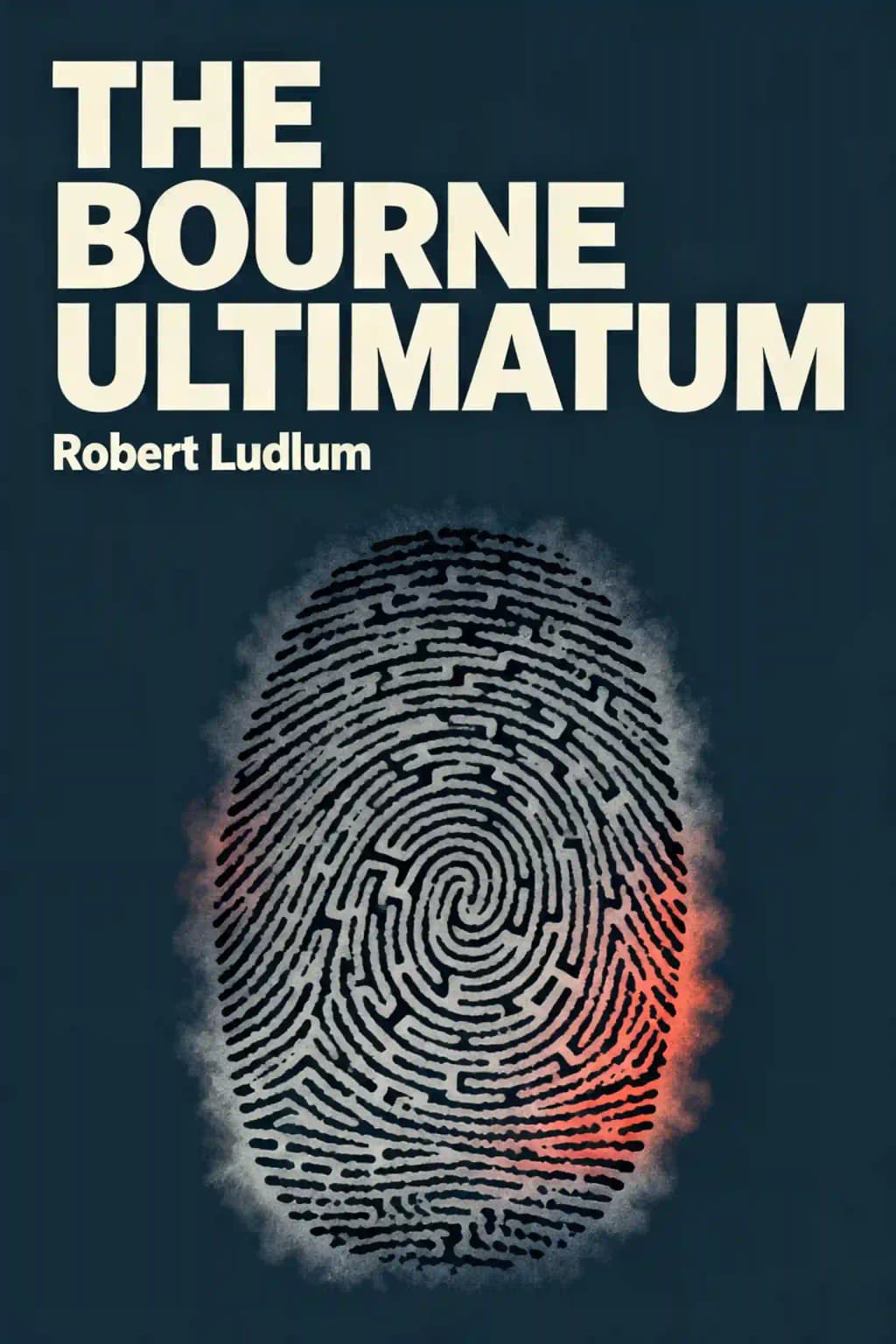
The Bourne Ultimatum stands as Robert Ludlum's masterful conclusion to his groundbreaking trilogy, a book that has captivated millions worldwide and inspired a blockbuster film franchise starring Matt Damon. This 1990 thriller represents Ludlum at the peak of his powers, delivering a heart-stopping finale to the saga of Jason Bourne, the amnesiac assassin whose journey began in The Bourne Identity. The novel's exploration of dual identity and psychological fragmentation resonated so deeply with readers that it remained on bestseller lists for months after publication. Even decades later, the book continues to influence the spy thriller genre, with its complex protagonist serving as a template for morally ambiguous heroes in contemporary fiction and film.
Глава 2
A Man Divided: The Battle Between David Webb and Jason Bourne
At fifty years old, David Webb should be enjoying the peaceful life of a university professor with his wife Marie and their children. Instead, he finds himself creeping through the woods surrounding a Virginia estate, armed and dangerous. The predator within him - Jason Bourne - is taking control once again, his movements fluid and purposeful, his academic persona dissolving with each silent step through the underbrush.
This internal struggle forms the psychological backbone of the entire narrative, creating a complex portrait of a man at war with himself. Webb is a gentle academic who wants nothing more than to live quietly with his family, spending his days discussing Far Eastern studies with eager students and his evenings helping his children with homework. Bourne, in stark contrast, is a ruthless killer, created years ago as part of a classified government operation codenamed Treadstone, specifically designed to hunt down the notorious assassin Carlos the Jackal. These two personas exist in perpetual conflict within one mind, each fighting for dominance - like matter and antimatter contained in the same vessel.
"In the final analysis, it's Carlos against Bourne," Webb tells his handler Alex Conklin during a tense midnight meeting. "We're back where we were thirteen years ago." This statement reveals the cyclical nature of their conflict - no matter how much Webb tries to escape his past through academic work, family life, or therapy, the Bourne identity resurfaces whenever danger threatens those he loves. The pattern repeats with devastating regularity: a threat emerges, Webb resists the change, but ultimately Bourne breaks through, bringing with him a flood of deadly skills and dark memories.
The psychological toll of this duality manifests physically in stark, observable ways. When Webb allows Bourne to take control, his entire demeanor transforms - his eyes become unfocused yet somehow more alert, his voice turns cold and mechanical, his movements become predatory and precise. His walk changes from the casual stride of a professor to the calculated gait of a hunter. Dr. Morris Panov, Webb's psychiatrist, watches this transformation with professional fascination and personal horror, meticulously documenting each transition while knowing that each time Bourne emerges, Webb risks losing himself permanently to the darker personality.
This internal conflict creates a fascinating character study that goes beyond typical espionage thriller conventions. Webb/Bourne must navigate not just external threats but his own fractured psyche, constantly balancing the need for Bourne's lethal capabilities with Webb's desire to maintain his humanity. When confronting enemies, he relies on Bourne's encyclopedic knowledge of weapons and combat techniques, but when thinking of his family, Webb's compassion and moral center shine through. This duality allows Ludlum to explore themes of identity and redemption in surprisingly nuanced ways for a thriller. The central question haunts every page: Can a man who has done terrible things truly leave that part of himself behind? Or will the darkness always remain, waiting in the shadows of his mind to resurface when needed? The answer seems to be that both aspects of his personality are permanently intertwined - neither fully dominant, neither completely submissive, but locked in an eternal dance of necessity and regret.
Глава 3
The Trap is Set: Carlos Strikes First
The novel opens with a masterful sequence of manipulation and danger. Alexander Conklin, Webb's former CIA handler, and Dr. Morris Panov, his psychiatrist, receive identical telegrams supposedly from Jason Bourne, asking them to meet at an amusement park in Baltimore. The location is deliberately chaotic-a place of violent attractions and disorienting noise, perfect for an ambush.
As they navigate through the crowd, a woman nearby is shot in the throat. This isn't random violence but a calculated move by Carlos the Jackal, who has spent years hunting the man who nearly killed him and saw his face. The shooting creates panic, allowing Carlos's agents to pursue their real targets while authorities focus on the murder.
This opening gambit reveals Carlos's methodical approach. Rather than attacking Webb directly, he targets those closest to him-the people who know his secrets and protect his identity. By eliminating Webb's support network, Carlos isolates his prey before moving in for the kill.
The strategy forces Webb to make an impossible choice: remain David Webb and protect his family by fleeing, or become Jason Bourne again to hunt down Carlos once and for all. "I can't spend the rest of my life looking over my shoulder," Webb tells Conklin. "I can't let Marie spend her life wondering when someone might come after the children." This dilemma drives Webb's transformation back into Bourne-not just to save himself, but to protect those he loves.
Carlos's network proves disturbingly extensive. His "old men of Paris"-elderly couriers and killers who serve him in exchange for providing for their families after they're gone-appear throughout the narrative. These unassuming agents, whom no one would suspect, represent Carlos's insidious reach. Even more disturbing is his penetration of government agencies and influential circles, suggesting that nowhere is truly safe from his influence.
The trap at the amusement park is just the opening move in an elaborate chess match between two master strategists. Carlos has planned meticulously, but so has Bourne, who recognizes the patterns in his enemy's methods. Their deadly game will span continents, claim numerous lives, and ultimately force both men to confront their own mortality.
Глава 4
Medusa Rises: The Conspiracy Within
As Bourne delves deeper into Carlos's activities, he uncovers a shocking connection to his own past - Medusa, a covert military unit from the Vietnam War that operated entirely without official sanction or oversight. This "unsanctioned battalion of killers" provided invaluable intelligence to U.S. forces but employed increasingly brutal methods, including the systematic slaughter of suspected Viet Cong sympathizers, the execution of non-combatants, and the methodical diversion of millions in taxpayer funds through elaborate money-laundering schemes in Saigon and Hong Kong.
What makes this revelation particularly disturbing is that many former Medusa members have methodically positioned themselves in roles of immense power and influence throughout the decades following Vietnam. The Pentagon procurements general, controlling billions in military contracts; the FTC chairman, directing American economic policy; the NATO supreme commander, orchestrating Western military strategy; and even the Chairman of the Joint Chiefs - all bear the distinctive Medusa tattoo - a woman's face with writhing snakes for hair, inked in secret ceremonies in Southeast Asian safe houses. These men have masterfully transformed themselves from shadowy military operatives into "global power brokers," leveraging their intricate web of connections to manipulate international economies and political systems for astronomical profit.
"They were killers and thieves, the original death squads," Conklin explains to Bourne in a pivotal scene, his voice heavy with both disgust and grudging admiration. "But damn it, they provided more actionable intelligence than all other units combined - intelligence that potentially saved thousands of American lives." This moral ambiguity - terrible means justified by beneficial ends - echoes throughout the narrative, challenging simplistic notions of heroism and villainy while forcing readers to confront uncomfortable questions about the true cost of national security.
The modern incarnation of Medusa operates with ruthless corporate efficiency, systematically destroying global economies for profit while maintaining an impeccable veneer of respectability through charitable foundations and think tanks. When Bourne finally confronts Albert Armbruster, the FTC chairman reveals the organization's staggering scope: nearly $100 million cached in numbered Zurich accounts, monthly coded telexes documenting vast deposits and lists of companies they're systematically gaining control of, and detailed plans to establish "the controls we need in Europe" within six months through a complex web of shell corporations and compromised officials.
This conspiracy represents a fundamentally different kind of threat than Carlos - not a single brilliant assassin operating in the shadows, but a hydra-headed organization with tentacles reaching deep into governments, financial institutions, and intelligence agencies worldwide. By connecting Carlos to Medusa, Ludlum creates an intricate web of intrigue spanning decades, suggesting that the seeds of present danger were planted long ago in the blood-soaked soil of Vietnam's killing fields.
The Medusa connection also provides Bourne with crucial leverage in his quest. By threatening exposure of their past atrocities - documented in hidden microfilm archives and secured testimonies - he systematically forces these powerful men to reveal critical information about Carlos's operations and safe houses. This strategy demonstrates Bourne's tactical brilliance - using one formidable enemy to defeat another while expertly exploiting their mutual vulnerabilities and minimizing his own exposure to direct confrontation.
Глава 5
The Hunt Across Continents: From Montserrat to Moscow
The narrative weaves through multiple locations, each serving as a distinct battlefield in the war between Bourne and Carlos. From the tropical paradise of Montserrat to the wintry streets of Moscow, the changing settings reflect the global nature of their conflict while providing unique challenges and opportunities that test both men's considerable skills.
Montserrat initially appears as a sanctuary for Marie and the children, hidden away at Tranquility Inn on Tranquility Isle. The lush vegetation, pristine beaches, and seemingly peaceful atmosphere create a false sense of security. The irony of the name becomes apparent when Carlos's agents infiltrate the island, transforming paradise into a killing ground. The elderly couple who arrive - Jean Pierre Fontaine wearing a Legion d'honneur medal and his frail wife in a wheelchair - exemplify Carlos's strategy of using unlikely assassins. Their carefully crafted personas, down to the authentic-looking medical equipment and trembling hands, demonstrate the Jackal's meticulous planning and psychological warfare. Their presence transforms the idyllic setting into a danger zone, proving nowhere is beyond the Jackal's reach, not even this remote Caribbean haven.
Paris serves as the central battleground, appropriate given its significance in their shared history. The city's labyrinthine streets and shadowy corners mirror the complexity of the chase. Here, Bourne infiltrates Le Coeur du Soldat, a hidden bistro serving as Carlos's message center. Located in a neglected quarter of the city, the establishment's worn facade conceals its true purpose. The clientele - mercenaries, former soldiers, and intelligence operatives - represents the shadow world both men inhabit. Through careful manipulation and calculated risk, Bourne establishes contact with Santos, the massive bald bartender who serves as Carlos's conduit. The bistro becomes a microcosm of their larger conflict, where every gesture and word carries potential death.
The hunt culminates in Moscow, where Carlos has fled after Bourne's relentless pressure in Paris. The Soviet capital, with its imposing architecture and omnipresent surveillance, represents hostile territory for both men - Carlos because he was disowned by his former KGB handlers, Bourne because he's an American operative in Cold War Russia. The city's winter darkness and paranoid atmosphere amplify the tension. This final setting strips both men of their usual advantages, forcing them to rely on raw skill and determination. The frozen streets and Soviet bureaucracy create additional obstacles, while the constant presence of state security forces adds another layer of danger to their deadly game.
Throughout these location shifts, Ludlum maintains breathless pacing while developing the psychological cat-and-mouse game. Each new setting reveals different aspects of both hunter and hunted. In Montserrat, we see Carlos's patient planning and willingness to corrupt paradise; in Paris, Bourne's improvisational brilliance and deep understanding of the criminal underworld; in Moscow, both men's desperate final gambits as their options narrow and the weather itself becomes an enemy.
The global scale emphasizes the stakes - this isn't just a personal vendetta but a conflict with international implications. Government agencies from multiple countries become involved, creating a complex web of alliances and betrayals that neither Bourne nor Carlos can fully control. The CIA, KGB, French Intelligence, and various other organizations all pursue their own agendas, making the hunt even more treacherous as loyalties shift like quicksand beneath the protagonists' feet.
Глава 6
The Price of Loyalty: Allies and Betrayals
Throughout his journey, Bourne relies on a network of allies whose loyalty becomes increasingly crucial-and increasingly tested-as the danger escalates. These relationships reveal much about both David Webb and Jason Bourne, showing how differently each persona forms connections with others.
Alexander Conklin serves as Bourne's primary handler and friend, though their history is complicated. Years earlier, Conklin tried to kill Bourne, believing he had gone rogue. Now he works tirelessly to protect Webb, driven by guilt and genuine affection. Their relationship embodies the moral ambiguity at the heart of intelligence work-professionals who might be ordered to eliminate each other "with deep regrets," as Dimitri Krupkin puts it.
Morris Panov represents Webb's anchor to normalcy. As his psychiatrist for thirteen years, Panov understands the fragile balance between Webb and Bourne better than anyone. When captured and drugged by Medusa, Panov resists revealing information about Webb even under extreme duress, demonstrating extraordinary loyalty. His professional concern often conflicts with operational necessities, highlighting the tension between Webb's mental health and Bourne's effectiveness.
Marie St. Jacques Webb embodies the human stakes of the conflict. Her determination to protect her husband-both physically and psychologically-drives her to fly to Paris despite the danger. She understands that while Jason Bourne might survive without her, David Webb needs her to maintain his humanity. "I'm not here to save your life," she tells him. "I'm here to save your mind."
Betrayal comes from unexpected quarters. Steven DeSole, the CIA's "mute mole" known for absolute discretion, sells classified information to Medusa, justifying his actions as necessary for his grandchildren's futures. His betrayal underscores how even the most trusted systems can be compromised by personal motivations.
The most complex relationship is between Bourne and Dimitri Krupkin, a Soviet intelligence officer who becomes an unlikely ally. Despite representing opposing governments, they develop mutual respect based on professional competence. When ordered to execute Bourne, Krupkin refuses, citing the Nuremberg principle that "obscene commands should not be obeyed." This moral stand costs him everything-his position, his home, his identity-yet he makes the choice without hesitation, demonstrating that loyalty to principles can transcend loyalty to institutions.
These relationships illustrate how trust functions in a world of deception. Each character must constantly evaluate where their true loyalties lie-to individuals, to organizations, or to abstract ideals of justice and duty. The choices they make under pressure reveal their core values more clearly than any declaration could.
Глава 7
The Jackal Unmasked: Carlos's Descent into Madness
Carlos the Jackal begins the narrative as a phantom-unseen but omnipresent, his influence felt through his network of agents. As the story progresses, we witness his gradual unraveling, transforming from a calculated mastermind into an increasingly unstable killer consumed by vengeance.
The Jackal's obsession with destroying Bourne drives his every action. This fixation stems from their previous encounters, where Bourne not only saw Carlos's face but also killed his lover. For an assassin whose power derives partly from anonymity, being identified represents an existential threat. More personally, the loss of his companion created an emotional wound that festered over years into pathological hatred.
Physical deterioration accompanies Carlos's psychological decline. His hollow cough confirms rumors of illness, suggesting his time is limited. This mortality adds urgency to his vendetta-he must eliminate Bourne before disease claims him. The knowledge that he's dying makes Carlos more dangerous, as he has nothing left to lose.
Carlos's methods become increasingly erratic as pressure mounts. When his carefully orchestrated traps fail to capture Bourne, he abandons subtlety for direct confrontation. At the Kubinka armory in Moscow, he recklessly attacks a heavily guarded facility. Later, at a meeting with Soviet officials who have secretly accepted his money for years, he massacres them all when they question his authority, screaming "Traitors! Filth! Garbage!" as he guns them down.
This descent culminates in the final confrontation at Novgorod, where Carlos reveals his ultimate goal-not just to kill Bourne but to destroy the Soviet training facility, leaving a message that "the Komitet made a colossal error in not utilizing my extraordinary talents." This grandiose declaration exposes the narcissism driving his actions. Beyond revenge against Bourne, Carlos seeks validation of his importance, recognition of his "extraordinary talents" from those who rejected him.
The Jackal's deterioration serves as a dark reflection of Bourne's own struggle with identity. Both men are professional killers whose personas have consumed their original selves. The difference lies in their response to this transformation-Webb fights to maintain his humanity despite Bourne's influence, while Carlos surrenders completely to his assassin identity, losing whatever person he might once have been.
Глава 8
The Final Confrontation: Novgorod's Reckoning
The climactic showdown takes place at Novgorod, the Soviet training facility where Carlos received his education as an assassin. This location carries symbolic weight-the place that created the Jackal will now witness his destruction. For Carlos, returning to Novgorod represents a perverse homecoming; for Bourne, it's the final battleground in a war that has consumed half his life.
Bourne infiltrates the facility with help from Benjamin, a young Soviet trainer with American education and complex loyalties. Their alliance highlights how personal connections often transcend political divisions-Benjamin helps Bourne not out of ideological agreement but because Bourne promises to help his imprisoned mother in return.
Carlos breaches Novgorod through the Spanish tunnel, using classic misdirection tactics-sending in a decoy with fake papers while stealing a uniform during the confusion. His plan to burn the facility reveals both his tactical brilliance and his psychological deterioration. The rational goal of eliminating Bourne has become entangled with an irrational desire for spectacular vengeance against the system that discarded him.
The confrontation unfolds with cinematic intensity. When Carlos murders Enrique to steal his uniform, he reveals his complete moral emptiness-killing an ally simply to minimize bloodstains on the clothing he needs. This casual cruelty contrasts with Bourne's earlier decision to tranquilize rather than kill a guard dog, showing the ethical gulf between them despite their similar professional skills.
The final moments deliver poetic justice. Carlos dies not directly by Bourne's hand but trapped in a flooding tunnel-a death engineered by Benjamin, who recognized the Jackal by his weapon and uniform. As Bourne watches Carlos's corpse crash against steel bars, his "dark features twisted in hate, his eyes like glass orbs reviling death," we see the satisfaction of Jason Bourne alongside the relief of David Webb-"a man freed from a loathsome burden."
This conclusion resolves the external conflict while setting the stage for Webb's internal reconciliation. With Carlos eliminated, the justification for Bourne's existence vanishes. As Panov later declares, "Jason Bourne is dead, cremated in Moscow." This pronouncement offers hope that Webb might finally integrate his fractured psyche and live as a whole person rather than a divided self.
Глава 9
Legacy of Violence: Can Peace Ever Truly Come?
The novel's epilogue raises profound questions about identity and redemption. Though Carlos is dead, the violence he represented continues to haunt David Webb. Walking along the moonlit beach with Marie, Webb admits to carrying a gun-a "reflex" and "compulsion" he can't entirely explain. When footsteps approach and Webb instantly transforms into Bourne-spinning around, pushing Marie away, crouching with weapon drawn-we see how deeply ingrained his violent instincts remain.
The intruder turns out to be Morris Panov, who confronts Webb with brutal honesty. "Jason Bourne is dead, cremated in Moscow," he insists, demanding Webb accept this reality or end their relationship. This ultimatum forces Webb to confront his dependence on the Bourne identity as a shield against vulnerability. Despite Carlos's death, Webb continues to cling to Bourne's strength and certainty.
This final scene encapsulates the novel's central theme-the difficulty of escaping one's past. Webb has spent thirteen years trying to exorcise Jason Bourne from his psyche, yet under stress, Bourne emerges automatically. This suggests that violent experiences fundamentally alter a person, creating patterns that persist even when the original threat has disappeared.
Panov acknowledges the unique challenge of "two lives in one mind" but affirms with certainty that "it's over now. It's really over." This declaration offers cautious optimism-not that Webb will magically become whole, but that with continued effort and support, he might gradually integrate his experiences rather than compartmentalizing them.
The novel's conclusion resonates beyond its specific characters to address broader questions about violence and healing. Can someone who has committed or experienced extreme violence ever truly leave that part of themselves behind? The answer seems to be both yes and no-the capacity for violence remains, but its expression can be channeled and controlled through conscious choice and supportive relationships.
This nuanced perspective elevates The Bourne Ultimatum above typical thriller fare. While delivering the expected action and intrigue, Ludlum also explores psychological depth and moral complexity. The ultimate "ultimatum" may not be between Bourne and Carlos but between integration and fragmentation within Webb himself-the choice to accept all aspects of his experience rather than dividing himself into "good" and "bad" personas.
As Webb kneels on the beach, overcome with emotion while Marie comforts him, we sense both the pain of confronting one's darkest capabilities and the possibility of moving forward with greater wholeness. This bittersweet ending acknowledges that healing is neither simple nor complete but remains worth pursuing despite its challenges.