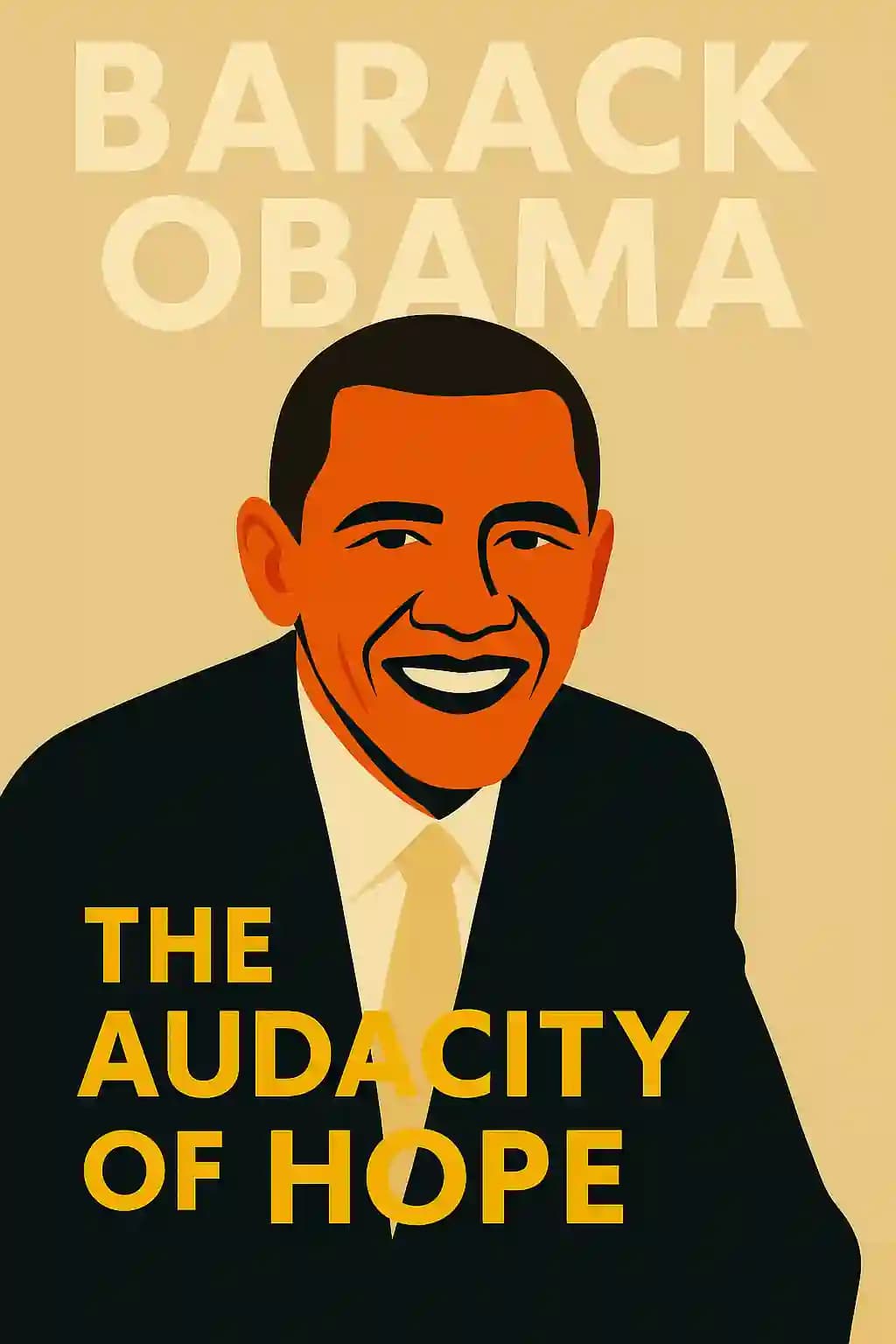
The Audacity of Hope
Обзор книги The Audacity of Hope
Obama's visionary manifesto topped bestseller charts, transforming political discourse with its compelling call for empathy and inclusive politics. Even skeptics found themselves respecting his perspective - what sermon-inspired painting gave this presidential philosophy its audacious title and enduring cultural impact?
Ключевые темы в The Audacity of Hope
- bipartisan consensus
- american political history
- communal values
- ideological polarization
- national renewal
Цитаты из The Audacity of Hope
Hope in the face of difficulty. Hope in the face of uncertainty. The audacity of hope!
We worship an awesome God in the blue states, and we don't like federal agents poking around our libraries in the red states.
In the world's greatest deliberative body, no one is listening.
Self-reliance becomes selfishness, patriotism slides into jingoism, faith calcifies into self-righteousness.
Empathy-standing in someone else's shoes-forms the core of my moral code.
Персонажи в The Audacity of Hope
- Barack ObamaThe author and then-U.S. Senator from Illinois
- Jeremiah WrightReverend whose sermon inspired the book's title
Об авторе
Об авторе книги The Audacity of Hope
Barack Obama, the 44th President of the United States and #1 New York Times bestselling author of The Audacity of Hope: Thoughts on Reclaiming the American Dream, combines his political leadership with literary craftsmanship to explore themes of democracy, unity, and civic responsibility. A graduate of Columbia University and Harvard Law School, Obama’s career as a civil rights attorney, Illinois state senator, and U.S. senator informs his nuanced analysis of bipartisan governance and societal progress in this 2006 political memoir.
His debut book, Dreams from My Father (1995), and presidential memoir A Promised Land (2020) further cement his reputation as a reflective chronicler of American identity and global leadership.
Known for leveraging pop culture to engage diverse audiences, Obama has appeared on platforms like Between Two Ferns with Zach Galifianakis and The Ellen DeGeneres Show, blending wit with policy advocacy. His works have been translated into dozens of languages, with A Promised Land selling over 3 million copies in its first month and topping bestseller lists globally.
Скачать резюме книги «The Audacity of Hope»
Получите резюме книги «The Audacity of Hope» в формате PDF или EPUB бесплатно. Распечатайте или читайте офлайн в любое время.
Часто задаваемые вопросы об этой книге
The Audacity of Hope outlines Barack Obama’s vision for transcending partisan politics by focusing on shared American values like equality, civic responsibility, and faith. It advocates for unity through dialogue, addressing economic insecurity, racial tensions, and global threats while reflecting on governance, family, and balancing ideological divides. The book blends personal reflections with policy ideas grounded in constitutional principles.
This book resonates with politically engaged readers, activists, and anyone interested in bipartisan solutions to modern challenges. It appeals to those seeking hopeful perspectives on democracy, policymakers exploring inclusive governance, and voters curious about Obama’s pre-presidential ideals. Critics of political polarization will find its emphasis on common ground compelling.
Yes—Obama’s eloquent prose and pragmatic optimism make it a standout political memoir. Critics praise its humane solutions to divisive issues, while readers note its cross-partisan appeal (e.g., conservatives like the reviewer’s grandmother embracing it). It remains relevant for understanding 21st-century American politics and the mindset of a future president.
- Unity over division: Prioritizing shared values like equality and community.
- Civic responsibility: Government’s role in addressing economic insecurity, healthcare, and climate change.
- Bipartisan dialogue: Respectful engagement with opposing viewpoints to find actionable solutions.
- Moral governance: Balancing faith and policy without ideological dogma.
- “The audacity of hope”: Symbolizes optimism in restoring community amid conflict.
- “There’s not a liberal America and a conservative America… there’s the United States of America”: Emphasizes national unity.
- “Our pride is based… all men are created equal”: Reinforces foundational American ideals.
Obama acknowledges skepticism about bipartisan cooperation but argues practical progress requires “radically hopeful” engagement. He rejects cynicism, urging readers to see governance as a collective project rooted in empathy and incremental change. Critics cite challenges in implementation, but supporters praise its actionable frameworks.
Obama advocates for centrist pragmatism, blending progressive goals with respect for conservative perspectives. He emphasizes constitutional fidelity, ethical leadership, and faith’s role in public life—while rejecting dogma. His vision prioritizes empathy, compromise, and systemic reforms to uplift marginalized communities.
The book solidified Obama’s national profile after his 2004 DNC speech, framing his presidential ethos. It introduced themes of unity and hope later central to his campaigns, showcasing his ability to bridge divides. Historians view it as a blueprint for his governance style.
Its insights on polarization, economic inequality, and democratic renewal resonate amid 2020s political divisions. The call to prioritize “common good over partisan warfare” aligns with contemporary debates about misinformation, social justice, and institutional trust.
Unlike polemical works, Obama’s focus on bipartisan dialogue and humility distinguishes it. It avoids demonizing opponents, instead offering constructive critiques of media, fundraising, and extremism. Readers liken its tone to historical leadership texts rather than modern partisan manifestos.
Some argue its centrist approach underestimates systemic barriers to unity, while others find specific policy proposals vague. However, even critics concede its aspirational tone inspired broader civic engagement, particularly among younger audiences.
He humanizes policy issues through anecdotes—e.g., conversations with protesters, reflections on fatherhood, and reconciling faith with public service. These stories reinforce his theme of “seeing ourselves in others” to build empathy across divides.