Глава 1
The Assassin Who Would Be Queen: A Tale of Vengeance, Betrayal, and Freedom
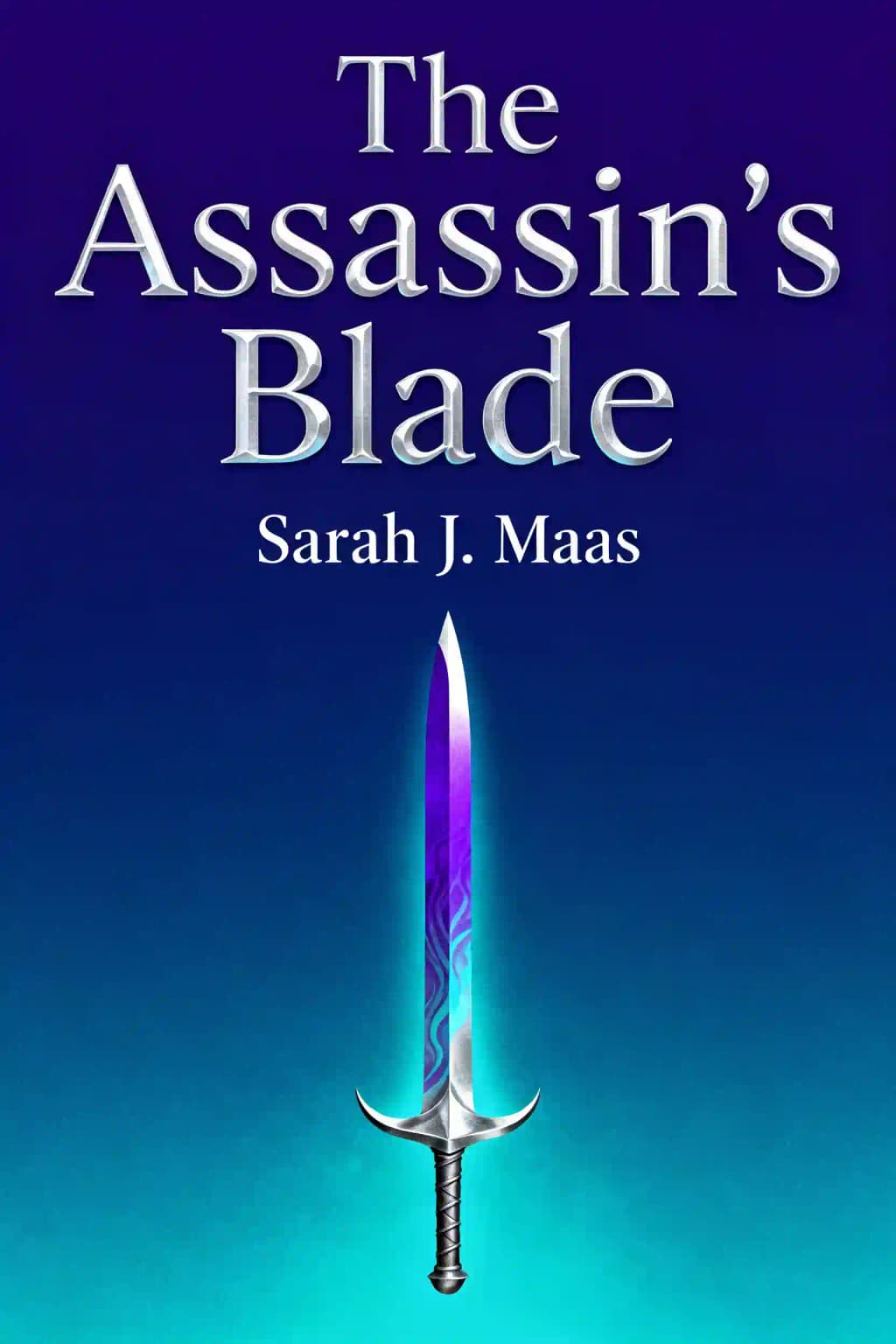
When Throne of Glass hit bookshelves in 2012, few could have predicted the cultural phenomenon it would become. Before readers met Celaena Sardothien in the salt mines of Endovier, Sarah J. Maas crafted five novellas detailing her protagonist's earlier adventures-collected as The Assassin's Blade. This prequel collection has become required reading for fans, offering crucial insights into the character who would eventually reshape an entire fantasy universe. With over 12 million copies sold worldwide and a Hulu adaptation in development, Maas's saga about a teenage assassin's journey from prisoner to champion has captivated readers across generations. What makes these stories particularly compelling is how they transform a seemingly cold-blooded killer into someone readers can't help but root for-revealing the vulnerable heart beneath the deadly exterior.
Глава 2
The Making of an Assassin: Celaena's Origins and Moral Complexity
At just sixteen, Celaena Sardothien has already earned her reputation as Adarlan's Assassin - feared throughout the continent and prized by her master, Arobynn Hamel, King of the Assassins. Their relationship forms the complex backbone of her character: he saved her from death as a child, found half-frozen in the banks of the Avery River, and transformed her through brutal training into his most lethal weapon. Yet beneath his seemingly paternal care lies calculated cruelty - he manipulates her emotions, pits her against other assassins, and demands absolute loyalty while showing none in return. This twisted father-figure dynamic creates the central tension in Celaena's life, as she struggles between gratitude for the man who gave her a second chance and growing awareness of his toxic control.
What makes Celaena fascinating isn't just her deadly skills - her mastery of poison, blade work, and silent killing - but her unexpected moral code. Despite her profession, she maintains certain principles that separate her from true monsters. She refuses contracts on children, won't torture her targets, and shows mercy when possible. This becomes starkly evident in "The Assassin and the Pirate Lord" when she discovers Arobynn has arranged for her to facilitate slave trading with Captain Rolfe. Her visceral disgust reveals the first major crack in her loyalty to Arobynn - she may kill for money, but trafficking innocent people crosses a line she refuses to accept.
The contrast between her professional identity and personal values creates compelling internal conflict. Trained since childhood to be emotionless and efficient, she nevertheless cannot ignore her conscience when confronted with true injustice. She maintains a secret library of books, appreciates fine clothes and music, and harbors dreams beyond the assassin's life - all while being one of the most feared killers in the realm. This moral complexity makes her more than just another fantasy assassin archetype; she's a young woman struggling to reconcile her brutal training with her innate sense of right and wrong.
Her relationship with fellow assassin Sam Cortland adds another crucial dimension to this struggle. Initially rivals competing for Arobynn's approval, their mutual disgust for slavery forms the first bridge between them. Sam sees past her carefully constructed facade of arrogance to recognize the compassion she tries to hide. When they risk everything to free two hundred slaves from Skull's Bay, we witness not just their growing romantic connection but also their first major act of defiance against their master. This decision marks a turning point in Celaena's journey toward independence - a choice that will have devastating consequences as Arobynn's retaliation proves both swift and merciless, forever changing the trajectory of their lives.
Глава 3
Bonds Forged in Blood: The Evolution of Sam and Celaena's Relationship
Few literary romances begin with mutual antagonism quite like Sam and Celaena's. Their initial interactions are marked by professional jealousy and personal dislike-Sam resents Celaena's favored position with Arobynn, while she views him as competition. Their transformation from rivals to allies to lovers unfolds organically across the novellas, creating one of the most emotionally resonant relationships in the series.
The pivotal moment comes during their mission to Skull's Bay, where they discover Arobynn has sent them to facilitate slave trading. Their shared moral outrage creates the first genuine connection between them. When Sam reveals his mother was sold to a brothel at age eight, we understand the personal stakes driving his opposition. For once, Celaena sees beyond her own interests, recognizing in Sam someone whose childhood trauma mirrors her own hidden past.
Their relationship evolves through shared danger and mutual protection. After freeing the slaves-an act of defiance they know will bring Arobynn's wrath-they return to face punishment together. The brutal scene where Arobynn beats Celaena while forcing Sam to watch becomes a turning point. Sam's helpless rage and Celaena's relief that he wasn't harmed reveal deeper feelings neither is ready to acknowledge.
What makes their romance compelling is how it develops alongside their growing desire for freedom from Arobynn's control. After Celaena returns from the Red Desert, their relationship shifts from professional respect to something more intimate. The moment Sam confesses, "Because I love you!" after admitting he spent months fighting the urge to kill Arobynn for hurting her, marks their transition from colleagues to partners. Their subsequent kiss represents not just romantic connection but mutual recognition of their shared desire to escape Arobynn's shadow.
Their relationship reaches its most poignant in their final days together, planning a future neither will live to see. Sam's promise that they have "all the time in the world" becomes heartbreaking with the knowledge of his impending death. Their love story serves as both the emotional core of the novellas and the catalyst for Celaena's transformation-his loss will eventually fuel her journey from assassin to something greater.
Глава 4
The Desert's Harsh Lessons: Transformation Through Discipline and Betrayal
Arobynn's punishment for Celaena's defiance in Skull's Bay sends her to the Red Desert to train with the Silent Assassins-a journey that transforms her both physically and mentally. The scorching desert setting serves as the perfect metaphor for this purifying ordeal, stripping away her arrogance and forcing her to rebuild herself from the ground up.
The Mute Master's unconventional training methods challenge everything Celaena thought she knew about being an assassin. Where Arobynn taught competition and cutthroat ambition, the Silent Assassins value collective wisdom and patience. Her initial frustration at being made to observe desert creatures rather than immediately train with the Master reveals her fundamental character flaw: pride that borders on hubris. The desert becomes her crucible, teaching her that true strength comes not just from speed and skill but from observation, adaptation, and inner calm.
Her friendship with Ansel of the Flatlands adds another dimension to her desert experience. In Ansel, Celaena finds a kindred spirit-another young woman shaped by trauma and driven by hidden motives. Their relationship progresses from initial wariness to genuine affection, making Ansel's eventual betrayal all the more devastating. When Celaena discovers Ansel has drugged her and left her to die in the desert while plotting to massacre the Silent Assassins, she confronts not just physical danger but the emotional pain of betrayal by someone she trusted.
The climactic confrontation between Celaena and Ansel represents a pivotal moment in her development. With Ansel at her mercy, sword poised for a killing blow, Celaena makes a crucial choice-she grants mercy rather than vengeance, giving Ansel twenty-one minutes to flee before firing an arrow she intentionally aims to miss. This decision marks significant growth from the ruthless assassin introduced at the beginning of the novellas.
The Master's parting gift-three trunks of gold, enough to buy her freedom from Arobynn-represents not just material wealth but the opportunity for rebirth. She leaves the desert with new fighting techniques, greater patience, and the financial means to potentially free herself from Arobynn's control. However, she also carries the painful lesson that trust can be weaponized and that even the closest bonds can hide betrayal-foreshadowing the greater betrayal awaiting her in Rifthold.
Глава 5
The Price of Freedom: Celaena's Growing Independence and Its Consequences
Upon returning to Rifthold, Celaena begins systematically dismantling her ties to Arobynn, though she doesn't yet recognize the dangerous game she's playing. Her first act of independence comes when she uses the gold from the Silent Assassins to pay off her debt to Arobynn-a transaction that should free her from his financial control. The moment she places three trunks of gold before him represents her first concrete step toward autonomy, yet his subdued reaction hints that money alone won't sever their complicated bond.
Her growing relationship with Sam accelerates this push for independence. Together, they move into an apartment away from the Assassins' Keep-a physical separation that mirrors their emotional distancing from Arobynn's influence. Their domestic moments-sharing meals, arguing about furniture, planning their future-offer glimpses of the normal life they might have had under different circumstances. These quiet scenes carry particular poignancy because readers know their happiness is temporary.
The Doneval mission becomes a turning point in Celaena's journey toward independence. When she discovers Arobynn manipulated her into killing an ally of slaves rather than their enemy, she finally recognizes the extent of his control and deception. His casual admission-"I wanted to see if you would do it"-reveals the cruel game he's been playing, testing not just her skills but her loyalty and moral flexibility. This betrayal catalyzes her final break from him, as she announces she's moving out permanently.
Her last act before leaving the Keep-using her remaining fortune to buy Sam's freedom as well-demonstrates her growth from the self-centered assassin introduced at the beginning. By prioritizing Sam's freedom alongside her own, she shows she's learned to value something beyond her individual success. However, Arobynn's parting revelation that he used her money to win Lysandra's Bidding ceremony demonstrates his unwillingness to relinquish control, foreshadowing the more devastating betrayal to come.
The price of their bid for freedom becomes clear in the final novella. Their attempt to establish themselves independently by taking on Ioan Jayne and Rourke Farran-without Arobynn's blessing or protection-leads directly to their downfall. The tragic irony is that in seeking complete freedom from Arobynn, they unwittingly walk into a trap he likely helped orchestrate, revealing that the price of true independence from the King of Assassins is ultimately their lives.
Глава 6
Masks and Identities: The Many Faces of Celaena Sardothien
Throughout the novellas, Celaena constantly shifts between identities-sometimes literally wearing masks, other times adopting personas to suit her needs. This theme of fluid identity reveals her complexity while hinting at deeper secrets about who she truly is beneath her assassin facade.
In Skull's Bay, she hides behind a physical mask, concealing her youth and gender to maintain her fearsome reputation. When she finally removes it to distract Rolfe, revealing her beauty becomes a tactical decision-another form of manipulation rather than genuine vulnerability. This pattern continues in her interactions with Doneval, where she adopts the persona of "Dianna Brackyn," a merchant's innocent niece, to extract information. Her ability to seamlessly transition between identities demonstrates both her training and her fundamental uncertainty about her authentic self.
Her time in the Red Desert forces her to temporarily abandon these masks. Among the Silent Assassins, she can't hide behind reputation or disguise-she must prove her worth through actions alone. This stripping away of pretense allows for genuine connections with Ansel and Ilias, though her reluctance to fully open herself remains. When Ilias attempts to kiss her and she pulls away thinking of Sam, we glimpse the conflict between her carefully constructed personas and her genuine emotions.
The most revealing moment of identity confusion comes when Celaena admits her deepest fear to Sam: "Deep down, I'm a coward. I'm scared all the time." This rare moment of vulnerability exposes the gap between her fearsome public reputation and her private insecurities. Sam's response-teaching her his mantra "My name is Sam Cortland, and I will not be afraid"-provides her with a tool to bridge this divide, one she ultimately adopts in her darkest moment entering Endovier.
Throughout the novellas, Maas carefully withholds Celaena's true identity while dropping subtle hints about her connection to Terrasen and its fallen royal family. The white stag's appearance as she's transported to Endovier-recognized as the Lord of the North, a sacred symbol of Terrasen-suggests a deeper connection than mere nationality. These breadcrumbs create intrigue for readers while establishing the foundation for the major revelations about her identity that will come in the main series.
Глава 7
The Architecture of Betrayal: Arobynn's Manipulation and Ultimate Treachery
Arobynn Hamel emerges as one of the most fascinating villains in the novellas-not through overt cruelty but through calculated manipulation disguised as love. His relationship with Celaena represents a masterclass in emotional abuse, using her dependency and desire for approval to maintain control while systematically isolating her.
The pattern begins with his punishment for her defiance in Skull's Bay. Rather than simply beating her, he forces Sam to watch-a psychological torture designed to damage their relationship by creating shared trauma. When she returns from the Red Desert, he presents himself as repentant, offering gifts and apparent autonomy while subtly undermining her independence. His "apology" takes the form of a custom-made assassin's suit-a gift that simultaneously acknowledges her skill while marking her as his creation.
The Doneval mission reveals the sophisticated nature of his manipulation. By offering Celaena the entire payment without taking his usual cut, he creates the illusion of generosity while setting her up to kill an ally of slaves rather than their enemy. When confronted, his casual admission-"I wanted to see if you would do it"-reveals the true purpose: testing the limits of her loyalty and moral flexibility. Each apparent concession to her independence actually tightens his control.
His most devastating betrayal comes in the final novella, though its exact nature remains deliberately ambiguous. The evidence strongly suggests Arobynn orchestrated Sam's death and Celaena's capture by working with Farran-the final scene showing them watching her transport to Endovier confirms their alliance. This ultimate betrayal serves multiple purposes: punishing Celaena's defiance, eliminating Sam as a rival for her loyalty, and potentially setting up her eventual return under his complete control.
What makes Arobynn truly terrifying is not just his willingness to destroy Celaena but his twisted justification-"Because I don't like sharing my belongings." This possessive declaration reveals his fundamental view of her not as a person but as property, explaining why her growing independence and relationship with Sam triggered such a calculated response. By sending her to Endovier rather than killing her outright, he preserves the possibility of reclaiming his "investment" while ensuring she suffers for her perceived betrayal.
Глава 8
The Geography of Power: Worldbuilding Through Character Journeys
Maas uses Celaena's journeys across the continent to gradually expand her fantasy world, revealing the political landscape of Erilea through personal experiences rather than exposition. Each location introduces different power structures and cultural values that illuminate the broader conflicts shaping this world.
Rifthold, capital of Adarlan, represents centralized imperial power with its rigid hierarchies. The contrast between the opulent Glass Castle and the squalid slums where the Assassins' Keep operates reveals the stark inequality under King Adarlan's rule. Through Celaena's eyes, we experience the city as a place of both opportunity and oppression-beautiful theaters and libraries exist alongside brutal fighting pits and brothels. This divided cityscape mirrors the larger continental divide between Adarlan's conquerors and the subjugated kingdoms.
Skull's Bay offers a different power structure-a lawless territory governed by pirate code rather than imperial decree. Captain Rolfe's tattooed hands-once a magical map that stopped moving when magic disappeared eight years ago-provide our first hint of Adarlan's suppression of magic. The slave trade flourishing here reveals how Adarlan's conquests have created human commodities from the citizens of fallen kingdoms, particularly Eyllwe, whose continued resistance makes its people especially targeted.
The Red Desert introduces yet another system-the meritocratic order of the Silent Assassins, where skill and discipline matter more than birth or wealth. This remote fortress represents a pocket of independence from Adarlan's influence, though Lord Berick's attacks demonstrate that even here, political pressures intrude. The desert setting itself becomes a character, its harsh conditions stripping away pretense and forcing authentic confrontation with oneself.
Through these contrasting locations, Maas constructs a world where power operates differently across geographical spaces-imperial decree in Adarlan's heartland, wealth and violence in border territories, and ancient traditions in remote regions. This layered approach to worldbuilding creates a rich backdrop for Celaena's personal journey while establishing the larger political conflicts that will drive the main series.
Глава 9
From Assassin to Prisoner: The Fall and Rebirth of Celaena Sardothien
The final novella charts Celaena's devastating fall from Adarlan's Assassin to prisoner in the salt mines of Endovier-a transformation that serves as both ending and beginning. Her capture represents the culmination of all previous novellas' themes: Arobynn's betrayal, the price of independence, and the consequences of underestimating one's enemies.
Sam's death shatters Celaena's carefully constructed world. The discovery of his body-tortured beyond recognition but identifiable by the Spidersilk over his heart-strips away her remaining emotional defenses. Her reaction reveals how completely her identity had become intertwined with his: "He was gone, and she was gone, too." This loss triggers a reckless pursuit of vengeance, leading her directly into Farran's trap.
The scene in Jayne's mansion represents her lowest point-physically overpowered by gloriella smoke, the same poison used on Sam, and facing the horrifying realization that she's been betrayed. Farran's revelation that she was manipulated into killing Jayne so he could take control completes her humiliation. The assassin who prided herself on controlling every situation has become a pawn in someone else's game.
Her trial before the King of Adarlan brings her face-to-face with the empire's ultimate power. The extensive list of her victims-the very reputation she once took pride in-now condemns her. Yet even in this moment of defeat, she finds a spark of defiance, meeting the king's gaze and challenging him to "make it quick." Her unexpected sentence-nine lives' worth of labor in Endovier rather than execution-represents both punishment and postponement of her story's conclusion.
The novella's final scenes transform defeat into potential rebirth. The appearance of the white stag-the Lord of the North, a sacred symbol of Terrasen-awakens something long dormant within her. The northern breeze carrying the scent of pine and snow connects her to her homeland and her hidden past. Most significantly, she adopts Sam's mantra as her own: "My name is Celaena Sardothien, and I will not be afraid." This declaration, as she walks into Endovier with her chin lifted, suggests that while the assassin has fallen, something new may rise from the ashes.
This ending creates the perfect bridge to Throne of Glass, where readers first meet Celaena after a year in the mines. The novellas transform that introduction from the beginning of her story into the middle of a much larger journey-one that began long before the salt mines and will continue long after.
Глава 10
Legacy of the Blade: How These Stories Reshape Our Understanding of a Fantasy Icon
The Assassin's Blade does more than simply provide backstory-it fundamentally transforms how readers understand Celaena Sardothien and the larger Throne of Glass saga. These novellas reveal the formative experiences that shaped her character, explaining both her remarkable skills and her deep psychological wounds.
Sam Cortland's presence looms large over the main series despite his absence. His memory influences Celaena's interactions with every subsequent character, particularly her romantic relationships. Her reluctance to trust, her fear of vulnerability, and her fierce protection of those she loves all stem directly from losing Sam. Without these novellas, her behavior often appears inconsistent or inexplicable; with them, we understand the trauma informing her decisions.
Arobynn Hamel's manipulation provides crucial context for Celaena's complex relationship with authority figures throughout the series. Her simultaneous resistance to and craving for approval, her difficulty fully trusting allies, and her hypervigilance against betrayal all make sense in light of his psychological abuse. The novellas reveal that her greatest strength-her independence-stems directly from her greatest trauma: discovering that the man who raised her was willing to destroy her rather than let her go.
Perhaps most significantly, these stories bridge the gap between the cocky assassin introduced in Throne of Glass and the more complex character she becomes. They explain how someone trained to kill without remorse developed the moral core that drives her later actions. From freeing slaves in Skull's Bay to showing mercy to Ansel in the desert, we witness the development of principles that will eventually transform her from mercenary to champion.
For readers approaching the main series after these novellas, Celaena's introduction in the salt mines becomes not just a beginning but a middle point in a longer journey-one that started with a girl trained to kill, evolved through experiences of friendship and betrayal, and continues with a prisoner who has lost everything except the determination to survive. The Assassin's Blade transforms Celaena from merely an engaging protagonist to a character of genuine tragic depth, making her eventual triumphs all the more meaningful for understanding the full scope of what she has overcome.