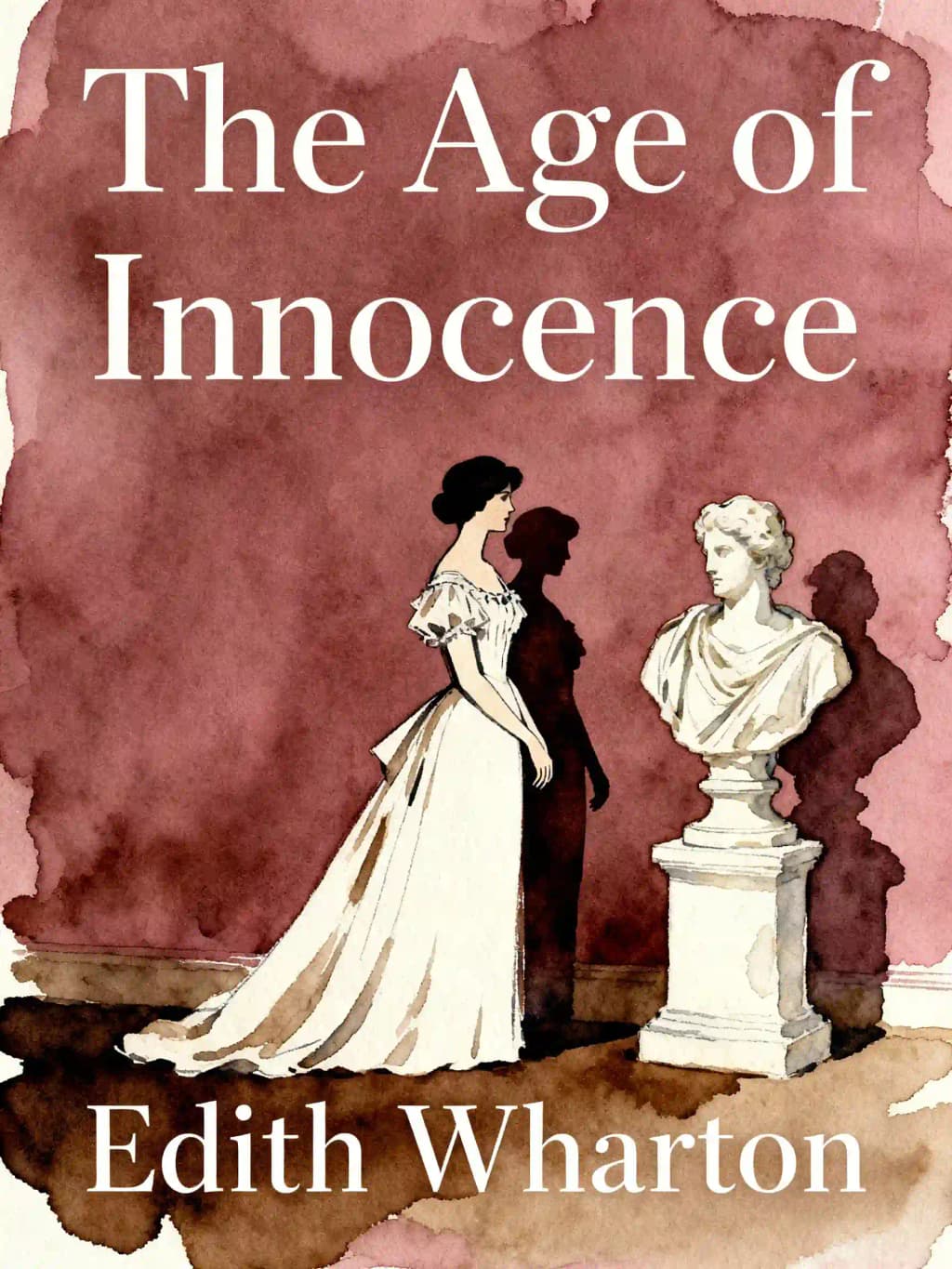
Age of Innocence
Обзор книги Age of Innocence
In Wharton's Pulitzer-winning masterpiece, old New York society suffocates a forbidden love affair. The first female Pulitzer Prize winner crafted a world so authentic that Martin Scorsese couldn't resist bringing its elegant tragedy to screen. What price would you pay for true desire?
Ключевые темы в Age of Innocence
- societal expectation
- duty versus desire
- gilded age convention
- unfulfilled love
- social hypocrisy
Цитаты из Age of Innocence
There was no use in trying to emancipate a wife who had not the dimmest notion that she was not free.
Women ought to be free—as free as we are,” he declared, making a discovery of which he was too irritated to measure the terrific consequences.
The real loneliness, he discovers, is living among all these kind people who only ask one to pretend.
Each time you happen to me all over again.
Персонажи в Age of Innocence
- Newland ArcherA young man torn between duty and desire
- Countess Ellen OlenskaMay's unconventional and exotic cousin
- May WellandNewland's wife, the epitome of social innocence
- Edith WhartonThe author and narrator of the story
Скачать резюме книги «Age of Innocence»
Получите резюме книги «Age of Innocence» в формате PDF или EPUB бесплатно. Распечатайте или читайте офлайн в любое время.
Часто задаваемые вопросы об этой книге
The Age of Innocence follows Newland Archer, a wealthy lawyer in 1870s New York, as he navigates societal expectations and a forbidden love for his fiancée’s cousin, Countess Ellen Olenska. The novel critiques the Gilded Age’s rigid social codes, exploring themes of tradition, sacrifice, and the tension between personal desire and duty.
This book appeals to fans of historical fiction, lovers of classic literature, and readers interested in critiques of high-society norms. It’s ideal for book clubs analyzing themes like love vs. duty or the impact of societal constraints on individuality.
Yes. Winner of the 1921 Pulitzer Prize, the novel remains relevant for its sharp critique of hypocrisy and its exploration of human vulnerability under societal pressures. Its richly drawn characters and Modernist narrative structure make it a timeless study of moral conflict.
Key themes include tradition vs. progress, love vs. duty, gender roles, and the illusion of innocence. Wharton dissects how societal norms stifle individuality, particularly through characters like May Welland, who weaponizes perceived innocence, and Ellen Olenska, who challenges conventions.
Wharton critiques New York’s aristocracy by exposing its unyielding customs, such as ostracizing Ellen for seeking divorce. Characters like Archer face moral dilemmas, torn between conforming to expectations (marrying May) or pursuing authentic desires (Ellen).
Innocence represents both naivety and deliberate pretense. May embodies society’s artificial purity, masking her cunning, while Ellen’s moral restraint—sacrificing love to protect others—reveals a deeper, truer innocence.
Archer begins as a rule-following conformist but slowly questions societal hypocrisy. His internal conflict peaks as he resists pursuing Ellen, ultimately resigning to tradition—a reflection of Wharton’s critique of individual powerlessness against collective norms.
May symbolizes tradition, using表面的 innocence to manipulate Archer, while Ellen represents freedom and authenticity. Their contrast underscores the novel’s central conflict: societal conformity vs. personal integrity.
Wharton employs symbolism (e.g., flowers representing May’s feigned purity), irony (Archer’s blindness to May’s cunning), and foreshadowing. The Modernist structure subverts traditional romance tropes, emphasizing unresolved tensions.
The bittersweet conclusion—Archer choosing not to reunite with Ellen—highlights societal pressure’s enduring grip. It underscores Wharton’s message about the sacrifices demanded by tradition and the haunting weight of "what might have been".
Wharton reveals societal "innocence" as a facade that enables manipulation and moral blindness. Characters like May exploit this ideal, while Ellen’s genuine integrity—choosing self-sacrifice—exposes the hypocrisy beneath surface virtue.
By rejecting predictable romance endings and focusing on internal conflict, Wharton aligns with Modernism. The unresolved conclusion and critique of social artifice reflect the movement’s disillusionment with traditional structures.