Глава 1
The Paradox of Aging: Finding Wisdom in Our Later Years
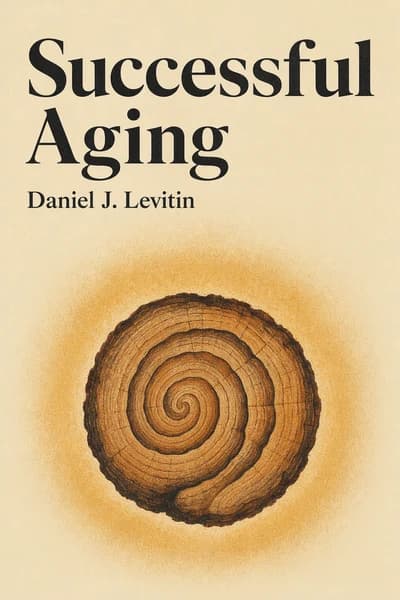
Aging doesn't have to be a story of decline. While poet Dylan Thomas urged that old age should "burn and rage," many of us have witnessed only the deterioration-physical limitations, memory loss, and dimmed spirits. Yet Daniel J. Levitin's groundbreaking work "Successful Aging" presents a radically different perspective. This New York Times bestseller, which Arianna Huffington called "revolutionary," challenges our cultural assumptions about aging by demonstrating that our final decades represent not just decay but a unique developmental stage with its own advantages. Embraced by celebrities like Jane Fonda and recommended by medical professionals worldwide, this book offers something rare: evidence-based hope. As the global population over 65 continues to grow faster than any other demographic, Levitin's insights couldn't be more timely, showing us that how we age depends not on inevitable decline but on childhood factors, environmental responses, and habits we can modify at any stage of life.
Глава 2
The Ever-Evolving Brain: A Story of Adaptation, Not Decline
Our brains continue developing throughout life, challenging traditional notions of inevitable cognitive deterioration. While aging brings certain changes, many are adaptations rather than failures. The darker side of personality changes often stems from cultural factors rather than biological inevitability. The 1960s generation that chanted "Don't trust anyone over thirty" inadvertently created a culture dismissive of the elderly, with media perpetuating images of aging as painful and isolating.
Consider the contrasting stories of two professionals: Levitin's grandfather, a pioneering radiologist forced to retire at sixty-five despite his pattern-matching skills likely improving with experience, died shortly after surgery at sixty-seven-the psychological stress of rejection potentially hastening his death by triggering cortisol release and reducing immune function. Meanwhile, Levitin's father, initially depressed after early retirement at sixty-two, found renewed purpose teaching at USC's business school. At eighty-five, he signed to teach until eighty-nine, with students valuing his real-world experience-his depression and physical ailments dramatically improving once he found meaningful work.
The Big Five personality framework-Extraversion, Agreeableness, Conscientiousness, Emotional Stability, and Openness-provides a structure for understanding how we change with age. All personality differences have biological underpinnings: testosterone influences assertiveness across genders, serotonin affects traits like conscientiousness and agreeableness, while dopamine impacts openness and extraversion. Research covering ages 10 to 101 shows that 75% of personality traits change significantly after forty. Older adults typically demonstrate better impulse control and self-discipline, with self-control increasing every decade after twenty. While flexibility decreases steadily, men show increased emotional sensitivity and women experience decreasing emotional vulnerability with age.
The "La Dolce Vita effect" emerges as individuals become more self-content in old age, with mood disorders and anxiety decreasing past sixty. Older adults generally become less risk-seeking, more morally responsible, and show increases in conscientiousness, emotional stability, and agreeableness-traits associated with longevity, success, and happiness. Julia "Hurricane" Hawkins exemplifies this possibility for change, taking up competitive cycling at seventy-five and running at age one hundred, setting records in her hundreds. At 103, she won gold medals in sprinting events, embodying her philosophy of staying in shape without overdoing it.
The most important personality factor for successful aging may be conscientiousness-strongly correlating with longevity, success, and happiness. Conscientious people maintain regular medical care, keep up with commitments, and show lower all-cause mortality. Developing this trait requires improving self-regulation (controlling impulses) and self-monitoring (recognizing what helps or hinders self-control). Practicing compassion-allowing for the possibility we might be wrong about others-reduces stress, protecting the aging hippocampus from damaging glucocorticoids that impair learning and memory.
Глава 3
Memory: The Foundation of Identity and Wisdom
Memory forms the foundation of our identity, making its occasional failures deeply disturbing. When we forget something, especially as we age, the panic feels visceral because memories tell us who we are. Yet our memories aren't like videotaped recordings but more like jigsaw puzzles with missing pieces. Our brains fill these gaps with creative guesses based on experience, leading to stubborn misrecollections that we cling to with certainty. Even the Beatles' producer George Martin discovered his memories of recording sessions were faulty when compared to documented logs.
Memory evolved not to record every detail but to abstract regularities from our experiences, allowing us to generalize and recognize patterns. This generalization principle explains why we can use unfamiliar objects without special training-we've abstracted their essential functions. Posner and Keele demonstrated this through experiments with dot patterns, showing that people often "remember" seeing prototype patterns they never actually saw. This abstraction ability increases with age, contributing to wisdom-the capacity to see patterns where others don't and extract common points from experience to predict future events.
Memory comprises multiple distinct systems, each influenced by different variables and supported by different neural circuits. At the highest level, memory divides into explicit (conscious recollections) and implicit (unconscious knowledge) systems. Explicit memory further splits into semantic memory (general knowledge without remembering when you learned it) and episodic memory (specific autobiographical events). The hippocampus and medial temporal lobe are crucial for explicit memory but not needed for implicit memory, which explains why someone with amnesia might not recognize you but still knows how to use a fork or read.
All memory systems are easily disrupted. As we age, we confabulate more as our brains slow down and millions of memories compete for primacy. Human memory makes logical inferences from available information, delivering a potent mix of fact and confabulatory fiction. Memory accuracy varies dramatically by domain-a housepainter might identify paint finishes with remarkable precision, yet autobiographical memories can be wildly inaccurate.
Our memories are organized through theoretical constructs called memory tags. These tags create multiple pathways to access the same memory-a birthday party might be retrievable through questions about recent parties, specific foods eaten, people encountered, or activities performed. Multiple-trace theory explains that every experience creates a unique memory trace, with repetitions adding new traces rather than overwriting old ones. The more traces for an experience, the more accurately and quickly you'll recall it.
For short-term memory improvement, training our attentional networks helps-practicing mindfulness, mono-tasking instead of multitasking, and being present. Externalizing memory through writing things down, list-making, and using memory applications can compensate for our fallible memories. Deep processing-paying close attention to details and making connections-significantly enhances memory formation.
The common belief that memory inevitably declines with age may be greatly exaggerated. Neuroscientist Sonia Lupien discovered that traditional memory testing environments create significant stress for older adults-unfamiliar settings, worry about performance, and being evaluated by younger researchers all trigger cortisol spikes that impair memory. When Lupien redesigned testing to eliminate these stressors, older adults performed as well as younger controls.
Глава 4
The Developing Brain: From Conception to Maturity
Life begins as a single cell that divides exponentially, with cells differentiating to form various body parts. The brain emerges around four weeks of gestation, with neural growth reaching an astonishing rate of 250,000 neurons per minute. The sensory systems develop sequentially-visual system first, followed by the auditory system (fully functional by week twenty), allowing the fetus to hear and process sounds filtered through amniotic fluid.
The infant brain's primary tasks are exploring the world and creating neural circuits that incorporate understanding of that world. As we age, prediction becomes a third major function of the brain-finding patterns in both physical and conceptual worlds. Mental development emerges from an intricate dance between genetics, brain topography, environmental stimulation, and culture. The brain requires proper environmental input during critical periods-specific time windows when particular abilities must be cultivated or risk never developing.
The brain contains specialized regions for particular functions, with sensory receptors developing neural connections to their corresponding brain regions during typical development. When someone is born deaf, the brain adapts by rewiring itself-visual information from sign language routes into the auditory cortex. Similarly, blind people who read braille use regions of their visual cortex to process touch information.
As we age, multiple factors impact brain function: reduced blood flow from plaque buildup, decreased neurochemical production (dopamine levels fall 10% per decade), alcohol-related neuronal death, less efficient synaptic connections, myelin sheath decay, and brain volume reduction (about 5% per decade after age 35, accelerating after 70). The prefrontal cortex and hippocampus shrink most significantly, affecting goal-setting, planning, attention, and memory.
Scientists once believed the brain was an immutable machine with finite cells that couldn't regenerate after birth. This view has been replaced by understanding the brain as remarkably adaptable throughout life. Neuroplasticity continues until death, though it slows with age. Previously learned motor skills remain well-preserved into our eighties, as demonstrated by Alzheimer's-affected musician Glen Campbell performing complex songs at 76 despite being otherwise disoriented. Learning new skills takes longer with age but remains possible into our nineties.
Глава 5
Perception: How We Connect with Reality
Perception is our fundamental connection to reality. John Locke challenged us to imagine a smell we've never experienced-highlighting how our knowledge comes entirely through our senses. The brain develops through interaction with the environment, which is crucial at all ages. Without sensory input and integration, the brain cannot reach its full potential.
Our senses don't provide an undistorted view of reality-rather, our brain constructs a version optimized for survival. The visual system compensates for lens distortions and chromatic aberration, while our auditory system favors speech frequencies. As Irv Rock demonstrated in his influential work, perception involves logical inferences and unconscious problem-solving to interpret incomplete or distorted sensory signals. The aging brain, despite physical decline, may actually improve at perceptual completion because it draws on decades of experience to fill in missing information.
Hermann von Helmholtz pioneered experiments demonstrating remarkable neuroplasticity in the visual system. Volunteers wearing prism glasses that shifted their visual field initially reached for objects incorrectly, but within an hour their brains adapted. Later experiments in Innsbruck pushed this further, with subjects wearing left-right reversing goggles and even upside-down inverting goggles. Astonishingly, after five days wearing the inverting goggles, participants' brains completely adapted, allowing them to navigate normally and perform complex activities.
Age-related vision decline, particularly presbyopia, is perhaps the most reliable marker of aging. Around age forty, the lens hardens and becomes less elastic while surrounding muscle fibers change, making close-up focusing difficult. Our brains compensate through adaptation-we hold reading materials farther away, install brighter lights, or increase font sizes. More importantly, our pattern-recognition systems fill in perceptual gaps through context.
Hearing loss (presbycusis) is another common age-related sensory decline. Like presbyopia, it's gradual, with about one-third of Americans aged 65-74 and nearly half over 75 experiencing it. When auditory input diminishes, neurons lacking stimulation can create their own, resulting in tinnitus-a ringing in the ears affecting one in five adults.
We evolved in complex natural environments that stimulate all our senses-not just vision, but sounds, smells, tastes and touch. Because everything we know originates with our senses, keeping them stimulated is critical to maintaining active, alert, and healthy brains. Neurologist Scott Grafton emphasizes that "the brain doesn't just need physical activity to remain vital, but complex physical activity." Walking in new environments forces feet to adjust to different surfaces, ankles to coordinate with feet, and eyes to scan surroundings while processing information from all senses.
Глава 6
Intelligence: The Aging Mind's Hidden Advantages
The most noticeable effect of aging, beyond wrinkles and hair loss, is the intellectual decline some people experience-but importantly, not all people. Some remain mentally vital into their eighties and nineties, not merely maintaining cognitive function but experiencing intellectual growth. At eighty, cellist Pablo Casals, when asked why he practiced so much, replied simply, "Because I want to get better!"
Despite age-related hearing decline, 87-year-old acoustician George Augspurger demonstrates how expertise can compensate for sensory loss. When tuning the author's home recording studio, Augspurger identified acoustic problems by carefully listening to a James Taylor recording from different positions in the room. Despite his advanced age and presumed high-frequency hearing loss, his decades of experience and specialized knowledge allowed him to make precise adjustments that transformed the sound quality.
Intelligence is the ability to apply knowledge in novel ways, making connections between seemingly unrelated things and adapting to changing environments. The wisdom found in older adults stems from four specific cognitive abilities: forming associations, drawing from experience, recognizing patterns, and using analogies. While younger people may excel at video games and new technologies, older individuals possess wisdom from witnessing recurring patterns throughout life.
Early 20th century psychologists viewed intelligence as a single, measurable quality called IQ or general intelligence (g). However, this simplistic view fails to account for how genes, culture, and opportunity affect learning. Scientists now distinguish between crystallized intelligence (accumulated knowledge), fluid intelligence (ability to apply information to new contexts and solve problems), and acquisitional intelligence (the ease with which one learns new information).
Gardner's theory of multiple intelligences identifies ten distinct types: musical-rhythmic, visual-spatial, verbal-linguistic, logical-mathematical, bodily-kinesthetic, interpersonal, intrapersonal, spiritual, moral, and naturalistic intelligence. Each represents a separate cognitive domain where individuals can excel independently of other areas.
Standardized intelligence tests suffer from several fundamental flaws. While they demonstrate reliability (consistent scores across multiple attempts), their validity is questionable-they explain only 25% of differences in school performance, leaving 75% unexplained. These tests contain cultural biases, favoring white, middle-class Western conceptions of intelligence. Another critical weakness is that IQ tests penalize creative thinking by requiring test-takers to guess the single "correct" answer the test creator intended, rather than recognizing multiple valid solutions.
Processing speed is often included in standardized intelligence tests, but its relationship to intelligence is questionable. While quick problem-solving seems impressive, the slow, methodical thinking that produced Einstein's relativity theory or Tolkien's Lord of the Rings shouldn't be considered less intelligent than Mozart's rapid compositions. Neuroscientist Jeffrey Mogil calls processing speed "essentially nothing to do with intelligence. It's just a party trick."
Abstract thinking-the ability to go beyond sensory inputs to form conceptual representations-improves with age. This cognitive skill involves multiple brain regions but reaches its peak in the prefrontal cortex, which doesn't fully mature until our twenties. By age sixty, we've learned not to always trust surface appearances and can better recognize functional similarities among visually different objects. While learning speed peaks in youth and declines after forty, fluid intelligence increases with each decade after forty, giving older adults a competitive edge despite slower processing speeds.
Wisdom, while lacking scientific consensus on its definition, encompasses nine common themes: social decision-making ability, prosocial attitudes, emotional homeostasis, self-reflection, coping with uncertainty, valuing tolerance, spirituality, openness to new experiences, and humor. Wisdom increases with age precisely because our neural networks scaffold upon accumulated knowledge and experience, allowing us to extract core principles that might elude younger observers.
Глава 7
From Emotions to Motivation: The Chemistry of Aging Well
Stress is presented as a universal emotion shared across species and the lifespan, though its causes vary widely between individuals. Chronic stress significantly impacts longevity, as demonstrated by Pacific salmon. After swimming upstream to spawn, salmon experience rapid aging due to stress hormones (glucocorticoids) and die. When researchers removed the salmon's adrenal glands that produce these hormones, the fish survived after spawning.
Stress expert Sonia Lupien points out the paradox between popular and scientific definitions of stress. While commonly associated with time pressure, stress is actually highly individualized-some thrive under pressure while others collapse. The body's stress response involves allostasis (stability through change) rather than simple homeostasis, with catecholamines and glucocorticoids being primary stress hormones. While these hormones are adaptive short-term, chronic secretion creates allostatic load, dysregulating multiple bodily systems.
Depression affects approximately 15% of Americans across all age groups, yet antidepressant drugs work only about 20% of the time. Depression can affect people of any age but often goes undiagnosed in older adults where it manifests differently-appearing as lethargy and lack of motivation rather than sadness. Despite common misconceptions, depression is not a normal part of aging but a treatable illness with biological causes. The good news is depression is less frequent among older adults than younger ones.
How we cope with setbacks is influenced by our genetic predisposition, culture, and environment. Susan Nolen-Hoeksema's research distinguishes between rumination and distraction as coping mechanisms. Rumination-repetitively focusing on what went wrong-releases soothing prolactin but ultimately increases stress hormones, interferes with problem-solving, and triggers depression by activating mood-dependent memory retrieval. The more effective strategy is positive distraction-immersing yourself in engaging, forward-looking activities you enjoy.
Our motivation is largely controlled by hormones and neurochemicals circulating in our brains, often operating below our conscious awareness. For example, women are more likely to be physically active during peak estrogen production in their menstrual cycle, possibly an evolutionary adaptation for mate-seeking. Testosterone in both men and women regulates status-seeking behaviors, including sexual status.
As we age, we naturally resist change due to depleted dopamine, deteriorating receptors, and physical limitations. Carol Dweck identifies two mindsets affecting motivation: those with fixed mindsets believe abilities don't change ("I'm too old to change"), while those with growth mindsets believe in continued learning and are energized by overcoming difficulties. Growth-minded people outperform fixed-minded people at all ages.
Глава 8
Social Factors: The Critical Role of Connection
Philosopher Jean-Paul Sartre wrote "L'enfer, c'est les autres" (hell is other people), but for longevity, the opposite is true-social connectedness is essential. Loneliness doubles the risk of Alzheimer's, increases stress hormones leading to arthritis and diabetes, promotes inflammation, negates exercise benefits, and is worse for health than smoking fifteen cigarettes daily. Unlike objectively measurable social isolation, loneliness is subjective-people can feel lonely even at parties or within families when lacking meaningful connections.
Our social development is governed by the triad of genes, culture, and opportunity. Harry Harlow's controversial experiments with infant monkeys demonstrated that physical comfort-not just nutrition-is essential for development. John Bowlby's attachment theory similarly established that human infants require at least one primary caregiver for proper emotional development. Michael Meaney's research showed that maternal care physically alters stress responses-rat pups receiving more licking and grooming in early life produced fewer stress hormones when facing challenges later.
When time feels limited, our social priorities fundamentally shift. Laura Carstensen discovered this while studying young AIDS patients facing premature death in San Francisco. Her socioemotional selectivity theory explains that when we perceive our future as open-ended-typical for youth-we prioritize knowledge acquisition, skill-building, and expanding our social networks. But when time horizons shorten, whether through aging or terminal illness, we pivot dramatically toward emotional meaning and present well-being. We become selective, prioritizing deep, established relationships over new acquaintances.
As we age, our sense of agency and self-efficacy becomes crucial for well-being. The belief that we can exert control over our environment activates the brain's reward system and reduces stress. Studies show that even small choices, like caring for a houseplant, can dramatically improve nursing home residents' happiness and alertness.
For most people, continuing to work provides crucial social interaction and meaning that protects against cognitive decline. Impressive examples include Anthony Mancinelli who cut hair daily until his death at 108, Congresswoman Louise Slaughter who served until 88, and neuroscientist Brenda Milner who still works at 101. The complex social navigation required in work environments exercises vast neural networks throughout the brain.
Aging actually improves our social behavior in many ways. Older adults generally demonstrate better emotional regulation, less reactivity to insults, and greater focus on life's positive aspects-what Art Shimamura calls a "positivity bias." Social engagement provides powerful protection against cognitive decline, with epidemiological studies showing that larger social networks significantly reduce dementia risk, even when controlling for other factors. Volunteering emerges as particularly beneficial, associated with reduced depression, better health outcomes, fewer functional limitations, and lower mortality.
Глава 9
Pain: Understanding and Managing Discomfort in Later Life
Pain accounts for 80 percent of doctor visits in America, making it the number one complaint when seeking medical care. While we tend to associate aging with increasing aches and pains, the reality is more complex-chronic pain actually peaks in our fifties and sixties before declining in our seventies and beyond. Pain is fundamentally a brain-based phenomenon; the sensation itself is generated in the brain, not in the injured body part.
Pain is a complex phenomenon with different types affecting us in distinct ways. While cutaneous (skin) pain provides precise location information, visceral (internal) pain feels more unpleasant though neurologically similar in intensity. This distinction becomes increasingly important as we age, since older adults experience more visceral pain due to aging internal organs.
Pain evolved as a crucial survival mechanism that protects injured body parts and allows healing. The devastating consequences of living without pain are evident in people with hereditary sensory autonomic neuropathy (HSAD/CIPA)-an extremely rare disorder where individuals cannot feel physical pain. These patients suffer horrific injuries without awareness: biting off fingertips, burning their mouths with hot food, developing eye infections from undetected foreign objects, and acquiring life-threatening bedsores.
Pain perception varies dramatically across individuals due to cultural, environmental, historical and cognitive factors. Family microcultures teach us whether to adopt stoic or medicalized approaches to pain. Context profoundly shapes pain experience-soldiers shot in battle might frame injuries as heroic sacrifices, while convenience store clerks with similar wounds typically experience greater depression and higher opioid addiction rates.
Modern medicine still struggles with pain management despite significant medical advances. Opioids remain the most effective pain relievers but their high addiction potential and overdose risks make them problematic. For inflammatory conditions like arthritis, insect bites and some headaches, anti-inflammatory drugs offer relief. Topical NSAIDs have gained popularity for older patients, with diclofenac (available as pill, gel, cream or patch) being nearly 100% effective for osteoarthritis.
Distraction proves remarkably effective for pain management-when we're not focusing on pain, it bothers us less. Enriched environments with abundant stimuli significantly reduce pain signals in the insula and primary sensory cortex. Effective distractions include exercise, hobbies, conversation, yoga, meditation, socializing, music, and nature immersion-all of which trigger the body's natural opioid production.
Глава 10
Living Longer, Living Better: The New Longevity
The tension between longevity and quality of life dates back to Greek mythology, where Eos secured immortality for her mortal lover Tithonos but forgot to request eternal youth, leaving him decrepit and mindless while she remained forever young. When comparing hypothetical lives-one that starts poorly but improves versus one that begins well but declines-people consistently prefer the upward trajectory, even when the total amount of good and bad experiences is identical.
Contrary to popular belief, older adults are actually happier than younger people. Happiness tends to decrease in the late thirties but increases sharply after age fifty-four across seventy-two countries. This may be due to adjusted expectations, as Daniel Pink suggests, or our natural drive to make sense of our lives. Older adults demonstrate a positivity bias-they're more likely to attend to positive stimuli and experiences, spend time doing things they enjoy, and have greater activity in brain regions associated with selective attention and motivated cognition.
What's the ideal retirement age? Never. Even if physically impaired, continuing meaningful work or volunteering is vital for well-being. Between 25-40% of retirees "unretire," returning to work seeking purpose, mental stimulation, and social engagement. Successful older adults like Quincy Jones (86) and Lamont Dozier (78) maintain purposeful work schedules, though sometimes modified for age-related changes. Empty time correlates with unhappiness, while multigenerational workplaces with older members show increased productivity and fewer mistakes.
Despite trends toward impersonal, automated healthcare, research confirms that continuity of care leads to greater longevity across cultures. A long-term doctor-patient relationship allows physicians to understand not just medical history but personality, habits, and context-all crucial for effective diagnosis and treatment.
Preparing for end of life reduces stress and creates more peace. Nature provides significant comfort to the terminally ill, whether through actual gardens or virtual reality environments. Studies show natural scenes and sounds reduce pain during procedures and speed recovery. Many modern hospitals now incorporate gardens and natural elements in their design, like TriPoint Medical Center in Ohio with its forests and waterfall entrance.
Conscientiousness remains the single most important factor for successful aging, and though difficult, you can develop this trait even later in life. Practice gratitude for what you have-it alters brain chemistry toward positive emotions and oils the pleasure circuits. As Placido Domingo, still performing at seventy-seven after 150 roles and nearly 4,000 performances, said: "When I rest, I rust." By 2030, Americans over sixty-five will outnumber those under fifteen, with two-thirds of people over sixty-five who've ever lived alive today. We must view the elderly as resources rather than burdens, harnessing their wisdom, positivity bias, and compassion. As Gloria Steinem said at eighty-four when asked who she's passing the torch to: "Nobody. I'm holding on to my torch. I'll let other people light theirs from mine."