Глава 1
The Modern Self: How Our Culture Lost Its Way
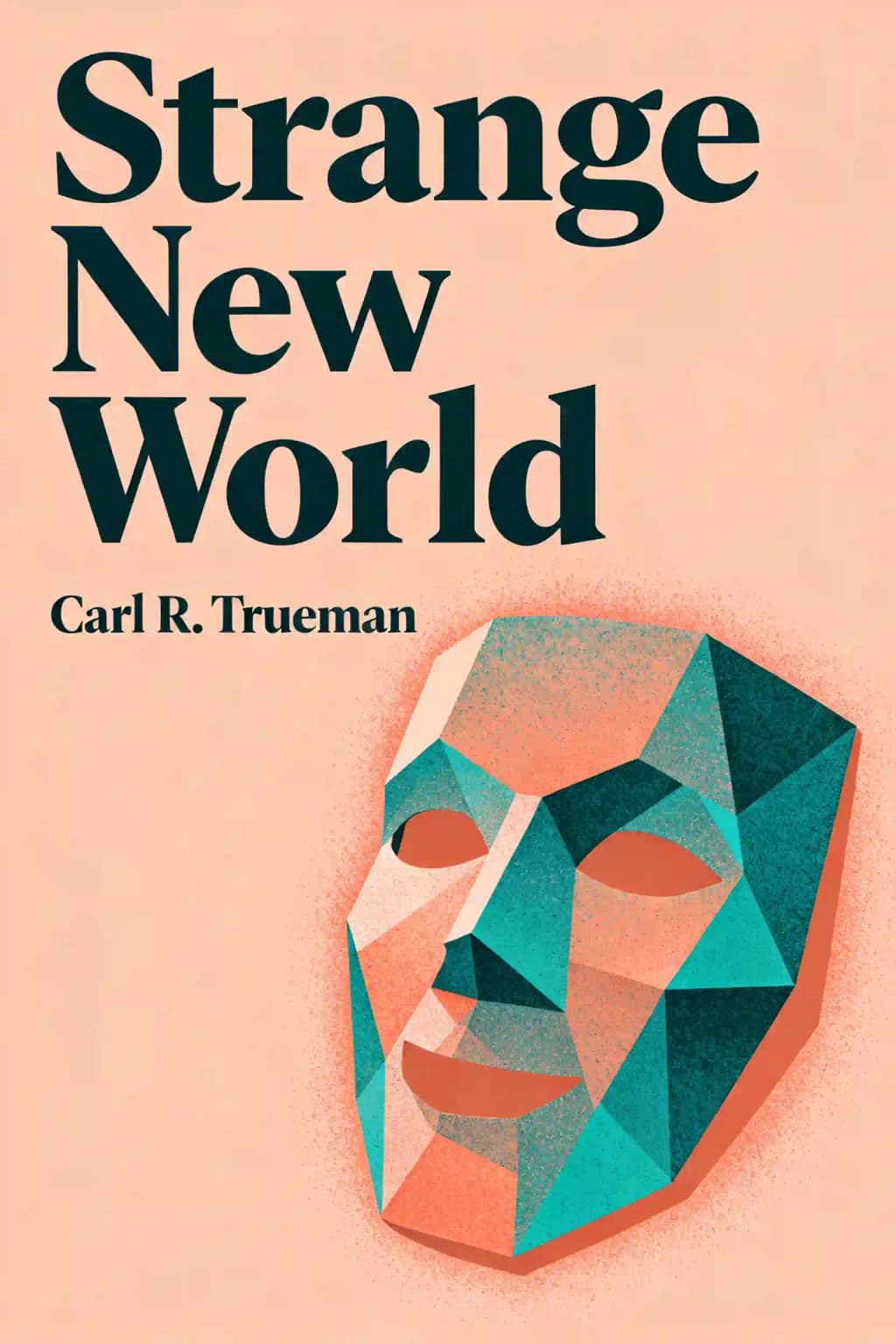
In a world where a man can declare "I am a woman trapped in a man's body" and receive not psychiatric care but surgery to align his body with his feelings, something profound has shifted in our cultural understanding of human identity. Strange New World by Carl Trueman has become a cultural touchstone for those trying to make sense of our disorienting times, earning praise from diverse voices including New York Times columnist Ross Douthat and Princeton legal scholar Robert George. The book traces how Western society moved from viewing the self as something discovered in relation to external realities to something created through psychological expression-a shift that explains everything from gender politics to religious freedom battles. As we navigate a culture where yesterday's common sense is today's bigotry, Trueman's analysis offers a roadmap through terrain that feels increasingly alien to many.
Глава 2
The Birth of the Psychologized Self
The modern self didn't emerge overnight. Its roots stretch back to Rene Descartes, whose famous "I think; therefore, I am" elevated psychological experience as the foundation of certainty. But it was Jean-Jacques Rousseau who truly revolutionized our understanding of identity. Despite abandoning his five children to orphanages, Rousseau developed influential theories about human nature that continue to shape our world.
In his groundbreaking autobiography Confessions, Rousseau declared his intention to reveal his "inner self" as the true essence of his identity. This focus on feelings and motivations rather than external actions represented a radical departure from traditional autobiography. Where previous generations valued restraint and self-control, Rousseau pioneered the modern obsession with authenticity-the idea that one should act outwardly in a manner consistent with inner feelings.
Rousseau also introduced the dangerous notion that society corrupts our naturally good instincts. His famous statement "Man is born free, yet everywhere he is in chains" epitomizes this philosophy, though it contradicts human reality. Humans are actually born utterly dependent on others, particularly parents, for survival. Yet this fallacy became foundational to his concept of the "noble savage"-the uncorrupted individual in a pristine state of nature who is answerable to no one and free to be authentic.
The Romantic movement built upon Rousseau's ideas, seeking authentic humanity through connection to nature's power. Poets like Wordsworth and Coleridge believed contemplating natural wonders had profound ethical impacts, reshaping individuals morally by reconnecting them with their true humanity. They frequently used the Aeolian harp metaphor-an instrument played by the wind-to represent humans as instruments played by nature's power.
Wordsworth's controversial poem "The Idiot Boy" depicted a simpleton who spent the night in the forest looking at the moon and listening to owls. When criticized for his choice of subject, Wordsworth defended it by arguing that the "idiot boy" represented purer, more authentic humanity precisely because he wasn't corrupted by sophisticated society. For Wordsworth, authentic humanity was found not among the educated elite but among those who "lead the simplest lives most according to nature."
Глава 3
The Death of Human Nature
The modern self not only gives supreme authority to inner feelings but fundamentally rejects the notion that human nature contains any inherent moral structure or universal ethical framework. While we readily acknowledge biological human nature in scientific terms-our genetic makeup, evolutionary history, and neurological processes-we strongly resist drawing moral implications from these biological facts. This separation between biological reality and moral meaning represents a profound shift in human self-understanding, with far-reaching implications for how we conceptualize ethics, identity, and purpose.
These two crucial aspects of modern selfhood-the rejection of moral structure in human nature and the perception of traditional moral codes as instruments of oppression-find their most powerful theoretical expression in the works of Marx and Nietzsche. Their critiques, though different in focus and conclusion, converge in dismantling traditional foundations of moral authority.
Marx's analysis of religion proves particularly illuminating. He viewed religious belief not as divine truth but as a psychological and social response to economic alienation. For Marx, religious morality fundamentally expresses and enforces the economic interests of the dominant class. Christian teachings about faithfulness, sobriety, and hard work aren't divine imperatives but rather middle-class employers' sophisticated means of creating a stable, compliant workforce-cleverly disguised as God's commands. Marx memorably described religion as "the opium of the people"-a human creation that simultaneously soothes psychological suffering while serving ruling class interests. This critique extends beyond religion to all traditional moral systems, which Marx saw as elaborate superstructures built upon economic foundations.
Nietzsche's famous "madman" passage dramatically portrays the death of God as an earth-shattering event with consequences far more profound than mere religious skepticism. For Nietzsche, God's death necessarily means the death of human nature itself-without God, there can be no absolute moral standards, no divine image in which humans are made, and no transcendent authority to which we must submit. Morality becomes merely a sophisticated power play-a way for the weak to manipulate and constrain the strong by inverting natural values and elevating weakness to virtue.
In this godless universe, humans must embrace radical self-creation, becoming whoever they choose to be without obligation to conform to external standards or predetermined essence. Our contemporary moral language confirms that Nietzsche's perspective has become cultural intuition, as we increasingly frame moral judgments in subjective, aesthetic terms: "That's offensive" or "That makes me feel unsafe"-where personal emotional response becomes the primary ethical criterion.
Oscar Wilde brilliantly exemplified this Nietzschean ideal through three distinct aspects: his elevation of the artist as life's exemplar who creates rather than conforms ("Most people are other people. Their thoughts are someone else's opinions, their lives a mimicry, their passions a quotation"); his decisive detachment of art from moral codes ("There is no such thing as a moral or an immoral book. Books are well written, or badly written. That is all"); and his transformation of ethics into aesthetics, where actions are judged by their contribution to personal creative freedom rather than their conformity to external moral standards. This aesthetic approach to ethics continues to shape contemporary attitudes toward morality, identity, and self-expression.
Глава 4
Sex Becomes the Center of Identity
Though many of Freud's psychoanalytic theories have been discredited, his legacy endures through two crucial ideas: that sex is foundational to human happiness and his theory of civilization. Freud positioned sexual pleasure as the prototype for all happiness, making sexual desire central to human identity. This revolutionary perspective transformed how Western society understood both individual fulfillment and collective organization.
This represents a profound shift from earlier conceptions of happiness - Aristotle saw it as living virtuously through the cultivation of character and wisdom, Christians understood it as glorifying God through righteous living and spiritual devotion, and Jefferson enshrined it as a natural right alongside life and liberty. With the collapse of belief in human nature having intrinsic moral structure (witnessed by Marx and Nietzsche), Freud defined happiness through pleasure-seeking and pain-avoidance, with sexual gratification as the strongest form of pleasure. This mechanistic view of human nature replaced centuries of philosophical and religious understanding.
For Freud, morality serves to make civilization possible by restricting natural sexual instincts, but at a significant psychological cost. Society trades happiness for security, cultivating guilt and shame about certain behaviors - a bargain that creates lasting neuroses in individuals. Religion, while infantile in Freud's view, provides justification for sexual codes necessary for civilization. This creates a fundamental discontentment in human existence, as the path to true happiness - unrestricted sexual expression - remains blocked by social necessity.
Wilhelm Reich bridges Marx and Freud by arguing that sexual repression only serves specific historical forms of civilization, particularly capitalism and patriarchy. For Reich, "every moral regulation is sex-negating" and "all compulsory morality is life-negating." He completely inverts traditional education, seeing it not as forming individuals by curbing instincts, but as liberating sexual expression for authentic selfhood. Reich's work influenced later sexual liberation movements by connecting sexual freedom to political liberation.
The sexual revolution isn't merely about expanding legitimate sexual activities; it fundamentally challenges the legitimacy of sexual codes themselves. The fate of modesty illustrates this shift - questions about appropriate skirt length or bikinis now seem quaint because modesty wasn't just redefined but completely overthrown. Today, even raising such questions risks ridicule or rebuke for attempting to control others' self-expression. This transformation extends beyond clothing to encompass all aspects of sexual expression and identity formation.
The legacy of this shift continues to shape contemporary debates about gender, sexuality, and personal identity. What began with Freud's theories has evolved into a comprehensive worldview where sexual self-expression is seen as fundamental to personal authenticity and human rights. This has profound implications for education, law, and social institutions, as traditional moral frameworks increasingly give way to individual autonomy in matters of sexual identity and expression.
Глава 5
How Technology Transformed Our World
Our modern world stands in stark contrast to the fixed, stable existence of medieval life. Today's world is plastic, malleable to human will. Where a fourteenth-century peasant would have lived a predetermined life - bound to farming, fixed geographically, worshipping in one church, following seasonal rhythms - modern life offers unprecedented choice and mobility. This transformation represents not just a change in living conditions but a fundamental shift in how humans conceive of their place in the universe.
Technology has fundamentally altered our relationship to nature and each other. Irrigation systems transform barren deserts into fertile farmland, modern medicine conquers diseases that once decimated populations, and high-speed transportation shrinks vast distances into manageable journeys. Digital technology has further accelerated this transformation, creating virtual spaces that transcend physical limitations entirely. This technological mastery reinforces individualism, transforming even communal experiences into private consumption - from solitary Netflix viewing replacing movie theaters to personal playlists supplanting shared radio experiences. We no longer see ourselves as subject to the world's fixed nature but as masters who shape reality according to our desires, viewing the world as raw material to be molded by human will and technological innovation.
The rising authority of the self corresponds with the collapse of traditional external sources of identity. Three key institutions have lost their formative power: church, family, and nation. Religious authority initially fractured with the Reformation, creating a marketplace of competing churches rather than a single authoritative institution. This fragmentation has accelerated in modern times, with cultural portrayals of religion as hypocritical or oppressive, along with highly publicized scandals and abuse cases, further eroding its moral standing in society.
Similarly, the family unit faces unprecedented challenges. Elite critique frames traditional family structures as potentially oppressive, while legal changes like no-fault divorce have fundamentally altered family stability. Economic pressures requiring two-income households, delayed marriage and childbearing, and changing social norms have transformed family dynamics. Even the nation-state concept struggles under multiple pressures: challenges to founding myths (like whether America began in 1776 or 1619), immigration patterns that complicate national narratives, and global connectivity that increasingly blurs national boundaries and loyalties.
As Yuval Levin astutely observes, institutions have transformed from character-forming "molds" into mere "platforms" for self-display - no longer places of formation but of performance. This shift is particularly evident in the age of social media, where everyone can publicly perform their identity through carefully curated online personas. Traditional institutions that once shaped character through discipline, mentorship, and shared values now often serve primarily as stages for individual expression and advancement. This transformation reflects a broader cultural shift from viewing institutions as formative influences to seeing them as tools for personal brand building and self-promotion.
Глава 6
The Rise of Imagined Communities
Recognition fundamentally shapes human identity and social belonging. Like a child being picked first or last for a schoolyard game, recognition affirms our intrinsic value while its absence creates deep-seated feelings of alienation and exclusion. Throughout history, societies have developed complex ethical frameworks - cultural standards, behavioral expectations, and moral codes - that determine who receives full membership and who remains on the periphery. The nation-state demands patriotic behavior and loyalty; families establish behavioral standards and expectations for their members; religious institutions maintain the power of excommunication for perceived heretics. Each community, whether large or small, operates with implicit and explicit rules determining who truly belongs and who remains an outsider.
Benedict Anderson's influential concept of "imagined communities" revolutionized our understanding of nationalism by arguing that nation-states function as collective mental constructs. Since citizens can't possibly know everyone within their nation personally, they must imagine shared commonalities - language, customs, values, and historical narratives - that create a coherent national identity. This imagined coherence once provided powerful social glue, but today, this dynamic has changed dramatically. National narratives no longer serve as unifying forces but have instead become ideological battlegrounds, while new communities based on race, sexuality, disability, political beliefs, and other identity markers have emerged to fill the void.
The internet has fundamentally transformed how we connect and form communities, making geographic proximity less significant while allowing people to choose their communities and construct their identities more freely. Digital platforms enable instant connection across continents, creating powerful bonds between people who've never met in person. Events like George Floyd's death can resonate more deeply with British citizens than struggles in Hong Kong, despite Britain's centuries-long historical connection to the latter. This shift reflects how social justice narratives and identity-based solidarity have increasingly replaced traditional national allegiances for many people, especially younger generations.
When we understand recognition in the context of these new imagined communities, contemporary social conflicts take on greater clarity. While our societies remain formally organized around nation-states - with voting systems, legal frameworks, and institutions reflecting national boundaries - many citizens now identify more strongly with communities based on race, gender, sexuality, or shared values than with their national identity. They often feel greater affinity and solidarity with people across the globe who share these characteristics than with geographic neighbors who don't. This tension between traditional political structures and emerging forms of identity creates new challenges for governance, social cohesion, and collective action in the modern world.
These evolving patterns of recognition and belonging have profound implications for social stability, political movements, and individual identity formation. As traditional national bonds weaken and new forms of community emerge, societies must grapple with questions of how to maintain cohesion while acknowledging and respecting increasingly diverse forms of identity and belonging.
Глава 7
The LGBTQ+ Revolution
The LGBTQ+ coalition represents the most remarkable political success story of the last half century. In the 1960s, homosexuality remained illegal in many Western countries. Even Barack Obama avoided unequivocal support for gay marriage until 2012. Yet today, merely questioning transgender ideology can trigger fierce social media backlash and exclusion from liberal society.
Interestingly, the LGBTQ+ coalition's constituent members are actually divided over the very thing outsiders might assume unites them: the nature and status of sex. Until the early 1980s, lesbians and gay men operated separately. Lesbians viewed gay men as benefiting from male privilege-a gay man wasn't pressured to appear attractive to female bosses, while lesbians often had to perform femininity for career advancement.
The AIDS crisis of the 1980s brought them together. As AIDS devastated gay communities, their image transformed from privileged self-indulgence to tragic victimhood. This shared sense of victimhood against heteronormative society created common ground.
Trans ideology's origins can be traced to nineteenth-century thought. Marx and Engels noted that as production became automated and physical strength less important in the workplace, differences between men and women would diminish. Nietzsche's antimetaphysical philosophy, with its emphasis on our godlike power to create truth, also undermined stable categories like male and female.
More directly influential was Simone de Beauvoir, whose 1949 book "The Second Sex" declared: "One is not born, but rather becomes, woman." This fundamental distinction between biology and gender-where gender is viewed as a social construct not intrinsic to the female body-underlies modern trans movement. Judith Butler later described gender as a "performance," a set of behaviors society expects from those with certain bodies.
The addition of "T" to LGB creates fundamental incoherence. Lesbians, gay men, and bisexuals all assume the biological sex binary that trans ideology denies. This contradiction emerges painfully in personal testimonies, like the lesbian whose female partner transitioned to male. She struggled with her identity-was she still a lesbian (denying her partner's male identity), now straight (denying her own lesbian identity), or something else? She ultimately settled for the vague term "queer."
Глава 8
Freedom Redefined
Perhaps the strangest recent developments have been challenges to freedoms once considered self-evident goods - particularly freedom of speech and religion. Growing up in 1970s-80s Britain, many were taught these fundamental liberties distinguished Western democratic society from totalitarian regimes like the Soviet Union. The idea that these core freedoms would become actively contested within Western society itself would have seemed not just unlikely but almost inconceivable to previous generations.
A clear and direct connection exists between the sexual revolution and growing cultural antipathy toward religious freedom. This tension became international headline news in 2015 when Indiana's proposed Religious Freedom Restoration Act, designed to protect religious business owners' hiring policies regarding LGBTQ+ individuals, faced swift and severe condemnation, particularly from corporate America, as discriminatory. Major companies threatened boycotts, conventions were canceled, and the state faced intense economic pressure to modify the law - demonstrating how market forces now increasingly shape social policy.
The underlying dynamic reveals why mere tolerance of LGBTQ+ identities was never going to satisfy the movement's ultimate goals. To tolerate someone is, by definition, to disapprove of them while passively accepting their existence. Tolerance fundamentally fails to provide recognition - the positive affirmation of identities as people wish them to be affirmed - and instead relegates certain groups to an implicit second-class status in society. This shift from seeking tolerance to demanding recognition marks a crucial evolution in civil rights movements.
This fundamental tension explains why seemingly minor issues like cake baking have become such contentious flashpoints in the culture wars. A Christian baker refusing to create a cake for a gay wedding does so because her conscience views such an act as supporting what she considers an immoral relationship. The gay couple, however, perceives this refusal not as a matter of religious conviction but as denying their fundamental, constitutionally protected identity. Modern equality demands forms of recognition that mere tolerance simply cannot provide - creating an apparently irreconcilable conflict.
This conflict stems directly from the modern psychological construction of identity, which places internal states at the core of personhood. If we are fundamentally what we think, feel, and desire, then anything interfering with the free expression of these internal states prevents us from being our authentic selves. In this framework, verbal insults and misgendering take on new cultural power, as seen in increasingly heated debates over pronoun usage. Words become viewed not as mere expression but as assaults as real and damaging as physical blows - transforming speech from a protected right into a potential weapon.
The collision between traditional religious liberty and new conceptions of identity rights represents perhaps the most significant challenge to classical liberal freedoms in recent Western history. Neither side appears capable of retreating without surrendering core principles, suggesting this tension will likely define social politics for years to come.
Глава 9
Living as Strangers in a Strange New World
For traditional believers, this narrative is inevitably depressing, pointing to transformations in selfhood that challenge beliefs at every level while revealing a world increasingly hostile to their expression. Objecting to same-sex marriage now registers morally similar to racism. The era when religious people could disagree with secular convictions yet remain respected members of society is ending, if not already over.
Rather than looking nostalgically to the past, religious communities should find precedent in the second-century post-apostolic church. In that era, Christianity was a despised, marginal sect suspected of immorality and sedition-much like today when traditional believers are considered irrational bigots and threats to civil society.
First, community was central to church life. The Acts of the Apostles and the Didache show Christians caring for each other and adhering to distinctive moral practices that separated them from surrounding culture. This makes perfect sense because identity is shaped by our strongest communities. Ironically, the LGBTQ+ movement proves this point-they moved from margins to center stage through strong community formation.
Second, worship and fellowship were essential. Gathering for prayer, singing, hearing Scripture, celebrating sacraments, and giving materially constitute the church's witness. The most powerful cultural engagement is presenting an alternative community rooted in liturgical practices and manifested in loving relationships.
The church must avoid both despair and naive optimism in responding to our age. Despair ignores the promise that truth will prevail; optimism merely sets the stage for deeper disappointment. Both lead to inaction.
Rod Dreher offers a better alternative: hope rather than pessimism or optimism. Unlike Pollyanna's optimism that everything will work out if we just wait, hope is realistic. It acknowledges this world as a vale of tears where things aren't as they should be. We can be grateful for present blessings-freedoms, healthcare, loving families-while recognizing this fallen world doesn't promise ease or comfort.
As we enter an uncharted, dark era, we must prepare ourselves-knowing what we believe and why, worshiping in ways that form us as disciples and pilgrims, and holding fast to timeless truths. We lament the fall's distinctive ravages in our generation while sharpening our identity as people of hope and our hunger for a better world to come.