Глава 1
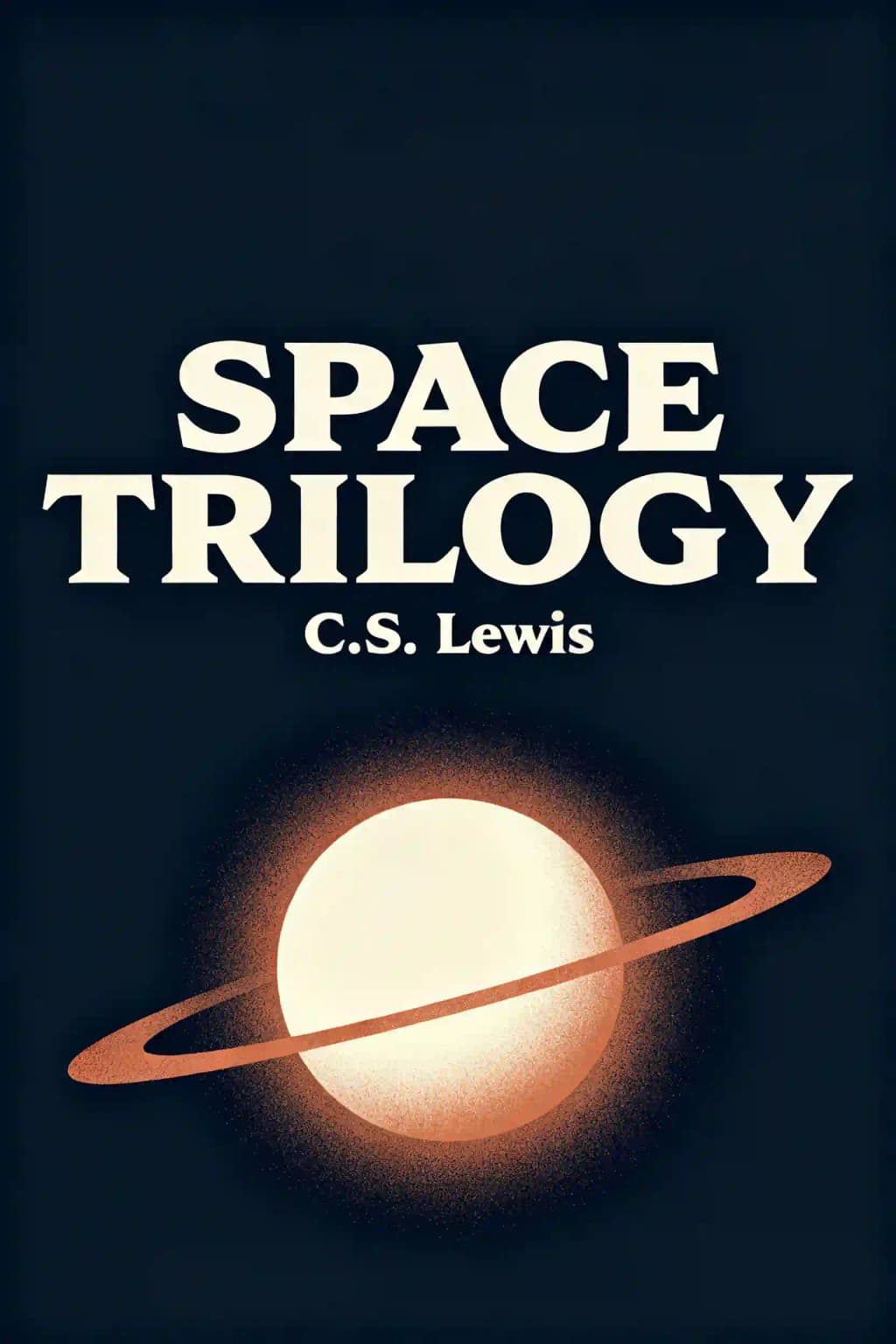
Beyond the Silent Planet: The Cosmic Vision of C.S. Lewis's Space Trilogy
When J.R.R. Tolkien first read his friend C.S. Lewis's manuscript for "Out of the Silent Planet," he described being "enthralled" by its linguistic inventions and philosophical depth. This enthusiasm wasn't mere politeness-Tolkien later acknowledged his "unpayable debt" to Lewis, claiming that without his friend's encouragement, The Lord of the Rings might never have been completed. The Space Trilogy represents Lewis at his most imaginative, blending adventure with profound theological and philosophical explorations. While Lewis's Narnia series enjoys widespread cultural recognition, his Space Trilogy remains something of a hidden gem, beloved by literary scholars and science fiction aficionados alike. Stephen King once called it "science fiction that succeeds in being both religious and readable," while Neil Gaiman has cited it as a formative influence on his own mythic storytelling. The trilogy's enduring impact stems from its unique fusion of medieval cosmology, Christian theology, and speculative fiction-creating worlds that feel simultaneously ancient and startlingly relevant to our technological age.
Глава 2
Cosmic Warfare: Earth as the Silent Planet
At the heart of Lewis's Space Trilogy lies a startling cosmological revelation: Earth is known throughout the solar system as "Thulcandra"-the Silent Planet-a world cut off from the harmonious community of the heavens. This isolation stems from a primordial rebellion, when Earth's guardian angel (its "Oyarsa") became "bent" and was bound to our planet's atmosphere after a celestial war. This fallen being-whom we would recognize as Satan-has kept Earth in spiritual quarantine for millennia.
The trilogy reveals this cosmic backstory gradually. In "Out of the Silent Planet," philologist Elwin Ransom is kidnapped by the physicist Weston and his financier accomplice Devine, who believe the inhabitants of Mars (Malacandra) want human sacrifices. Upon arrival, Ransom escapes into the Malacandrian wilderness, discovering not a savage wasteland but a prelapsarian paradise inhabited by three intelligent species living in harmony: the poetic, otter-like hrossa; the scholarly, elongated sorns; and the technically skilled, frog-like pfifltriggi.
Through his encounters with these beings, Ransom learns that each inhabitable planet has its own guardian Oyarsa, but Earth's Oyarsa rebelled against Maleldil (God) and has been "bent." The Malacandrians refer to Earth as "the silent planet" because no communication comes from it-the cosmic community receives no messages from our world. This silence isn't merely communicative but spiritual, representing humanity's isolation from divine presence.
When Ransom finally meets the Oyarsa of Malacandra, this ancient being explains: "The Bent One has been bound there since before your kind came to be." Earth exists in a state of spiritual quarantine, with the rebellious Oyarsa unable to leave our atmosphere yet still exerting malevolent influence over human affairs. This cosmic arrangement explains why Earth alone among planets suffers from war, exploitation, and spiritual confusion-we are the only world whose guardian turned against the divine order.
This framework brilliantly recontextualizes human history as part of a larger cosmic drama. Our wars, cruelties, and spiritual blindness aren't merely human failings but symptoms of our planet's corrupted spiritual environment. Lewis thus transforms traditional Christian concepts of fallen nature into an interplanetary mythology that feels both ancient and scientifically plausible.
Глава 3
The Three Worlds: Distinct Planetary Visions
Lewis crafts three remarkably distinct planetary settings across his trilogy, each serving as both physical location and spiritual landscape. Malacandra (Mars), Perelandra (Venus), and Thulcandra (Earth) aren't merely different planets but represent different spiritual conditions and theological concepts.
Malacandra appears initially as a harsh landscape of towering mountains and deep canyons (handramits), but Ransom discovers it's actually a world of ancient, fading glory. The planet is dying slowly, its atmosphere thinning, its habitable areas shrinking to the canyon floors. Yet despite this physical decline, Malacandra maintains spiritual harmony. Its three intelligent species-hrossa, sorns, and pfifltriggi-live in peaceful cooperation, each contributing their unique gifts to society without domination or exploitation.
The hrossa are poets and musicians, living simple lives of hunting and farming along the warm canals. When Ransom asks why they don't seek technological advancement like humans, Hyoi (a hross) responds with bewilderment: "A pleasure is full grown only when it is remembered... What you call remembering is the last part of the pleasure." This profound statement reveals the hrossa's integration of experience, memory, and meaning-a stark contrast to humanity's restless pursuit of novelty.
Perelandra presents an even more startling vision-a young paradise of floating islands on a world-spanning ocean. Here, Lewis reimagines Eden, creating a planet where the Fall has not yet occurred. The Green Lady (Perelandra's Eve) lives in innocent communion with Maleldil, experiencing each moment as fresh discovery. The floating islands themselves embody this spiritual condition-there is no fixed land, no possibility of establishing permanent settlements or possessions. The Lady must surrender to the waves' movement, trusting Maleldil's provision rather than seeking security through control.
When Ransom arrives on Perelandra, he discovers Weston has also come, now possessed by the "Un-man" (Satan's influence) who attempts to tempt the Green Lady into disobedience. The temptation centers not on forbidden fruit but on the Fixed Land-the one place Maleldil has prohibited her from staying overnight. The Un-man suggests that true maturity means making her own decisions rather than blindly following rules. This sophisticated temptation appeals to autonomy and self-development rather than mere rebellion.
Earth (Thulcandra) appears in the final volume as a world where spiritual corruption has infected social institutions. The National Institute of Co-ordinated Experiments (N.I.C.E.) represents the culmination of "bent" thinking-science divorced from ethics, power without love, progress without purpose. At Belbury (the N.I.C.E. headquarters), human relationships degenerate into manipulation, language loses meaning, and eventually even the ability to speak coherently dissolves into chaos.
Through these three worlds, Lewis presents a cosmic spiritual geography: Malacandra as ancient wisdom fading but preserved, Perelandra as innocence tested and triumphant, and Earth as the battleground where corruption must be confronted and overcome. This planetary trilogy becomes a spiritual journey from fallen awareness (Mars) through temptation and redemption (Venus) to the ultimate confrontation between good and evil on our own world.
Глава 4
Language, Meaning, and the Cosmic Speech
Throughout the Space Trilogy, Lewis explores language not merely as communication but as a spiritual reality connecting all creation. The ancient language of "Old Solar" (Hressa-Hlab) serves as the cosmic mother tongue, the original language from which all others derive. On Malacandra, Ransom discovers that while each species has its own language, they share Old Solar for poetry, philosophy, and communication between species.
This cosmic language isn't merely a convenient plot device but embodies Lewis's philological and theological convictions about language's nature. Old Solar reflects reality directly-its words connect inherently to the things they name, unlike human languages where words are arbitrary symbols. When Ransom first learns Old Solar from the hrossa, he experiences not just new vocabulary but a new way of perceiving reality. The language carries an almost magical quality, allowing beings to communicate across species boundaries with perfect understanding.
The power of true language reaches its apex in "That Hideous Strength" when Merlin, awakened from centuries of suspended animation, pronounces judgment on the N.I.C.E. leadership. Speaking the "Great Tongue" (Old Solar), Merlin unmakes human language itself, causing the assembled scientists and bureaucrats to speak only meaningless gibberish. This linguistic confusion directly inverts the Tower of Babel story-instead of diversifying language to prevent human overreach, Merlin removes language entirely from those who have abused it.
This scene dramatizes Lewis's concern about modern language's corruption through propaganda, advertising, and academic jargon. Throughout the trilogy, the villains manipulate language to obscure rather than reveal truth. Weston's philosophical justifications for planetary conquest, Devine's business euphemisms, and the N.I.C.E.'s bureaucratic doublespeak all represent language turned against its proper purpose. By contrast, the direct speech of Malacandrians and the Green Lady represents language in its unfallen state-words that connect rather than divide, reveal rather than conceal.
Lewis further explores this theme through Mark Studdock's journey at the N.I.C.E., where he's tasked with writing newspaper articles about riots that haven't yet occurred. This propaganda work represents the ultimate corruption of language-not merely lying but creating a false reality through words. Mark's moral awakening begins when he rediscovers the concept of "Normal" language that corresponds to actual reality rather than serving power.
The trilogy ultimately suggests that true language is inseparable from truth itself. When the N.I.C.E. leaders lose the ability to speak coherently, this linguistic collapse reflects their spiritual condition-having rejected reality's divine ordering, they can no longer participate in meaningful communication. Language, for Lewis, isn't merely a tool but a sacramental reality connecting us to the cosmic order.
Глава 5
The Cosmic Hierarchy: Order Without Tyranny
Lewis's Space Trilogy presents a vision of cosmic hierarchy that challenges both modern egalitarianism and traditional authoritarianism. Throughout the three novels, we encounter a universe structured by natural authority and willing submission, where hierarchy exists not for domination but for harmony and mutual flourishing.
On Malacandra, the three intelligent species live under the benevolent oversight of the Oyarsa, an angelic being who guides rather than controls. Each species contributes its unique gifts to society-the hrossa as poets and farmers, the sorns as philosophers and scientists, the pfifltriggi as craftsmen and artists. This arrangement isn't enforced through coercion but emerges naturally from each species' inherent nature and abilities. When Ransom asks if the species ever war with each other, Hyoi responds with genuine confusion-the concept seems incomprehensible to him.
This harmonious hierarchy stands in stark contrast to Earth's power structures, where Weston justifies planetary colonization as humanity's evolutionary destiny. His chilling declaration that humans would kill all Malacandrians to secure their own future represents hierarchy perverted into exploitation. The Oyarsa of Malacandra identifies this as the influence of "the Bent One," who teaches beings to "break all moral laws except love of kindred, which has been distorted into blind obsession."
On Perelandra, hierarchy appears in its most primal form through the relationship between the King, Queen, and Maleldil. The Green Lady's initial innocence includes perfect submission to divine authority-not as oppressive restriction but as loving guidance. The Un-man's temptation attempts to disrupt this harmony by suggesting that true maturity means independence from authority. When the Lady asks whether sometimes disobedience might be the higher obedience, she begins contemplating a false hierarchy where her judgment supersedes Maleldil's command.
The cosmic hierarchy reaches its fullest expression in "That Hideous Strength" through the descent of the planetary powers (Oyeresu). Each planetary intelligence embodies a distinct aspect of divine order: Mercury brings language and communication, Venus brings love and fertility, Mars brings courage and justice, Saturn brings ancient wisdom and solemn judgment, and Jupiter brings kingship and joyful majesty. Their appearance creates not oppression but liberation-each being in the household experiences their true nature more fully in the presence of these cosmic authorities.
This vision directly challenges the N.I.C.E.'s false hierarchy, where power serves only itself. At Belbury, authority exists for control rather than flourishing, creating a parody of true order. The Deputy Director Wither's evasive, meaningless speech represents authority without substance, while Frost's "objectivity" strips away humanity in service to inhuman powers.
Lewis's cosmic hierarchy ultimately reveals that true authority serves those beneath it rather than exploiting them. The Oyarsa of Malacandra explains they could have invaded Earth long ago but were prevented by Maleldil from becoming like humans-"wise enough to see death approaching but not wise enough to endure it." True hierarchy, Lewis suggests, involves both willing submission and loving guidance, creating an order where each being finds its proper place not through coercion but through the recognition of natural authority.
Глава 6
Science Without Wisdom: The Dangers of Technological Hubris
Lewis's Space Trilogy offers a prophetic critique of scientific advancement divorced from moral wisdom. Through characters like Weston and institutions like the N.I.C.E., Lewis examines how technology without ethical constraints becomes a tool for domination rather than flourishing.
Weston embodies scientific brilliance without moral guidance. As a physicist who develops interplanetary travel, he represents remarkable achievement, yet his philosophy reveals profound moral blindness. When questioned by the Oyarsa of Malacandra about his values, Weston delivers a grand speech about humanity's destiny to spread across the cosmos, preserving "Life" even if it means exterminating other intelligent species. When this speech is translated into straightforward language by Ransom, its moral bankruptcy becomes clear-Weston would sacrifice anything, including other rational beings, for his vision of human progress.
The Oyarsa's response cuts to the heart of Weston's error: "I see now how the lord of the silent world has bent you. There is no escape from the siege of your world... and you, who should have been the ransom of your race, have become the leaders of the siege." This statement identifies scientific advancement without moral wisdom as not merely misguided but actively destructive-a tool of "the Bent One" rather than genuine progress.
In "That Hideous Strength," this critique expands through the N.I.C.E., an institution that represents science as totalitarian control. The Institute's true aims emerge gradually: eliminating "undesirable" populations, conditioning humans through propaganda and psychological manipulation, and ultimately transcending organic life entirely. When Filostrato reveals their plan to keep Alcasan's severed head alive indefinitely, he declares this the first step toward immortality through technology-consciousness preserved while eliminating the "mess" of organic existence.
This vision reaches its logical conclusion in Filostrato's description of the Moon as the ideal world-a sterile, mineral landscape where an advanced race has "cleaned their world" by eliminating all organic life except a small reservation of "savages" who resist. This chilling image of technological "progress" represents what Lewis elsewhere called "the abolition of man"-humanity's self-destruction through its own technological power.
Lewis's critique isn't anti-science but rather a call for science guided by wisdom. The contrast between Weston's destructive brilliance and the integrated knowledge of the sorns illustrates this distinction. The sorns possess advanced scientific understanding but apply it within ethical boundaries, using technology to serve life rather than control it. When Augray shows Ransom the Earth through a special viewing device, this technology serves contemplation and understanding rather than domination.
The trilogy suggests that scientific advancement without corresponding moral development inevitably becomes destructive. As Hingest (the chemist who leaves the N.I.C.E.) explains to Mark: "If chemistry began supporting a secret police run by a middle-aged virago who doesn't wear corsets and a scheme to take away people's children and put them in compounds...I'd let chemistry go to the devil." Science, Lewis argues, must remain the servant of humanity rather than its master, guided by moral wisdom rather than mere technical capability.
Глава 7
Gender and Cosmic Complementarity
Lewis explores gender throughout the Space Trilogy not merely as biological difference but as a cosmic principle reflecting deeper spiritual realities. His treatment of masculine and feminine principles operates on multiple levels-biological, psychological, and metaphysical-creating a complex vision of gender complementarity that both affirms traditional distinctions and transcends them.
On Malacandra, gender appears in its most straightforward form through the hrossa's monogamous mating practices. When Ransom discusses love with Hyoi, he discovers that hrossa mate only once in their lifetime, experiencing this as complete fulfillment rather than limitation. Hyoi explains that "a pleasure is full grown only when it is remembered," suggesting that the hrossa experience sexuality not as momentary gratification but as part of a lifelong narrative of relationship. This vision contrasts sharply with human sexuality's restless pursuit of novelty and sensation divorced from commitment.
On Perelandra, gender takes cosmic significance through the King and Queen, who embody masculine and feminine principles in their unfallen state. The Green Lady's femininity appears as receptivity, intuitive wisdom, and connection to the natural world, while the King embodies protection, exploration, and rational understanding. Their relationship isn't one of domination and submission but of complementary gifts forming a harmonious whole. When Ransom witnesses them together, he perceives them as "Paradise itself, in its two Persons," suggesting that gender complementarity reflects divine intention for creation.
The cosmic dimension of gender appears most explicitly when Ransom encounters the Oyeresu of Mars and Venus. Though both are technically sexless, Ransom perceives fundamental gender principles operating through them: "Malacandra was masculine (not male); she of Perelandra was feminine (not female)." Mars embodies vigilance and justice, his eyes "impregnated with distance," while Venus embodies nurturing abundance, her eyes opening inward to "a world of waves and murmurings." These principles transcend biological sex while maintaining distinct masculine and feminine qualities.
In "That Hideous Strength," gender becomes a central battleground between competing visions of humanity. The N.I.C.E. represents gender confusion and sterility-Miss Hardcastle's masculine demeanor, Filostrato's disgust with organic reproduction, and the ultimate goal of creating consciousness without bodies all represent rejection of natural gender complementarity. By contrast, St. Anne's Manor embodies healthy gender relations where differences are acknowledged and celebrated without becoming oppressive.
Jane Studdock's spiritual journey centers on reconciling her independence with marriage's demands. When the Director tells her, "You do not fail in obedience through lack of love, but have lost love because you never attempted obedience," he challenges modern assumptions about autonomy and relationship. Jane's resistance isn't merely to Mark but to cosmic masculinity itself-what the Director calls "the masculine itself: the gold lion, the bearded bull-which breaks through hedges and scatters the little kingdom of your primness."
Lewis's vision culminates in Jane and Mark's separate journeys toward reunion. Jane learns that true freedom comes through surrender rather than autonomy, while Mark discovers that true masculinity involves protection rather than possession. Their reconciliation in the novel's final pages suggests that proper gender relations involve mutual submission to divine order rather than either patriarchal domination or gender erasure.
While Lewis's gender concepts reflect mid-twentieth-century assumptions that many modern readers might question, his deeper insight-that gender involves complementary principles that transcend mere biology-offers a more nuanced perspective than either rigid traditionalism or complete relativism.
Глава 8
Britain and Logres: The Spiritual Battle for England
In "That Hideous Strength," Lewis shifts from interplanetary adventures to England itself, revealing that the cosmic battle between good and evil has always been present in human history. Through the concept of "Logres" (the spiritual ideal of Britain) versus "Britain" (its materialistic shadow), Lewis examines how spiritual forces shape national identity and destiny.
Dr. Dimble explains this tension: "Something we may call Britain is always haunted by something we may call Logres. Haven't you noticed that we are two countries? After every Arthur, a Mordred; behind every Milton, a Cromwell: a nation of poets, a nation of shopkeepers." This duality represents not just historical alternation but ongoing spiritual warfare within English culture-the struggle between materialistic pragmatism and spiritual idealism.
The N.I.C.E.'s takeover of Edgestow represents Britain's triumph over Logres-bureaucratic power, scientific materialism, and administrative efficiency crushing the human-scale community with its ancient traditions. When Mrs. Dimble describes the destruction of her neighborhood, she captures this spiritual dimension: "It was like a nightmare... almost as if we'd lost the war." The physical transformation of Edgestow-ancient trees felled, historic buildings demolished, local governance replaced by centralized control-represents spiritual colonization disguised as progress.
Against this materialistic tide stands the company at St. Anne's, representing the "secret Logres" that has existed within Britain through "an unbroken succession of Pendragons"-seventy-eight since Arthur, with Ransom as the seventy-ninth. These hidden guardians have been "the fingers which gave the tiny shove or the almost imperceptible pull" that kept England from final corruption. This concept reframes English history as spiritual warfare conducted through cultural influence rather than military power.
The awakening of Merlin represents Logres's ancient power returning in Britain's moment of crisis. As a figure who bridges pagan and Christian Britain, Merlin embodies the nation's spiritual continuity beneath historical changes. His magic-which Lewis presents as a pre-modern science rather than supernatural power-represents knowledge integrated with wisdom rather than divorced from it. When Merlin channels the planetary powers to defeat the N.I.C.E., this represents ancient wisdom overcoming modern technocracy.
Lewis's vision of national identity transcends both jingoistic nationalism and rootless cosmopolitanism. England, in his view, has a spiritual character and purpose-not racial or political superiority but a particular quality Dimble describes as "an awkward grace, a humble, humorous incompleteness." This spiritual identity doesn't justify imperialism or exclusion but rather calls the nation to its better nature against materialistic corruption.
The novel's conclusion, with Edgestow destroyed by earthquake and flood, suggests that when a society completely rejects its spiritual foundations, even physical destruction may follow. Yet Lewis avoids simple moralism-the destruction comes not as divine punishment but as the natural consequence of the N.I.C.E.'s own actions. By attempting to control nature completely, they unleash forces beyond their understanding.
Through this national mythology, Lewis suggests that cultural conflicts are ultimately spiritual battles-not merely political disagreements but competing visions of human nature and purpose. The struggle between Logres and Britain continues in every generation, with each individual choosing which vision of the nation they will serve.
Глава 9
Redemption Through Surrender: The Spiritual Journey
Across the Space Trilogy, Lewis traces a consistent spiritual journey for his characters-from self-protective autonomy through surrender to genuine freedom. This pattern appears most clearly through Ransom and the Studdocks, whose transformations reveal Lewis's understanding of spiritual growth as paradoxically requiring submission before liberation.
Ransom's journey begins with fear and resistance. Kidnapped and taken to Malacandra against his will, his initial response is panic and escape. His encounter with Malacandrian civilization gradually transforms him from observer to participant, culminating in his willing acceptance of the role Maleldil has chosen for him. By the trilogy's conclusion, Ransom has become the Pendragon-a spiritual authority who leads not through domination but through service.
This transformation involves physical suffering as well as spiritual surrender. On Perelandra, Ransom must literally fight the Un-man, receiving a wound in his heel that never heals. This wound marks him as one who has entered spiritual battle and bears its cost permanently. When he returns to Earth, his appearance has changed dramatically-his formerly graying beard now golden, his body radiating health despite the persistent wound. This physical transformation reflects his spiritual metamorphosis from reluctant participant to willing servant.
Mark Studdock's journey follows a darker path before reaching redemption. His lifelong pattern of seeking belonging through "inner rings" of exclusive social groups leads him into the N.I.C.E., where he compromises his integrity for acceptance. His gradual awakening begins when he recognizes the emptiness of this pursuit-that each "inner ring" only leads to another, with no genuine community at its center. His moral turning point comes when he refuses to desecrate a crucifix, not from religious conviction but from recognizing it represents "what happens when the Straight meets the Crooked."
Mark's redemption culminates in his journey to St. Anne's, where he confronts his failures as a husband. Walking through the snow-covered landscape, he sees himself clearly for the first time: "one more little vulgarian" who wrongly assumed marriage gave him "power or title to appropriate" Jane's freshness and beauty. This self-knowledge prepares him for genuine reunion with Jane-not possession but partnership.
Jane's spiritual journey centers on surrendering her fierce independence. Initially resistant to both marriage and spiritual authority, she gradually recognizes that her autonomy has become a prison rather than freedom. When the Director tells her, "Go in obedience and you will find love," he articulates the paradox at the heart of Lewis's spiritual vision-that true freedom comes through willing submission to proper authority.
Jane's transformation culminates in her garden experience, where she encounters divine presence not as abstract concept but as personal reality: "The garden at St. Anne's was made by a God who was not in the least like Saturn... It was made by a God who meant some creatures to be high and others low; some to be beautiful and others to be quaint; all to be different, each from the others, each a character." This vision of divine order includes hierarchy without tyranny, difference without inequality, and surrender without erasure of personality.
For both Studdocks, redemption comes through recognizing that true freedom exists not in autonomy but in right relationship-with each other, with society, and ultimately with the divine order. Their reunion in the novel's final pages suggests that genuine human connection becomes possible only when both partners surrender their self-protective isolation and embrace vulnerability.
This spiritual journey-from fear through surrender to freedom-represents Lewis's understanding of Christian discipleship not as rule-following but as transformation through relationship with divine love. As the Director explains, "obedience and rule are more like a dance than a drill," suggesting that spiritual growth involves harmony with divine order rather than mere submission to external authority.
Глава 10
The Cosmic Dance: Lewis's Vision of Harmonious Creation
Throughout the Space Trilogy, Lewis develops a vision of the cosmos not as mechanistic clockwork but as an intricate dance of complementary forces. This dance appears at every level-from the harmonious society of Malacandra to the relationship between planetary powers to the reconciliation of the Studdocks. The dance represents Lewis's alternative to both rigid hierarchy and chaotic individualism-a vision of freedom within structure, diversity within unity.
On Malacandra, this cosmic dance appears through the relationship between the three intelligent species. Rather than competing for dominance, each contributes its unique gifts to create a harmonious whole. The hrossa provide poetry and agriculture, the sorns philosophy and science, the pfifltriggi craftsmanship and art. Their differences create not conflict but complementarity, each species flourishing through relationship with the others rather than isolation or domination.
The floating islands of Perelandra embody this dance physically. Unlike Earth's fixed continents, these islands rise and fall with the waves, requiring their inhabitants to surrender control and trust the planet's rhythms. When the Green Lady explains why she doesn't fear being separated from the King, she reveals the spiritual dimension of this dance: "I am His beast, and all His biddings are joys." Her submission isn't oppressive but liberating, allowing her to move in harmony with divine intention rather than struggling against it.
The cosmic dance reaches its fullest expression in "That Hideous Strength" through the descent of the planetary powers. Each Oyarsa brings distinct qualities-Mercury's swift intelligence, Venus's generous love, Mars's righteous strength, Saturn's ancient wisdom, and Jupiter's majestic authority. Their interaction creates not confusion but harmony, each amplifying the others' qualities rather than diminishing them. This heavenly dance transforms the household at St. Anne's, allowing each member to experience their true nature more fully in the presence of these cosmic authorities.
This vision directly challenges the N.I.C.E.'s mechanistic worldview, which seeks control through elimination of difference. Filostrato's dream of replacing organic life with artificial substitutes-metal trees, switch-operated birds, and eventually a planet "shaved" of all organic life-represents the ultimate rejection of the cosmic dance. The N.I.C.E. seeks not harmony but uniformity, not relationship but domination.
Lewis's cosmic dance extends even to language itself. When Ransom speaks the "Great Tongue" (Old Solar), the words come through him rather than from him-"as if they were not words at all but present operations of God, the planets, and the Pendragon." This experience suggests that true language participates in cosmic reality rather than merely describing it, creating harmony between speaker, listener, and the world they share.
The trilogy concludes with the promise of reconciliation between Jane and Mark Studdock-a human-scale reflection of the cosmic dance. Their separate journeys lead them toward reunion not as dominant and submissive but as complementary partners in a shared life. As Jane approaches the Lodge where Mark awaits, she recognizes that their relationship can become a dance rather than a power struggle-each surrendering not to the other but to the divine pattern that encompasses them both.
Through this vision of the cosmic dance, Lewis offers an alternative to both modern individualism and traditional authoritarianism. True freedom, he suggests, comes not through autonomy but through finding one's proper place in the divine order-not isolation from others but harmonious relationship with them. The dance represents Lewis's ultimate vision of creation restored-diverse yet unified, structured yet free, each participant both giving and receiving in an eternal pattern of love.