Глава 1
The Paradox of Productivity: Why Rest is the Secret to Success
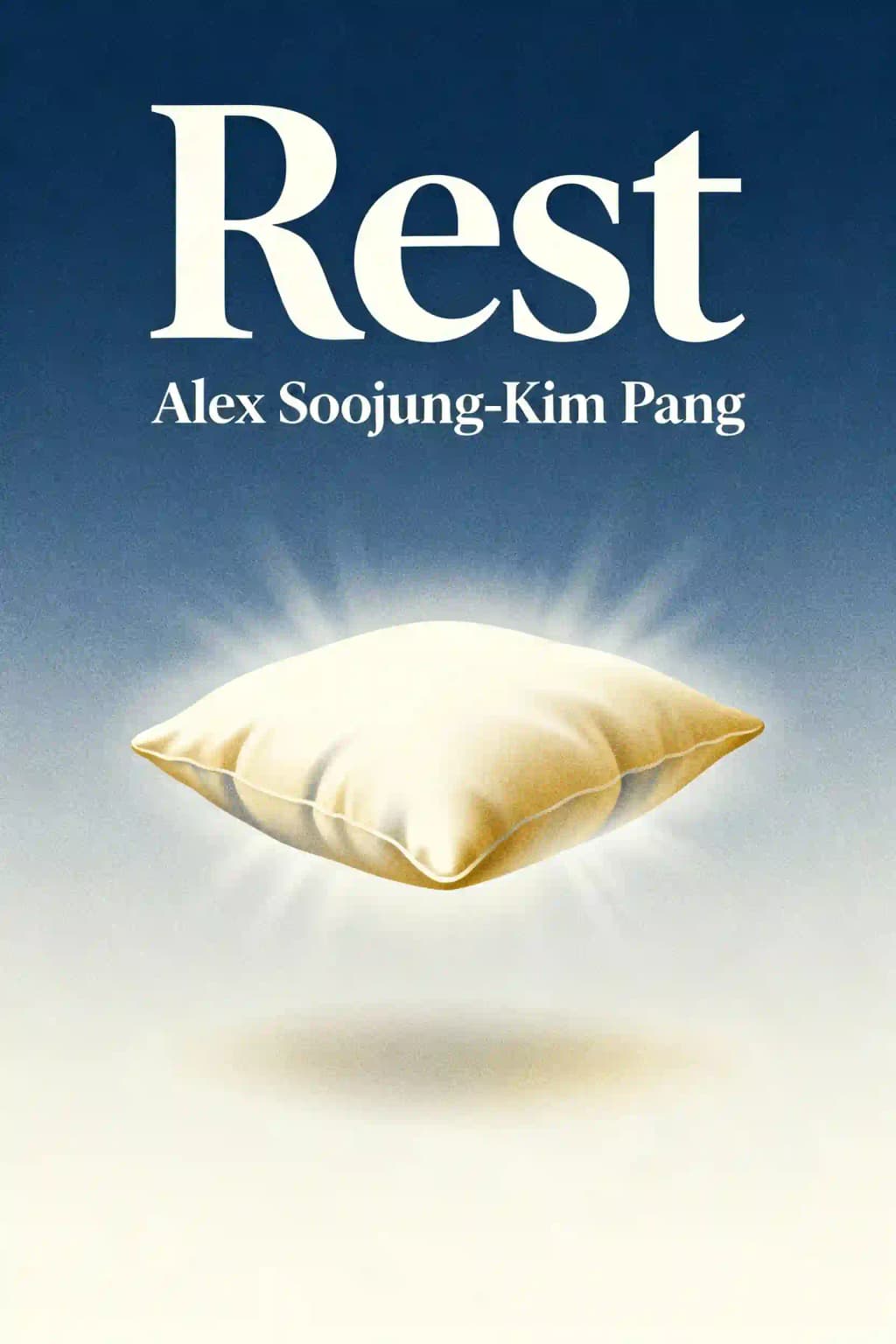
Ever wondered why some of the world's most accomplished individuals seem to work less than you do? Picture Charles Darwin, who despite revolutionizing our understanding of life on Earth, rarely worked more than four hours a day. Or consider Winston Churchill, who insisted on taking a nap every afternoon-even during the darkest days of World War II. These weren't signs of laziness but deliberate strategies that fueled their extraordinary achievements. In Alex Soojung-Kim Pang's groundbreaking book, we discover that deliberate rest isn't the opposite of work but its essential partner. This revelation has captivated high-performers across industries, from Silicon Valley executives to Olympic athletes. As Arianna Huffington notes, it's "a must-read for anyone who wants to work more creatively and productively." The book has sparked a quiet revolution in how we think about productivity, challenging our always-on culture with scientific evidence that strategic rest is the hidden ingredient in creative success.
Глава 2
The Overwork Epidemic: How We Lost Our Balance
Modern society has completely inverted our relationship with work and rest. What was once a mark of shame-"working hard"-has become a badge of honor worn proudly in our LinkedIn profiles and casual conversations. We brag about our busy schedules, glorify hustle culture, and wear our stress like expensive jewelry.
This cultural shift isn't just unhealthy-it's counterproductive. As neuroscientist Santiago Ramon y Cajal observed over a century ago, two major impediments to scientific discovery are the frantic pace of competitive research and the misguided belief that long hours and prolific output lead to profound insights. This hurried approach typically produces shallow work rather than deep discoveries.
Our sharp division between work and rest is actually a historical artifact. Before the Industrial Revolution, work and domestic spaces overlapped, and working time was more flexible and task-oriented. People worked when there was work to be done and rested when natural boundaries like daylight or seasons dictated. The factory model separated these spheres and established rigid working hours, with labor movements unintentionally reinforcing this dichotomy by negotiating for specific non-working times.
In today's creative and knowledge industries, where productivity is difficult to measure, workers are rewarded not necessarily for output but for "performing" busyness. Digital tools have expanded this performance around the clock, transforming work from discrete blocks into a flood that soaks our entire lives. We check emails at dinner, respond to Slack messages in bed, and scroll through work documents while waiting for coffee-all while complaining about being "so busy."
The cost of this imbalance is steep. Burnout rates have reached epidemic proportions across professions. Americans leave hundreds of millions of vacation days unused annually. Stress-related illnesses cost billions in healthcare and lost productivity. Perhaps most ironically, this overwork culture actually reduces creative output and innovation-the very things most organizations claim to value.
What if we've been thinking about productivity all wrong? What if the key to doing our best work isn't working more but working less-and resting better?
Глава 3
The Four-Hour Sweet Spot: Quality Over Quantity
When examining history's most creative figures-from Charles Dickens to Henri Poincare-a striking paradox emerges: they organized their lives around their work but typically spent only a few hours daily on their most important contributions. The best performers don't just practice deliberately-they rest deliberately.
Studies of Berlin conservatory students revealed that top violinists practiced intensively for about four hours daily in 80-90 minute sessions with breaks between, while sleeping an hour more than average students and taking afternoon naps. Unlike merely good violinists who underestimated their leisure time, the best performers accurately tracked their downtime-about 25 hours weekly-and were mindful about how they spent it.
Music psychologist Carl Emil Seashore noted nearly a century ago that "the command to rest is fully as important as to work in effective learning." This pattern repeats across disciplines: mathematicians like G.H. Hardy worked limited hours before spending afternoons walking and playing tennis; writers like Dickens worked methodically for fixed periods.
Why four hours? Psychologist Anders Ericsson's research on deliberate practice provides insight. The kind of deep, focused work that produces breakthroughs is mentally demanding and can only be sustained for limited periods before quality deteriorates. Beyond four hours, diminishing returns set in rapidly. What matters isn't time spent but the quality of attention during those hours.
The most productive creatives typically work in the morning when willpower and focus are highest. They create protected time blocks free from interruption. They work intensely during these periods-not checking email or social media-then deliberately stop, often mid-task. This pattern allows them to maintain high-quality output consistently rather than burning out in sporadic bursts.
World-class performance doesn't just come after 10,000 hours of practice-it comes after 10,000 hours of deliberate practice, 12,500 hours of deliberate rest, and 30,000 hours of sleep. The most successful people aren't those who work the longest hours but those who work the right hours with full concentration, then rest with equal intention.
This approach contradicts our cultural mythology that creative breakthroughs come from manic all-nighters or obsessive work binges. Instead, sustainable creativity emerges from rhythmic alternation between focused work and genuine recovery-a pattern that can be cultivated and improved like any other skill.
Глава 4
The Walking Mind: Movement as Creative Catalyst
Walking has been a vital tool for creative thinking throughout history. For executives like LinkedIn CEO Jeff Weiner, walking meetings provide rare opportunities to focus on one topic amid fragmented days. Strategic walkers include Steve Jobs, who used walks to win over reluctant allies, and Mark Zuckerberg, who walks with prized recruits and acquisition targets.
History's most consequential walking meeting occurred in 1938 when Howard Florey and Ernst Chain decided to develop penicillin while walking through Oxford's University Parks. Their work saved countless lives during WWII and earned them the 1945 Nobel Prize. Many creative breakthroughs have occurred during walks: Werner Heisenberg conceived the uncertainty principle during a Copenhagen walk; Erno Rubik designed his famous cube after observing water turbulence around pebbles while walking by the Danube; and mathematician William Rowan Hamilton literally carved his quaternion insight on a bridge during a walk.
Stanford researchers Marily Oppezzo and Daniel Schwartz scientifically confirmed walking's creative benefits through four experiments using standardized creativity tests. They found that walking improved divergent thinking (generating multiple solutions) by 81% compared to sitting, though it slightly decreased convergent thinking (finding specific answers). Surprisingly, walking on a treadmill facing a blank wall was just as effective as walking outdoors, suggesting the physical act of walking itself-not the environment-stimulates creativity.
Why does walking work? Several mechanisms appear to be at play. First, walking increases blood flow to the brain, delivering more oxygen and glucose. Second, the rhythmic, bilateral movement of walking helps synchronize brain hemispheres. Third, walking requires just enough attention to prevent mind-wandering from becoming rumination but not so much that it prevents the default mode network from activating. This network, discovered relatively recently by neuroscientists, plays a crucial role in making novel connections between ideas.
Creative walkers often carry notebooks to capture insights: Tchaikovsky and Beethoven jotted musical ideas during forest walks; Lin-Manuel Miranda wrote Hamilton lyrics during Sunday walks; and Ferran Adria constantly noted culinary inspirations. Others devised unique solutions-Thomas Hobbes had an inkwell built into his cane, while mathematician David Hilbert installed a blackboard in his garden.
Walking for creativity is a deliberate practice that can be cultivated, as demonstrated by geneticist Barbara McClintock, who used walks to engage in "intense, subconscious thinking" that led to breakthrough discoveries. McClintock learned to harness her walking practice deliberately, using it to activate her unconscious "in the service of scientific discovery." After mastering this technique at Stanford, she could "summon it when needed," which helped her discover "jumping genes" and eventually win a Nobel Prize.
The beauty of walking as a creative tool is its accessibility. Unlike expensive equipment or specialized training, walking requires only comfortable shoes and the decision to step away from your desk. Even a 15-minute walk can reset mental patterns and open new pathways of thought-making it perhaps the most underrated productivity tool available to us.
Глава 5
The Power of Pause: Strategic Stopping and Sleep
A counterintuitive yet effective form of deliberate rest is stopping work at precisely the right moment-when you can clearly see your next move but deliberately leave it for tomorrow. Ernest Hemingway championed this approach, advising writers to "always stop when you are going good and when you know what will happen next." This practice serves multiple purposes: it makes restarting work easier, establishes a steadier productive rhythm, and engages your subconscious to continue processing your work during downtime.
Many successful writers have adopted this technique. Screenwriter Allan Burns would "quit when I'm hot." Roald Dahl intentionally left work unfinished to avoid returning to "a blank page." Salman Rushdie always tried to have "some notion of where I want to pick up," while Mario Vargas Llosa would leave "a few lines untyped" as a morning warm-up exercise. Even Cambridge mathematician John Littlewood recognized the value of ending "in the middle of something."
This deliberate stopping creates sustainable productivity. Science fiction author Neal Stephenson discovered this after wasting years on an "incoherent pile" of a book before learning to stop mid-thought, leaving "something in the buffer" for the next day. John McPhee abandoned his youthful all-night writing sessions when he realized they diminished his overall output.
Sleep represents the ultimate form of deliberate rest-far more active and vital than commonly understood. Since the 1930s, sleep scientists have discovered that while we sleep, our brains consolidate memories, repair physical damage, and generate dreams. Sleep deprivation immediately impairs focus, judgment, performance, and creativity, while long-term deprivation affects mental and physical health.
During deep sleep, our bodies release growth hormone (GHRH) that repairs cells, fights infections, and stimulates growth. During REM sleep, oligodendrocyte precursor cells generate myelin, critical for proper neural function. Maiken Nedergaard's groundbreaking research revealed how sleep allows the brain to clear toxins. Her team discovered that cerebrospinal fluid barely moves when mice are awake but circulates actively during sleep. This happens because glial cells-which make up most of the brain-shrink during sleep, creating wider channels for fluid flow. This "glymphatic system" removes waste products including beta-amyloid, a protein linked to Alzheimer's disease.
Beyond physical restoration, sleep plays a crucial role in memory consolidation and creativity. Different sleep stages process different types of memories-REM sleep handles visual tasks and emotional experiences, while slow-wave sleep consolidates factual memories. Scientists like Hans Bethe, Linus Pauling, and Glenn Seaborg deliberately primed their sleeping minds with problems, often finding solutions would "burst into consciousness" upon waking.
Strategic napping has emerged as an effective performance enhancer. NASA researcher Mark Rosekind found that 747 pilots allowed a 40-minute nap window during transpacific flights performed more consistently throughout flights and remained alert during critical landing approaches, while non-napping crews experienced an average of 22 "micro-events associated with physiological sleepiness" during landing procedures.
The most effective creative individuals don't just accept sleep and stopping points as necessary evils-they actively engineer their work patterns around these pauses, recognizing them as essential components of the creative process itself.
Глава 6
The Recovery Equation: Detachment and Renewal
Recovery explores how detachment from work is essential for mental and physical restoration. Eisenhower exemplifies this need-while planning Operation Torch in 1942, he established Telegraph Cottage as a sanctuary where he could escape his 15-18 hour workdays and insomnia. This detachment likely saved him from "mental crack-up."
Sociologist Sabine Sonnentag's decades of research reveals that workers who mentally disconnect from their jobs are more productive, better colleagues, and achieve deeper flow states. Recovery requires four key elements: relaxation (pleasant, undemanding activities), control (autonomy over time), mastery experiences (engaging challenges done well), and psychological detachment (mentally disconnecting from work).
Studies show burnout affects our most valuable workers-71% of regular vacationers report job satisfaction versus only 17% of those who don't take breaks. Burnout costs organizations through errors, reduced empathy, and turnover. Counterintuitively, even military reservists return from service less burned out than before, as the change provides detachment from regular work stresses.
Vacations offer creative breakthroughs but their emotional benefits fade after about four weeks. Psychologists find happiness peaks around day eight of vacation then plateaus or declines. Rather than one annual vacation, shorter, more frequent breaks every few months provide better recovery. As Jessica de Bloom puts it, "vacations are like sleep: you need to take them regularly to benefit."
Telegraph Cottage exemplifies perfect recovery conditions-Eisenhower kept it private, didn't bring work there, and avoided shop talk. Even in high-stakes jobs, we must build rest into our schedules. Despite today's blurred work-life boundaries and constant connectivity, the most creative and productive workers are those who unplug, recover their energy, and return recharged.
The quality of recovery matters as much as the quantity. Simply being away from work isn't enough if you're constantly checking email or thinking about pending projects. True recovery requires psychological detachment-the mental equivalent of turning off your work phone. This doesn't mean avoiding all challenging activities; rather, it means engaging in different kinds of challenges that use different mental muscles.
The most effective recovery activities provide what psychologists call "mastery experiences"-opportunities to develop skills and experience competence in domains unrelated to work. These activities create positive emotions and a sense of accomplishment without the pressure of professional consequences. Whether it's learning to play guitar, mastering a rock climbing route, or perfecting a sourdough recipe, these experiences rebuild our sense of agency and capability that stress often erodes.
Глава 7
The Athletic Mind: Physical Exercise as Intellectual Fuel
In the late 1950s, UCLA sociologist Bernice Eiduson began tracking forty promising young scientists to discover what separated the truly great from the merely good. Over twenty years, their careers diverged dramatically-some won Nobel Prizes while others settled into unremarkable positions.
When researchers added questions about physical activity after Eiduson's death, they discovered something striking: the most accomplished scientists were dedicated athletes. They chose activities sustainable throughout life-tennis, swimming, hiking, skiing, and in Southern California, surfing and sailing. Their less distinguished colleagues had largely abandoned physical activity after college.
This finding challenges the false dichotomy between intellectual and athletic excellence. Despite stereotypes about the "life of the mind" requiring denial of the body, history reveals numerous brilliant scholar-athletes. Professional athletes like Rhodes Scholars Byron White, Pat Haden, and mathematician John Urschel maintained distinguished academic careers. Conversely, scientists like Nobel Prize winners Niels Bohr (soccer), Marie Curie (cycling), and John Bardeen (swimming, water polo, golf) were serious athletes.
Cambridge University's nineteenth-century "wranglers" formalized this connection, with tutors recommending rigorous exercise regimens to prepare for the grueling Tripos exams. Top students experimented with different combinations of study, exercise and sleep to maximize performance. They viewed physical training as the necessary "complement of hard study," with rowing particularly valued for developing the "machine-like regularity" needed in examination halls.
Recent research confirms what these scientist-athletes intuited: exercise improves brain structure and function. Studies show exercise increases brain volume, stimulates neurogenesis through proteins like BDNF (triggered by the hormone irisin during endurance exercise), and improves cognitive performance. Running particularly enhances neurogenesis, with studies showing mice who run develop twice as many new hippocampal neurons as sedentary ones.
Exercise provides multiple benefits for creative work: improved cardiovascular capacity delivers more oxygen to the brain during intense concentration; physical stamina supports the demanding work of sustained creativity; and regular exercise builds resilience against stress. World-class chess players now train physically as intensively as mentally, recognizing that physical conditioning supports the mental stamina needed for competition.
The benefits extend throughout life. Studies show correlations between physical fitness in youth, higher academic achievement, better careers, and higher incomes decades later. For women executives, the connection is even stronger-97% of female C-suite executives played sports at some point. Physical activity also slows cognitive decline, with twin studies showing that more active siblings maintain better brain structure and cognitive function as they age.
When we view work and rest as opposites or treat exercise as something to do when we "finally have time," we risk becoming like Eiduson's underachievers. The most accomplished scientists weren't successful despite being physically active-they were successful because of it.
Глава 8
Deep Play: The Serious Business of Meaningful Recreation
Deep play goes beyond mere hobby to become an activity with layers of personal significance. At Silicon Valley's Maker Faire-a jubilant gathering of engineers, artists, and educators-Lindsay Lawlor's eighteen-foot-tall Electric Giraffe exemplifies this concept. Originally built for Burning Man, this one-ton robot has evolved over years as Lawlor continually improves it, adding new sensors and interactive features. What began as a side project has become an "endless canvas" demanding countless evening and weekend hours in his garage workshop.
Under the right conditions, hobbies become what anthropologists call "deep play"-activities rewarding on their own that take on additional layers of meaning. Unlike shallow games that provide momentary distraction, deep play teaches transferable skills and reveals character. Anthropologist Clifford Geertz popularized the term when studying Balinese cockfighting, which functioned as more than entertainment-it enabled displays of wealth, ritualized competition, and expressions of otherwise taboo emotions.
Deep play has four key features. First, it's mentally absorbing without requiring effort. Second, it allows players to use work-related skills in new contexts. Third, it offers similar satisfactions as work but with different, clearer rewards. Finally, it provides living connections to the player's past. This combination makes deep play a powerful source of recovery and respite from professional frustrations.
For physicist Albert Michelson, billiards served as deep play. After suffering a nervous breakdown from overwork on his famous experiments measuring light's speed, Michelson deliberately sought recovery through activities connecting to his youth: violin playing (learned from a Gold Rush-era musician), painting, sailing, and eventually billiards. These activities reflected both his Sierra Nevada mining town upbringing and his extraordinary manual dexterity-his talent with "a cue, a brush, a bow" complemented his scientific skill building precision instruments.
Winston Churchill found similar restoration in painting after resigning from the Admiralty following the Gallipoli disaster. In his book "Painting as a Pastime," Churchill explained that busy people need not just rest but new interests that use different parts of the mind. Painting absorbed him completely without physical exhaustion, offered endless new challenges, and shared qualities with his political and military work-requiring planning, reserve strength, and "a single unity of conception." Yet it also provided physical pleasure through colors and materials, making it refreshingly different from politics.
Mountain climbing represents an especially rigorous form of deep play for scientists. Unlike casual walks where minds can wander, climbing demands absolute focus. Psychotherapist Viktor Frankl found climbing prohibited him from thinking about "lectures or books," while neuroscientist Christof Koch describes it as meditative-the environment demands such attention that "your inner voice is completely silent." Elite climbing uses scientific problem-solving skills, as demonstrated by Nobel physicist Henry Kendall who pioneered free climbing techniques and invented climbing equipment.
Some forms of deep play eventually transform into second careers or masterpieces. Neurosurgeon Wilder Penfield began writing novels after retirement at seventy, drawing on decades of letter-writing to his mother. Veterinarian James Alfred Wight spent evenings writing at his Olivetti for years before publishing his first James Herriot stories at age fifty. Theater manager Bram Stoker developed Dracula over seven years of vacation writing, incorporating observations from London's theatrical world. Most remarkably, J.R.R. Tolkien's childhood fascination with inventing languages evolved into decades of private mythology-building before The Hobbit emerged from stories told to his children.
For creative individuals, deep play doesn't compete with work but expresses the same fundamental fascinations in different contexts. It provides restoration, develops additional skills, and reflects profound personal interests. It helps unify seemingly disparate activities into a coherent life that exceeds the sum of its parts.
Глава 9
The Sabbatical Mindset: Strategic Withdrawal for Breakthrough Thinking
Designer Stefan Sagmeister takes a year-long sabbatical every seven years, closing his studio to recharge his creativity. Despite fears of losing clients or his edge, he returned with fresh ideas and greater success, winning Grammys and prestigious design awards. Similarly, chef Ferran Adria would close his world-famous restaurant El Bulli for six months annually to experiment with new techniques and dishes. Even executives like Bill Gates have benefited from shorter "think weeks" away from office pressures, gaining broader perspectives that led to strategic insights.
Nonprofits report that sabbaticals improve work-life balance, vision, and confidence, while organizations like Samsung Electronics use sabbatical programs to develop global leaders. Even the interwar period gave future World War II generals like Marshall, Eisenhower, and Patton opportunities to study military theory, economics, and languages. Brief sabbaticals can also spark intellectual breakthroughs, as when Douglas Engelbart discovered his vision for augmenting human intelligence while waiting for orders in the Philippines after World War II, or when Wilder Penfield advanced his neurological research through focused study abroad.
James Lovelock developed his Gaia hypothesis during sabbaticals at Yale, NASA's Jet Propulsion Laboratory, and other institutions, finding that his moments of illumination came when exchanging village solitude for intellectually stimulating environments. Psychologists have found that extended exposure to different cultures increases creativity, with studies showing that "biculturals" who identify with both home and host cultures advance faster in innovative industries. The most effective sabbaticals combine new but accessible environments, detachment from regular life, and active engagement-even if they're as short as a week.
What makes sabbaticals so powerful is their combination of distance and purpose. Unlike vacations focused primarily on relaxation, sabbaticals provide space for exploration and reflection while maintaining intellectual engagement. They create what creativity researchers call "psychological distance"-the mental space needed to see familiar problems from new angles.
The sabbatical mindset doesn't necessarily require extended time away. It can be cultivated through regular "mini-sabbaticals" like quarterly retreats, monthly digital detox days, or even weekly blocks of unstructured thinking time. What matters is creating genuine separation from routine demands and allowing the mind to wander into new territories without immediate pressure to produce results.
Глава 10
Embracing the Restful Life: From Survival to Thriving
Rest isn't just the absence of work-it's something positive that requires deliberate cultivation. Taking rest seriously means recognizing its importance, claiming our right to it, and defending space for it in our daily lives. When we elevate rest from leftover hours to something we actively claim, it becomes more valuable and tangible.
Deliberate rest brings life into clearer focus, helping us concentrate better, avoid multitasking, and decline unnecessary commitments. It forces us to evaluate whether new demands are truly worth our time, helping us escape the trap of pointless busyness to focus on what matters most. A life structured around deliberate rest may appear simple externally but feels rich and fulfilling internally.
Rest also cultivates calm-a quality traditionally associated with leadership and self-mastery. While today's workplace celebrates stress and overwork as badges of honor, historical wisdom from Sun Tzu to Miyamoto Musashi emphasizes that true strength comes from being "determined though calm." As William James noted, anxiety and breathlessness aren't signs of strength but of weakness and poor coordination.
The most profound insight from studying deliberate rest is that it isn't separate from work but integral to it. The creative lives of history's most accomplished figures weren't divided between work and rest but unified through practices that recognized both as essential components of a single process. Their routines weren't designed to maximize hours worked but to optimize creative output-a subtle but crucial distinction.
This perspective invites us to reconsider our relationship with productivity itself. Rather than asking "How can I work more?" we might ask "How can I create the conditions for my best work to emerge?" Rather than measuring success by hours logged, we might evaluate it by problems solved, insights generated, or meaningful contributions made.
In our hyperconnected, always-on world, deliberate rest has become both more difficult and more necessary. The constant pressure to perform, produce, and participate leaves little room for the quiet moments when creativity often flourishes. Yet the science is clear: our most valuable work emerges not from relentless effort but from the rhythmic alternation between engagement and recovery, focus and diffusion, activity and rest.
The path to a more restful life begins with small steps: protecting morning hours for deep work, taking genuine breaks rather than scrolling through social media, incorporating daily walks, reclaiming weekends for restorative activities, and perhaps most challenging, learning to stop at strategic points rather than pushing through fatigue. These practices aren't indulgences but investments in sustained creative capacity.
As we integrate these insights, we might discover what the most accomplished figures in history already knew: that rest isn't what we do when we're done with work, but what enables our most meaningful contributions in the first place.