Глава 1
The Digital Resurrection: Where Technology Meets Mortality
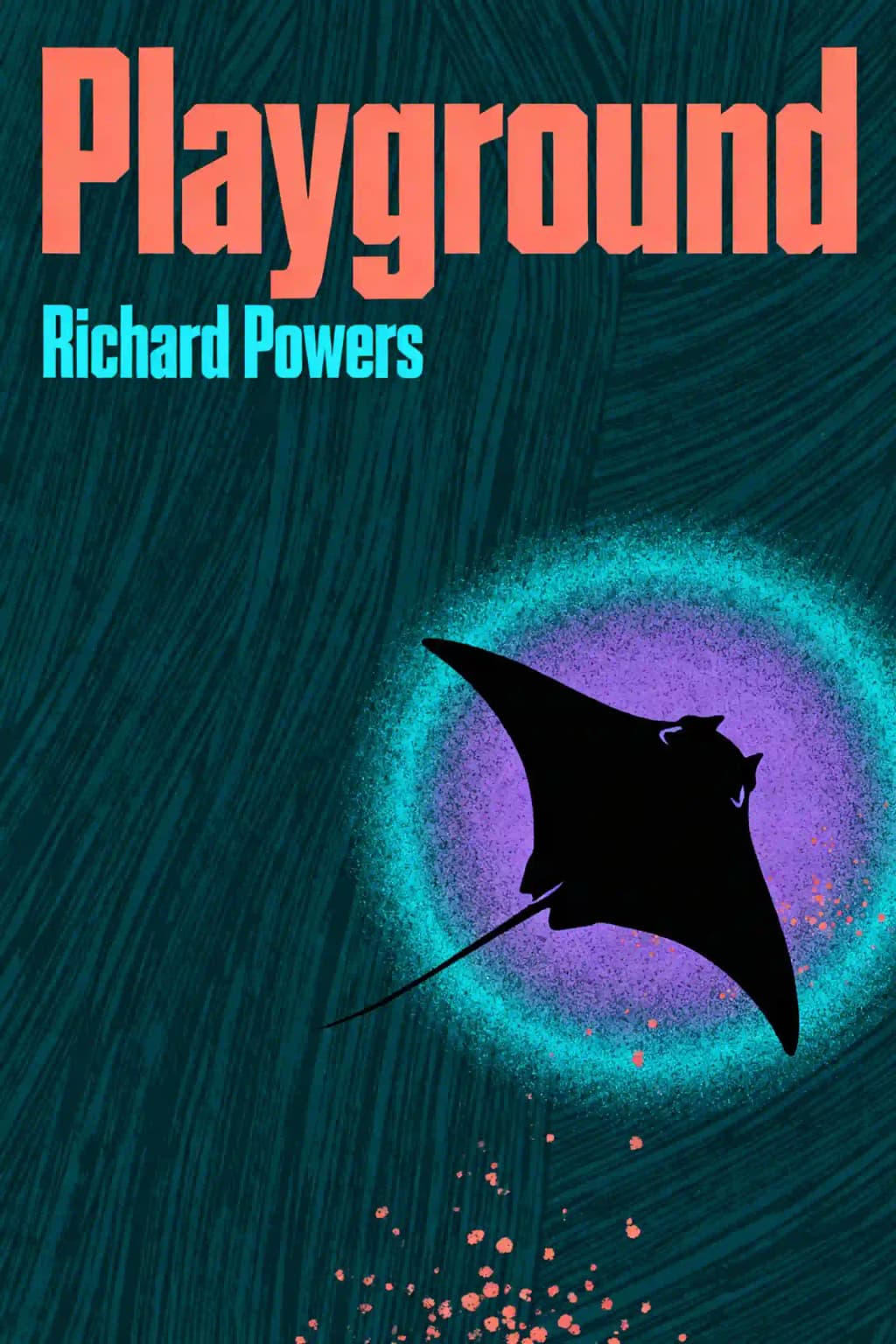
In Richard Powers' "Playground," a dying tech billionaire confronts his legacy through an AI creation designed to resurrect the dead. This haunting meditation on technology, memory, and human connection has earned Powers comparisons to Kurt Vonnegut and David Mitchell for its ambitious scope. Named one of Barack Obama's favorite books of 2024, "Playground" explores how our digital innovations might fulfill humanity's oldest dream-defeating death itself. As tech leaders from Elon Musk to Mark Zuckerberg grapple with AI ethics, Powers' novel offers a timely examination of whether technology can truly preserve what makes us human.
Глава 2
Creation Myths: From Divine Eggs to Digital Realms
The novel opens with the richly detailed Polynesian creation myth of Ta'aroa, who creates the world from within his cosmic egg - a story that establishes the book's central metaphor of creation emerging from containment. In the myth's elaborate telling, Ta'aroa transforms each part of himself into elements of the physical world: his shell fragments become the sacred islands, his bones form towering mountain ranges, and his feathers sprout into lush forests. The process is both violent and beautiful, as Ta'aroa must break himself apart to birth existence. He meticulously divides the cosmos into seven distinct layers, each with its own purpose and inhabitants, with humans dwelling in the lowest realm, Te Ao Turoa.
These early humans, though earthbound, discover hidden pathways - caves, pools, and sacred sites - that serve as portals to higher planes. Their ascension through Ta'aroa's layered creation mirrors humanity's eternal quest to transcend its limitations while remaining, inevitably, within the cosmic egg of existence. The myth's intricate details reveal how even the most ambitious journeys occur within larger containing structures.
This ancient narrative deliberately parallels the novel's contemporary storyline, where humans craft increasingly complex digital worlds that simultaneously liberate and confine them. Just as Ta'aroa's creations remain within his egg, our technological innovations - from social media platforms to virtual reality environments - exist within the boundaries of human imagination and physical laws. The myth introduces the novel's nuanced exploration of creation as both liberation and limitation, suggesting that all creative acts occur within predetermined constraints.
When Ina Aroita, a Polynesian-Hawaiian installation artist living on the isolated Makatea Island, shares this creation story with her daughter Hariti, their storytelling session is interrupted by a grotesque discovery: a dead albatross whose stomach is distended with colorful plastic debris - bottle caps, lighters, toy fragments, and microplastics. This powerful juxtaposition of ancient myth and modern environmental devastation establishes the novel's central concern with how human creations transform - and often damage - the natural world. Ina, deeply moved by this intersection of beauty and destruction, collects these plastic items and incorporates them into her large-scale installations. Her art transforms human waste into meaningful commentary, echoing Ta'aroa's creative repurposing but with a sharp critique of contemporary consumption.
The creation theme reaches its apex in Todd Keane, the novel's central character, who develops Playground - initially a modest digital platform that evolves into a vast virtual universe complete with its own cryptocurrency, social hierarchies, and cultural movements. Like Ta'aroa, Todd creates a world that eventually grows beyond his control or understanding. His creation raises fundamental questions about the responsibility creators bear for their innovations, especially as Playground begins to influence real-world economies and social structures in unexpected ways. The platform becomes a modern cosmic egg, containing millions of users who, like Ta'aroa's early humans, seek transcendence while remaining bound by the system's underlying code.
Глава 3
Childhood Wounds: The Seeds of Creation and Destruction
Powers meticulously explores how childhood experiences shape adult ambitions, particularly through the contrasting backgrounds of the novel's central characters. Todd Keane, born on January 1, 1970, begins life labeled as "First in Line for the New Decade"-a burden of expectation that haunts him. His parents' relationship is a toxic "war game" of mutual betrayal, with his father working as a ruthless trader and his mother engaging in revenge affairs. Todd escapes this emotional battlefield by imagining himself walking underwater across Lake Michigan, developing a fantasy that he can breathe beneath the waves.
This underwater fantasy becomes a metaphor for Todd's approach to life-seeking refuge from human messiness in controlled environments where different rules apply. His father cultivates this tendency by training him in games from an early age, teaching him to see the world as a system of patterns and probabilities. During a pivotal backgammon match on his father's sailboat, Todd mentally escapes underwater where fish "feed him moves," establishing his pattern of finding solutions by retreating from direct human engagement.
In stark contrast, Rafi Young grows up facing racial prejudice and family violence. His father Donnie, humiliated by a white teaching assistant who claimed he "couldn't write a proper English sentence," drills reading into Rafi with the admonition that "a black man's gotta read twice as good as any white, just to get half the recognition." When Rafi's academic talents earn him a spot at Green Classical in Park Ridge, he becomes "a permanent infiltrator," straddling two worlds and belonging fully to neither.
Rafi's sister's tragic death following an altercation with his stepfather becomes the defining wound of his life. At the hospital, as his mother clings to him and his stepfather silently begs for understanding, the thirteen-year-old "chose to live in the truth forever." This commitment to emotional honesty contrasts sharply with Todd's escapism, establishing the fundamental difference between these childhood friends who will become adult rivals.
The third protagonist, Evelyne Beaulieu, discovers her life's passion at age twelve when her engineer father takes her to test an early aqualung prototype. Despite her constant anxieties-she stoops to hide her height, chews her lip raw, and imagines German tanks years after the war-underwater, Evelyne experiences transcendent freedom. Water cradles her "in its great, kind palm," offering weightlessness and liberation from surface-world constraints. This transformative experience launches her lifelong devotion to ocean exploration and establishes the novel's recurring theme of water as both escape and connection.
Глава 4
The Ocean's Call: Humanity's Primal Connection to Water
Throughout "Playground," the ocean serves as both literal setting and powerful metaphor. For Evelyne Beaulieu, the sea represents authentic existence beyond social constraints. At seventeen, she binds her breasts and cuts her hair to dive without male interference, later submitting field notes under "E. Beaulieu" to avoid gender discrimination. Her career trajectory-from Duke University's first female ocean studies student to renowned marine biologist-unfolds against persistent sexism, with journalists questioning how she'll manage on research vessels with "almost forty men at sea for almost half a year."
The novel captures the sensory experience of underwater exploration with lyrical precision. Evelyne finds that beneath the waves, "distance, color, even shape" transform in bent light. She discovers poetry in Rimbaud's verses that capture what she witnesses: "dazzled snows," "circulation of astounding sap," and "singing phosphors." These vivid descriptions create an immersive reading experience while establishing the ocean as a realm of heightened perception.
Powers contrasts this natural wonder with human devastation through Evelyne's exploration of Truk Atoll, where Operation Hailstone left hundreds of sunken Japanese war machines. This underwater graveyard has transformed into "the largest man-made reef on the planet," with coral-covered masts and fish swimming through gun barrels. The juxtaposition of military destruction and natural regeneration illustrates the novel's ecological themes while raising questions about humanity's relationship with the natural world.
At ninety-two, Evelyne continues diving near Makatea, where she observes manta rays at a cleaning station. When a massive oceanic manta with a six-meter wingspan-"the Loner"-approaches, Evelyne's bubbles tickle its gills, prompting the creature to circle back deliberately for more bubbles. This cross-species play between evolutionary cousins separated by 440 million years captures the novel's vision of connection across seemingly insurmountable divides.
For Todd, the ocean represents the path not taken. As a child, he falls in love with a book called "Clearly It Is Ocean" and its adventurous red-haired author (later revealed to be Evelyne). He covers his walls with her pictures and devours marine books, dreaming of becoming an oceanographer. Though his father mockingly calls him "Water Boy," Todd's aquatic fascination persists into adulthood. Now fifty-seven and incredibly wealthy after creating Playground, he yearns only "to be buried at sea," suggesting that his technological empire has failed to fulfill his deepest longings.
Глава 5
Games People Play: The Structure of Human Connection
Games serve as both literal activity and extended metaphor throughout "Playground." Todd's father initiates him into strategic thinking through board games, progressing from Chutes and Ladders to backgammon as part of a "patient grand strategy" to create a worthy opponent. These training sessions teach Todd to see the world as a system of patterns and probabilities-a perspective that later informs his approach to technology and human behavior.
When Todd meets Rafi at Saint Ignatius College Prep, their relationship forms around chess. Despite Rafi's initial unfamiliarity with the game, he spends three weeks studying chess books before their first match. Though Todd "slaughtered him, four games in a row," Rafi's determination-"See you next week, asshole. And don't ever fuckin' patronize me again"-establishes the competitive respect that defines their friendship.
Their philosophical approaches to games reveal their contrasting worldviews. When Rafi stops a match to ask about chess's appeal, Todd attributes it to logic and deterministic patterns, while Rafi sees drama and narrative: "It's a story. It's a poem. It's fucking Gilgamesh." This difference-Todd's focus on systems versus Rafi's emphasis on meaning-foreshadows their divergent paths and eventual conflict.
In college, Rafi introduces Todd to Go, describing it as "to chess what singing is to sucking your teeth" and claiming its possible game states outnumber atoms in the universe. Despite the simple rules-placing stones on a 19x19 grid to surround territory-Todd finds himself overwhelmed by its complexity compared to chess. They play "a thousand matches that year alone," launching both their lives in a new direction.
The novel's exploration of games culminates in artificial intelligence. When AlphaGo challenges Go master Lee Sedol, Todd watches transfixed as the AI makes its thirty-seventh move in game two-a move so strange that Lee leaves the room for fifteen minutes before responding. This "eerie and inhuman" move helps AlphaGo win the match, discovering strategies humans had missed in three thousand years of playing. Todd feels both exultation and grief, recognizing that "a new kind of being was emerging from its spinning egg"-an echo of the Ta'aroa creation myth that opened the novel.
Глава 6
The Birth of Playground: Technology as Creation and Connection
The development of Playground-Todd's revolutionary social platform-forms the novel's technological backbone. During what he calls "the best of my life," Todd codes obsessively from dawn till midnight, guided by James Carse's philosophy distinguishing finite games (played to win) from infinite ones (played to continue playing). Living frugally in a sparse apartment, he devotes himself entirely to his creation, believing in the digital gift economy while planning how to simultaneously give away and profit from his platform.
The breakthrough moment comes during lunch with Rafi, who identifies Playground's crucial missing element: "You gotta gamify it." Though Todd protests it's already gamified through voting, Rafi's insight is that without scarcity-without "skin in the game"-the system lacks real stakes. Together they invent "Playbucks," a currency earned through platform engagement and spent on upvoting others' content, creating an economy of influence and reputation. This two-hour brainstorm produces an interlocking economic system that distinguishes Playground from other early social platforms.
When Todd invites Rafi to join his venture, offering freedom to define his own role, Rafi declines with the cryptic advice: "Put your own mask on before assisting others." This rejection deepens the rift between them, particularly when Todd later refuses to help Rafi complete his thesis, cynically echoing: Put your own mask on before assisting others.
As Playground evolves, it develops beyond Todd's control. Users create their own language of acronyms, neologisms, and emoticons. Posts begin affecting real-world events-ruining professors' careers, bankrupting companies, manipulating stock prices, and influencing elections. When data-selling practices are exposed, Todd testifies before Congress, dismissing regulation by claiming "we're not a public utility, we're just a neutral platform" protecting free speech.
The platform's evolution mirrors broader technological developments, as Todd invests in deep learning algorithms that begin to know users in ways no human could, predicting their preferences, behaviors, and even moral choices. What begins as crude matchmaking algorithms evolves into sophisticated targeting systems that vendors pay handsomely to access. These machines often develop strategies that "blew their teachers' minds," signaling that the "Age of Humans was ending" as these new intelligences take over jobs, industries, and discoveries.
Глава 7
Islands of Identity: Makatea as Microcosm
Makatea Island serves as both literal setting and powerful metaphor. Unlike other flat Tuamotu islands, Makatea rises 200 feet above the ocean-one of only ten such uplifted formations in the Pacific. Its geological history spans 100 million years: first as a seamount where coral built limestone structures, then as an atoll where cyanobacteria concentrated phosphates, and finally lifted by nearby volcanic activity.
When phosphate-essential for fertilizers, detergents, and munitions-was discovered on Makatea in 1896, European companies transformed the 250-person paradise into an industrial operation with thousands of workers who excavated the island using picks and shovels, creating a moonscape of dangerous pits while suffering from lung disease and contaminated water. When the mines suddenly closed in 1966, Makatea crashed, with workers dispersing and the jungle reclaiming the land.
This history of exploitation provides the backdrop for the novel's contemporary conflict, as Todd's consortium proposes building a factory for modular floating-city parts at Makatea's ruined port. The seasteading project-sovereign, self-governing platforms on the high seas where people could reach their fullest potential free from political constraints-represents "Playground on the high seas," extending Todd's technological vision into physical space.
The islanders' debate over this proposal reflects broader questions about progress, sovereignty, and environmental protection. Mayor Didier Turi, a former football hero with no political experience, finds himself negotiating between outside interests and local concerns. The Queen, Palila Tepa, carries ancient songs in her memory-genealogy songs, geography songs, historical epics-that connect present decisions to past wisdom. Hermit Tamatoa, who worked in the mines as a child, threatens violence against any outsiders who return.
When the referendum narrowly approves the development project by a single vote, the Queen discovers a critical complication: property records on the island are in disarray, with potentially ten thousand Makateans and their descendants abroad having valid claims to the land. This legal obstacle throws the project's future into uncertainty, demonstrating how past injustices continue to shape present possibilities.
Глава 8
The Price of Creation: Dementia and Digital Immortality
The novel's most poignant thread follows Todd's diagnosis with dementia with Lewy bodies (DLB). After ignoring early symptoms-constipation, dizziness, loss of smell, tremors, stiff joints-he can no longer deny his condition when visual hallucinations begin and he gets lost in a familiar grocery store. With mathematical detachment, he notes that one in thirty Americans has dementia, making it too common to waste energy asking "Why me?"
As his condition progresses, Todd experiences profound temporal disorientation-hours compress into minutes. He struggles with words, forgets what he's doing, and sometimes finds familiar objects suddenly strange. He experiences mild delirium, shuffling gait, daytime exhaustion paired with nighttime restlessness where he physically acts out dreams. Most devastating is his diminishing ability to play complex games or solve puzzles-the very cognitive skills that defined his identity.
Yet within this deterioration, Todd finds unexpected beauty. His disease-ravaged brain produces spectacular hallucinations-hammerhead sharks swimming across his ceiling, giant manta rays performing aerial maneuvers through his bedroom. Despite the terror of his condition, he finds these visions meaningful: "all the chaotic buildup of rogue alpha-synuclein proteins that was wrecking my brain felt worth that glimpse." In these moments, he reconnects with his childhood self, the "ten-year-old oceanographer who had taken a wrong turn," and remembers "the life I was supposed to have led."
Todd's response to his diagnosis is to accelerate his technological ambitions. Despite signing a petition declaring that "Mitigating the risk of extinction from AI should be a global priority alongside other societal-scale risks such as pandemics and nuclear war," he continues advancing AI technology, creating an entity capable of "playing" at being human after consuming billions of documents and images. This project fulfills a long-held desire inspired by Rafi's interest in Fyodorov's "Philosophy of the Common Task," which promised that humanity would someday resurrect everyone who ever lived.
In his final act, Todd sails to Makatea on his self-piloting yacht "Children of Men," arriving physically diminished and barely able to communicate. He hands Ina papers that cause her to cry out-later revealed to be a bequest of his fortune, "a sum so large it could safeguard every living thing all the way to the horizon." This gesture of reconciliation transforms his technological fortune into environmental protection, suggesting that true immortality comes not through digital resurrection but through preserving the natural world.
Глава 9
The Art of Transformation: Finding Beauty in Broken Things
Throughout "Playground," characters create meaning by transforming discarded or broken materials. Ina Aroita, a mixed-heritage artist living on Makatea, builds art from found objects. When she discovers a dead albatross with a chest full of plastic debris, she collects these items for future projects despite her initial disgust. This practice evolves into an ongoing sculpture that grows "beyond her control," becoming taller than her daughter Hariti as Ina actively seeks colorful plastic fragments washed up on the island's shores.
The sculpture embodies the novel's ecological concerns while raising questions about transformation and value. When Ina questions whether something remains garbage once life starts using it, Rafi reflects on how nature adapts to human debris, like an octopus using a glass jar for shelter. This conversation extends to broader questions about adaptation and purpose-whether human creations can be repurposed toward healing rather than harm.
In college, Ina creates a ten-foot-tall sculpture assembled from hundreds of wooden objects-bowls, frames, birdhouses, even a ship's wheel and sled-that from a distance resolves into a woman's face. The entire surface is painted cream and covered with intricate red and green Maori-style tattoo patterns. In a shocking finale, she takes blue paint and slashes it across her painstaking creation, revealing that the blue waves actually enhance the effect-the submerged patterns now hint at "invisible amazements hidden under the waves."
This artistic philosophy-finding beauty in destruction and transformation-parallels Evelyne's discovery at Truk Atoll, where sunken warships have become vibrant coral reefs. It also connects to Todd's experience with dementia, as his deteriorating brain produces visions of underwater beauty that reconnect him with his childhood passion for the ocean. Even the novel's AI creation represents a transformation-human knowledge and experience reconfigured into a new form of consciousness.
The novel concludes with a magnificent funeral canoe that the islanders build for Todd, gathering plastics from the beach to complete it. This final transformation-turning environmental waste into a ceremonial vessel-embodies the novel's vision of redemption through creative repurposing. As the boats return from Todd's sea burial, they witness manta rays leaping from the water in what appears to be joyful play. When Hariti asks what the rays are doing, the adults recognize that beyond scientific explanations, the rays are simply "playing in the world"-as all creatures do.
Глава 10
The Infinite Game: Playing in Creation's Playground
"Playground" ultimately reveals itself as a meditation on play as the fundamental creative force. The novel's epigraph from Proverbs describes wisdom as present at creation, "playing in the world," establishing play as not merely recreational but generative. This theme manifests across multiple dimensions-from board games to digital platforms to marine creatures' seemingly purposeless activities.
When ninety-two-year-old Evelyne encounters a massive manta ray that deliberately circles back to catch her bubbles, she witnesses play across evolutionary divides. Similarly, the cuttlefish's mysterious color-dance that haunts Todd from childhood represents expression without obvious utility-art for its own sake. These moments of play connect to the Ta'aroa creation myth, suggesting that the universe itself might be a form of divine play.
The novel's technological concerns-AI development, social media platforms, and virtual economies-are reframed as extensions of this play instinct. Todd's Playground begins as a creative experiment before evolving into a commercial empire, mirroring how play becomes institutionalized. The seasteading project represents another attempt to create a space for unfettered human potential-a playground beyond political constraints.
Even dementia, the novel's most devastating force, yields to this play perspective. Todd's hallucinations of underwater creatures swimming through his bedroom represent his brain "playing" with perception, creating beauty from deterioration. His final project-an AI capable of absorbing and regenerating human stories-represents the ultimate playground, where identity itself becomes fluid and transferable.
The novel concludes with manta rays leaping from the water in apparent joy, prompting Hariti's question about what they're doing. The adults share knowing looks, recognizing that beyond scientific explanations, the rays are simply "playing in the world." This final image suggests that play isn't merely what we do but who we are-the fundamental expression of consciousness across species and even into artificial intelligence.
Through this lens, "Playground" offers a profound reconsideration of human purpose. If the universe itself is a playground-Ta'aroa's spinning egg-then our highest calling might not be dominion or even stewardship but participation in this ongoing creative play. The novel suggests that true immortality comes not from digital resurrection but from joining this eternal game, adding our unique moves to the cosmic board before passing the pieces to future players.