Глава 1
The Power of Reinvention: Your Identity Is a Choice, Not a Discovery
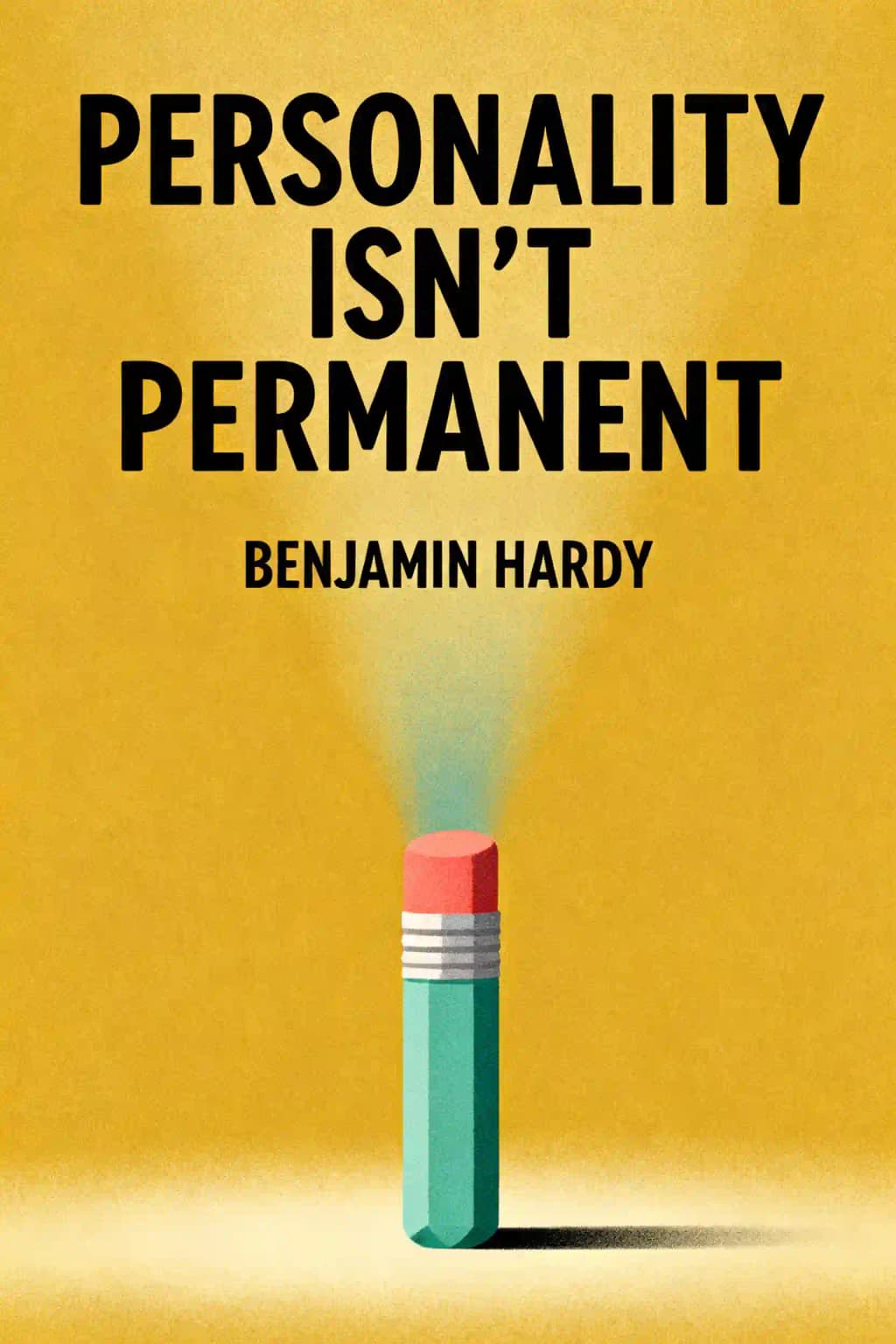
Imagine being told you can't marry the person you love because a personality test says you're incompatible. This nearly happened to Benjamin Hardy when his wife Lauren's family, believers in the Color Code personality system, warned her against marrying him. As a "White" (stereotyped as a passive dreamer), Hardy supposedly wouldn't match Lauren's "Red" personality. Thankfully, Lauren saw beyond these labels and chose him anyway-a decision that led to their thriving marriage and family of five children. This experience sparked Hardy's mission to debunk the dangerous myth that personality is fixed and immutable. His book, which has become required reading in psychology programs nationwide and a favorite of celebrities like Tim Ferriss and Seth Godin, challenges our fundamental assumptions about who we are and who we can become. With over 300,000 copies sold and translations in 12 languages, it's reshaping how we think about human potential across cultures.
Глава 2
The Myths That Limit Our Potential
The personality testing industry has grown into a $2 billion annual enterprise, marketing the seductive promise of self-discovery despite fundamental scientific shortcomings. The Myers-Briggs Type Indicator (MBTI), the industry's flagship assessment used by 89 of Fortune 100 companies, exemplifies these problems. Created by Katharine Briggs and Isabel Myers-a mother-daughter duo with no formal psychological training-the test was based primarily on their living room observations and personal interpretations of Jung's theories. Modern analysis shows these tests fail all four critical scientific standards: reliability (getting consistent results), validity (measuring what they claim to measure), independence (categories that don't overlap), and comprehensiveness (covering all key traits).
These tests do more than waste resources-they actively shape how we view ourselves and our capabilities. When someone receives a label like "INTJ" or "Blue personality type," they often internalize it as a permanent identity. Common self-limiting statements like "I'm not a creative person," "I'm terrible at public speaking," or "I'm not leadership material" become self-fulfilling prophecies. These artificial constraints create psychological barriers that prevent people from attempting new experiences or developing crucial skills.
Extensive research demonstrates that personality is far more malleable than previously believed. A groundbreaking 63-year longitudinal study by the University of Edinburgh found almost zero correlation between personality traits measured in adolescence and late adulthood. Even more telling, Harvard psychologist Dr. Daniel Gilbert's research revealed what he calls the "end-of-history illusion": while people can easily recognize dramatic personal changes over the past decade-in values, preferences, and behaviors-they consistently underestimate how much they'll change in the future. As Gilbert notes, we are "works in progress that mistakenly think we're finished."
Our understanding of memory further challenges the fixed personality myth. Neuroscience shows that memories aren't static recordings but dynamic reconstructions that change with each retrieval. Similar to how historical interpretations of events like the Vietnam War or Civil Rights Movement evolve with new perspectives, our personal narratives are continuously reshaped by current experiences and future goals. What we consider unchangeable personality traits are often just stories we've grown comfortable telling about ourselves.
The popular "discover your passion" narrative compounds these limitations. This mindset suggests that success comes from identifying innate talents rather than developing valuable skills through deliberate practice and persistence. Cal Newport's research in "So Good They Can't Ignore You" demonstrates that passion typically follows mastery, not the reverse. This discovery mindset breeds both entitlement-expecting success without sufficient effort-and avoidance, as people use personality labels to dodge growth opportunities. For instance, someone might decline leadership roles citing their "introversion" rather than viewing it as a chance to develop new capabilities.
Perhaps the most insidious myth is the notion that our current personality represents our "authentic" self. This belief leads to defensive statements like "I'm just being honest" or "That's not who I am" when faced with challenges to grow. True authenticity isn't about remaining static; it's about acknowledging our capacity for change and actively working toward becoming our ideal selves. Real personal growth often requires pushing beyond comfortable self-imposed limitations and embracing the discomfort of new experiences.
Глава 3
Your Goals Shape Your Identity
Andre Norman's transformation from violent prison inmate to Harvard fellow powerfully illustrates how personality is shaped by purpose. During solitary confinement, Andre plotted to kill seven white inmates after learning his friends were stabbed in another prison. But he experienced a profound revelation-his "Wizard of Oz moment"-realizing his pursuit of prison status was meaningless. He'd be "king of nowhere," achieving empty power in a system designed to contain him. This stark realization forced him to confront the futility of his life's direction.
This awakening compelled Andre to fundamentally question his goals. Instead of violence, he chose an audacious new purpose: Harvard. This goal became the foundation of his new identity, requiring a complete reinvention of his character, habits, and skills. During his remaining eight years in prison, he methodically taught himself to read and write, studied law books for hours daily, and developed intellectual discipline he'd never known. With crucial mentorship from an Orthodox rabbi who "taught him how to be human," Andre transformed from an angry, violent inmate into a thoughtful, purpose-driven man. After release, he achieved his dream of becoming a Harvard fellow and evolved into an internationally regarded speaker, helping others navigate similar life transformations.
Whether conscious or not, everything we do has an underlying purpose that shapes our identity. When Andre abandoned his childhood trumpet, he wasn't just quitting an instrument - he was detaching from his potential identity as a musician, replacing it with the goal of fitting in with friends. This seemingly small choice ultimately shaped his personality and life trajectory. Our goals, not fixed personality traits, determine who we become through the daily actions and habits they inspire.
All goals fundamentally emerge from three critical sources: exposure to possibilities, desire for change, and confidence in our ability to achieve them. You can't choose what you don't know exists - our imagination is limited by our experiences. Chef Charlie Trotter understood this principle when he regularly invited impoverished children to dine at his elite Chicago restaurant, despite criticism from others. He wasn't just offering meals; he was expanding their horizons by providing transformative experiences that opened their imaginations to new possible futures they'd never considered.
Our desires aren't innate - they're trained through accumulated experiences, societal influences, media consumption, and our social circles. What we want in the present moment may not serve our future self, which is why we must consciously train new desires aligned with who we want to become. This might mean deliberately seeking new influences, environments, and relationships that nurture our aspirational identity.
Confidence determines which goals we'll seriously entertain and pursue. It's built through progressive acts of courage and commitment - like the overweight runner who boldly pursues transformation despite public exposure and initial struggles. These courageous actions create peak experiences that enhance our subconscious self-image and set new baselines for what we believe possible. Each small win builds momentum toward larger transformations, gradually expanding our sense of personal potential.
Глава 4
Transform Your Trauma
Trauma fundamentally shapes personality by creating rigid, fixed thinking patterns that constrain our future possibilities. Even seemingly minor negative experiences can create lasting psychological barriers - like "math trauma" that convinces students they're inherently bad at mathematics, or social rejection that leads to persistent self-doubt. When traumatized, we develop a "fixed mindset" about our capabilities, making premature cognitive commitments that define our perceived limitations and become self-fulfilling prophecies.
What we commonly identify as personality is often just a collection of adopted coping mechanisms rather than our authentic self. Like a child who keeps glass embedded in their foot because they fear the momentary pain of removal, we construct elaborate life patterns around our emotional wounds. We create safe but limiting environments that accommodate our traumas rather than challenge them. People might avoid intimate relationships after heartbreak, choose unfulfilling careers that feel "safe," or maintain destructive habits because change feels threatening. Our authentic self isn't defined by these limitations but by our deepest aspirations, creative impulses, and dreams of what's possible.
Psychological flexibility is the key to shortening our emotional recovery time from difficult experiences. Professional athletes, particularly basketball players, provide an excellent model - they can't afford to dwell on missed shots or bad plays because the game demands immediate presence. Similarly, we must learn to hold our emotions loosely while pursuing meaningful goals. When we remain stuck in emotional refractory periods, we continuously reconstruct the emotions of traumatic events, replaying them daily until temporary emotional states crystallize into seemingly permanent personality traits.
Trauma isn't solely about what happens to us - it's about what we hold inside without an empathetic witness to help us process it. Journalist Lisa Ling's work provides a powerful example through her emotional interviews with trauma survivors, including a seventeen-year-old sex trafficking victim. The emotional weight of bearing witness to such stories is so intense that Ling and her team regularly huddle together and cry afterward. She openly acknowledges that this work would be impossible to sustain alone - her team serves as mutual empathetic witnesses, helping each other process these challenging experiences.
Being an effective empathetic witness requires a specific set of skills and attitudes. It means being genuinely interested rather than trying to be interesting or impressive. This requires cultivating patience, authentic curiosity, and the ability to sit with discomfort without rushing to provide solutions or fix problems. Skilled empathetic witnesses ask thoughtful, open-ended questions like "Can you explain more about how that felt?" and "How do you see this experience shaping your future?" They practice deep listening, regularly rephrase what they've heard to ensure accurate understanding, and recognize that building trust is a gradual process that can't be rushed. This approach creates a safe space for trauma survivors to begin their healing journey.
Глава 5
Shift Your Story
Our life stories aren't fixed narratives but constantly revised interpretations that explain how we became who we are. The contrast between astronaut Buzz Aldrin and basketball player Giannis Antetokounmpo demonstrates how differently we can frame our achievements. After walking on the moon, Aldrin spiraled into alcoholism because he believed nothing could top his accomplishment, thinking "I will never outlive this." Conversely, after winning MVP, Antetokounmpo refused to dwell on it, saying "that's in the past now" while focusing on his next goal.
We create meaning from experiences by connecting three elements: defining what happened, linking it to our identity, and placing it within our worldview. This process happens during emotional moments, as illustrated when Hardy's son Kaleb experienced an accident with his baby sisters' stroller. Hardy recognized his son was forming negative meaning from the incident and wanted to help him frame the experience constructively rather than letting it define him negatively.
Ken Arlen's story demonstrates how we can rewrite our personal narratives. Despite smoking a pack a day throughout college and failing to quit twenty times, Ken impulsively told his new coworkers at a hospital that he'd never smoked. By publicly declaring a new identity in a fresh environment, he created circumstances where smoking would be incongruent with his self-presentation. The nicotine cravings disappeared after just a week, and he never thought about smoking again.
Dan Sullivan's "gap and gain" concept provides a powerful reframing technique: living in "the gap" means focusing on what's missing, while living in "the gain" means measuring yourself against where you were before. Measuring gains trains your selective attention to see progress, creating confidence that fuels pursuit of bigger goals.
To shift from gaps to gains, reflect on significant wins and growth over the past ten years. Consider how you've changed as a person, what negative things you've released, how your self-perception has evolved, and what recent accomplishments you've achieved. Then identify key negative experiences and list all benefits, opportunities, or lessons that came from them. Reframe how these experiences happened for you, rather than to you.
When you're fully committed (100%) to a decision rather than partially committed (98%), you eliminate decision fatigue and identity confusion. Clayton Christensen noted that "It's easier to hold to your principles 100 percent of the time than it is to hold to them 98 percent of the time." Nate's complete commitment to eliminating refined sugar transformed his identity-his future self as a healthy person who could play with grandkids and remain active shaped his current choices.
Глава 6
Enhance Your Subconscious
Our unconscious mind holds all our feelings, regardless of their social acceptability, and drives many of our personality characteristics and behaviors. This profound connection is exemplified by Jane Christiansen's story, which demonstrates the intricate link between suppressed emotions and physical pain. After a severe waterskiing accident that tore her hamstring, Jane accepted a doctor's definitive verdict that she'd never run again. Fifteen years later, when her husband unexpectedly retired early without consulting her, Jane suppressed her intense rage about the situation. Subsequently, not only did her old leg pain mysteriously return, but she also developed new, unexplained pain in her left foot. Only when she finally confronted and processed her suppressed emotions through therapy and journaling did her physical symptoms begin to improve dramatically.
Our memories aren't merely abstract mental constructs-they're physically stored throughout our bodies at a cellular level. As pioneering researcher Dr. Steven Cole explains, "A cell is a machine for turning experience into biology." This biological encoding process happens continuously, with every experience leaving its mark. The connection between emotions and physical body is fundamental and bidirectional; emotions are inherently physical, with neuropeptides-what Dr. Candice Pert revolutionarily identified as "molecules of emotion"-constantly relaying information throughout our body's vast network of cells, organs, and systems.
Our bodies become deeply habituated to certain emotional chemicals, creating powerful addictions to specific emotional states. This biological dependency explains why overcoming any addiction is profoundly difficult-it requires changing your fundamental biology through establishing a new identity, rewriting your personal narrative, modifying your environment, and literally transforming your body's chemistry. Many high-achieving professionals are unknowingly addicted to stress chemicals like cortisol, and when they begin improving their lives through healthier practices, they often unconsciously self-sabotage to return to their familiar, though destructive, emotional state-what Dr. Gay Hendricks termed the "Upper Limit Problem."
Fasting for eighteen-plus hours emerges as one of the most powerful ways to enhance your subconscious-body connection. Since your physical body is effectively your subconscious mind materialized, depriving yourself of food strategically resets the body's systems, allowing it to rest and repair rather than constantly digest. Extended fasting dissipates cravings for addictive substances like nicotine and caffeine, significantly increases dopamine levels, enhances cognitive function, and can extend longevity. Recent research demonstrates it improves sleep quality, mental focus, learning capacity, and memory consolidation through multiple biological pathways.
Charitable giving creates measurable happiness according to detailed fMRI research and sends a powerful signal to your subconscious that you're someone who actively contributes to others' wellbeing. George Cannon's remarkable story illustrates how charitable donations can fundamentally transform identity. Rather than traditionally tithing 10 percent of his current earnings, this impoverished young Christian boldly chose to pay 10 percent of what he intended to earn in his future. His innovative approach wasn't merely transactional but deeply transformational, viewing tithing as a conscious investment in his future self and capabilities. This mindset shift led to extraordinary personal and professional growth, as his actions aligned with his expanded self-image.
Глава 7
Redesign Your Environment
Your environment profoundly shapes who you are and who you become, influencing everything from your behavior to your biology. Dr. Ellen Langer's groundbreaking 1979 "counterclockwise study" powerfully demonstrated this when eight elderly men lived for five days in a meticulously recreated 1959 environment. Every detail was authentic - from vintage radio programs to old magazines and black-and-white TVs. By treating them as their younger selves and having them act as if they were twenty years younger, these men underwent remarkable physical transformations. They grew taller, improved their eyesight, hearing, memory, manual dexterity, and appetite. Most striking was that those who had arrived using canes left carrying their own suitcases, showing how environmental cues can reverse even seemingly fixed biological markers of aging.
The way others treat you shapes not just your self-perception but your actual biological functioning. We unconsciously default to the roles our social environments expect of us, whether that's acting "old" when treated as elderly or becoming more capable when treated as competent. Breaking from these ingrained patterns requires deliberate effort and awareness. As we age, our personalities appear stable largely because we stop engaging with novel situations and environments. William James observed that personality becomes relatively fixed by age thirty primarily because life becomes routine and predictable. We experience fewer "firsts" - first jobs, first homes, first relationships - and instead settle into comfortable but limiting patterns of behavior.
Strategic environmental design can powerfully shape identity and behavior. Artist James Whistler kept his finest painting - a delicate spray of roses - near him at all times as a tangible reminder of his capabilities when self-doubt emerged. This exemplifies "strategic remembering" - deliberately designing your environment to evoke your desired future self. Modern figures employ similar tactics: Tim Ferriss prominently displays The Magic of Thinking Big on his bookshelf as a trigger for expanded thinking, while author Ryan Holiday carries a "Memento Mori" coin as a physical reminder of mortality to maintain focus on what truly matters.
Strategic ignorance isn't about being closed-minded - it's about intentionally protecting yourself from inputs that could derail your future self. As motivational speaker Zig Ziglar emphasized, "Your input determines your outlook. Your outlook determines your output." Many successful individuals practice this: Peter Diamandis, founder of XPRIZE, refuses to watch TV news to maintain his optimistic vision of the future. Author Seth Godin avoids reading Amazon reviews to preserve his creative independence. Warren Buffett deliberately lives in Omaha, away from Wall Street's groupthink.
Forcing functions are environmental elements that compel specific actions and outcomes. The author illustrates this through his Ironman Triathlon experience - the moment he invested $800 in race registration, his identity and behaviors transformed automatically. He began visualizing himself as a triathlete, invested in endurance sports audiobooks, recommissioned his old bicycle, and shifted his gym routine from strength training to cardiovascular endurance. The financial and social commitment created an environment that demanded follow-through.
Environment may be the most powerful lever available for personality development and behavior change. If you don't actively control your environment, it will inevitably control you. You are the product of your culture, context, and the inputs you consume - from the food you eat to the information you absorb to the people you surround yourself with. Success requires first developing awareness of how your context shapes you, then strategically designing an environment aligned with your desired future identity. This might mean redesigning your physical space, carefully curating your media consumption, or intentionally surrounding yourself with people who embody your aspirations.
Глава 8
Embrace Your Future to Change Your Past
Melissa Hull's devastating story of losing her son Drew, facing her husband's betrayal, and ultimately finding purpose through her trauma powerfully illustrates the book's central message. After nearly taking her own life, a letter from a stranger who had experienced similar loss became her turning point. This unexpected connection showed her she wasn't alone and that her pain could have meaning. Over time, Melissa transformed her perspective from seeing herself as a victim to recognizing her experiences as preparation for her purpose-helping others who feel unheard. She now leads support groups and speaks at conferences, turning her personal tragedy into a beacon of hope for others.
This fundamental shift is essential for transformation: seeing your past as happening FOR you rather than TO you. When you embrace this mindset, your purpose drives you rather than your "personality," enabling you to transcend comfort zones and continuously evolve. For example, someone who experienced childhood poverty might view those struggles as preparation for helping underprivileged communities, rather than as a lifelong limitation.
Having covered trauma, story, subconscious, and environment-the four levers of personality-you're now equipped to increase your imagination, motivation, faith and courage. Life is presented as a classroom where you're meant to grow through faith and design. Each challenge becomes an opportunity for learning and development, rather than an obstacle. Consider how Navy SEALs view their rigorous training not as punishment, but as necessary preparation for their future missions.
Your personality can change dramatically, eventually making your wildest dreams your new normal. Research shows that people who consciously work on personal growth can achieve significant personality changes within as little as two months. Whether it's becoming more extroverted, developing greater emotional resilience, or cultivating leadership qualities, intentional change is possible. And once you reach your imagined future self, you can use that confidence to dream even bigger, creating an upward spiral of growth and achievement.
The choice of who you will become is entirely yours. Your personality isn't permanent but a deliberate creation-one that you can shape according to your deepest aspirations and most inspiring vision of your future self. This might mean transforming from an anxious public speaker into a confident presenter, or from a procrastinator into someone who takes immediate action. The key is recognizing that your current traits are not fixed characteristics but rather habits and patterns that can be consciously reshaped through consistent effort and clear intention.