Глава 1
Finding Light in the Messiest Moments
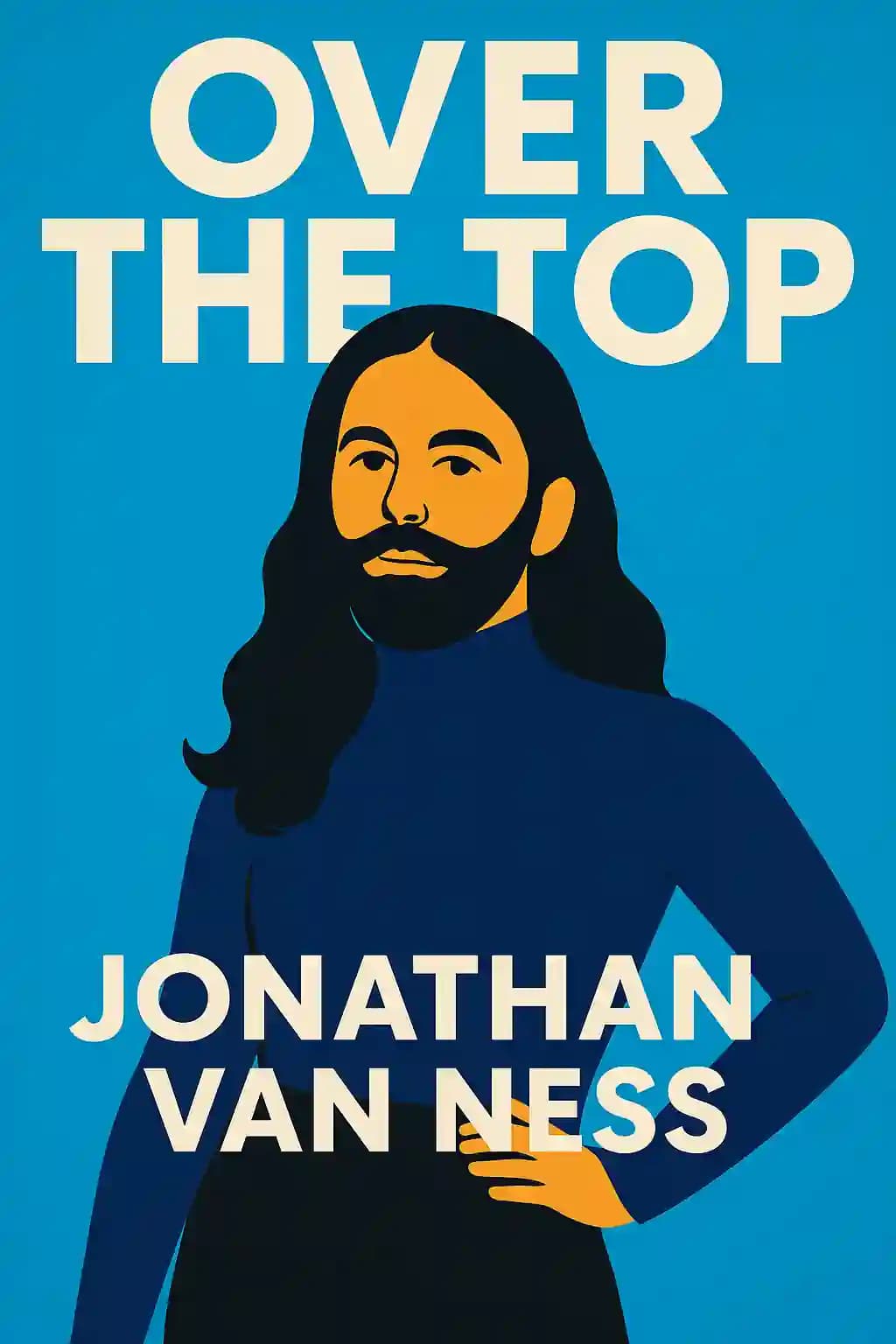
Jonathan Van Ness's memoir "Over the Top" has become a cultural phenomenon since its 2019 release, landing on bestseller lists and resonating with readers worldwide. This raw, unflinching account from the beloved "Queer Eye" star doesn't just chronicle his journey from small-town Illinois to Netflix fame-it reveals the painful, beautiful, and messy experiences that shaped him. Celebrities from Reese Witherspoon to Elton John have praised its honesty, while mental health professionals recommend it for its candid portrayal of trauma recovery. What makes this memoir so powerful is Van Ness's ability to find humor and humanity in even his darkest moments, showing that healing isn't linear but rather a continuous journey of self-discovery and acceptance.
Глава 2
The Parts That Make Us Whole
Like those determined plants that somehow find light no matter where they're placed, Jonathan Van Ness navigated a circuitous route not just to survive but to bloom-"extremely flamboyantly jubilant and oh so gay." Growing up as a chubby, frizzy-haired kid in Springfield, Illinois, he dreamed of Olympic ice-skating glory despite having no skating ability whatsoever. His childhood was marked by both creative expression and struggle, performing improvised routines in his basement and facing bullying at school for being different. By 2017, he'd settled for more attainable goals: building a successful career as a hairdresser in LA and NY, creating the viral web series "Gay of Thrones" - a hilarious Game of Thrones recap show that showcased his wit and charm - and joining four new friends for a Netflix reboot called "Queer Eye."
After the show's explosive success, Jonathan's life transformed overnight in ways both exhilarating and challenging. Suddenly, strangers recognized him everywhere - in coffee shops, airports, and on the street - sharing vulnerable stories that both touched and triggered him. These encounters ranged from heartwarming coming-out stories to painful revelations about trauma and abuse. With this newfound fame came a persistent, nagging question that echoed through his quieter moments: Would people still love him if they knew all his parts-the insecure, sexually promiscuous, irritated, binge-eating parts? This question became the driving force behind his memoir, pushing him toward radical honesty.
Jonathan didn't invent the concept of "parts" - it comes from Richard C. Schwartz's internal family systems therapy, a revolutionary approach to understanding human psychology. We're all born with a centered self but develop different parts to handle trauma and life's challenges. Jonathan vividly describes his personality as a minivan with different pieces driving together - his busy bee saying yes to everything (often to his detriment), his people pleaser who can't bear disappointment, his vulnerable inner child seeking validation, his sharp inner critic (speaking in his grandmother's disapproving voice), and even his "raunchy sex kitten doing Lizzo twerk practice for Instagram." Each part serves a purpose, even when they seem to conflict.
What makes his story so compelling is his willingness to integrate all these parts - the funny, wounded, loving, diva, spiritual, and the scariest part: the psychotically depressed, self-destructive version who didn't care what happened. Through therapy, self-reflection, and radical acceptance, Jonathan learned to embrace each aspect of himself, understanding that these seemingly contradictory elements create his whole being. By sharing his truth - from childhood trauma to adult struggles with addiction and HIV diagnosis - Jonathan demonstrates that masterpieces often start as a mess, and that comparison - that toxic bus stop we should all ride past because "it smells bad and drains us" - only prevents us from embracing our authentic selves. His journey illustrates that healing doesn't mean eliminating our challenging parts, but rather understanding and integrating them into our complete story.
Глава 3
Tumbling Through Trauma
Jonathan's introduction to gymnastics came unexpectedly when his stepfather Steve forced him into attempting a back dive off a diving board. Despite his terror, Jonathan not only survived but immediately completed a backflip on his first try. This moment taught him he could overcome mental blocks that had previously paralyzed him-a lesson that would prove vital throughout his life.
School felt like a prison for Jonathan's vibrant queer personality. After dreaming about Olympic gymnast Shannon Miller, he begged to join gymnastics, eventually enrolling at the Gymnastics Center in Quincy. There, he joined a power tumbling troupe of mostly straight rural boys who performed at basketball halftimes. Despite his enthusiasm, Jonathan struggled-being "rotund" and not very strong. The other boys bullied him mercilessly, calling him "fatso" and mocking his curly hair.
What Jonathan truly wanted was to experience the grace, precision, and pageantry of women's gymnastics. He admired female gymnasts rather than male ones, whose bodies only reminded him of what he lacked. He craved the spotlight, the drama, the camaraderie of being on a team with girls who wouldn't mock him.
In sixth grade, still seeking Olympic-style glamour, Jonathan choreographed a lyrical interpretive dance to Jewel's "Pieces of You" for the school talent show. His mother warned him: "Jack, if you do this, the kids will never let you live this down." Though she promised to support him regardless, her warning revealed she was aware of his bullying and worried about their family's reputation.
The most devastating childhood trauma surfaced when Jonathan met with his mother's therapist Dimitri. After revealing his experience of sexual abuse by an older boy who'd played "Doctor" with him as a child, Jonathan felt relieved-until the next morning when he was called to the principal's office. Despite Dimitri promising confidentiality, he'd reported it, and the boy had been taken into custody.
Jonathan's mother gave him a choice: participate in the investigation, knowing their family would be in the local paper, or decline to protect their privacy. He chose the latter, repeating "I choose not to participate because it would be detrimental to my mental health" to every question. This experience taught him to turn everything against himself, leading to nine years of self-destructive behavior before he could finally heal.
Глава 4
Seeking Love in All the Wrong Places
Teenage Jonathan's heart belonged to Fyodor Orlov, a gorgeous swimmer with "perfectly chiseled, rustically hairy pecs." Their relationship was deeply fraught-Jonathan desperately in love while Fyodor insisted he wasn't gay, creating a complicated dynamic where they never kissed despite spending countless nights in the same bed.
Their physical boundaries were constantly tested through games of escalating undress, running around cornfields in underwear, and even masturbating together while looking at Playboys. Despite this intimacy, they maintained the fiction that Fyodor was straight and Jonathan was gay. They'd have lovers' quarrels over petty things, especially when Fyodor dated girls instead of spending time with Jonathan.
Looking back, Jonathan recognizes their relationship was unhealthy and manipulative-him fighting for Fyodor's affections while being strung along for validation. Eventually, rumors spread that Jonathan claimed they were boyfriends, and though he denied it, their friendship circle fractured. In one day, his closest friends were no longer his, and Fyodor cut him off completely.
The rejection devastated Jonathan, leaving him feeling too fat, too femme, too loud, and unlovable. Having already survived sexual abuse and now suffering this heartbreak, he felt he had nothing left to lose. This led him into a dangerous period of seeking validation from strangers online, exposing himself to risky situations he couldn't share with his parents.
Jonathan sought older men to explain his "gay urgings and raging hormones," landing in dingy apartments and traumatic sexual encounters that "tore pieces of his soul away." These experiences showed him how much pain he could numb and endure. It wasn't until his mid-twenties that he'd experience enriching sexual connections rather than destructive ones.
His days became a bizarre circuit between innocent childhood activities and a dark secret life: trampoline sessions, AOL chat rooms, phone sex, violin practice, cheerleading chants, and binge-eating. He'd meet guys online, exchange pictures, and rack up mysterious long-distance phone bills his parents questioned. This double life eventually led to his desperate escape from Quincy after heartbreak, finding new forms of rebellion with friends who smoked weed and broke curfew.
Глава 5
The College Spiral and Road to Recovery
Determined to escape Quincy, Jonathan bulldozed through every requirement to graduate high school early and secured a spot on the University of Arizona cheer squad. However, his college experience quickly unraveled. Despite making the cheer squad, he neglected classes in favor of watching Golden Girls reruns. After being caught with marijuana, he was evicted from campus housing. By semester's end, he had a 1.7 GPA, was caught cheating, and lost his spot on the cheer squad.
With his parents still paying his rent but needing money for "necessities" like drugs and alcohol, Jonathan turned to escorting. The dangerous reality hit when he was sent to a meth house where a client pulled out a gun, forcing him to dive through a window screen to escape. Devastated, he called his mom in tears, confessing everything. She sent money so he could return home with his rescued kitten Bug, determined to start fresh at beauty school.
With a dream and a FAFSA application, Jonathan enrolled at the Aveda Institute in Minneapolis. There, he started going by Jonathan instead of Jack and discovered his passion for hair and natural ingredients. The diverse student body expanded his worldview and skills, particularly with textured hair. He fell in love with Aveda's sustainable approach, becoming "an Aveda girl, through and through."
After graduation, Jonathan moved to Scottsdale, working at a salon among the "fake blondes, fake boobs, and $20,000 'millionaires'" of Arizona. Though his career was flourishing, he struggled with feelings of inadequacy. A meaningful part of this period was driving hours every Friday to style his cancer-surviving grandmother's hair-for which she'd generously tip him $8.50. When she died on his twenty-second birthday, Jonathan realized how special it was that she chose the day he entered the world to begin her next journey.
His hairdressing career flourished until the 2008 recession devastated Phoenix. When five clients committed suicide and his appointment book emptied daily, Jonathan knew he needed to leave. He headed to Los Angeles, where he landed a lucky break at a prestigious salon, assisting superstar stylists while learning to be "seen and not heard" as he blow-dried celebrities like Jane Fonda, who called him "Jesus" because of his long hair.
Глава 6
Love, Loss, and HIV
Jonathan's first true love was Sergei-a tall, muscular man who took him to the Getty on their first date and held his hand in public, the first person who wasn't remotely ashamed of him. Unlike Jonathan's usual hookups, they didn't sleep together that first night. Sergei completely accepted Jonathan, even when he nervously confessed to wearing tights to yoga.
But they had fundamental disconnects in how they communicated their needs, especially sexually. Jonathan was unable to express what he wanted, and Sergei's demanding work schedule left him only thirty minutes a day for Jonathan. Despite these challenges, the beginning was beautiful-Sunday Fundays and Sergei crawling into Jonathan's bed after work.
Jonathan's unprocessed trauma led him to cheat on Sergei, sending him into a shame spiral that culminated in a five-day bathhouse bender. With his family's support, he checked into rehab for sex addiction in Tennessee, while back home, his stepdad Steve was battling terminal cancer. After treatment, they reconciled, but when Jonathan felt hurt by Sergei not taking work off for his salon Christmas party, he started cheating again "like it was his job." Then came his darkest moment-trying meth for the first time, something he never thought he'd do.
After a second rehab stint, Jonathan and Sergei moved to St. Louis to be closer to his family as Steve's condition worsened. When Steve died, something broke inside Jonathan. He spiraled into destructive behavior, seeking anonymous sexual encounters and drugs. Eventually, Sergei and Jonathan's mother arranged his return to Los Angeles, ending their relationship.
Physically ill and emotionally devastated, Jonathan collapsed while doing a client's hair. The next day at Planned Parenthood, his HIV test came back positive. At his follow-up appointment, his doctor reassured him about modern HIV treatment, explaining it was now a manageable chronic condition with normal life expectancy. Within two weeks of starting medication, his viral load became undetectable-meaning he could no longer transmit the virus sexually.
Jonathan has made it his mission to educate others about HIV, emphasizing that "undetectable equals untransmittable"-a fact confirmed by the CDC. Living with HIV taught him profound self-acceptance and gratitude for the activists who fought for treatment access. His diagnosis ultimately helped him learn to love himself more deeply than ever before.
Глава 7
The Phoenix Rises in Los Angeles
After hitting rock bottom in St. Louis, Jonathan orchestrated his escape back to Los Angeles with the determination of Michelle Kwan. He convinced his uncle to release $5,500 from his grandfather's trust fund - money that represented both his lifeline and his last chance at redemption. With just his essential belongings and a few treasured hair styling tools packed into his weathered Kia Rio, he embarked on the long drive west. His friend Sergei, who had remained steadfast during Jonathan's darkest times, helped him secure a tiny $800 studio apartment in West LA - a cramped space that nonetheless represented hope and new beginnings. Within days, he began rebuilding his hairstyling clientele from a bustling salon in Venice, working tirelessly to prove to himself and others that he could rise again.
One of his first and most significant calls was to Erin Gibson, a former client he'd abruptly abandoned when fleeing to St. Louis. During their reunion appointment, Jonathan made the brave decision to be completely transparent, sharing not only his struggles with methamphetamine addiction but also his HIV diagnosis. Her response - a mixture of warmth, acceptance, and casual normalcy - left him "completely wigless." It was during this appointment that fate intervened in an unexpected way. While doing Erin's hair, he overheard a conversation about Game of Thrones and launched into an impromptu, wildly inaccurate but hilarious recap of the show, peppered with his signature pop culture references and unique nomenclature for characters. Erin, a producer and comedian herself, immediately recognized the raw comedic talent before her and proposed creating a recap series for Funny or Die.
Within four months, they had developed and filmed the first episodes of "Gay of Thrones" - a stream-of-consciousness recap show that would become Jonathan's unexpected breakthrough into entertainment. The show's unique format allowed him to blend his natural wit with his passion for pop culture, creating something entirely new in the recap space. As the show gained momentum and attracted a devoted following, Jonathan felt the sting of what he called the "content creation bee" - that intoxicating creative drive that made him question whether his future might extend beyond the salon chair. This revelation led him to sign with a manager and begin auditioning for roles, though he found himself frequently typecast in stereotypical "Gay Best Friend" parts.
When his first major opportunity - a promising deal with Style Network - collapsed after a corporate buyout, Jonathan refused to let the setback define him. Instead, he channeled his naturally curious nature into creating the "Getting Curious" podcast, a passion project that allowed him to explore diverse topics that fascinated him. Despite initial cancellation due to funding issues, he persevered, producing episodes independently and building a loyal listener base.
In a pivotal moment of self-advocacy, Jonathan fired his skeptical manager who couldn't see his full potential - marking one of the first times he'd truly stood up for himself professionally. This decision coincided with his growing attraction to New York City's energy and opportunities, leading him to split his time between coasts while building a bi-coastal clientele. During a temporary hosting job in New York, fate intervened again when his former manager reached out about an opportunity that would change everything - casting had begun for the Queer Eye reboot. After years of incremental successes and wondering if Gay of Thrones would be the pinnacle of his entertainment career, Jonathan finally realized what others had seen in him all along - he was not just worth saving, but destined for something greater.
Глава 8
Becoming America's Favorite Queer Eye
Jonathan arrived at his Queer Eye audition straight from a hairstyling job, covered in hair clippings despite his best efforts with a lint roller. With five o'clock shadow and a low-slung bun, wearing his signature flowing clothes and sporting his characteristic beard, he was certain they'd prefer a more masculine-presenting grooming expert who'd be less threatening to straight audiences. The entertainment industry had a long history of favoring conventionally attractive, clean-cut gay men for mainstream shows. As his friend Tess reminded him, quoting Wayne Gretzky, "You miss 100 percent of the chances you don't take," so he brought his "hippie gay-man-chic ass" to that audition anyway, determined to be authentically himself.
When the casting producer asked why he was right for this, Jonathan drew from deeply personal experience. He explained how the original Queer Eye for the Straight Guy helped him navigate difficult conversations with his conservative Midwestern family about his sexuality in a non-threatening way. The show had created a bridge of understanding when words alone couldn't suffice. He shared his evolved philosophy that true beauty comes from knowledge, self-acceptance, and personal growth rather than conforming to cookie-cutter "metrosexual" standards that dominated the 2000s. Despite his admittedly terrible self-tape (he's "garbage at auditions" and kept rambling about hair science), something about his authentic enthusiasm resonated, and he made it to the final fifty candidates for a three-day chemistry test in Los Angeles.
The audition process was brutally intense - contestants dropping "like flies" as they went from fifty to twenty-five to fifteen. While other candidates exhausted themselves with constant performative behavior, Jonathan strategically preserved his energy, drawing on his years of salon experience in reading people and managing long days. He knew he needed to stay focused and genuine rather than trying to be what he thought they wanted. Eventually, the five of them - Jonathan, Karamo Brown, Bobby Berk, Tan France, and Antoni Porowski - got the life-changing call that they'd been chosen as the new Fab Five.
When they descended upon Atlanta for filming, Jonathan, having rarely ventured below the Mason-Dixon line, didn't know what to expect from the South. Unlike typical reality TV that relies heavily on multiple takes and manufactured drama, their production team made the bold choice to prioritize authentic first-take connections and genuine emotional moments, which ultimately contributed greatly to the show's runaway success. Fans frequently ask if their obvious onscreen chemistry extends beyond the cameras. The truth is they genuinely love and support each other as much as it appears, though like any family, they've weathered their share of growing pains and learning curves while adjusting to sudden fame and intense schedules.
During those first eight weeks in Atlanta, Jonathan maintained an exhausting schedule, flying back to LA or New York every weekend to maintain his loyal clientele, uncertain whether the Netflix reboot would resonate with audiences. His industrious nature and business mindset wouldn't let him abandon the thriving career he'd built, even while filming what could be his big break. He was effectively living a double life - transforming lives on camera Monday through Friday, then flying to LA on weekends for his regular clients and shooting his Game of Thrones recap show Gay of Thrones, before returning to Atlanta to do it all again. This punishing schedule reflected both his work ethic and his practical understanding that television success can be fleeting.
Глава 9
Finding Self-Acceptance in the Spotlight
Queer Eye's success brought opportunities beyond Jonathan's wildest dreams, but having so many eyeballs on him created new pressures. He struggles with "popping off" on social media, and he's had to wonder if potential partners loved him for himself or for the opportunities his success might bring-an extremely painful lesson.
Being flexible through life's changes has been crucial. Jonathan has learned that no matter how his circumstances shift, he is enough and loved by himself. Fame hasn't changed him-it's made him more of who he already was: loving, naively trusting, and sometimes "the landlord of Petty Lane."
Balancing public recognition with his personal life creates challenges. When fans approach for selfies while he's running late to appointments, he can't always be the bubbly JVN they expect. People think they know him from Queer Eye's edited footage, but that's just one version of him. He's still just a person with insecurities and worries beneath the public persona-famous or not, we're all onions with many layers.
The key is grounding himself in self-acceptance rather than others' approval. Jonathan spent years hating his body and appearance until he learned to reject narrow beauty standards and recognize his own worth. He's still the same Jonathan who checks in on all his parts, making sure that voice that once felt separated from everyone knows he is loved and valued.
Jonathan often imagines what it would be like to tell little Jack from Quincy, Illinois-that bullied, donut-obsessed boy desperate for acceptance-that one day he'd dance with Michelle Kwan, learn to figure skate, and sell out Radio City Music Hall. For years he pushed that inner child aside, tearing him to pieces, until he realized that being a fulfilled adult means accepting and nurturing all parts of himself, including those that were hurt.
He shares his journey because no matter how broken we feel, we're never too broken to heal. It's not about meeting others' expectations but evolving authentically with all parts of our experience. The key to fulfillment is learning to parent yourself with compassion, forgiving yourself, and becoming your own cheerleader. That power has been inside you all along-and no matter how far down you get, you can always make a gorgeous recovery.