Twenty Lessons from the Twentieth Century
Обзор книги Twenty Lessons from the Twentieth Century
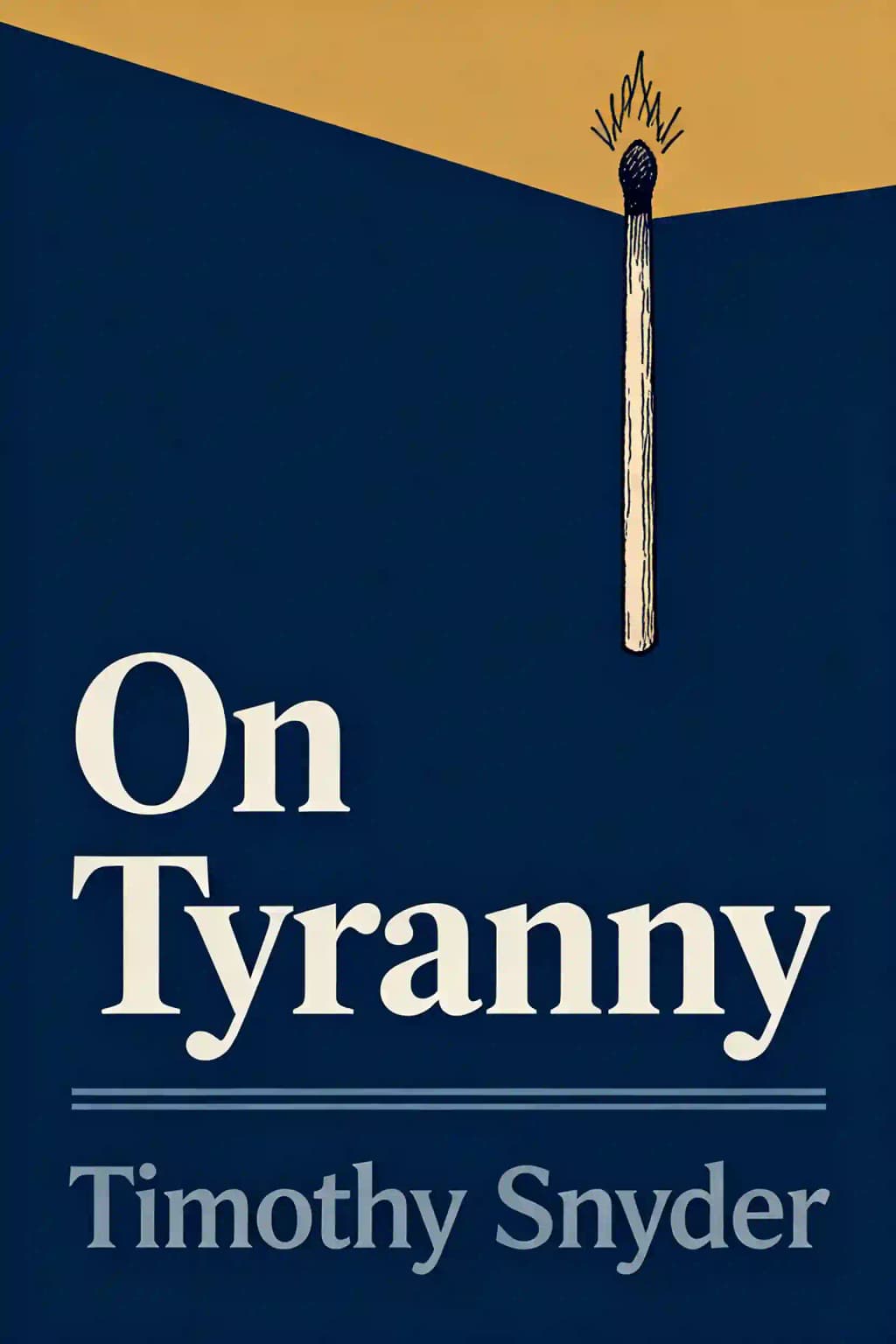
In this urgent 126-page bestseller, historian Timothy Snyder offers twenty lessons to defend democracy against authoritarianism. Topping charts after Trump's inauguration, this "how-to guide for resisting tyranny" became required reading in classrooms nationwide - a stark warning The Washington Post called "clarifying and unnerving."
Ключевые темы в Twenty Lessons from the Twentieth Century
- anticipatory obedience
- authoritarian power dynamics
- institutional fragility
- totalitarian history
- democratic resistance
Цитаты из Twenty Lessons from the Twentieth Century
Democracy is not a given-it's a fragile achievement.
Wait to be asked.
Institutions don't defend themselves-they need us to defend them.
The warning signs are rarely subtle.
The tragedy is that each small step seemed reasonable at the time.
Персонажи в Twenty Lessons from the Twentieth Century
- Timothy SnyderAuthor and Yale historian of totalitarianism
- Stanley MilgramPsychologist who conducted obedience experiments
Скачать резюме книги «Twenty Lessons from the Twentieth Century»
Получите резюме книги «Twenty Lessons from the Twentieth Century» в формате PDF или EPUB бесплатно. Распечатайте или читайте офлайн в любое время.
Часто задаваемые вопросы об этой книге
On Tyranny outlines 20 historical lessons from 20th-century authoritarian regimes like Nazi Germany and Stalinist Russia, offering actionable strategies to safeguard democracy. Snyder emphasizes resisting complacency, defending institutions, and recognizing manipulative tactics used by tyrannical leaders. The book blends political philosophy with urgent warnings about modern threats to freedom.
This book is essential for politically engaged citizens, activists, and students of history or political science. Its concise format (126 pages) makes it accessible to general readers concerned about democratic erosion. Snyder’s insights resonate with those seeking to understand authoritarian playbooks and counter disinformation tactics.
Yes. Despite being written in 2017, its lessons on media literacy, institutional defense, and civic courage remain critical amid rising global authoritarianism. The short, direct chapters provide timeless guidance, though some critiques note its brevity limits depth.
Key concepts include:
- Anticipatory obedience: Tyrants exploit preemptive compliance to consolidate power.
- Defend institutions: Independent courts, media, and NGOs guard against overreach.
- Truth matters: Reject disinformation and cultivate critical thinking.
- Practice physical civic engagement: Move beyond online activism to real-world solidarity.
- “Do not obey in advance”: Highlights how preemptive submission enables tyranny.
- “Believe in truth”: Urges resisting lies that erode shared reality.
- “The quicker you let go of old cheese, the sooner you find new cheese”: A metaphor for adapting to change (via J.K. Rowling reference).
Snyder warns against normalized corruption, distorted language (e.g., “fake news”), and exploitation of crises to suspend rights. He parallels Trump-era rhetoric with historical authoritarian tactics, though some argue this focus risks dating the book.
Unlike his dense historical texts (Bloodlands), On Tyranny is a pragmatic guide. It echoes themes from The Road to Unfreedom but prioritizes brevity over academic rigor, aiming for broad public impact.
- 1938 Austrian annexation: Illustrates how “anticipatory obedience” enabled Nazi dominance.
- Holocaust and Holodomor: Show institutional collapse’s consequences.
- Soviet propaganda: Demonstrates language manipulation to control narratives.
With AI-driven disinformation and democratic backsliding, Snyder’s call to “investigate” facts, support journalism, and foster community ties remains urgent. Updated editions address post-2020 challenges, reinforcing its applicability.
A Yale history professor specializing in 20th-century European totalitarianism. His expertise on the Holocaust and Eastern Europe underpins On Tyranny’s historical rigor. Snyder is also a vocal commentator on modern U.S. and global politics.
Some argue its Trump-era references may age poorly, and its concise format oversimplifies complex issues. However, supporters praise its accessibility and actionable advice for non-academic audiences.
- Verify information before sharing.
- Engage locally: Build trust through face-to-face interactions.
- Support independent media: Counteract authoritarian control of narratives.