Глава 1
The Phoenix Path: Rising from Nihilism to Meaning
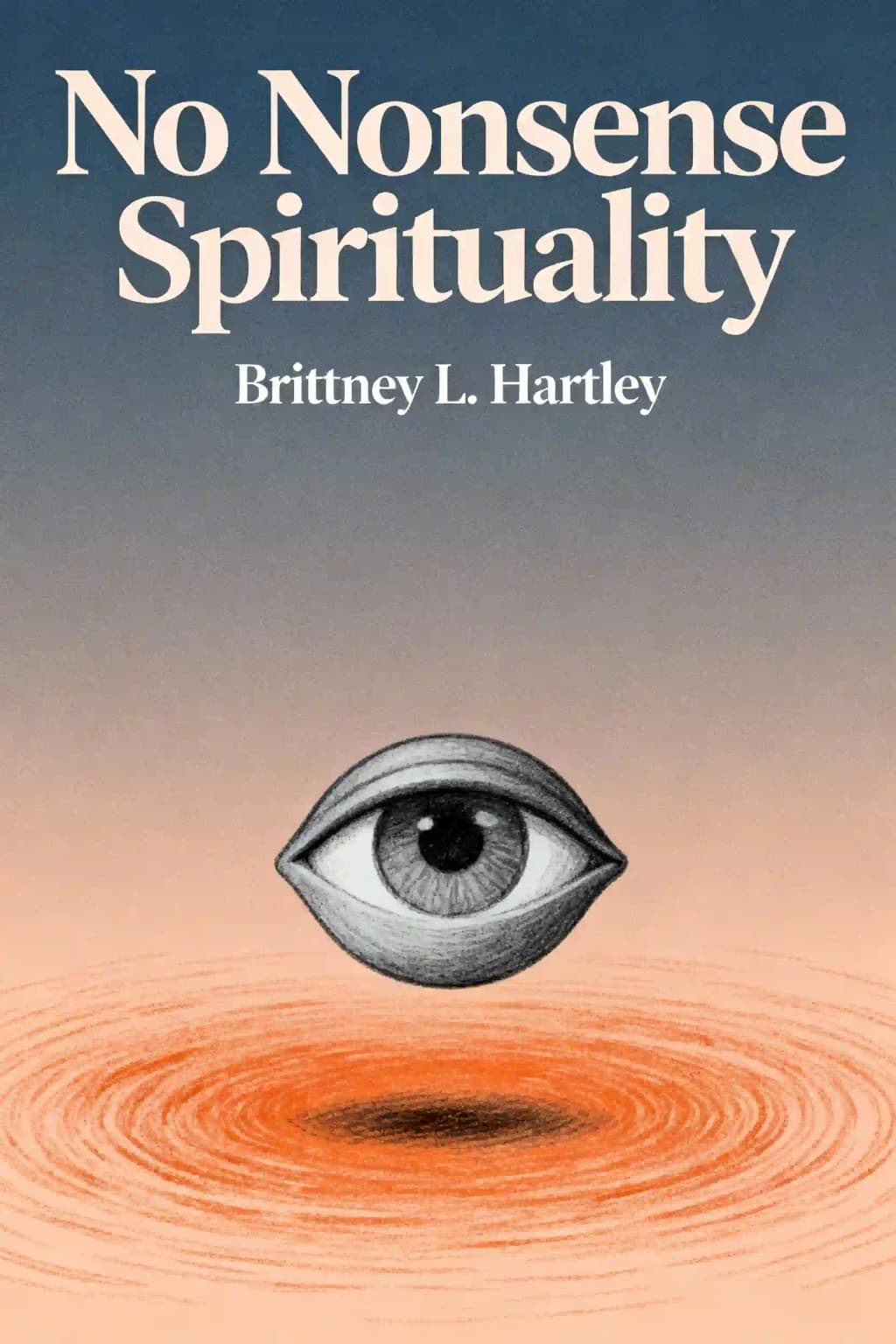
In a world increasingly divided between religious dogma and nihilistic emptiness, Brittney Hartley's "No-Nonsense Spirituality" emerges as a revolutionary middle path. The book has become a quiet phenomenon among those disillusioned with traditional religion but unwilling to abandon the search for meaning. While mainstream spiritual bestsellers often promise supernatural solutions, Hartley's work has gained traction among scientists, therapists, and former religious leaders for its unflinching honesty and practical approach. Her background as both a former Orthodox Mormon and academic theologian gives her unique credibility in bridging these worlds. As comedian and religious critic Bill Maher noted, "Finally, someone talking about spirituality without making me roll my eyes." What makes this book particularly relevant today is how it addresses the growing demographic of "spiritual but not religious" individuals-now the fastest-growing spiritual identification in America-who find themselves trapped between worlds, seeking authentic connection without supernatural claims.
Глава 2
Where Chaos Meets Order: A Personal Journey
My journey began in the rigid structure of Orthodox Mormonism, where I strived to be the perfect girl while privately questioning a system that equated God's love with shame. At sixteen, I was kicked out for having sex, sitting in church unable to partake in sacrament, visibly marked as unclean. This catalyzed my twenty-year quest to determine "what is"-the fundamental nature of reality that would guide my life.
I explored nuanced Mormonism, broader Christianity, and mysticism, even teaching radical interpretations at a religious university until the institution silenced me. Studying Christianity's evolution from radical Jewish movement to political force, I discovered its truth claims were unexceptional among world mythologies. The devastating realization that we can never truly know ultimate reality crushed my identity.
I didn't leave religion because I wanted to sin-I went kicking and screaming, losing everything I'd built. My deconstruction took years as I recognized how religion exploits cognitive biases to create supernatural certainty. My angry atheist phase was necessary boundary-setting after religious indoctrination. I devoured the works of Hitchens, Harris, Dawkins, and Dennett while my doctoral studies in postmodernism demolished my remaining faith.
Yet atheism as a culture felt soulless. Nihilism left me adrift-unable to make decisions, find purpose, or justify continued existence. At my lowest, life felt like a meaningless video game where I was just "playing human." This intersection is where I likely meet you-too jaded for religion, too skeptical for New Age spirituality, yet yearning for something more than cold rationalism.
Instead of rebuilding on another "ism," I built from the bottom up: creating authentic community, exploring psychedelics, developing a personal moral code, cultivating awe, and embracing intentional living. One day I realized I'd created a life worth living, with projects so meaningful that my eventual death and cosmic insignificance didn't matter. Facing nihilism became a gift-only by living with eyes wide open could I build a life worthy of meeting these existential monsters.
Глава 3
The Middle Path: Understanding Secular Spirituality
Secular spirituality represents a middle path between religious dogma and nihilistic emptiness-a deep connection to self and beyond without supernatural claims. Rather than rebuilding my foundation on another belief system only to face future crises, I discovered how to reconstruct what I valued about spirituality without faith requirements.
Religion, while complex, can be understood as how we orient ourselves in the universe-distinguishing between the profane and sacred. It's more than just Western Abrahamic traditions; it encompasses Eastern practices like Buddhism and even political worship systems like North Korea's necrocracy. Humans co-evolved with religion as an evolutionary response to chaos, helping our ancestors cope with uncertainty by perceiving patterns and agency where none existed. Though organized religion declines in the West, our religious tendencies persist in fandoms, wellness culture, and technological utopianism.
The occult tradition, meaning "hidden" knowledge, has existed alongside mainstream religions throughout history. This path focuses on accessing profound understanding through practices from ancient civilizations. Today's manifestations include New Age spirituality, paganism, tarot, and psychedelics-practices that help people tap into intuition and natural cycles. While offering powerful reconnections with the divine feminine and natural wisdom, this path becomes problematic when intuitions are mistaken for objective truth.
Atheism offers a third stance that rejects both religion and occult spirituality as primitive thinking. This skeptical position has statistical merit-throughout history, supernatural explanations have consistently been replaced by natural ones. At its core, atheism represents a humble position acknowledging humans' poor track record at determining ultimate reality. However, its fundamental limitation is that it offers nothing constructive-it can only tell us what isn't true.
Secular spirituality synthesizes the wisdom of religion, the intuitive aspects of the occult, and the empirical foundation of science without becoming trapped in any approach's limitations. Research validates this approach-Harvard scientist Dr. Ronald Kessler's groundbreaking work disentangled spirituality from religion, showing they are distinct concepts. Studies by Lisa Miller at Columbia University demonstrate that spirituality provides remarkable mental health benefits-adolescents showing up to 80% lower rates of substance abuse and 75% less clinical depression.
This science-driven approach offers a safe landing place for those with religious trauma without requiring mythological beliefs. Instead, it provides an interactive roadmap for creating personalized rituals, contemplative practices, and tools for facing existential fears.
Глава 4
Dancing Between Order and Chaos
Creation stories across cultures begin with the interplay between order and chaos-from Greek mythology's emergence from void to Hindu, Yoruba, Maori and Christian narratives of structure arising from formlessness. This fundamental balance represents a psychological truth: humans thrive in the dynamic middle ground between rigid structure and complete randomness. The Daoist yin-yang symbol captures this relationship perfectly, showing how each contains the seed of its opposite.
Death awareness represents our first encounter with existential fear. Unlike traditional religions offering comforting afterlife narratives, secular spirituality approaches death directly. Terror Management Theory reveals how death anxiety drives us to seek meaning, sometimes through group identity or legacy creation. When we truly confront death, we rearrange priorities, communicate more honestly, and live more authentically in the present.
Freedom, paradoxically, terrifies us. We readily surrender our autonomy to gurus, religions, or political movements promising certainty. Like choosing from endless salad dressings, the overwhelming responsibility of determining our own path often leads us to flee from freedom. As organized religion declines, political religions emerge offering similar narratives: "Follow me to utopia." The path forward requires honest self-reflection about the life worth living for you.
Existential isolation stems from the unbridgeable gulf between individuals-no one can fully know what it's like to be you. This drives many to sacrifice individuality for conformity. But as Brene Brown notes, the opposite of belonging isn't being alone-it's fitting in. True belonging requires first belonging to yourself. Overcoming isolation means enjoying your own company and recognizing our interconnectedness with all existence.
When we accept mortality, personal responsibility, and fundamental aloneness, we confront the question of meaning itself. Without an ultimate cosmic purpose, meaning must be created individually. The realization that saved me was understanding that removing myself would only spread more suffering-there's a piece of heaven on earth only I can build. The challenge becomes creating a life so meaningful that its eventual forgetting doesn't matter.
Глава 5
The Power of Ritual: Creating Sacred Time
Rituals provide structure and meaning in secular spirituality by marking what we value and creating a heartbeat for our lives. Religions excel at creating liturgical calendars that give people access to life's rhythm, but often create exclusivity around these tools. In secular spirituality, we can reclaim rituals by creating new ones or repurposing existing ones to reflect our personal values.
Studies show rituals work even when we know they're made up, helping us process emotions like grief. Small, intentional practices can create a supportive framework for life without religious dogma. My morning ritual begins with lighting a candle and writing three pages of stream-of-consciousness thoughts-clearing mental space before the day begins. With my children, we've created secular versions of religious holidays, focusing on values like gratitude at Thanksgiving or renewal at winter solstice.
When my grandmother died, I created a personal mourning ritual by visiting her favorite beach, writing memories on biodegradable paper, and releasing them into the ocean. This provided closure that formal religious services couldn't. For life transitions, I've developed ceremonies marking milestones like my daughter's first menstruation-celebrating her entrance into womanhood with gifts from important women in her life.
The beauty of secular rituals is their authenticity-they're designed specifically for your needs rather than inherited from tradition. Whether it's a monthly dinner with friends, a solitary walk in nature, or a family game night, these practices create islands of meaning in life's ocean. What matters isn't the specific ritual but the intention behind it-creating space to process emotions, mark transitions, and connect with what matters most.
Глава 6
The Experience of Awe: Transcendence Without Supernatural Claims
Awe is an intense emotional experience characterized by wonder, amazement, and reverence in the presence of something profound. It registers differently in our brain than joy or happiness, creating a sense of being part of something bigger than ourselves. Science has identified two key components of awe: "perception of vastness" and "need for accommodation"-encountering something that transcends our understanding and requires us to adjust our worldview.
This experience is central to spirituality, often what people mean when they describe feeling "God." In secular spirituality, we can acknowledge this feeling without attaching metaphysical claims about objective reality. Research shows awe decreases self-centeredness, increases prosocial behavior, and quiets the default mode network in our brains where self-representation occurs.
Contemplation practice transforms momentary experiences of awe into a spiritual way of life. Many people mistakenly believe they lack spiritual practice because they associate it only with formal meditation or religious rituals. The Center for Contemplative Mind in Society identifies diverse paths to contemplation through their "Tree of Contemplative Practices."
Stillness Practices involve quieting the mind to develop calmness and insight. Generative Practices deliberately cultivate specific thoughts and feelings through visualization or loving-kindness meditation. Creation Process Practices connect through creative expression-music, art, writing, gardening. Movement Practices include labyrinth walking, martial arts, yoga, and even surfing at dawn. Activist Practices like vigils and social justice work are increasingly popular with Gen Z as ways to become part of something larger.
The key is discovering how you personally experience awe and claiming it as your practice. According to Lisa Miller, spirituality is about 71% determined by environment, but 29% is innate-"inscribed in our genetic code, as innate as our eye color." Your ability to connect to life's story is an essential part of your humanity that no one can take from you.
Глава 7
Reclaiming the Divine Feminine
Most religious and spiritual texts have been written by men, for men, while women's thoughts are often relegated to "self-help." This imbalance has created a spirituality that often fails to address women's experiences. Before agriculture, our gods were different. "In the beginning, people prayed to the Creatress of Life, the Mistress of Heaven. At the very dawn of religion, God was a woman."
Early statues like the Venus of Willendorf (28,000-25,000 BCE) featured exaggerated female forms symbolizing fertility and life-giving qualities. Female deities weren't limited to fertility-they were associated with wisdom, language, healing, and creation itself. In matriarchal societies, land was shared rather than owned, life was communal, and women formed the social heart of the tribe.
With the advent of agriculture around 10,000 BCE, significant social shifts occurred. Men increasingly took roles related to plowing, herding, and protection, claiming land as property. Gods changed from female to male, symbolizing power, authority, and hierarchy. Eventually, male deities even took over the act of creation itself, with woman now coming from man instead of man from woman's womb.
Patriarchy emerged across both Western and Eastern religious traditions. The effect on women was broadly the same-religious systems presented as divine inspiration transmitted through men to other men, enshrining maleness as power itself. While female figures like Mary, Kali, or female Bodhisattvas exist, they remain secondary characters rather than equals to male deities.
For thousands of years, men have defined spirituality and God, creating internalized devaluation in women. While men benefit from ego-dissolving spiritual practices, women often need ego-building practices. Women are taught from childhood to be obedient and access God through men, yet spirituality rarely encourages women to find their voice.
Female spirituality exists in daily life rather than being separated through priesthood. Text chains with girlfriends, yoga classes, gardening, caring for family-these embodied spiritual practices are often dismissed as mere social activities. Reclaiming what's been lost allows women to exist authentically, build healthy egos, and pursue dreams. Men also suffer under patriarchy, deprived of community and connection to nature.
True feminine spirituality needs no footnotes to Plato or academic credentials. It exists in coffee conversations, household rituals, walking the dog, children's drawings, bread shared with neighbors, and intuitive text messages. The Sacred Feminine doesn't discriminate based on gender-it offers everyone the inherent right to walk their own sacred path.
Глава 8
Creating Meaning in a Meaningless Universe
When we lose our sense of meaning, we face what Dante called "a forest dark" where the straightforward path is lost. Many argue that without God or grand narrative, life has no purpose. Yet meaning can be curated even without certainty, building a life worth living despite inevitable suffering and death.
Leo Tolstoy's midlife crisis exemplifies the existential void that can emerge even amid success. For four years, he struggled with nihilism so severe he had to remove rope from his house to prevent suicide. This crisis isn't merely sadness but the exhaustion of maintaining social pretenses while grappling with existence's fundamental questions.
Albert Camus identified suicide as philosophy's primary question-whether life is worth living. When confronting meaninglessness, he offered three options: withdraw consent for life (suicide); commit "philosophical suicide" by clinging to comforting beliefs without examination; or embrace the absurd by recognizing life's inherent meaninglessness while asserting freedom to create personal meaning.
Embracing the absurd means recognizing life's inherent meaninglessness while simultaneously creating personal meaning through authentic experiences and creative acts. It's like playing a video game for the joy of playing rather than just completing it-finding value in the moment itself. As Alan Watts suggests, the secret is getting so lost in "work" that you realize it's actually play.
This shift saved me from nihilistic despair. After losing my faith, I faced difficult conversations, removed my children from church to create my own Sunday rituals, and rebuilt a life worth living despite societal pushback. Nihilism became my superpower-accepting our mortality made others' judgments less controlling, giving me freedom to create meaningful family rituals and deeper relationships.
Alexandr Solzhenitsyn's story exemplifies finding meaning amid extreme suffering. Arrested for criticizing Stalin and sentenced to eight years in Soviet labor camps while battling cancer, he witnessed humanity at its worst. Yet seeing others maintain moral courage even facing death inspired him to document the camps' horrors, work that contributed to eroding Western support for the Soviet Union.
The path to meaning involves asking: What truth do only you have to say? What suffering can you help prevent? Even in the most desperate circumstances, Viktor Frankl's experience shows that meaning can be created through personal choice and values, preventing the "give-up-itis" that leads to despair. The freedom that comes from facing meaninglessness allows for creative reinvention of your life-embracing simplicity, authenticity, and purpose beyond societal expectations.
Глава 9
Morality Without Divine Command
Morality is fundamentally about enabling cooperative group living by keeping our self-serving evolutionary traits in check. Rather than fixed commandments, morals represent specific values of particular groups at specific times, evolving as we learn more about human experience. The golden rule, variations of which appear across global cultures, forms the foundation of morality, with suffering providing a reference point for distinguishing good from bad.
Even animals display moral behaviors without religious frameworks-vampire bats share blood with hungry colony members, rats punish unfair play, and primates protest inequitable rewards. These behaviors emerge not from divine commandments but from evolutionary advantages of cooperation. Our brains reward altruism with dopamine, making helping others one of the rare instances where evolutionary impulses align with creating a better world.
The concept that morality requires fear of eternal punishment represents an immature ethical foundation we must outgrow. Biblical conceptions of hell themselves are contradictory and shifting-variously depicting a general gathering place for the dead, annihilation, eternal torment, or temporary purification. These concepts likely emerged as tools for maintaining social order and addressing the human need for cosmic justice when evildoers escape earthly consequences.
True morality comes not from external rewards or punishments but from our innate empathy, capacity to reason, and desire to create meaningful lives we can be proud of. As Dostoyevsky illustrates in Crime and Punishment, moral transgressions lead to profound psychological suffering regardless of whether one believes in divine judgment. Even if one could live without consequences in a godless universe, the cost of betraying one's inner morality would be constant internal conflict and the inability to form genuine intimate relationships.
Great mystics throughout history lived simply, demonstrating that immoral paths don't truly "pay off" despite material rewards. Secular morality encourages personal responsibility for ethical decisions based on intrinsic values rather than divine rewards or punishments. While core values may differ between individuals, this doesn't mean complete moral relativism-we remain interconnected beings whose actions have consequences.
Глава 10
The Intuitive Path: Finding Wisdom Beyond Logic
The "Christianity-to-witch pipeline is a quick ride" because occult practices fill gaps left by hierarchical religions by emphasizing feminine energy, intuition, and inner work. While mainstream churches condemn these practices, their popularity grew during the pandemic, with one in five US adults having used tarot cards or consulted mediums.
Astrology's ancient origins represent an early attempt at psychology. While it relies on cognitive biases and unfalsifiable claims, astrology can be useful for self-reflection through its archetypes without accepting pseudoscientific claims about planetary influences. Similarly, tarot serves as a visual tool that helps access the subconscious, giving language to what's "brimming at the edge of our awareness" without requiring supernatural beliefs.
Reiki shows measurable benefits in scientific studies, though its mechanism remains unknown-possibly activating evolutionary healing responses through archetypal caring gestures. Psychedelics, with their ancient history in spiritual practices, offer powerful tools for treating depression, PTSD, and fostering spiritual insights when used responsibly with guides.
Imagination can heal trauma through inner child work. Rather than retraumatizing ourselves by reliving painful experiences, we can use imagination to comfort our younger selves-becoming "the parent we needed." This creates an environment of self-support rather than letting unconscious childhood needs drive unhealthy patterns.
The shadow self-those parts we hide from others and ourselves-requires integration for wholeness. Making peace with these disowned aspects brings unprecedented self-love, creativity and inner peace. While valuable tools exist in occult practices, we should maintain skepticism toward claims of supernatural powers like psychic abilities or past life readings.
"Spiritual chasers" become addicted to spiritual experiences, constantly seeking the next high without integration. The true purpose of inner work is creating "a temple where each emotion can come in with its message"-living intentionally rather than reactively. Despite maintaining "an extra sensitive BS meter," meaningful experiences with tarot, meditation, plant medicine, and shadow work can help find "a spiritual home that no one can take from me."
Глава 11
The Wisdom Path: Learning from Mystics
Mysticism focuses on experiencing what people call "god" rather than debating religious truth claims, allowing mystics from diverse traditions to understand each other despite different terminology. Mystics value the experience itself without adding "therefore" statements that lead to dogmatic truth claims. God becomes "a way of life rather than a theology one uses to keep others out of heaven."
Studies show that while two-thirds of our spiritual life comes from culture, one-third is innate and unique to us-our capacity to connect deeply with ourselves and something larger. When religion overtakes this innate spirituality, it becomes a security blanket filling psychological needs: soothing fears, providing group identity, and offering certainty through magical books and comforting narratives about death.
Mysticism reverses religion's typical progression. While religions start with stories (like Adam and Eve), move to ethics (Ten Commandments), and then change one's being, mysticism begins with being-with oneness and spiritual experience. From this centered place of unity ("I am you, and you are me"), ethics flow naturally. Stories come last as playgrounds for learning about ourselves.
Spiritual experiences have inherent value, shifting our minds from negativity bias toward transcendent states of consciousness. People shouldn't need to invoke God to explain profound experiences-witnessing childbirth, having insights, connecting deeply, or experiencing awe and love are meaningful in themselves.
All religions begin with mystical experiences but eventually build "clubhouses" with rituals, narratives, prophets, and identity markers that inevitably become corrupt. Jesus was a homeless mystic who opposed the religious power structures of his day, flipping tables, embracing the marginalized, and encouraging inner work over outward righteousness. Similarly, Buddha resisted institutionalization, renounced material possessions, taught compassion, and emphasized inner transformation.
While religions claim mystical experiences represent objective divine encounters requiring institutional obedience, secular spirituality recognizes these experiences as valuable internal phenomena without supernatural claims. The brain itself is "a far more mysterious God than the Gods we have created." The goal isn't following Jesus, Buddha or any prophet, but digging your own well to experience transcendent consciousness firsthand.
Глава 12
The Future of Spirituality: Community and Connection
Our modern world faces a spiritual crisis. Young people encounter nihilism and existential questions earlier than previous generations, without the supportive community structures or clear developmental pathways that once existed. Rather than facing existential crises at midlife with established identities, today's teenagers confront global suffering, environmental collapse, and unaffordable living conditions while still forming their identities.
Yet hope remains. Dr. Lisa Miller's research demonstrates that spirituality dramatically reduces depression, existential angst, risky behaviors, and suicide-more effectively than medication. Her pivotal discovery came when organizing a Yom Kippur dinner for typically agitated psychiatric patients who transformed through shared ritual. Importantly, these benefits exist regardless of whether spirituality occurs within organized religion.
We're experiencing a gap period similar to post-Reformation Europe, where dissatisfaction with religious institutions exists but new structures haven't fully emerged. Creative solutions are developing: children's books about connection and spirituality, secular spiritual curricula, community-building through sports and activities, and accessible mindfulness practices.
The quality of relationships determines physical health and happiness more than any other factor. Secularism lacks the community infrastructure that religions provide-places that offer resources, education, mentorship, friendship and belonging. Without the "sticky" myths that include supernatural rewards and consequences, secular organizations struggle to inspire the same level of commitment and resources that religions command.
It's time to abandon the notion that one organization with one myth should provide all social benefits. Building your own community requires more effort but allows alignment with your values and needs. Post-religious relationships often become deeper and more authentic without the need for "masking."
Creating community requires embracing vulnerability-the birthplace of trust, belonging, and empathy. Unlike religious communities where love depends on faith and obedience, authentic connection embraces our whole selves. We are the universe experiencing itself-stardust formed over billions of years into conscious beings capable of contemplation. Self-love isn't narcissism but appreciating the universe within us and tending to our chapter in the cosmic story.
The rise of psychedelics is becoming a key component in spirituality's future, with substances showing promise for treating depression, PTSD, and addiction by increasing connection. Meanwhile, technology enables unprecedented access to wisdom teachers through TED talks, meditation apps, and online communities.
The future of spirituality creates space where we can "help one another cope with the realities of life, and walk hand in hand towards our own mortality," appreciating our brief witness to an amazing cosmic story. Through this journey of secular spirituality, we can find meaning not in cosmic significance but in the beauty of being alive-conscious stardust experiencing itself for a brief, precious moment.