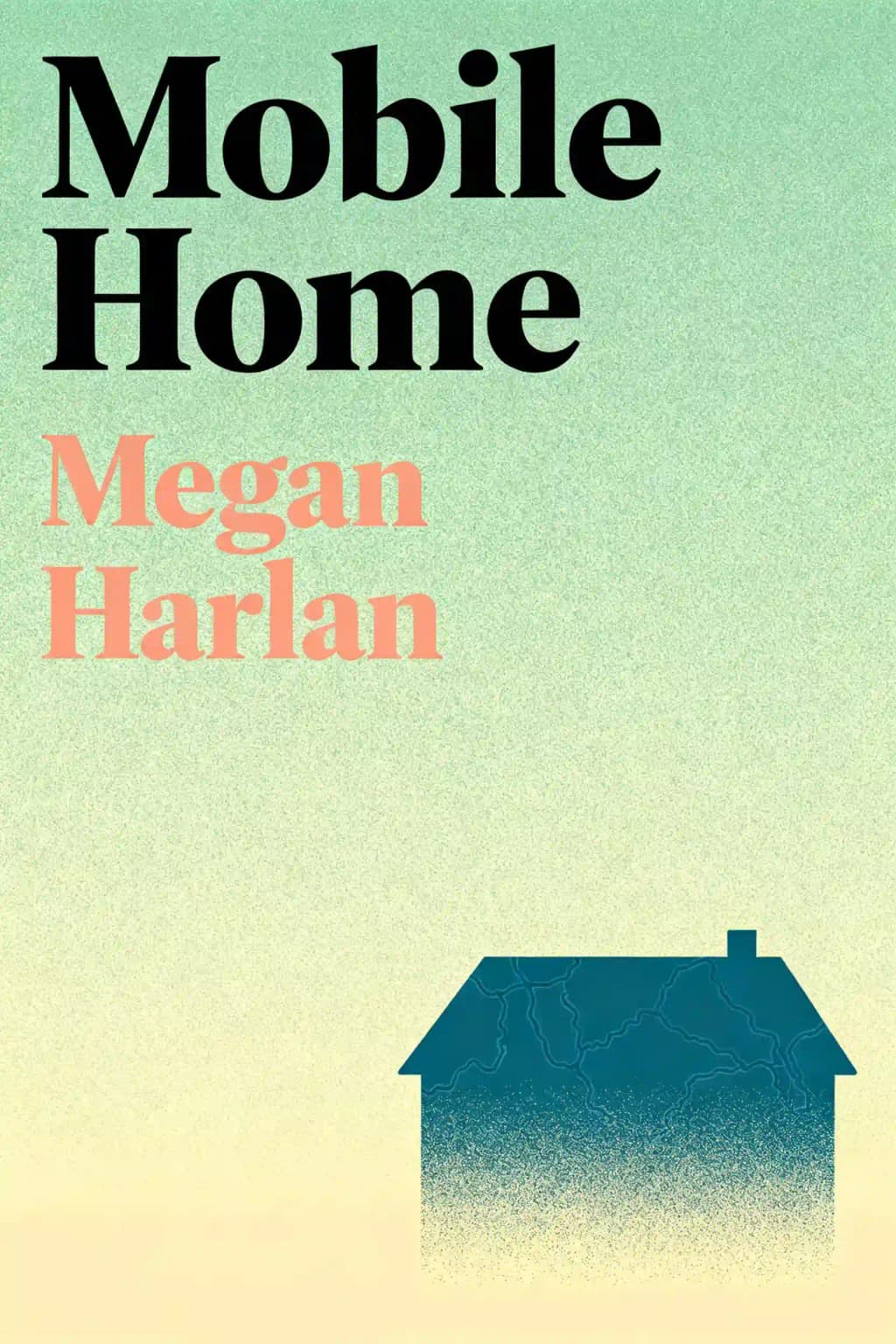
Mobile Home
A Memoir in Essays
Обзор книги Mobile Home
In "Mobile Home," award-winning author Megan Harlan transforms her nomadic childhood across seventeen homes on four continents into a lyrical exploration of belonging. Critics compare her to Annie Dillard, praising how she redefines "home" beyond physical spaces. What anchors us when everything keeps changing?

Ключевые темы в Mobile Home
- third culture kids
- nomadic childhood
- architecture of belonging
- global displacement
- transient identity
Цитаты из Mobile Home
Freedom is safety.
Togetherness outweighed location.
Home is portable.
Home as a fixed, immutable space.
Impermanence might be a feature rather than a flaw.
Персонажи в Mobile Home
- Megan HarlanThe author and protagonist who lived in 17 homes
- Megan Harlan's fatherAn engineer whose global jobs drove the moves
- Megan Harlan's motherA homemaker who managed the family's possessions
Об авторе
Об авторе книги Mobile Home
Megan Harlan is the award-winning author of Mobile Home: A Memoir in Essays, celebrated for her lyrical exploration of place, identity, and belonging.
A memoir blending travelogue and family history, the book draws from Harlan’s nomadic upbringing across the Middle East, Latin America, and the San Francisco Bay Area.
Her debut poetry collection, Mapmaking, won the John Ciardi Prize and was hailed as a “miracle of invention” by poet Alice Fulton.
Harlan’s essays, repeatedly cited in Best American Essays, have appeared in The New York Times, AGNI, and Colorado Review. She holds an MFA from NYU and writes The France House newsletter, chronicling life between California and Brittany.
Mobile Home received the AWP Award for Creative Nonfiction and the Independent Book Publisher Gold Medal, with The New York Times praising its “big-hearted and thoughtful” prose.
Скачать резюме книги «Mobile Home»
Получите резюме книги «Mobile Home» в формате PDF или EPUB бесплатно. Распечатайте или читайте офлайн в любое время.
Часто задаваемые вопросы об этой книге
Mobile Home explores Megan Harlan’s nomadic childhood across 17 homes on four continents—from Alaska to Saudi Arabia—interweaving personal stories with cultural histories of place. Through ten linked essays, it examines themes of family, addiction, and the fluid concept of "home," blending memoir with insights into nomadic traditions, suburban housing, and architectural landmarks.
Fans of literary memoirs, travel writing, or unconventional family narratives will appreciate this book. It resonates with readers interested in themes of identity, belonging, and how environments shape personal growth. Critics praise its elegant prose and rich research, making it ideal for lovers of hybrid memoir-essay forms.
Key themes include the malleability of "home," the impact of constant relocation on identity, and familial legacies of addiction and creativity. Harlan contrasts her mother’s obsession with renovating houses against her father’s wanderlust, while exploring global nomadic traditions and modern mobility.
Harlan juxtaposes her family’s experiences with broader cultural contexts, such as Bedouin nomadism, trailer-park communities, and the symbolism of landmarks like Stonehenge. These connections highlight how personal and collective understandings of place intersect.
Her mother’s relentless home renovations and her father’s alcoholism-fueled wanderlust drive the memoir’s exploration of rootlessness. Their contrasting approaches to "home" frame Harlan’s reflections on stability and transience.
The memoir portrays identity as shaped by displacement, arguing that belonging is a creative act rather than a fixed location. Harlan’s global upbringing underscores how adaptability and memory forge selfhood.
Some reviewers note a tension between meticulous research and emotional reserve, with one essay critiqued for prioritizing historical detail over deeper familial vulnerability. However, most praise its originality and lyrical prose.
Unlike linear travel narratives, Harlan’s essayistic structure layers geography with introspection, offering a fragmented yet cohesive meditation on place. It stands out for blending autobiography with architectural and anthropological insights.
Essays span the Alaskan tundra, a Colombian jungle, a London flat, and a Saudi Arabian trailer. Each setting becomes a metaphor for impermanence, reflecting Harlan’s family dynamics and cultural observations.
Her prose is lyrical yet unsentimental, combining vivid scene-building with scholarly digressions. This hybrid style mirrors the book’s themes of mobility and reinvention, earning acclaim for its intellectual depth and accessibility.
Yes. By linking her childhood to Bedouin traditions and modern mobile homes, Harlan reframes nomadism as a conscious, creative choice rather than a rootless existence. The memoir offers a nuanced perspective on intentional mobility.
The book depicts family as both anchor and burden, shaped by her father’s addiction and her mother’s aesthetic idealism. Harlan’s journey to create stability for her son adds generational depth to this exploration.