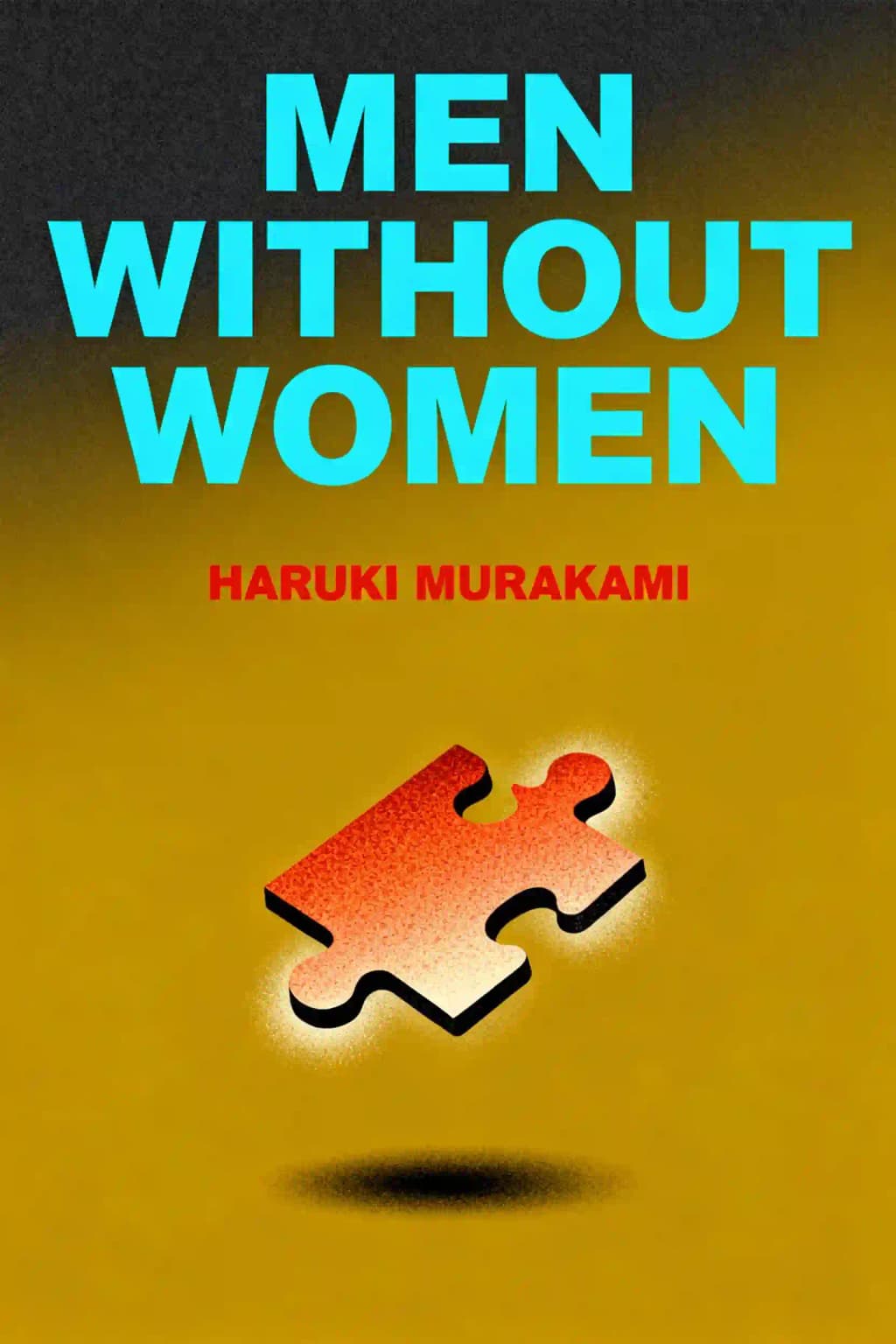
In Murakami's haunting "Men Without Women," seven stories explore the surreal landscape of male loneliness after women vanish from their lives. Praised by neuroscientist Christof Koch for its ghostly atmosphere, this collection invites readers to confront their own fears of loss and connection.
Haruki Murakami, the celebrated Japanese novelist and international literary icon, explores themes of loneliness, human connection, and existential longing in his short story collection Men Without Women. Born in Kyoto in 1949, Murakami drew early inspiration from Western literature and jazz culture, themes that permeate his surreal yet grounded narratives.
His background running a Tokyo jazz bar for seven years before becoming a full-time writer informs the rhythmic, introspective quality of his prose.
Murakami’s globally acclaimed works, including Norwegian Wood (a breakthrough realist novel) and the metaphysical Kafka on the Shore, have earned him prestigious honors like the Jerusalem Prize and Franz Kafka Prize. His books, translated into over fifty languages, often blend magical realism with examinations of identity and memory. Beyond fiction, he’s authored nonfiction such as What I Talk About When I Talk About Running, reflecting his marathon-running discipline.
Men Without Women continues his tradition of crafting haunting, emotionally resonant stories that have solidified his reputation as a master of contemporary literature.
Men Without Women explores the profound loneliness of men grappling with the absence of women in their lives through seven interconnected stories. Themes include lost love, existential reflection, and the haunting impact of separation, with characters navigating grief, memory, and identity. Murakami blends realism with surreal touches, as seen in tales like "Scheherazade" and "Samsa in Love."
Fans of literary fiction and Murakami’s signature style—lyrical prose, introspective characters, and metaphysical themes—will appreciate this collection. It resonates with readers interested in male vulnerability, relationships, and the emotional aftermath of loss. Critics note its appeal to those seeking nuanced explorations of loneliness and human connection.
Yes, for its evocative storytelling and psychological depth. Murakami’s ability to dissect male solitude through haunting narratives—like a man mourning an ex-lover’s suicide or a surgeon consumed by unrequited love—has earned praise. While some critiques cite abstract pacing, the collection’s themes of longing and identity remain compelling.
Central themes include loneliness, the fragility of relationships, and existential questioning. Stories like "Drive My Car" and "An Independent Organ" examine how men confront abandonment, while "Scheherazade" juxtaposes companionship with isolation. Murakami also explores memory’s unreliability and the duality of love as both transformative and destructive.
Loneliness manifests through characters like Habara, who clings to a storyteller’s visits, and Tokai, a surgeon withering from heartbreak. Murakami frames solitude as an inevitable state for those deeply loved and left, emphasizing emotional voids that persist even amid new connections. The title story likens this condition to becoming “the second-loneliest man on earth.”
Yes:
The title references Hemingway’s 1927 collection, echoing themes of male isolation. Murakami reimagines it as a philosophical state—men stripped of female relationships, left to confront existential voids. It underscores the idea that loving deeply risks irreversible loneliness when connections dissolve.
“Scheherazade” and the titular story are standout entries. “Scheherazade” intertwines eroticism and storytelling, while “Men Without Women” poignantly ties a man’s grief to the death of his younger self. Both highlight Murakami’s skill in blending melancholy with surreal imagery.
Women are often absent yet omnipresent—driving plots through their lingering influence. M’s suicide haunts her ex-lover, while Scheherazade’s tales captivate Habara. Their elusiveness underscores male narratives shaped by loss, memory, and idealized pasts.
Memory blurs reality and fantasy, as seen in protagonists idealizing lost lovers or reimagining past selves. In “An Independent Organ,” Tokai’s fixation on a married woman spirals into delusion, illustrating how nostalgia and obsession distort perception.
Yes: themes of solitude (as in Norwegian Wood) and surreal encounters (reminiscent of Kafka on the Shore) recur. The collection’s focus on everyday men confronting existential crises aligns with Murakami’s broader exploration of modern alienation.
Some critiques note uneven pacing and excessive abstraction, particularly in stories like “Samsa in Love.” Others argue female characters lack agency, functioning primarily as catalysts for male introspection. Despite this, the collection is lauded for its emotional resonance.
From “Men Without Women,” this line captures the paradox of love: the fear of loss taints even new relationships. Murakami suggests vulnerability is inherent in connection, as anticipation of separation shadows every romantic encounter.
While Hemingway’s stories emphasize stoic masculinity, Murakami’s focus on emotional fragility and metaphysical longing offers a modern contrast. Both explore male isolation, but Murakami infuses it with surrealism and introspective depth, reflecting contemporary existential anxieties.
Почувствуйте книгу через голос автора
Превратите знания в увлекательные, богатые примерами идеи
Захватите ключевые идеи мгновенно для быстрого обучения
Наслаждайтесь книгой в весёлой и увлекательной форме
Loneliness has become our most faithful companion.
The story becomes a meditation on the impossibility of truly knowing another person.
Reinvention: liberation or merely another form of confinement?
I wanted to see this man through my wife's eyes.
Some wounds never fully heal but can be carried with grace.
Разбейте ключевые идеи Men Without Women на понятные тезисы, чтобы понять, как инновационные команды создают, сотрудничают и растут.
Выделите из Men Without Women быстрые подсказки для запоминания, подчёркивающие ключевые принципы открытости, командной работы и творческой устойчивости.

Погрузитесь в Men Without Women через яркие истории, превращающие уроки инноваций в запоминающиеся и применимые моменты.
Задавайте любые вопросы, выбирайте голос и совместно создавайте идеи, которые действительно находят у вас отклик.

Создано выпускниками Колумбийского университета в Сан-Франциско
"Instead of endless scrolling, I just hit play on BeFreed. It saves me so much time."
"I never knew where to start with nonfiction—BeFreed’s book lists turned into podcasts gave me a clear path."
"Perfect balance between learning and entertainment. Finished ‘Thinking, Fast and Slow’ on my commute this week."
"Crazy how much I learned while walking the dog. BeFreed = small habits → big gains."
"Reading used to feel like a chore. Now it’s just part of my lifestyle."
"Feels effortless compared to reading. I’ve finished 6 books this month already."
"BeFreed turned my guilty doomscrolling into something that feels productive and inspiring."
"BeFreed turned my commute into learning time. 20-min podcasts are perfect for finishing books I never had time for."
"BeFreed replaced my podcast queue. Imagine Spotify for books — that’s it. 🙌"
"It is great for me to learn something from the book without reading it."
"The themed book list podcasts help me connect ideas across authors—like a guided audio journey."
"Makes me feel smarter every time before going to work"
Создано выпускниками Колумбийского университета в Сан-Франциско

Получите резюме книги «Men Without Women» в формате PDF или EPUB бесплатно. Распечатайте или читайте офлайн в любое время.
What happens when the person who defined your world simply vanishes? Not in a dramatic explosion of conflict, but in the quiet way that people slip through our fingers-through death, departure, or the slow erosion of intimacy. Haruki Murakami's "Men Without Women" doesn't offer answers. Instead, it invites us into seven precisely crafted worlds where men wake up to discover that the women who anchored their existence have disappeared, leaving behind only the echo of what once was. These aren't stories about heartbreak in the conventional sense. They're explorations of a more unsettling phenomenon: how we construct entire identities around the people we love, and what remains when those foundations crumble. Each protagonist faces a different flavor of absence, yet all share a peculiar inability to process their loss directly. They build elaborate scaffolding around their pain-routines, fantasies, physical journeys-anything to avoid looking straight at the void. What emerges is a meditation on modern loneliness, on the particular devastation of losing not just a person, but the version of yourself that existed in their presence.