Глава 1
The Marketing Maestro's Blueprint: Jenna Tiffany's Guide to Strategic Success
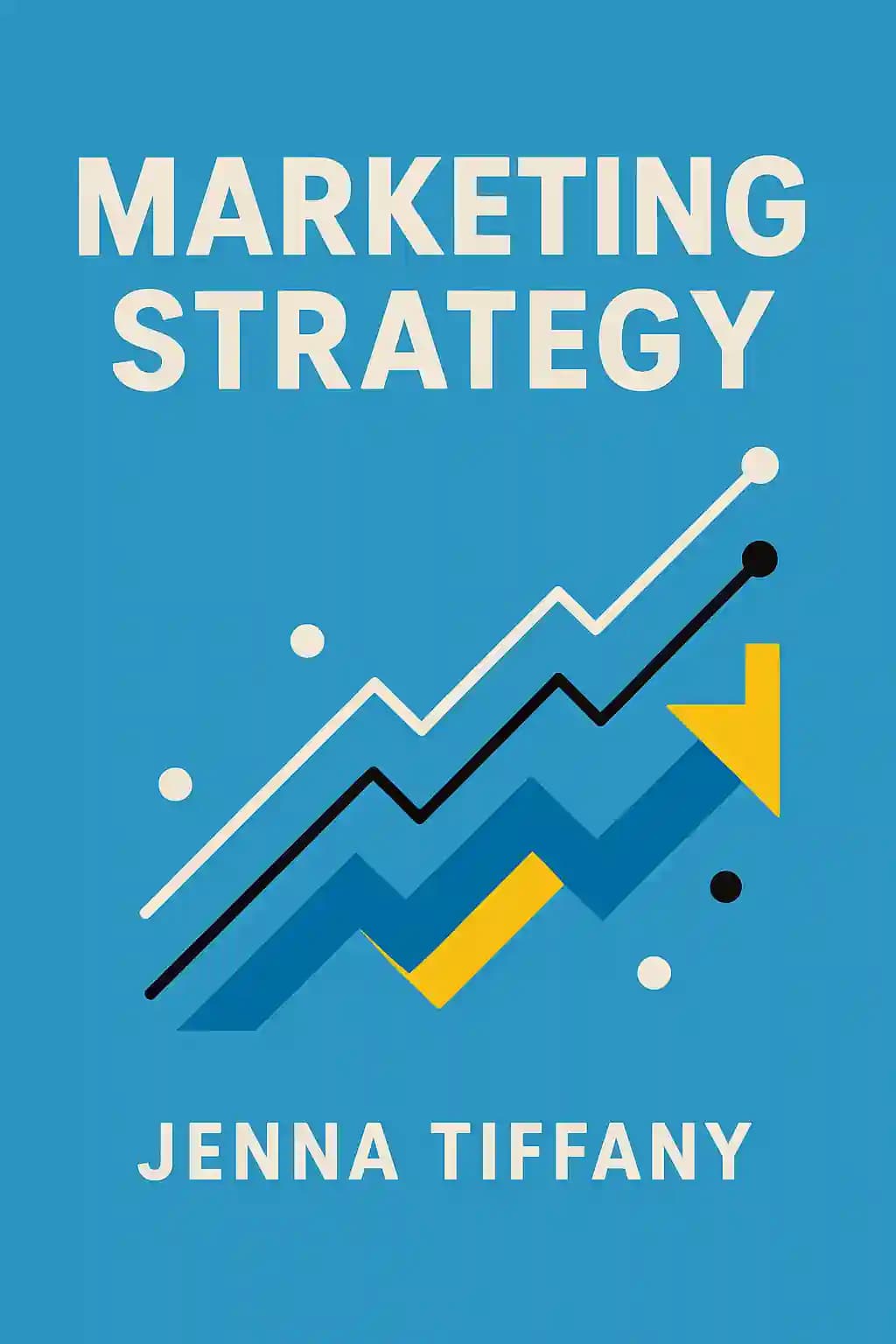
Ever found yourself drowning in marketing tactics without a clear direction? You're not alone. In a world where 63% of businesses operate without a documented marketing strategy, Jenna Tiffany's "Marketing Strategy" arrives as the lifeline many marketers desperately need. This isn't just another marketing book-it's the culmination of Tiffany's decade-plus experience helping brands escape the perpetual discount cycle and short-term thinking that plagues modern marketing. The book has quickly become required reading in marketing programs across universities like the University of South Florida and received endorsements from industry giants including Mailchimp and dotdigital. What makes it stand out? While most marketing literature focuses on flashy tactics, Tiffany takes us back to fundamentals, providing a clear roadmap for developing strategies that genuinely connect with audiences in our distracted, multi-screening world.
Глава 2
Strategy: The Missing Piece in Modern Marketing
Marketing has undergone a dramatic evolution-from the Simple Trade Era where supply was limited and exchanges based on available commodities, through the Production Era (1860s-1920s) with expanded manufacturing capabilities, to today's Social Mobile Marketing Era centered on communicating with the "always-on" mobile consumer through social media and AI.
Yet despite this evolution, many marketers continue to confuse strategy with tactics. Strategy represents the overarching plan that guides all marketing efforts, while tactics are the specific actions taken to execute that plan. This distinction is crucial because without a clear strategy, businesses fall into what Tiffany calls the "strategy-free strategy" problem-mistaking tactical elements like discounts and promotions for actual strategy.
Why do we need a marketing strategy? Tiffany outlines five compelling reasons: it provides direction, ensures consistency, maximizes resources, enables measurement of success, and facilitates adaptation to changing market conditions. In today's challenging environment where consumer attention spans have shortened dramatically and information overload is the norm, strategy becomes even more critical.
Consider the contrasting approaches of General Motors and Ford. While GM suffered from its rigid hierarchical structure that prevented adaptation, Ford reformed their structure to enable two-way communication, rewarded employees who reported risks, and created a more fluid organizational structure. The result? Increased creativity, improved products, and significantly higher customer satisfaction. This comparison demonstrates how company structure reflects its vision and directly impacts marketing strategy effectiveness.
The STRATEGY framework Tiffany introduces provides a comprehensive approach to developing effective marketing strategies. It starts with a clear vision that provides purpose and direction for all marketing activities. Without this foundation, even the most innovative tactics will fail to deliver consistent results. As she wisely notes, "Playing a short-term tactical game without a long-term strategic plan puts businesses at risk of falling behind in this data and technology-driven marketplace."
Глава 3
Establishing Your Current Position: The Foundation of Strategic Planning
Before charting a course forward, you must understand where you currently stand. This is the "Scenario" component of the STRATEGY framework-analyzing your organization's internal and external environments to identify opportunities and challenges.
The marketing environment consists of two key elements: micro factors (internal, sometimes controllable influences) and macro factors (external, mostly uncontrollable influences). Micro factors include team skills, patents, financial stability, reputation, and supplier relationships. Understanding these elements helps identify structural limitations and resource constraints that impact marketing capabilities. Macro factors encompass all external forces affecting an organization, such as economic conditions and current events.
Why is this analysis so important? It helps marketers understand customer needs, assess their business's capability to fulfill these needs, and compare their position with competitors. Organizations that regularly conduct such analyses often spot trends before competitors, gaining a crucial advantage in rapidly changing markets.
Tiffany introduces several powerful analytical tools to help marketers assess their current position:
The SWOT analysis examines organizational strengths, weaknesses, opportunities, and threats. Self-aware organizations can better align ambitions with capabilities by understanding their weaknesses and strengths. Tiffany provides a personal example of her SWOT analysis for the book launch, demonstrating how to identify factors and develop strategies to capitalize on positives while mitigating negatives.
The PESTLE framework analyzes external factors: Political (government legislation), Economic (employment rates, market trends), Social (buyer behavior, societal trends), Technological (adaptation to new technologies), Legal (compliance requirements), and Environmental (ecological impact and legislation). This analysis should be organization-specific to provide actionable insights, not just generalizations.
For a more marketing-focused approach, Tiffany introduces SWOTELL, which extends the traditional SWOT analysis by adding three elements: Existing (current marketing activities and their effectiveness), Limitations (what's holding marketing back), and Leverage (successful elements that can be built upon).
When analyzing competitors, the COMPETE framework provides a structured approach across seven key dimensions: Current operators, Offering, Market share, Price, Expertise, Target, and Employees. This comprehensive competitive analysis helps organizations identify challenges, opportunities, and competitors to monitor closely.
Finally, the VRIO framework helps determine if your strategy can be effectively implemented by analyzing four critical components: Value (whether resources add value for customers), Rarity (control of scarce resources), Imitability (how difficult it is for competitors to copy), and Organization (whether management systems can capitalize on resources). Apple exemplifies differential advantage with innovative products, though competitors eventually caught up, showing that competitive advantages aren't permanent.
Imagine you're planning a journey. This analysis is like studying the map, understanding the terrain, checking your vehicle's condition, and assessing weather forecasts before setting out. Without this preparation, you risk getting lost or encountering unexpected obstacles that could have been avoided.
Глава 4
Setting Clear Objectives: Your Strategic North Star
With a clear understanding of your current position, the next step is defining where you want to go. The "Targets" component of the STRATEGY framework focuses on creating effective marketing objectives that provide purpose, direction, motivation, and benchmarks for measuring success.
Objectives serve multiple crucial functions in your marketing strategy. They help align departmental activities toward consistent goals, motivate staff (especially when tied to performance measures), and establish benchmarks for measuring progress. Digital objectives should align with corporate objectives, and all objectives should be both acceptable and understandable to both internal managers and external stakeholders.
But how do you create effective objectives? Tiffany introduces the SCALE framework, where each letter represents a critical element of well-structured objectives:
• Strategic: Defining the desired ambition
• Considered: Connecting to business goals
• Audience: Specifying target engagement
• Lift: Setting numerical performance targets
• End: Establishing clear deadlines
This framework ensures objectives are comprehensive, measurable, and achievable within specific timeframes. For example, when writing her book, Tiffany set an objective to achieve bestseller status in the marketing category within 12 months of publishing-a clear goal with a specific timeline and measurable outcome.
Without clear objectives, marketing activities lack direction and focus. They become a collection of disconnected tactics rather than a cohesive strategy driving toward specific business goals. As management guru Peter Drucker famously said, "What gets measured gets managed." By setting clear, SCALE-defined objectives, you create a roadmap that guides all marketing activities and provides a basis for evaluating success.
Think of objectives as the destination coordinates in your journey. Without them, you might be moving, but you won't know if you're heading in the right direction or when you've arrived.
Глава 5
Understanding Your Customer: The Heart of Effective Marketing
At its core, marketing revolves around value exchange-customers trading their attention and money for products that benefit them. The "Reach" component of the STRATEGY framework focuses on deeply understanding your customers to deliver value that resonates with their needs and wants.
As Michele Gettins from Tommee Tippee explains, marketing's fundamental role is understanding consumers' wants, needs, and desires to deliver innovations that genuinely improve their lives. This aligns with the Chartered Institute of Marketing's definition of marketing as "identifying, anticipating and satisfying customer needs."
Data is essential for understanding customer interests, behaviors, needs, and wants. However, in the post-Cambridge Analytica era, consumers have become increasingly wary of sharing personal information. Ethical data practices-being transparent, giving customers control and choice, securing data properly, and using it only for stated purposes-are essential for rebuilding trust.
Market research helps gather information about target audiences through both primary research (first-hand information directly from customers) and secondary research (public information like trend reports and industry content). This research enables the development of customer personas-fictional representations of your ideal customers that illuminate who buyers are, their pain points, and their goals.
Effective segmentation is another crucial element of customer understanding. Tiffany presents four main types:
• Geographic: Regions, countries, cities
• Demographic: Age, gender, income
• Psychographic: Personality, lifestyle, attitudes
• Behavioral: Product awareness, usage patterns, loyalty
Each approach provides different insights into consumer behavior. Effective segmentation must be measurable, accessible, substantial, differentiable, and actionable.
For targeting, approaches range from mass marketing to micro-targeting individuals. Positioning involves creating a distinctive identity in consumers' minds relative to competitors, as exemplified by Spotify's clear positioning as a digital music service.
The dangers of misunderstanding customers are illustrated by American Airlines' AAirpass debacle. In 1981, the airline introduced unlimited first-class flights at a fixed price, aiming to generate millions in sales. However, they drastically underestimated how frequently customers would use these passes, leading to significant financial losses and damaged customer relationships.
Understanding your customer is like having a detailed map of their needs, preferences, and behaviors. Without this map, your marketing efforts are essentially guesswork-you might occasionally hit the target, but more often than not, you'll miss the mark entirely.
Глава 6
Planning Your Marketing Campaign: The Blueprint for Action
With a clear understanding of your target audience, the next step is planning your marketing campaign using the information gathered about the marketing environment, competitors, and target audience to achieve established objectives. The "Awareness" component of the STRATEGY framework focuses on creating a comprehensive marketing plan that serves as an assessment of the terrain your strategy will cover.
The marketing mix-either the traditional 4Ps (Product, Price, Place, Promotion) or the expanded 7Ps (adding People, Process, Physical Evidence)-provides an essential framework for creating balanced marketing strategies. This model ensures efforts aren't overly focused on one area, preventing common pitfalls like developing excellent products without adequately considering distribution, promotion, or pricing.
Let's explore each element of the 7Ps:
Product focuses on creating offerings that satisfy target market needs. The Product Life Cycle model helps marketers understand where products are in their lifecycle-Introduction, Growth, Maturity, or Decline-and plan appropriate marketing approaches. Lucozade successfully extended its product lifespan by repositioning from a medicinal drink in the 1950s to an energy drink for athletes today.
Price should reflect product positioning and business objectives while covering costs and achieving profit margins. Pricing methods include cost-plus, value-based, competitive, skimming, discount, and psychological pricing. Modern approaches include subscription models like Netflix and pay-per-view, which offers flexibility but requires careful price setting based on customer perception of value.
Place concerns where and how products are sold, including physical location and distribution channels. Distribution types include Direct (producer to consumer), Indirect (using wholesalers and retailers), Dual (combining direct and indirect methods), and Reverse Channels (consumers selling back to companies).
Promotion focuses on communicating your product to target customers, explaining what it is, how to use it, and why they should buy it. Promotional methods include Above-the-Line (mass media like TV and radio) and Below-the-Line (more targeted approaches like email marketing and social media).
People has become one of the most crucial parts of the marketing mix. Everyone involved directly or indirectly with the product affects customer experience-from retail staff answering queries to IT developers creating useful features. People can be a key differentiator, as with a renowned chef attracting diners to a restaurant.
Process focuses on the systems that deliver products to customers, encompassing everything from website transactions to customer service support. Amazon Go supermarkets demonstrate how process innovations can enhance customer experience by eliminating checkout queues through automatic scanning and smartphone charging.
Physical evidence encompasses both physical and psychological factors in the marketing mix, including tangible elements like buildings and decor, as well as ambience, layout, and signage that contribute to public perception.
Tiffany also introduces the 4Cs model, which adds a consumer-focused layer to the traditional 4Ps: Customer (understanding the value delivered), Cost (reflecting total cost of ownership), Communication (relationship-building dialogue), and Convenience (understanding how target markets prefer to purchase). The Netflix vs. Blockbuster example illustrates how focusing on convenience-offering online streaming rather than physical store rentals-can determine market success.
Service marketing presents unique challenges due to five fundamental differences from product marketing: services are Intangible, Inseparable from the provider, Perishable, Lack ownership, and are Heterogeneous (difficult to standardize).
Глава 7
Selecting the Right Channels: The Vehicles for Your Strategy
With your marketing plan in place, the next step is selecting the appropriate channels to implement your strategy. The "Tactics" component of the STRATEGY framework examines both digital and traditional marketing channels, recognizing that tactics are merely the vehicles used to reach your strategic destination.
According to Hootsuite, digital marketing tactics should focus on three key areas: building confidence (67% of consumers try products from companies with good reputations), providing human connection (less corporate content, more meaningful relationships), and enabling convenience (meeting expectations for rapid response).
Digital marketing channels have evolved dramatically over the decades:
Search Engine Optimization (SEO) ensures website content appears in relevant search results. Following Moz's "Hierarchy of SEO Needs," effective SEO begins with ensuring search engines can crawl your site, then focuses on compelling content that answers user queries, keyword optimization, great user experience, and share-worthy content. SEO has evolved from simple directory listings to sophisticated algorithms that prioritize quality content while penalizing manipulative techniques.
Pay-per-click (PPC) advertising evolved from directory-style listings to sophisticated auction-based models. Google AdWords established the auction-based PPC model that became industry standard, with quality scores determining ad placement based on optimization factors and revenue generation potential. PPC remains enormously profitable-Google alone generated $134 billion in ad revenue in 2019.
Affiliate marketing rewards external partners with commissions for delivering specific results to merchants. William J. Tobin created the concept in 1989, and Amazon popularized the model globally in 1996 with its Associates Programme. Despite the dot-com burst in 2001, affiliate marketing thrived, generating 9 billion in UK sales by 2017-6% of the entire online economy.
Social media marketing connects brands with audiences to build awareness, drive traffic, and increase sales. With 3.8 billion users worldwide spending an average of 144 minutes daily on platforms, it's a powerful marketing channel. Each platform serves different demographics-Facebook users skew 25-34, Pinterest is 72% female, and Twitter is male-dominated.
Email marketing remains one of the most effective revenue-generating channels, delivering 35.41 ROI for every 1 spent. It builds relationships with subscribers throughout the customer journey while providing valuable data on customer interests and behaviors.
E-commerce enables online buying and selling through digital storefronts. From CompuServe's dial-up technology in 1969 to today's sophisticated platforms, e-commerce has forever changed how customers compare prices and shop. E-commerce revenue is projected to reach $476.5 billion in the US alone by 2024.
Content marketing, despite appearing modern, has deep historical roots dating back to 1835 with The New York Sun's Great Moon Hoax series. Throughout the 20th century, brands like Michelin created travel guides, P&G developed branded radio and TV programs, and LEGO launched its club magazine. Today, content spans all channels and formats, serving as the cornerstone of effective marketing when aligned with audience needs.
Traditional marketing channels continue to play important roles:
Trade shows provide opportunities to demonstrate expertise and products to industry-specific audiences, particularly in B2B sectors where attendees are actively searching for solutions.
Direct mail remains effective for reaching older demographics who prefer physical communication, with modern campaigns leveraging technology for precise targeting and incorporating augmented reality elements.
Out-of-home (OOH) advertising has evolved from hand-drawn billboards to incorporate digital displays and augmented reality that bring advertisements to life in three dimensions.
Radio advertising remains relevant with 89% of UK residents still listening weekly, with digital streaming and podcasts adding interactive dimensions to traditional formats.
TV advertising continues to evolve with innovations like interactive ads and space-filmed commercials, though the basic format of 10-60 second commercials aired during program breaks remains consistent.
The future of marketing tactics will be shaped by smart home devices becoming both brand voices and gatekeepers, with voice search shifting SEO focus from search engines to smart device optimization. Artificial intelligence and machine learning enable automation at unprecedented scale, though they complement rather than replace human marketers.
Глава 8
Execution: Bringing Your Strategy to Life
The execution phase represents the critical moment when strategic planning transforms into action. The "Execution" component of the STRATEGY framework focuses on implementing marketing strategies with consistency as the cornerstone principle.
Consistency emerges as the fundamental principle in strategy execution. When messaging lacks consistency, audiences become confused, creating a barrier to understanding that prevents customers from engaging with the brand. Maintaining consistent tone, visual elements, and messaging across all channels is essential for building brand recognition and trust.
A brand represents how people perceive an organization, influenced by elements like logos, slogans, designs, and the feelings evoked by products or services. Brand equity-the value generated from recognizable brand elements-can be measured and enhanced through memorable, high-quality offerings. Coca-Cola's $84 billion brand value in 2020 exemplifies successful brand equity built through consistency and clear visual identity.
Finding your brand's tone of voice is crucial. Voice remains consistent and unique to a brand, while tone shifts based on context and circumstances. Mailchimp provides an excellent example with their comprehensive content style guide that defines their voice as "plain spoken" and "genuine" while keeping tone "usually informal" but prioritizing clarity over entertainment.
Effective brand guidelines should be concise, comprehensive, and involve all stakeholders. Rather than creating extensive documents that nobody uses, guidelines should focus on core elements like colors, fonts, and logo usage rules. Implementation requires organization-wide awareness and enthusiasm-treat guideline launches like marketing campaigns with events and branded items.
When implementing campaigns, tactical timing should align with when the audience is most likely to engage. Key focus areas include messaging (what you're trying to say and to whom), channels (how to deliver the message), action (scheduling implementation), resources (identifying needed skills), and roles and responsibilities (defining who does what).
Clearly defined roles and responsibilities are essential across your marketing team. Each team member must understand their expectations regarding deadlines, KPIs, and budget constraints. An effective action plan must include every element and tactic of your marketing activity, aligned with start/end dates, target personas, and team responsibilities.
Content creation must align with your brand voice, tone, goals, and vision while knowing your audience. Storytelling is particularly effective as humans are hardwired to respond to narratives. TOMS Shoes exemplifies this with their "One Day Without Shoes" campaign, where Instagram tags of bare feet resulted in shoe donations to children in developing countries.
Personalization is vital for grabbing and maintaining consumer attention, as people increasingly expect content that feels personally relevant. However, personalization must be implemented carefully to avoid appearing intrusive or creepy. Barriers to effective personalization include data privacy concerns, the subjective line between personalized and intrusive content, coming on too strong with first-time customers, not investing sufficient effort in relationship-building, and including only basic personalization elements without providing truly relevant content.
Deploying marketing tactics requires strategic timing aligned with the customer journey. The EAIDAL model (an adaptation of AIDA) adds "Educate" for new offerings and "Loyalty" for customer retention. Each stage requires different tactics and KPIs: Educate (videos, guides, events), Awareness (landing pages, newsletters), Interest (product descriptions, demos), Desire (highlighting USPs), Action (conversion-focused CTAs), and Loyalty (incentive schemes, continued communication).
Глава 9
Measuring Results and Analyzing Success: The Feedback Loop
Once your marketing strategy is implemented, the final steps involve tracking results and analyzing success. The "Generate" and "Yield" components of the STRATEGY framework focus on measuring performance and extracting insights to improve future campaigns.
Before measuring campaign performance, revisit what you're trying to achieve. Look beyond simply launching the campaign to consider the specific actions you want to provoke from your audience. Ensure your KPIs can be tracked throughout the campaign and are aligned with your overall business strategy.
Measuring customer value requires defining what constitutes a "lead" for your organization. Establish lead values by determining average sale value, sales per customer, profit margins, customer acquisition costs, and projected lifetime value. This approach helps align specific measurements to your marketing campaign and provides results that senior leadership will understand.
Data becomes valuable when transformed into actionable insights. While tracking performance across marketing tactics helps with budget allocation, it's crucial to assess traffic quality, not just quantity. Examine metrics like bounce rate, page visits, and new versus returning visitors to determine true engagement.
Digital marketing campaigns can be tracked through various tools that collect data via tracking pixels. Website analytics tools like Google Analytics measure visits, traffic sources, time spent, and conversions. Even offline marketing tactics can be measured digitally through unique URLs, UTM parameters, and call tracking with different phone numbers for each marketing channel.
Regular performance reports-monthly, weekly, or even daily during crucial periods-help monitor campaign effectiveness. These should include traffic by source, year-over-year comparisons, bounce rates, ad spend, clicks, and conversions to measure ROI. Focus reports on metrics that align with objectives rather than tracking everything.
Before drawing conclusions, ensure data is statistically significant by analyzing trends over extended periods (ideally 12 months). This reveals genuine patterns rather than temporary fluctuations, enabling better forecasting and strategic decision-making.
KPIs are specific, measurable metrics that indicate whether marketing activities are achieving their goals. Effective KPIs must be actionable, quantifiable, transparent, and directly aligned with objectives-not merely interesting "vanity metrics." Essential marketing KPIs include conversion rate, ROI, customer lifetime value, cost per acquisition, close rate, and customer retention rate.
Different channels require specific KPIs:
• Websites: Conversion rates, basket abandonment, average order value for e-commerce; content downloads and lead form abandonment rates for B2B
• PPC: Click rate, click-through rate, cost per click, cost per conversion, conversion rate, customer lifetime value
• SEO: Organic traffic, search ranking, search visibility, organic sessions, brand vs non-branded traffic, backlinks, page speed
• Social media: Reach metrics (impressions, audience growth), engagement metrics (engagement rate, amplification rate), and conversion metrics (CTR, bounce rate)
• Direct mail: Response rate, conversion rate, cost per acquisition, average order size
• Email marketing: Delivery rate, open rates, clicks, bounce rates, unsubscribes, click-to-open rate, device stats, spam score
Post-campaign analysis (PCA) is essential for understanding what worked and what didn't, informing future campaigns and assessing strategic success against objectives. PCA preparation should begin at campaign start, documenting dates and action plans. After campaign completion, analyze performance against objectives, critically evaluating what didn't work and what could be improved. Document what to repeat, change, or stop in future campaigns.
Глава 10
Avoiding Common Pitfalls: Navigating the Strategic Landscape
Even with a solid understanding of the STRATEGY framework, marketers often encounter common pitfalls that can derail their efforts. By recognizing these challenges in advance, you can develop strategies to avoid them or address them effectively when they arise.
Lack of vision clarity occurs when the organization's direction is unclear, difficult to understand, or constantly changing. Everyone should understand where the business is heading, what it's trying to achieve, and who it's targeting. Without this clarity, any marketing strategy is likely to miss its mark.
Over-complexity happens when companies with brilliant products over-complicate their marketing message until no one understands what they actually do. If you can't explain what your organization does in three lines, it's too complicated. As attention spans shrink, brevity becomes crucial.
Unstructured processes can make or break marketing strategy effectiveness. Proper structure requires clear lines of responsibility, ownership, and accountability. Without this clarity, important tasks fall through the cracks or areas remain completely neglected. As Tim Watson notes, "Strategy fails when structure is wrong... Right structure is as necessary as right strategy because if they aren't aligned structure prevails."
Inconsistent messaging confuses customers who interact with brands across multiple touchpoints. Maintaining consistent branding, tone of voice, and goals across all channels is crucial for building strong customer relationships. This consistency is challenging when marketing teams work in silos with different channels operating independently.
Communication failures occur when meetings consume excessive time without clear outcomes. The increasing reliance on online video meetings has led to fatigue. Having clear communication policies-covering channels, meeting agendas, and action points-is recommended.
Not recognizing marketing's value happens when organizations view marketing merely as something that "just happens" or judge it solely on cost. To demonstrate marketing's value, results must align with company vision, and regular performance reports should measure each part of the marketing mix and its business impact.
Ignoring the customer by targeting "everyone" seems appealing but wastes marketing budget. Proper segmentation, targeting, and positioning ensures consistent messaging tailored to each segment's needs while placing marketing tactics where your target audience actually is.
Failure to plan leads to ad hoc reactive marketing without long-term focus. Without planning, success becomes undefined, communication breaks down, and the marketing team appears disconnected from the business. The constant cycle of unplanned "launches" creates inconsistencies, inefficiencies, and forgotten responsibilities.
Missing milestones occurs when a strategy lacks clear goals. The "T" in STRATEGY stands for Target-defining your destination through specific objectives. Without aligning your plan to organizational objectives, your marketing efforts lack direction and purpose.
Poor people management can derail even the right strategy. Team members must be motivated, which can suffer due to unclear vision or excessive complexity. Conducting a SWOT analysis of your team reveals strengths, weaknesses, opportunities, and threats-highlighting skill gaps requiring training, external agency support, or role restructuring.
In the future of marketing, strategy must come first, informing every decision while embracing ideas that satisfy consumer needs. This framework equips you to create award-winning strategies in a marketing world that too often focuses on quick-win tactics without clear planning.
Глава 11
The Strategic Marketer's Path Forward
Jenna Tiffany's "Marketing Strategy" provides a comprehensive framework for developing effective marketing strategies in today's challenging environment. By following the STRATEGY framework-Scenario, Targets, Reach, Awareness, Tactics, Execution, Generate, Yield-marketers can create cohesive, customer-focused strategies that drive meaningful results.
The key takeaways from this journey through strategic marketing include:
1. Strategy must precede tactics-understand the difference and prioritize accordingly
2. Begin with a thorough analysis of your current position, both internally and externally
3. Set clear, measurable objectives using the SCALE framework
4. Deeply understand your customers through research, segmentation, and persona development
5. Plan comprehensive marketing campaigns using the 7Ps framework
6. Select appropriate channels based on your audience and objectives
7. Execute with consistency across all touchpoints
8. Measure results against your objectives
9. Analyze performance to extract actionable insights
10. Avoid common pitfalls that derail marketing strategies
In a world where marketing is increasingly fragmented and attention spans continue to shrink, a solid strategy provides the foundation for cutting through the noise and connecting with your audience in meaningful ways. As Tiffany emphasizes throughout the book, the future belongs to marketers who can balance strategic thinking with tactical execution, always keeping the customer at the center of their efforts.
The journey to marketing excellence isn't about finding the perfect tactic or jumping on the latest trend-it's about developing a comprehensive strategy that aligns with your business goals, resonates with your target audience, and provides a framework for consistent execution across all channels. With Tiffany's guidance, you now have the tools to navigate this journey successfully.