Глава 1
The Love Revolution: Breaking Free from Relationship Dysfunction
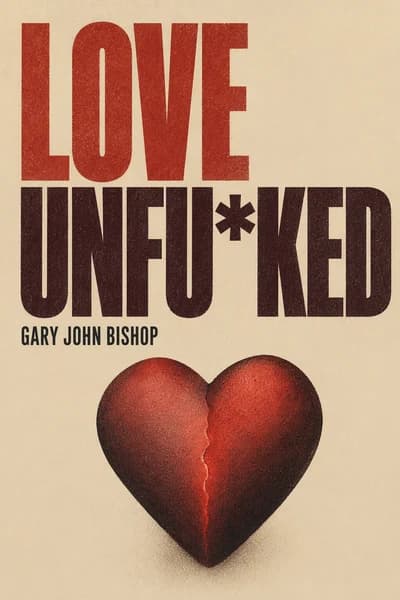
Ever wondered why the fairy tale romance you've been promised never quite materializes? You're not alone. Gary John Bishop's "Love Unfucked" has become a phenomenon precisely because it dares to say what most relationship books don't: you don't know shit about having an authentically great relationship. This raw, unfiltered guide has found its way onto the bookshelves of celebrities like Dax Shepard and Kristen Bell, who've publicly praised its no-nonsense approach. Unlike traditional relationship books that dominate bestseller lists with communication tips and personality tests, Bishop's work has cultivated a devoted following for its brutal honesty. The Scottish author's distinctive "urban philosophy" cuts through the noise of an oversaturated self-help market, offering something refreshingly different: the truth about why your relationships keep failing-and it starts with you.
Глава 2
The Relationship Paradigm: Everything is Connected
Your entire life functions through relationships. From your parents to your spouse, your boss to your friends, even your relationship with inanimate objects-you have relationships with everything you're conscious of. Even relationships defined by absence, like with an ex you haven't spoken to in years, remain relationships that affect you. The quality of these connections directly dictates the quality of your life.
When your relationships thrive, you thrive. When they struggle, you struggle. This isn't just true for romantic relationships but applies to every interaction in your life. Your ability to empower yourself in all these situations becomes the key to your success. If you've been telling yourself the story that you're "just not good at relationships," you've already set yourself up for failure.
Most relationship advice focuses on communication techniques, personality compatibility, or healing past traumas. But Bishop takes a fundamentally different approach by examining how you do relationships, why yours have a certain predictable flavor, how that plays out, and how you can completely reinvent your approach.
This requires complete surrender to something other than your usual patterns. No tentative toe-dipping-this demands a full dive into examining your contribution to relationship dysfunction. You simply cannot have something new if you remain committed to old patterns. When resistance inevitably arises-and it will-you must handle yourself rather than blame external circumstances.
The foundation of relationship transformation begins with a simple but profound realization: your relationships are a mirror reflecting your internal state. They reveal your fears, insecurities, and unresolved issues. Until you're willing to look unflinchingly at that reflection, you'll continue repeating the same patterns with different people, wondering why the results never change.
Глава 3
The Uncomfortable Truth: Your Relationship Doesn't Work
Your only hope of improving relationships starts with acknowledging that your current one doesn't work. Many of us are like someone with a leaky tire who keeps adding air instead of fixing the actual problem. We settle for "making it work" while it slowly deflates. As Kierkegaard wisely observed, "People settle for a level of despair they can tolerate and call it happiness."
Whether settling for loneliness or an anxiety-filled relationship, we build these accommodations into our lives without truly addressing them. In Dostoevsky's words, "Lying to ourselves is more deeply ingrained than lying to others." We tell ourselves it's working when it's not, and eventually the pretense becomes so ingrained we mistake it for reality.
When I began telling myself the truth-the starting point for any transformation-I wanted a relationship unlike my parents'. But my approach was fundamentally flawed. Whether you're trying to avoid your parents' relationship or recreate it, both strategies fail miserably. Using a failed model as your foundation or holding yourself to some iconic ideal creates unbearable pressure.
Your partner can never be your mom, dad, or ex, no matter how much you try to make them that. A lifetime of denying someone space to be themselves-through "helping" or "saving" them-will never work. With partners engaged in self-destructive behaviors, you must make a clear choice: in or out. By choosing "in," you surrender your right to complain.
Your life consists of a constant stream of personal choices, even when options seem limited. The moment you recognize this truth, you begin reclaiming your power in relationships. The discomfort you feel reading this likely stems from confronting the possibility that you've been complicit in your relationship's dysfunction-perhaps even its primary architect.
Глава 4
The Identity Relationship: The Subconscious Match
We enter relationships hoping someone will fix our issues-that unfillable hole of inadequacy we all carry. This cycle of self-sabotage keeps us stuck in familiar patterns. We're unconsciously attracted to people who seem to possess what we lack, while they're doing the same with us-a "match made in subconscious heaven" that often becomes "real-life hell."
This "identity relationship" is what most commonly draws people together. It's not that they complete you; they temporarily fix you. But they also become the perfect foil for unresolved childhood issues. We get into relationships as a solution, but this myopic strategy eventually becomes our biggest problem.
Think about your current or past relationships. What initially attracted you? Often, it's qualities we believe we lack-confidence, spontaneity, stability, or emotional openness. Your partner's strengths temporarily patch your perceived weaknesses, creating an intoxicating sense of wholeness. But this arrangement contains the seeds of its own destruction.
As the relationship progresses, the very qualities that attracted you become sources of conflict. Their confidence now feels like arrogance. Their spontaneity seems like irresponsibility. Their emotional openness appears as neediness. What's happening? The relationship is exposing your unresolved issues rather than fixing them.
The real issue isn't that your relationship is broken, but that your approach to relationships is fundamentally flawed. Rather than trying to fix something that seemingly doesn't work, you need a completely new approach-not different, not improved, but genuinely new.
To create something truly new, you must examine yourself and your patterns. Your opinions and beliefs about yourself and others form the first barrier to producing something genuinely unique in any area of your life. The uncomfortable truth? You'd rather be right than have love.
Глава 5
The Prison of Belief: Choosing Love Over Rightness
You can change your opinions, but changing what you believe is much harder. Your beliefs form the granite foundation of how you engage with life, and contrary to popular myth, you're not guided by your view-you're imprisoned by it. You'll fight tooth and nail for your beliefs, even when they're destroying your relationships.
Your addiction to being right can be the biggest wrecking ball to what you want. When it comes to relationships, you'd rather have your view over having love. In relationship problems, either you believe you're right, or they believe they're right-and that belief anchors all the dysfunction.
You'll convince yourself you're fine or better off, gathering evidence to support your actions, but deep down, you're not okay and this needs to change. The problem is you-you're not "up to" love in your relationship. We've become obsessed with compatibility, looking for people who make us feel better rather than working on ourselves.
We cut away anything that causes discomfort until our world becomes smaller and smaller. Instead of making your surroundings smaller so you can cope, you need to grow bigger, more flexible, and more adventurous. Independent people often try to solve relationship issues alone-a fundamentally flawed strategy.
Whether you live alone or with someone, you always have a relationship to relationships. You change yourself to change yourself, not to change others. Your partner will never fix your issues and insecurities-only you can do that.
If you feel you're doing all the loving in your relationship without reciprocation, remember that love is an expression, not a transaction. When you married or committed, you chose to love this person. If you now need something from your partner that they're unwilling or unable to provide, you must either accept their brand of expression or make a change.
Take responsibility for your experience-when you generate your own experience of being alive, there are always solutions; when you put that on someone else, there are always problems. You bring both your best and worst to relationships, including fears and manipulative tactics. Don't get distracted by focusing on your partner's flaws. This work is about you.
Глава 6
The Self-Management Contract: Your First Relationship Priority
When starting relationships, we focus on the other person being "the one" while ignoring the elephant in the room-ourselves. We completely overlook how we'll manage our own destructive traits, hooks, triggers, and self-sabotaging behaviors. The first step is awareness-recognizing your personal patterns that cause relationship problems.
Most of us explain our behavior rather than examining it, insisting our observations are truth without questioning ourselves. We focus on changing our partners instead of managing ourselves, creating hypocrisy when we refuse to acknowledge our own bullshit while pointing out theirs.
The critical question you must answer is: "Am I willing to diligently manage myself and my commitments?" This means being disposed to conscientiously and persistently monitor your behavior-not perfectly, but reliably. When you fall into destructive habits, can you clean up your messes, apologize, and correct course? Or are you more interested in being right?
The more you let negative habits run wild, the stronger they become and harder they are to break. Your relationships demand constant attention, like a garden that needs tending. Without this self-management agreement, you're not even authentically at the negotiating table with another person.
Think about your typical reactions when triggered. Do you withdraw into silence? Explode in anger? Become passive-aggressive? These patterns didn't develop overnight, and they won't disappear overnight either. Self-management means catching yourself in these moments and choosing a different response.
This isn't about perfection-you'll still mess up. The difference is that when you do, you take full responsibility without excuses or blame. You apologize sincerely, make amends where possible, and commit to doing better next time. This process requires tremendous humility and courage, qualities that strengthen with practice.
Without this foundational agreement with yourself, all other relationship advice becomes meaningless. You can learn all the communication techniques in the world, but if you're not committed to managing your own reactivity, they'll fly out the window the moment you feel threatened.
Глава 7
The Truth Beyond Feelings: Reclaiming the Power of Words
What is your relationship based on right now? Whatever foundation you believe it rests on-trust, faith, love-ultimately comes down to relying on someone's word. When their actions match their words, your confidence soars; when they deviate, you become unsettled.
But here's the problem: while you rely on what they say and do, they're ultimately relying on how they feel in the moment-and vice versa. This shift in how we approach relationships has weakened our connection to the power of language. Your words lack substance when you constantly say things you never do. You are only as strong as the power of your promises. Weak words, weak you. Period.
Arguments are conversations too, and if left unchecked, they become a way of life. Use the 90-10 formula: keep arguing to no more than 10% of your overall conversations with your partner. Even if you generously spend 90 minutes daily in actual conversation, that's a maximum of nine minutes for arguing. Instead of obsessing over stopping arguments, focus on starting the love.
You're a significance machine, constantly adding gravitas to small incidents-they forgot your birthday, haven't said "I love you," seem more interested in something else. This constant meaning-making slowly destroys relationships. The truth is not a feeling, and it remains the truth whether you feel it or not. You don't have to be guided by your feelings; there's a larger truth that can guide your relationships.
Modern relationships have become hostage to emotional states. We make promises when feeling good and break them when feeling bad. This emotional rollercoaster creates instability and erodes trust. What if you honored your commitments regardless of how you felt? What if your word actually meant something?
Imagine telling your partner, "I love you," and having them know with absolute certainty that this statement will remain true tomorrow, next week, and next year-regardless of arguments or challenges. The power in that kind of reliability is transformative. It creates a foundation of security from which authentic intimacy can flourish.
Глава 8
The Empty Vow: Rediscovering Commitment's Power
Nearly every marriage ceremony includes vows that we treat as mere ceremonial words for a magical day, failing to recognize them as a public declaration and life's mission. When I married, I was madly in love but saw vows as just "my bit" in the proceedings-something to get through before moving to the next part.
Yet historically, vows were solemn promises that formed the cornerstone of marriage-your word was your bond, your reputation, your honor. Today, that cornerstone has crumbled; the vow has become an empty tradition, a dead word as useful as "forsooth" or "gadzooks." We've kept the ritual but stripped away its substance, leaving our marriages built on an inauthenticity that explains why we struggle so much with relationships.
Most marriages begin based on hope, connection, and attraction, but eventually become governed by our day-to-day emotional states rather than our promises. We haven't rigorously considered what our marriages are truly founded on, settling for "getting along" or "making it work"-a bar so low that mundane victories feel like tremendous relief.
When marriages fail, we blame communication problems or "falling out of love," but people don't fall out of love-it degrades from lack of use. Even unmarried committed relationships operate on implied contracts and unspoken expectations about exclusivity, attention, and care.
The challenge is to consciously determine what you want your marriage to be about, write it down if necessary, and then actually live by that commitment rather than drifting through on autopilot. When we live by feelings rather than vows, relationships devolve into power struggles where being right becomes more important than being connected.
How much simpler relationships would be if we returned to our vows: "I promised to cherish her, so that's what I'm going to do-regardless of how I feel." Living this way would revolutionize your relationship by eliminating the weighing of pros and cons or seeking advice from friends. You can live that way.
This doesn't mean blindly staying in unhealthy situations. Rather, it means approaching relationship challenges from the foundation of your commitments rather than your fluctuating emotions. When difficulties arise-and they will-you ask yourself, "What would honoring my commitment look like in this situation?" rather than "How do I feel about this?"
Глава 9
Values in Action: The Three-Party Relationship
What guides your life? What internal influence keeps you within boundaries, distinguishing right from wrong? Most people point to their upbringing-either reflecting or reacting against childhood rules. But what are your actual values? Before automatically answering "faith" or "family," examine the reality of your life.
Most people aren't truly guided by their stated values, instead being "blown around by life" and surrendering to whatever "deviant wind gusts our way." Yet we can be guided; we do have a say in our direction. While philosophers debate whether values are inherited or invented, the reality is most people don't consistently live by their professed values.
The values that guide our relationships often conflict with our actions. Some philosophers argue we can consciously establish new values rather than hypnotically following conditioned ones, but this requires significant effort. The problem isn't just having values but making them commitments-living, breathing statements of who we are.
To identify your relationship values, set aside your current situation and explore what you believe is critical to a great relationship. Consider elements like love, connection, loyalty, adventure, inspiration, mystery, or romance. Write down one-word values and imagine how your relationship would look if these were foundational.
Many people mistakenly focus on values they want from their partner (loyalty, honesty, communication) rather than what they themselves will bring. Trust should be fundamental, not a value to introduce-if it's broken, address it immediately through exhaustive conversation until the issue is completely resolved.
The traditional view of relationships as 50/50 partnerships is fundamentally flawed because it creates a scorekeeping dynamic where you're constantly checking who owes whom, preventing you from being fully present. The revolutionary alternative is taking full ownership of the relationship.
There are three distinct parties in any relationship: you, your partner, and the relationship itself. Your partner is responsible for their own happiness and fulfillment-it's not your job to make them happy. You should focus on improving yourself, particularly managing your worst moments.
The relationship is what demands most of your effort and attention-this is where you consistently demonstrate your values. Every action-dates, daily interactions, vacations, gifts, chores-should serve to deepen your connection. When you focus on the quality of connection rather than scorekeeping, the relationship thrives.
Глава 10
Boundaries and Deal Breakers: Protecting Your Core Values
Having relationship values is meaningless without genuine commitment. Like New Year's resolutions, initial enthusiasm for relationship values will fade without something deeper to sustain them when challenges arise. You need personal investment-"skin in the game"-to keep from reverting to blame when difficulties emerge.
Relationships aren't battles but dances requiring finesse rather than brute force. The crucial insight is that you're not dancing with another person but with yourself. Like ballroom dancers who must focus on their own performance regardless of their partner's mistakes, you can only control your own steps. Stop seeking control over what others do or say.
This doesn't mean accepting everything without boundaries. Deal breakers-situations that might cause you to reconsider continuing a relationship-are critical but under-discussed aspects of relationships. This doesn't contradict making commitments; rather, it acknowledges that certain behaviors might require reassessing those agreements.
Physical violence is a clear deal breaker for most people. Regardless of explanations or circumstances, once physical violence occurs, you're in "it's over" territory-yet many people stay even when their safety is threatened. The impact never truly disappears, even if it happened only once.
Similarly, stealing from a partner-whether money or possessions-crosses from simple disagreement into questioning the entire relationship. While previous sections focused on personal responsibility, this doesn't mean partners get free rein to behave however they want. Everyone needs clear boundaries and integrity about where they stand.
Rather than viewing deal breakers as binary yes/no decisions, consider them as points on a spectrum that activate once trust is broken. Setting deal breakers means defining the boundaries of your relationship field-letting your partner know that once certain lines are crossed, you might stop playing altogether.
These boundaries can't be mysteries or ambiguous; they must be clearly communicated early in the relationship. If you're uncomfortable having these difficult conversations, you're not ready for a relationship. When deal breakers occur, give yourself time to think, process and evaluate before making decisions, understanding that regardless of choice, everything changes afterward.
Глава 11
Honorable Endings: Breaking Up with Integrity
While it may seem counterintuitive to discuss breakups in a relationship book, understanding how to end relationships properly is crucial-like learning emergency procedures on an airplane. Statistically, relationships are more likely to end than planes are to crash, yet we prepare for one and wing the other. Learning proper breakup skills isn't about wanting to break up, but about knowing how to survive if it happens.
Most breakups are framed around blame, typically directed at the other person. We cite their failures-lack of affection, dishonesty, infidelity-but in doing so, we often abandon the person we promised to be at the relationship's start. Marriage vows commit us to loving and cherishing through sickness and health, but when relationships deteriorate, these commitments transform into spite and hurt.
Instead of supporting our partners, we focus on taking as much as possible, whether emotional wounds or material possessions. Yet it doesn't have to be this way. You can stay true to your values and who you are, even during a breakup, allowing you to move forward without having to completely rebuild yourself.
Being true to your values means becoming an honorable person. Honor isn't some lofty medieval concept-it simply means aligning your actions with your words, even when circumstances or emotions make it difficult. This doesn't mean staying in a relationship that isn't working just to keep your word-that would be living in pretense, which has no honor.
Instead, honor means treating what you say as significant and acting accordingly, whether that means bravely ending a relationship or working through its challenges. Being honorable doesn't make you perfect, but it calls you to be someone greater than ordinary, to express yourself authentically and love openly.
Глава 12
Embracing the Journey: Love as Continuous Creation
Rather than offering false inspiration, relationships ground you in reality. Relationships, like your favorite coffee shop, come with predictable challenges. At coffee shops, you accept long lines or occasional wrong orders as part of the experience. Yet in relationships, you resist when things don't go your way, collecting grievances like a squirrel hoarding for winter. This resistance prevents you from creating and exploring your relationship as you once did.
Relationships are fundamentally about continuous creation. All of life consists of relationships, and their quality determines your life quality. You control your own triggers and can free yourself from emotional hooks to create great relationships.
As the architect of your relationship, you must shift from focusing on "me" to championing "us"-though not at the expense of completely losing yourself. Your commitments should guide your actions even when emotions suggest otherwise. Show up authentically with nothing to hide, giving your full effort as if your happiness depends on it-because it does.
Create each day from values that inspire you, and if they no longer do, create new ones! A truly loving relationship is absolutely possible when you allow yourself to be guided by commitments rather than fleeting emotions. Love the struggle even when it is difficult-it's worth it in the end. Live extraordinarily, holding nothing back.
The path to extraordinary love isn't found in avoiding difficulties but in embracing them as opportunities for growth. Every challenge presents a choice: retreat into familiar patterns or step forward into new possibilities. When you choose the latter consistently, you create a relationship that transcends the ordinary-one that becomes a source of strength rather than strain, joy rather than obligation, and growth rather than limitation.