Discover the art of presence in "Living Presence" - where ancient Sufi wisdom meets modern mindfulness. Named among the "500 Most Influential Muslims," Helminski bridges spiritual traditions with practical guidance that resonates with Buddhists and scientists alike. What hidden self awaits your awakening?
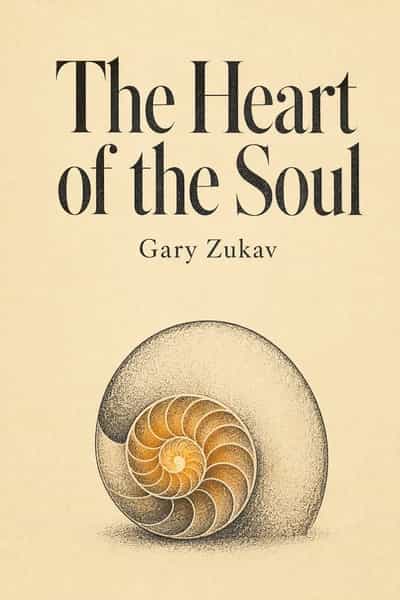
Kabir Edmund Helminski, author of Living Presence: The Sufi Path to Mindfulness and the Essential Self, is a renowned Sufi teacher, translator, and spiritual activist recognized for bridging Islamic mysticism with contemporary psychology.
A shaikh in the Mevlevi Order rooted in Rumi’s teachings, Helminski co-founded the Threshold Society to make Sufism accessible globally. His work explores mindfulness, spiritual transformation, and holistic well-being, informed by decades of practice and scholarship. He has authored seminal works like The Knowing Heart: A Sufi Path of Transformation and The Mysterion: Rumi and the Secret of Becoming Fully Human, translated into over 12 languages.
A frequent contributor to the Huffington Post and Times of India, Helminski was named among the “500 Most Influential Muslims” by Georgetown University. Living Presence, first published in 1992, remains a cornerstone of Sufi literature, reissued in 2017 as a 25th-anniversary edition.
His translations of Rumi’s poetry, including The Rumi Collection and The Pocket Rumi, have popularized the 13th-century mystic’s wisdom worldwide. Over 300,000 copies of his works circulate internationally, with teachings integrated into interfaith dialogues and mindfulness programs.
Living Presence explores cultivating mindfulness through Sufi teachings, blending ancient wisdom with modern psychology to help readers connect deeply with themselves and others. The book outlines practices like breathwork, gratitude, and forgiveness to achieve presence—a state of conscious awareness that fosters spiritual growth and emotional resilience. Revised for its 25th anniversary, it integrates Rumi’s poetry with actionable steps for daily life.
This book suits seekers of spiritual growth, mindfulness enthusiasts, and readers interested in Sufism or Rumi’s teachings. It’s ideal for those navigating life transitions, seeking inner peace, or wanting to deepen their understanding of Islamic mysticism. Helminski’s accessible approach makes it valuable for both newcomers and seasoned practitioners of contemplative traditions.
Yes—it’s a timeless guide praised for bridging Sufi spirituality with practical mindfulness. Readers gain tools for emotional resilience, self-awareness, and fostering love/forgiveness. The revised edition updates insights while retaining core teachings, making it relevant for modern challenges. Helminski’s authority as a Mevlevi Order Shaikh and Rumi translator adds depth.
Key ideas include:
Helminski draws extensively on Rumi’s poetry to illustrate Sufi principles like divine connection and transformative love. The book interprets Rumi’s metaphors (e.g., “the Guest House”) as frameworks for embracing life’s challenges mindfully. This fusion of poetic wisdom and practical exercises distinguishes it from purely academic analyses.
The book offers:
The “Essential Self” refers to the unchanging core of consciousness beyond ego-driven thoughts. Helminski describes it as the source of wisdom and authenticity, accessible through presence. Practices like meditation and gratitude help readers align with this inner truth, fostering resilience against external chaos.
Some readers may find its Sufi-specific terminology challenging without prior knowledge. Others might desire more structured daily routines beyond philosophical insights. However, the revised edition addresses these by clarifying concepts and adding contemporary psychological context.
While both focus on Sufi spirituality, Living Presence emphasizes mindfulness techniques, whereas The Knowing Heart delves into heart-centered wisdom for ethical living. Together, they provide complementary paths—presence as foundational awareness and the heart as a moral compass.
Yes—its mindfulness exercises reduce overthinking by anchoring attention in the present. Chapters on forgiveness and love offer frameworks to reframe stressful relationships. The book’s emphasis on “gathering the fragmented self” helps readers manage overwhelm through integrated awareness.
Amid rising digital distractions and societal polarization, the book’s tools for cultivating presence and empathy remain vital. Its updated edition references modern psychological research, reinforcing timeless Sufi principles with neuroscience-backed insights on attention and resilience.
Почувствуйте книгу через голос автора
Превратите знания в увлекательные, богатые примерами идеи
Захватите ключевые идеи мгновенно для быстрого обучения
Наслаждайтесь книгой в весёлой и увлекательной форме
Our attention defines who we are at any given moment.
We must work to become truly human.
Life's infinite cosmic energy can be tapped; our only limitation is awareness.
Presence shapes how we occupy space.
Realization means making something real in oneself.
Разбейте ключевые идеи Living Presence на понятные тезисы, чтобы понять, как инновационные команды создают, сотрудничают и растут.
Погрузитесь в Living Presence через яркие истории, превращающие уроки инноваций в запоминающиеся и применимые моменты.
Задавайте любые вопросы, выбирайте свой стиль обучения и создавайте идеи, которые действительно вам подходят.

Создано выпускниками Колумбийского университета в Сан-Франциско
"Instead of endless scrolling, I just hit play on BeFreed. It saves me so much time."
"I never knew where to start with nonfiction—BeFreed’s book lists turned into podcasts gave me a clear path."
"Perfect balance between learning and entertainment. Finished ‘Thinking, Fast and Slow’ on my commute this week."
"Crazy how much I learned while walking the dog. BeFreed = small habits → big gains."
"Reading used to feel like a chore. Now it’s just part of my lifestyle."
"Feels effortless compared to reading. I’ve finished 6 books this month already."
"BeFreed turned my guilty doomscrolling into something that feels productive and inspiring."
"BeFreed turned my commute into learning time. 20-min podcasts are perfect for finishing books I never had time for."
"BeFreed replaced my podcast queue. Imagine Spotify for books — that’s it. 🙌"
"It is great for me to learn something from the book without reading it."
"The themed book list podcasts help me connect ideas across authors—like a guided audio journey."
"Makes me feel smarter every time before going to work"
Создано выпускниками Колумбийского университета в Сан-Франциско

Получите резюме книги «Living Presence» в формате PDF или EPUB бесплатно. Распечатайте или читайте офлайн в любое время.
Imagine living in a city shrouded in perpetual darkness, moving like a shadow among others, disconnected and afraid. This is our ordinary state of consciousness - separated from our deeper selves and the sacred dimension of life. Yet beyond this metaphorical city lies another possibility: a state of presence where the ordinary transforms into the extraordinary. This is the revolutionary proposition at the heart of "Living Presence" - that through conscious, moment-to-moment awareness, we can awaken to the divine reality constantly surrounding us that we've forgotten how to perceive. Presence shapes everything: how we occupy space, our self-image, emotional tone, and whether we scatter or direct our energy. Unlike conventional education that merely transfers information, spiritual education awakens the soul through practices that have existed throughout history. This "Great Work" activates our latent human faculties, many of which have atrophied in our technological culture where means have dangerously outstripped understanding of purpose. What makes us truly human isn't guaranteed by our species but exists as potential - we must work to become fully human. Like a finely tuned instrument, our consciousness can produce either harmony or discord depending on its refinement and alignment with higher principles. Beyond our familiar faculties lie subtle capacities: volitional (deep intentionality), psychic (sensitivity to subtle energies), intuitive (direct knowing), magnetic (personal presence), and ecological (connection with all life). With these functioning harmoniously, we would experience intimate relationship with the Source of Life, much as a clear mirror perfectly reflects light.
Our attention defines who we are at any given moment. Whether focused on roses or thorns, success or failure, our consciousness becomes what it attends to. This transformative power requires balancing outer and inner worlds, material and spiritual realms. The ego's attention flutters like a butterfly between likes and dislikes, while the awakened self directs attention voluntarily, like a steady flame illuminating without flickering. By observing how our attention gets caught in mental loops and emotional triggers, we gradually weaken the ego's hold. We began living as if separate and in danger, constructing a false self we've defended ever since. This self exists primarily in our thoughts, generated by fear and resulting desires, coming between us and reality. When divorced from the heart, it loses contact with Being. Our capacity for voluntary attention is naturally limited, like a muscle that tires. However, when centered in our essential nature, attention flows more readily from a place outside time. Through conscious physical work without identification, we generate finer energy that sustains free attention - the soul's transformative power. Freedom comes through loving but objective observation. We must see ourselves differently than our habitual way, with an impartiality that breaks our fixation on the false ego. This new quality of seeing uses the eyes of the heart, with light concentrated through authentic teaching and spiritual community.
Our essential Self exists on a spectrum - from the artificial self-construct of those without self-knowledge to the natural Self reflecting Spirit's attributes of conscious choice, unconditional love, and creativity. This spectrum ranges from the reactive personality driven by conditioning, through the awakening and conscious self, to the realized self living in harmony with Spirit. This realization occurs through three processes: deconditioning (releasing limiting beliefs), reconditioning (cultivating virtues), and unconditioning (developing receptivity to higher influences). The Work requires practical application in daily life and constant self-observation - not merely believing or theorizing. If asked about your soul, what image emerges? Looking deeply, we may experience ourselves as simple, unqualified presence behind thoughts, emotions, and behaviors. Sufism recognizes three human aspects: self (personal identity including thoughts and emotions), heart (deeper inner knowing with compassion), and spirit (our inmost consciousness reflecting the divine). Soul quality emerges from the relationship between self and spirit. Self without spirit's presence is merely ego, the false mask governed by self-centered thoughts. The more self becomes infused with spirit through presence and remembrance, the more soulful we become. Care of the soul means bringing loving attention to our problems, conflicts, and longings. Rather than avoiding emotional suffering, we attend to it. We learn to read our life as a story - and if our story has been a melodrama or tragedy, we must rewrite it.
The experience of one's own "I" varies greatly - for some it's alienation, for others communion with Life. Spiritual attainment transforms this "I" from a separate, limited identity into an infinite one, moving from separation to union. The first step is observing our fragmentation. We scatter ourselves when yielding to every impulse, reducing our identity to momentary reactions. Our attention shifts constantly between likes, dislikes, and preoccupations with little abiding presence. Without will directing our attention, we are not fully human. Integration requires extending awareness to thinking, feeling, and sensing simultaneously rather than being absorbed in just one. The gathering process follows two currents: gathering inwardly to our essential core through meditation, then carrying that collectedness into purposeful action. "The religion of Love is like no other," declared Rumi - not advocating a new religion but pointing to an awakening of divine Love transcending all religious forms. Established religions often default to something unlike their original prophetic impulse. The religion of love has no particular outer form, yet those with a "taste" for it recognize it regardless. While religion should be the remedy, it sometimes becomes the illness when fear replaces love, turning the God of mercy into idols of judgment. Fear-based religion is mind control, not spirituality. In the religion of love, the ego isn't destroyed but transformed into the heart's servant.
Every human is either perfecting or degrading their soul, though most remain unaware of this significance while pursuing cravings or avoiding suffering. Our task is not to judge others but to examine our own purpose and authenticity. Soul perfection comes through objective intelligence and unconditional Love, while degradation results from truth-distorting egoism. The key difference is how much conscience - a Divine attribute inherent in humans - operates within us, often veiled by societal egoism. Our soul's freedom depends on awareness that we exist at the intersection of multiple worlds. Higher worlds have fewer laws and greater freedom. The more conscious we become, the less constrained we are by compulsions and external forces. True freedom comes from making our home in consciousness, regardless of circumstances. Love is not the goal but the cause of everything. Spirit - a single cosmic energy - manifests at all levels of existence as love. The energies of our inner life form a spectrum from sexual to spiritual, all expressions of one fundamental energy. Every creative act is an act of love, beginning with the Absolute Creator. The human who loves is the human who truly lives. In our fragmented world of distraction and disconnection, the path of presence offers both personal transformation and hope for our shared humanity. By awakening to the present moment, we become living mirrors of the divine qualities that are our birthright.