Глава 1
The New LinkedIn Playbook: Revolutionizing Your Career Search
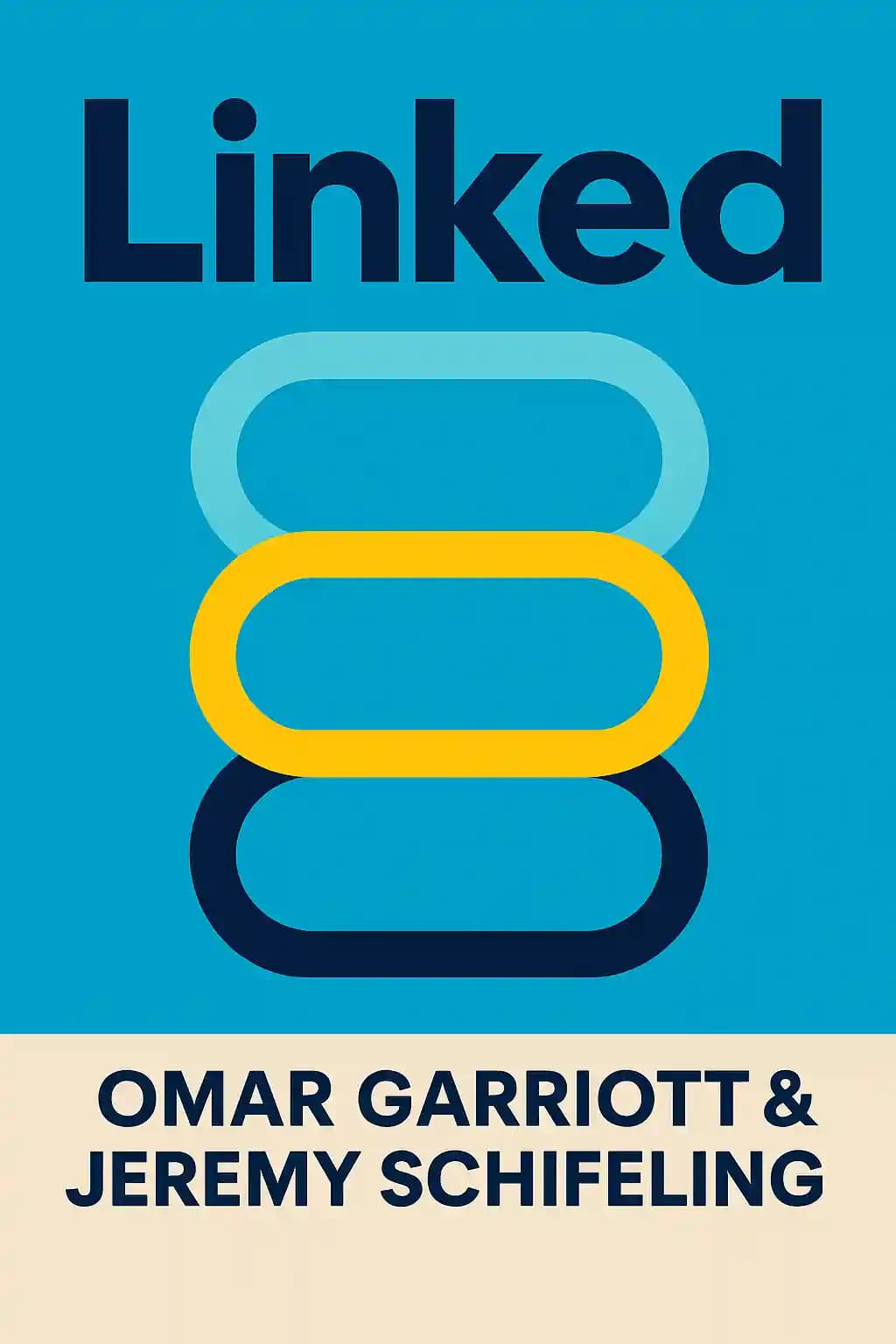
In a world where job hunting feels increasingly like shouting into the void, "Linked" offers a refreshing revelation: you're not powerless in the modern job market. Written by Omar Garriott and Jeremy Schifeling, former LinkedIn insiders who led the platform's college and new grad marketing, this book has become a sensation among career coaches and job seekers alike. Even Shark Tank's Mark Cuban calls it "the ultimate guide to the most important professional platform." What makes this book particularly valuable is its insider perspective-the authors aren't just career experts; they've literally helped build the very tools most recruiters now use to find talent. Their approach has helped thousands of professionals across industries land their dream jobs without ever submitting a traditional application. Whether you're just starting your career or pivoting after decades of experience, this book reveals the hidden rules of the modern job search game-and how to win it.
Глава 2
Why Traditional Job Hunting Fails in Today's Market
The job search landscape has fundamentally transformed, yet most candidates remain stuck in outdated methods. Today's hiring reality is starkly different from what previous generations experienced. With over 70% of American employees actively seeking new positions and 40% ready to quit, we're experiencing unprecedented job dissatisfaction, particularly among younger workers who may hold 20-40 jobs in their lifetimes.
Why is this happening? Several factors have converged: globalization has increased competition, automation has eliminated traditional roles, wages have stagnated while costs rise, attitudes about work purpose have evolved dramatically, and pandemic disruptions have permanently altered workplace expectations.
Meanwhile, employers now wield unprecedented power through technology. Rather than reviewing unsolicited resumes, recruiters proactively search for exact matches to their requirements. When resumes are reviewed, they typically receive just six seconds of attention. The average corporate job posting attracts 250 applications, with recruiters needing to reject 249 candidates while juggling 30-40 open positions simultaneously.
This mathematical reality shapes how recruiters approach candidate evaluation. They must say "no" quickly and often, rejecting candidates for even minor issues like spelling errors or unclear experience. They're inherently risk-averse, preferring "Obvious Candidates" who clearly demonstrate they can do the job. And they rely heavily on technology to filter candidates efficiently rather than manually reviewing hundreds of applications.
The result? Underemployment has become a persistent problem, with over 40% of new graduates taking jobs that don't require degrees-a situation that often persists for a decade. Despite some sectors seeing wage increases during the "Great Resignation," overall job satisfaction remains dismally low.
Глава 3
Your Personal Brand: No Longer Optional
Your online presence isn't a luxury anymore-it's essential. Nearly half of employers (47%) are less likely to interview candidates they can't find online, with 20% explicitly expecting an online presence. When researching candidates, employers seek a "professional online persona" that confirms job fit and includes recommendations.
A staggering 93% of recruiters check candidates' social profiles, primarily on LinkedIn. Building your brand means weaving a compelling story, carving out your niche, creating a custom LinkedIn URL, completing your profile with strong keywords, and showing rather than telling through original content.
The old adage "it's not what you know, it's who you know" has evolved-it's now about who your connections know. With 500+ LinkedIn connections, you're just one degree removed from millions of potential opportunities. These "weak ties" (connections of connections) account for an estimated 80% of jobs found.
LinkedIn has become "The Great Opportunity Democratizer," breaking down barriers regardless of background or education. Despite some job seekers viewing networking negatively, it's how most positions are filled. Even at top business schools, 80% of students now find jobs through networking rather than traditional recruiting. Referrals dramatically increase your chances-while referred candidates make up only 7% of applicants, they account for 40% of new hires.
Глава 4
LinkedIn: The New Center of Hiring Gravity
LinkedIn has become the dominant platform for job seeking and hiring, with nearly a billion members and 50 million corporate clients. Recruiters pay thousands per user annually for LinkedIn Recruiter, making it the company's primary revenue source.
The platform's business model is ingenious: provide job seekers a place to network and post professional details, then charge recruiters premium prices to find them. LinkedIn functions as a "resume-PLUS"-your resume combined with a human narrative connecting your experiences, skills, passions, and aspirations.
Modern job applications face enormous competition-Google receives 3 million applications yearly for just 7,000 openings. Over 70% of resumes are first screened by AI systems before reaching human eyes, with 95% of Fortune 500 companies using Applicant Tracking Systems.
These algorithms aren't superintelligent-they're more like basic calculators scanning for keywords to determine if you're worth human consideration. The greater challenge comes after passing these algorithmic gates, when actual humans review your materials. Unlike predictable algorithms, human decision-making is fuzzy and susceptible to biases, with many recruiters unable to articulate exactly why they chose one candidate over another.
Глава 5
The Five-Step Framework for Modern Job Search Success
To navigate this complex landscape, the authors introduce a comprehensive five-step framework that transforms how you approach job searching:
1. Exploring: Get focused on what you actually want to do by understanding your options and testing them through conversations with real people in desired roles.
2. Positioning: Optimize your LinkedIn profile to be discoverable by recruiters searching for candidates with your skills and experience.
3. Searching: Strategically find and apply to opportunities using techniques that maximize your chances of getting interviews.
4. Networking: Build relationships that can lead to referrals-the single most powerful advantage in your job search arsenal.
5. Researching: Thoroughly investigate companies, industries, and people to prepare for interviews and ensure the job is right for you.
This framework requires adopting a mindset of "Positivity, Proactivity, and Possibility"-believing that you have significant agency in shaping your professional future despite inevitable obstacles. Success typically comes from hard work, circumstance, ingenuity, and learning from failures-not overnight breakthroughs.
The job search framework should be viewed as fluid and iterative rather than strictly sequential, applying not just to your next job but to the many positions you'll hold throughout your career. Professional paths are rarely straight lines but rather series of mini-pivots that sometimes require lateral moves or even steps backward.
Глава 6
Exploring: Finding Your Career North Star
The hardest part of any job search is getting started. While it might feel productive to fire off resumes or click "Easy Apply" buttons, these actions won't yield results unless they're focused. You need a laser-guided approach, not a bazooka. The fundamental question is: What kind of job would you actually love?
To avoid tunnel vision on specific career paths you've heard about, you must explore the trails others have blazed before you. The LinkedIn Alumni Tool-perhaps the platform's best-kept secret-shows the paths of every alum at virtually every school in the world. These alumni have been in your shoes, studied what you've studied, and landed opportunities across various fields.
By selecting specific locations, fields of study, or occupational filters in the Alumni Tool, you can narrow down hundreds of thousands of alumni to just those most relevant to your interests. The tool dynamically updates to show only the companies hiring alums in your desired area, creating a custom-tailored directory of potential organizations.
For those without four-year degrees (two in three Americans), LinkedIn still offers powerful options. The Alumni Tool works for almost any school worldwide, including vocational programs and high schools. Additionally, LinkedIn's company pages allow you to explore different roles within organizations by clicking the "People" tab, revealing career paths and required skills.
After discovering potential career paths, it's crucial to test them through conversations with real people. Rather than simply following others with similar backgrounds, speak with alumni in your desired roles to understand the daily reality of the job. When reaching out, emphasize your shared affiliation, offer flattery, respect their time, and ask insightful questions about their career journey, daily responsibilities, and what they love or find frustrating about their work.
Andrew Kung's story demonstrates how career exploration can transform dreams into reality. Despite having a prestigious job at LinkedIn, Andrew felt unfulfilled because his true passion was photography. Instead of indefinitely deferring his dreams, he reached out to professional photographers through LinkedIn connections, learning that his aspirations were achievable. He transferred to LinkedIn's NYC office, built up part-time photography gigs, and eventually left corporate life entirely to pursue his passion. Within years, he was shooting for major brands like Beats by Dre and HBO, with his work featured in the New York Times and Vogue.
Глава 7
Positioning: Thinking Like a Recruiter
After gaining career clarity through exploration, the next crucial step is positioning yourself effectively for recruiters, who ultimately control your career fate. Understanding how recruiters think and use LinkedIn is essential for optimizing your profile to get discovered by this critical audience.
LinkedIn's premium Recruiter tool, which costs organizations about $10,000 annually, is the primary platform recruiters use to filter candidates. Recruiters typically begin searches with just two criteria: job title and location. A search for "Project Manager in Chicago" might yield 130,000+ results, but only those appearing on the first two pages matter.
The pattern among top results reveals LinkedIn's search algorithm prioritizes the Headline (the 120-character text beneath your name) above all other profile elements. Include your desired job title clearly in your Headline-even if you're aspiring to the role rather than currently in it. Qualifiers like "Aspiring" or "Future" don't affect the algorithm's keyword recognition.
Location remains a critical filter for recruiters, even in the age of remote work. List your profile location as where you want to work next, not necessarily where you currently live. Being filtered out by location is one of the quickest ways to miss opportunities.
Activating LinkedIn's "Open to Work" feature is like shining the Bat Signal for recruiters. You can choose to broadcast your job search publicly with a photo frame visible to all LinkedIn members, or limit visibility to recruiters only for a more discreet search.
Building a large network on LinkedIn significantly increases your visibility to recruiters who often filter candidates by company connections. The power lies in "weak ties"-distant connections who can introduce you to new opportunities outside your immediate network. Import your email and phone contacts to quickly build hundreds of connections, giving recruiters more reasons to contact you through shared connections.
Following companies on LinkedIn signals your interest to recruiters who are selective with their limited InMail messages. When faced with thousands of qualified candidates but only thirty monthly messages, recruiters often prioritize those who follow their company.
Your LinkedIn profile photo dramatically increases your visibility-candidates with photos are fourteen times more likely to be viewed. For maximum impact, study the profile photos of people in your target role to match their dress style, display a genuine "Duchenne Smile" with crinkled eyes and upturned mouth corners, and crop your photo tightly around your head and shoulders.
Your LinkedIn About section is critical for both recruiters and algorithms. Structure it in four parts: First, craft an opening 330 characters that tell your professional story with key job titles and skills; second, list your three most relevant experiences with measurable impact; third, include a "Specialties" line packed with keywords relevant to your target role; and finally, add your email to make it easy for recruiters to contact you outside LinkedIn's InMail system.
Глава 8
Searching: Finding Your Next Opportunity
After optimizing your LinkedIn profile for defense-ensuring recruiters can find you-it's time to go on offense in your job search. LinkedIn serves as the world's most trustworthy job board, scraping opportunities from across the web while featuring exclusive postings.
Applicant Tracking Systems (ATS) function similarly to LinkedIn's search algorithm-they scan thousands of resumes for keywords to help recruiters filter candidates. The key to success is using LinkedIn's resume template, which is already optimized for ATS scanning with keyword-focused sections rather than fancy formatting.
Rather than applying randomly to jobs, implement a systematic, data-backed approach to your application process. Start by typing your desired job title in LinkedIn's search box and selecting "Jobs." Then click "All Filters" to access advanced search options where you can refine by industry, job function, title, location, and work arrangement.
Timing is everything in job applications. Recruiters give special attention to early applications, being eight times more likely to grant interviews to candidates who apply within the first 96 hours of a posting. Like eager children on Christmas morning, recruiters can't wait to review the first applications after finally getting a job posted.
Don't let impostor syndrome hold you back-recruiters typically want candidates who meet only about 50% of listed criteria, as someone meeting all requirements might be overqualified and likely to decline or quickly leave. Rather than putting all eggs in one basket with a 1% chance of success per application, aim for a diversified portfolio of 100+ applications.
Despite conventional wisdom about one-page resumes, recent studies show recruiters actually prefer two-page resumes by a margin of nearly three to one. This preference holds true even for entry-level candidates, so don't hesitate to use that second page if needed to showcase your qualifications effectively.
With only an estimated 26% of recruiters reading cover letters (likely an overcount), follow this practical approach: Skip cover letters for jobs you're not passionate about to apply quickly within that crucial 96-hour window. For dream jobs, write focused cover letters addressing just what recruiters care about-keywords demonstrating your relevant skills with concrete examples, and specific enthusiasm showing genuine interest in the role or company.
Глава 9
Networking: The Ultimate Edge
Networking represents the single most powerful advantage in your job search arsenal. While you've already optimized your profile and application strategy, networking can transform you from an unknown applicant into a referred insider, dramatically increasing your hiring chances.
Referrals represent the ultimate job search advantage, with referred candidates accounting for 40% of hires despite representing less than 10% of applications. This happens because referrals de-risk candidates for employers-companies trust employee recommendations, which is why most organizations guarantee at least a phone screen for any referred candidate.
LinkedIn functions as your dream company's employee directory. Simply search for the company page, click on the number of employees, and you'll have access to a searchable database of potential referrers. The strategy begins with finding your existing connections at target companies.
Start with the lowest-hanging fruit by finding people you already know at your target employer. Apply the 1st-Degree Connection filter in LinkedIn's company search, then reach out directly to these connections. These individuals represent the perfect intersection of people who can help and who want to help.
Second-degree connections exponentially expand your network reach. With just 100 connections who each have 100 connections, you potentially access 10,000 second-degree contacts. The key is finding people at the intersection of "who wants to help" and "who can help." Start by reaching out to your mutual connection first, asking for an introduction to their contact at your target company.
When you lack direct connections, alumni networks provide powerful alternative pathways. Use LinkedIn's School filter to find graduates from your institutions at target companies. Be thorough by selecting all schools and sub-schools you've attended. Further refine your search using the Title filter to find alumni in your desired department or role.
Shared work experience creates another powerful connection pathway. Former colleagues who now work at your target company can be excellent referral sources, often as effective as alumni connections. LinkedIn makes finding these connections simple-use the Past Companies filter after viewing a company's employees.
For those new to the workforce or without traditional educational paths, volunteer experience offers another avenue for meaningful connections. Research shows people often find volunteer work more meaningful than paid work, and over half of recruiters consider volunteer and paid experience equally. Search for your volunteer organization on LinkedIn to find employees at target companies who share your cause.
While agencies and headhunters account for just 5% of hires from 2% of applicants (doubling your odds compared to most channels), they typically focus only on obviously qualified candidates. The solution? Become your own headhunter by directly reaching the hiring manager. After applying for a position, use LinkedIn to identify the team hierarchy and pinpoint the manager or lead for your desired role.
Глава 10
Researching: Sealing the Deal
When interviews result from your networking efforts, thorough research becomes your competitive edge. In a field of similarly qualified candidates, knowledge differentiates winners from runners-up. Successful candidates need three types of knowledge: company, industry, and people.
Beyond demonstrating job-specific skills, you must show versatility and growth potential-employers increasingly seek "future-proof chess pieces" who can adapt as organizational needs evolve. Your research should help you appear as an insider who understands the company's unique culture, strategy and pain points.
Most importantly, you must establish authentic human connections, as hiring decisions often hinge on perceived team fit. The number one mistake candidates make is knowing embarrassingly little about prospective employers-a completely avoidable error with the right research approach.
To thoroughly understand a company, set up LinkedIn Job Alerts for your target company, office location, and specific team. Monitoring these alerts provides insight into company priorities and growth areas-valuable information to reference during interviews. The LinkedIn Company Page is your essential hub for company research, helping you learn company-speak, culture insights, and connect with employees.
To understand an industry, curate your LinkedIn feed by following relevant people and hashtags. The platform prioritizes job postings shared by connections and content shared by multiple connections. Following industry influencers provides unique insights rarely published elsewhere-particularly valuable when preparing for interviews in new sectors.
Reviewing LinkedIn profiles of everyone on your interview panel is absolutely essential preparation. Ask recruiters for interviewer names if not provided, or search by title to identify them. This basic step is frequently overlooked by candidates, yet hiring managers find it maddening when interviewees haven't done this homework.
To excel in interviews, prepare a concise answer to "tell me about yourself"-it starts most interviews, so don't wander. Make strong first impressions by demonstrating competence through purposeful narratives and showing genuine warmth. Avoid generic responses by incorporating concrete examples in "Problem-Action-Result" format. Be appropriately self-promotional, using "I" statements more than "we" to highlight your contributions.
After receiving a job offer, do your due diligence to ensure the company is truly a good fit. Use LinkedIn's Past Companies filter to find former employees who can provide unfiltered perspectives on the workplace culture, team dynamics, and management. When negotiating salary, use both LinkedIn's Salary tool and Glassdoor's employee-reported data as complementary resources.
Глава 11
Beyond the Basics: Advanced Strategies
For those who have mastered the fundamentals, advanced LinkedIn techniques can further enhance your job search. LinkedIn's Career Explorer helps identify potential career paths based on your existing skills, showing percentage matches between seemingly different roles and outlining skills gaps you need to close. The Economic Graph reports provide a bird's-eye view of labor market trends, helping you identify growing employers, trending jobs, and in-demand skills.
Writing and posting original articles on LinkedIn provides significant value for job seekers compared to simply resharing others' content. These 500-750 word articles demonstrate critical thinking ability and remain attached to your profile for prospective employers to view. This approach is particularly valuable for career switchers, allowing them to demonstrate competency in desired fields without formal experience.
For those seeking autonomy over security, LinkedIn offers tools to support entrepreneurial ambitions. The platform allows users to build personal brands that can launch independent careers through strategies like starting a side hustle (using LinkedIn's "Providing Services" feature), hunting for new leads (using advanced search to find potential clients), and creating a company page to establish a professional business presence.
LinkedIn's "Who Viewed My Profile Roulette" technique leverages human curiosity and vanity to create connection opportunities. Simply view a desired connection's profile (multiple times if needed), and they'll likely view yours back out of curiosity. This creates the perfect opening to send a connection request beginning with "I noticed we viewed each other's profile," followed by your networking message.
LinkedIn Groups provide a free alternative to Premium InMails. When you find someone you want to contact, check their Interests section to see which Groups they belong to, then join the same Group. Navigate to the Group's member directory, search for your target contact, and click "Message" to reach out directly-even without being first-degree connections.
Глава 12
The Future of Job Searching
The job search strategies outlined here are built for the long-term, as hiring processes become increasingly technology-driven. According to LinkedIn's survey of recruiters, 78% believe diversity in hiring is extremely important, 50% prioritize data-driven decisions, and 35% expect AI to become critical.
We're witnessing the convergence of resumes and LinkedIn profiles, with cover letters becoming optional for most positions. Most significantly, transferable skills are becoming more valuable than industry experience, allowing savvy job seekers to pivot between sectors by emphasizing expertise rather than specific industry knowledge.
You've learned the hidden truth of hiring: it's messy but navigable once you understand how recruiters and managers actually make decisions. Cold applications rarely work-seven in ten people can't get their dream jobs because they rely solely on applying online. The key is viewing applications as just one step in a larger process.
Build relationships first so you're top of mind when opportunities arise. Be patient but persistent, as your networking efforts may take time to bear fruit. Remember that dream jobs come from baby steps, not quantum leaps, and no job will ever feel 100% perfect.
Sometimes work is about survival rather than fulfillment, as Omar learned during his cancer battle. Most importantly, maintain self-belief while staying grounded-keep pushing forward with your chin up, ears to the ground, eyes open, and yourself in a loving embrace. The modern job search may be challenging, but with these strategies, you now have the tools to navigate it successfully.