Глава 1
Unlocking Your Learning Potential: The Science of Mastery
Have you ever wondered why some people seem to absorb information effortlessly while others struggle despite hours of study? What if the difference isn't intelligence, but technique? Barbara Oakley and Olav Schewe know this reality intimately. Oakley, once a math-phobic student who failed high school algebra, transformed herself into an engineering professor. Schewe evolved from an average student to graduating at the top of his class at Oxford. Their secret wasn't innate brilliance-it was learning how to learn.
"Learn Like a Pro" has become a phenomenon in educational circles, with Bill Gates naming it one of his top recommendations for students. The book has been translated into 19 languages and adopted in university curriculums worldwide. Its popularity stems from a simple truth: most of us were never taught how to learn effectively. By synthesizing cutting-edge neuroscience and cognitive psychology into practical techniques, Oakley and Schewe have created what The New York Times called "the ultimate guide to mental performance optimization"-a roadmap anyone can follow to unlock their learning potential.
Глава 2
The Science of Focus: Conquering Distractions and Procrastination
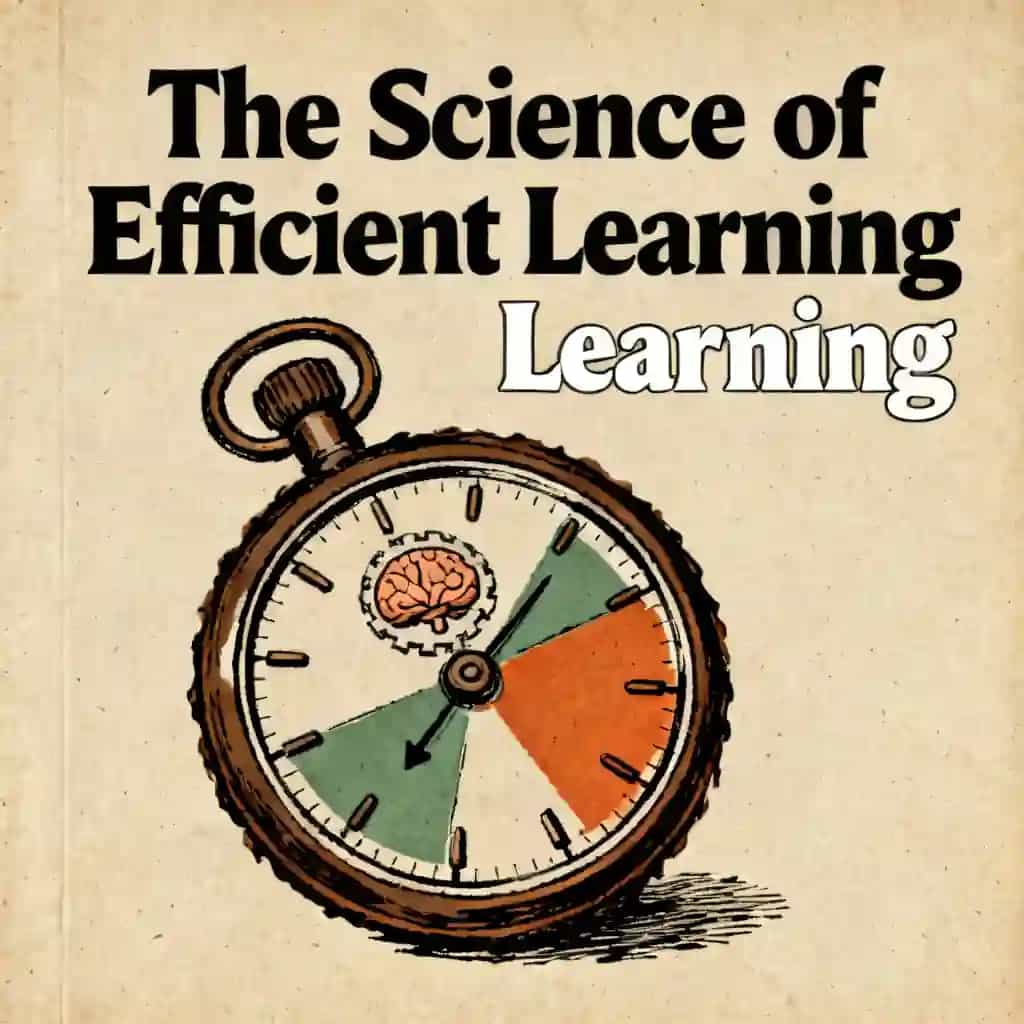
The battle for effective learning begins with mastering your attention. The Pomodoro Technique stands as one of the most powerful weapons in this fight-a deceptively simple method backed by substantial research. The technique involves setting a timer for 25 minutes of intense focus, followed by a 5-minute break. This structured approach aligns perfectly with how our brains naturally process information.
When you implement the Pomodoro Technique, you're essentially training your brain's attention networks. During those focused 25 minutes, your prefrontal cortex-the brain's executive control center-activates fully, directing your cognitive resources toward the task at hand. The technique works because it provides focused attention practice, much like lifting weights builds muscle. Each Pomodoro session strengthens your ability to concentrate for extended periods.
The 5-minute breaks are equally crucial. These intervals allow your brain to transfer new information from working memory to long-term memory. Think of it like saving a document on your computer-without these periodic saves, your mental work remains vulnerable to being lost. The anticipation of these breaks also triggers dopamine release, creating a reward system that motivates continued effort.
The technique makes commitment easier through manageable chunks. Rather than facing the daunting prospect of studying for hours, you're only committing to 25 minutes-a psychological trick that helps overcome the initial resistance to beginning difficult tasks. This initial resistance is what neuroscientists call "activation energy"-the mental effort required to start a challenging activity. The brain literally experiences discomfort when shifting from relaxation to concentration, but this sensation typically fades after a few minutes of engagement.
While the standard Pomodoro involves 25-minute work periods, the technique is flexible. Research on highly productive workers shows many naturally work in cycles of 52 minutes followed by 17-minute breaks. The key is finding your optimal rhythm while ensuring you incorporate active recall practice during your sessions to strengthen memory formation.
One crucial element often overlooked is how you spend your breaks. The reflexive reach for your smartphone during these intervals sabotages the technique's effectiveness. Studies reveal that mobile phones are cognitively taxing in ways we don't consciously perceive. Research from the University of Texas found that students without phones nearby wrote 62% more notes, recalled more information, and scored a letter grade and a half higher on tests compared to those with phones present. Even having your phone in the same room creates a cognitive drain as your brain unconsciously monitors it. Despite the initial anxiety of separation, placing your phone in another room or even back in your car dramatically improves your ability to focus.
The environment you create for learning matters tremendously. Libraries or isolated study spaces work best, with noise-canceling headphones providing both sound reduction and a visual "do not disturb" signal. Digital distractions prove particularly insidious-research shows people check messages every 35 seconds when messenger apps remain open. Tools like Freedom, FocalFilter, or StayFocusd can block these digital interruptions during critical study periods.
Глава 3
The Power of Mental Modes: Harnessing Your Brain's Hidden Problem-Solving Abilities
When you hit a learning roadblock-that frustrating moment when progress seems impossible-understanding how your brain actually works can provide the breakthrough you need. Your mind operates in two complementary modes: focused and diffuse thinking. These aren't just theoretical constructs but distinct neural states that neuroscientists can observe in brain scans.
The focused mode activates when you concentrate intensely on specific material. In this state, your prefrontal cortex directs your attention along established neural pathways-like following familiar roads on a map. This mode excels at working through straightforward problems using knowledge you've already internalized. When solving a math equation you've practiced before or applying a familiar grammar rule, your focused mode efficiently guides you through the process.
The diffuse mode, by contrast, emerges when you relax your concentration. During this state, your thoughts flow freely across broader regions of your brain, creating connections between previously unrelated neural areas. Neuroscientists call this the "default mode network"-a constellation of brain regions that activate when you're not focused on external tasks. Think of the diffuse mode as tiny drones flying above a maze, seeing connections and pathways invisible from ground level.
This diffuse mode is your secret weapon for creativity and insight. When Einstein was stuck on a physics problem, he would often play violin. Mozart composed while playing billiards. These weren't mere procrastination tactics-they were deliberately engaging the diffuse mode to solve complex problems. The key insight is that breakthrough thinking often happens not through harder concentration but by strategically alternating between focused and relaxed mental states.
To activate your diffuse mode intentionally, first focus hard on a problem until you reach an impasse. Then deliberately stop focusing on it. Engage in a mindless activity like walking, showering, or washing dishes-something requiring minimal concentration that allows your mind to wander. During this period, your brain continues working on the problem below the level of conscious awareness, often generating insights that weren't possible during focused concentration.
This understanding leads to practical strategies like the Hard Start Technique for tests or homework. Begin by identifying the most difficult problems with check marks. Start working on the hardest problem first, but when you get stuck, switch to easier problems. Later, when you return to the difficult problem, you'll often find you can make more progress because your diffuse mode has been working on it in the background. This technique prevents fixation on incorrect approaches and helps avoid tackling the hardest problems when you're mentally fatigued.
The same principle applies to writing projects. Many people struggle by simultaneously writing and editing-mixing the creative diffuse mode with the critical focused mode. Instead, try writing without seeing the words appear (cover your screen) or write by hand without looking back. This technique feels strange initially but helps you progress faster by separating the creative first draft process from the later editing stage.
Even your study environment can be optimized to leverage these mental modes. While quiet environments are ideal for memorization tasks, studying conceptually difficult material in places with ambient noise like coffee shops can be beneficial. The occasional disruptions trigger your diffuse mode, allowing new perspectives on complex concepts to emerge. This explains why some of your best ideas might come when you're not actively trying to generate them.
Глава 4
The Neural Architecture of Learning: Building Knowledge That Lasts
Learning isn't just about absorbing information-it's about physically changing your brain. When you learn something new, you're literally creating connections between neurons, the brain's specialized cells for processing information. With approximately 86 billion neurons at your disposal, your capacity for learning is virtually unlimited.
These neural connections form at synapses, where the axon ("arm") of one neuron meets the dendritic spine ("toe") of another. New knowledge emerges as patterns of these neural links in your long-term memory. Simple concepts create short link chains, while complex knowledge forms longer, more interconnected networks. With practice, these connections strengthen through a process called myelination-the brain's equivalent of insulating electrical wires-making recall easier and building expertise through rich, interconnected neural pathways.
Understanding this biological reality reveals why active learning is dramatically more effective than passive approaches. When you force your brain to work hard-through retrieval practice, problem-solving, or teaching concepts to others-you create stronger neural connections than you would through passive reading or listening. This explains why students who simply reread material often perform poorly compared to those who quiz themselves on content.
Retrieval practice-pulling information from memory rather than simply reviewing it-is particularly powerful. This process strengthens neural pathways and provides valuable feedback about what you know well versus what needs more work. Active learning techniques include working problems without looking at solutions, recalling key points after reading, creating practice tests, explaining concepts to others, and using flashcards.
The challenge principle is another crucial insight: it's tempting to review material you already know because it feels good, but this impedes progress. To advance quickly, you must continually push yourself into harder material, forming new neural connections rather than just reinforcing existing ones. When you tackle more challenging content, you're still practicing older connections while building new ones.
Deep understanding requires more than memorizing facts and definitions. You must actively connect new concepts to what you already know, creating an interconnected web of knowledge. This enables you to explain, analyze, synthesize, and apply concepts in novel situations-the hallmarks of genuine understanding. Two powerful techniques for building these connections are elaboration and interleaving.
Elaboration involves explaining concepts in your own words, forcing deeper processing of information. In one study, students who explained their reasoning when solving logical problems scored 90 percent on later tests, compared to just 23 percent for those who didn't self-explain. This dramatic difference occurs because elaboration creates multiple neural pathways to the same information, making it easier to retrieve later.
Interleaving-mixing different concepts during practice rather than focusing on one topic at a time-helps you learn both the concepts and the crucial differences between them. While blocked practice (mastering one concept before moving to the next) feels more comfortable, interleaving forces your brain to identify the right approach for each problem. For example, randomly mixing paintings by different artists helps you recognize distinctive styles faster than studying each artist in isolation.
Your physical condition profoundly impacts this neural architecture. Exercise dramatically enhances learning by producing BDNF (brain-derived neurotrophic factor), a protein that promotes dendritic spine growth on neurons, making new neural connections easier to form. Even a single 20-minute workout session can immediately enhance information processing and attention, while regular exercise provides cumulative benefits for cognitive function.
Perhaps most surprising is the role of sleep in learning. While dendritic spines begin forming during study sessions, the crucial connections with axons primarily occur during sleep. This explains why spacing out learning over days is vastly more effective than cramming-ten hours spread across ten days builds stronger long-term memory than ten hours in one day. Sleep also allows your brain to clear accumulated metabolic toxins, as brain cells shrink during sleep, allowing cleansing fluids to flow through. Most people need about eight hours of sleep for optimal cognitive function, though individual needs vary.
Глава 5
Maximizing Working Memory: Your Brain's Processing Bottleneck
Working memory is your brain's temporary mental workspace-the cognitive system that allows you to hold and manipulate information while performing complex tasks like reading, calculating, or problem-solving. Unlike long-term memory, which has virtually unlimited capacity, working memory is severely constrained for most people.
Think of working memory as an "attentional octopus" with arms that connect your thoughts. These arms can reach into long-term memory while simultaneously processing new sensory information. Most people's working memory can hold only three or four concepts at once, though capacity varies between individuals. These mental "arms" are slippery-they can't hold thoughts for long before dropping them to accommodate new information.
This limitation creates a fundamental bottleneck in learning. When you're trying to understand a complex new concept, your working memory can become overwhelmed, preventing effective processing. However, you can expand your effective working memory capacity through several strategies that work with-rather than against-your brain's natural functioning.
When you truly learn something, you create interconnected neural links in long-term memory that your working memory can access when needed. These established links function as extensions of your working memory's limited capacity. Consider how the random letters "aueiutfbl" are difficult to remember, but rearranged as "beautiful"-a word you already know-they become a single chunk in working memory rather than nine separate items.
This chunking process explains why experts can process complex information that overwhelms novices. A chess master doesn't see 32 individual pieces but recognizable patterns and positions. A fluent language speaker doesn't process individual grammar rules and vocabulary words but complete phrases and ideas. Well-practiced skills become accessible chunks rather than overwhelming collections of separate elements.
When your working memory becomes overwhelmed by difficult material, several strategies can help you process information more effectively. First, seek simplification-focus on synthesizing key ideas rather than getting lost in details. Look for instructors who excel at making difficult concepts accessible, whether in person or through educational platforms.
Breaking material into manageable chunks is equally important. When tackling difficult physics problems, start with the easiest examples and gradually progress to more complex ones. For language learning, master a few words before forming sentences. Musicians practice short passages before combining them, and martial artists learn individual movements before executing complete techniques. This approach builds foundational neural links that support more advanced learning.
Translating complex terminology into simpler language reduces working memory demands. Replace technical jargon with everyday terms when first learning concepts-like substituting "twist" for "torque." Using multiple sensory inputs simultaneously, such as seeing and hearing explanations together, distributes the cognitive load across different parts of your brain, making learning easier.
Note-taking, when done effectively, serves as an external extension of working memory. It helps transfer information from working memory to long-term memory through processing, organizing, and summarizing. Without this deliberate focus, information disappears within seconds. Before taking notes, get a rough idea of the text's organization by scanning headings and images. For lectures, read assigned materials beforehand to provide structure for more organized notes.
Two recommended note-taking methods are split notes (dividing the page with main ideas on the right and summary words on the left) and concept mapping (organizing information with words and arrows showing relationships). The most crucial step is reviewing notes before the day ends, even briefly. A study found A students almost always reviewed lecture notes the same day, while C students almost never did. When reviewing split notes, use the left column to quiz yourself on the right column's information.
Глава 6
The Art of Memorization: Techniques That Make Knowledge Stick
In our information-saturated world, some argue that memorization has become obsolete-why memorize what you can look up? This perspective misunderstands the fundamental role memory plays in higher-level thinking. Having key information readily accessible in your mind frees working memory for problem-solving and enables deeper understanding. The relationship works both ways: it's easier to memorize what you understand, and easier to understand what you've memorized.
Simply reviewing information repeatedly is inefficient. The recall technique-retrieving information from memory multiple times over days-creates stronger neural pathways. Memory tricks (mnemonics) can accelerate this process, creating "stickier" memories that remain in long-term memory and can be more easily accessed when needed.
Verbal memory techniques include acronyms and sentences. Acronyms create words from the first letters of items you need to memorize. For example, "RICE" helps remember Rest, Ice, Compression, and Elevation for treating sprains. When words don't form a neat acronym, create memorable sentences where each word corresponds to an item on your list. "My Very Elderly Mother Just Served Us Noodles" helps remember planet order (Mercury, Venus, Earth, Mars, Jupiter, Saturn, Uranus, Neptune).
Visual memory techniques leverage your brain's remarkable visual processing capabilities-nearly half the human cortex handles visual information while less than 10 percent processes auditory input. Studies show people can recognize 90 percent of 2,560 previously viewed images days later, demonstrating our extraordinary visual memory capacity.
Creating vivid, unusual mental images that represent concepts makes them stick in memory. Adding movement-like a short movie clip-enhances retention. For example, to remember the moon landing happened in 1969, visualize a moon shaped like a yin-yang symbol (resembling the number 69) swirling with a swooshing sound. The more sensory elements you incorporate, the stronger the memory becomes.
The Memory Palace (or Method of Loci) technique involves creating images for concepts and anchoring them to familiar physical locations. For memorizing the first five elements of the periodic table, you might visualize a fire hydrant (hydrogen) outside your door, a helium balloon in your kitchen, a battery (lithium) on your living room table, strawberries (beryllium) covering your bathroom, and a wild boar (boron) in your bedroom. Walking through this mental space helps retrieve the information in sequence.
Metaphors connect new concepts to familiar ones, like using "sets of links" to explain neural connections or a "drone" to explain diffuse thinking. They simplify complex topics by highlighting essential similarities. While no metaphor is perfect, they leverage existing neural pathways to build understanding of new concepts. Creating metaphors by asking "What does this remind me of?" helps grasp not just what a concept is, but also what it isn't.
These memorization techniques aren't just tricks-they're based on how your brain naturally processes and stores information. By aligning your study methods with your brain's innate capabilities, you transform difficult memorization tasks into engaging, effective learning experiences.
Глава 7
Developing Intuition: How Experts Think Fast
Tyler "Ninja" Blevins earns around $20 million yearly as a professional gamer, making split-second decisions during 10-12 hour daily gaming sessions. His expertise demonstrates that mastering complex skills requires more than conscious understanding-it demands tapping into the brain's powerful procedural learning system.
Your brain deposits neural links through two completely different systems. The declarative system works closely with working memory, making you conscious of what you're learning (you can "declare" it). The procedural system, however, operates like a black box-you're largely unaware of how it works. Initially thought to only involve motor skills and habits, researchers now understand that procedural learning applies to writing, language, math, music, and gaming.
The procedural system learns complex patterns unconsciously, allowing lightning-quick responses even in stressful situations. While the declarative system learns through step-by-step explanations, the procedural system intuitively feels out patterns through extensive practice in varied situations. You often cannot easily explain what you've learned procedurally-try explaining how to tie shoelaces without demonstrating.
To develop mathematical intuition, don't just follow step-by-step procedures (which only builds declarative knowledge). Instead, internalize key exemplar problems by attempting solutions without looking at worked examples. Listen to your intuition for hints about first steps. Only peek at solutions when absolutely necessary, then practice again later without assistance. This approach draws solutions from within yourself, strengthening your procedural system and building problem-solving confidence.
When internalizing problems, it's normal to struggle at first. You might need to peek at every step initially, but write everything down completely. Try again the next day-you'll find it easier, and by the third day, it will feel intuitive. Most students skip this crucial internalization practice, which distinguishes pro learners from ordinary ones.
For effective internalization, use interleaving-alternating between different types of problems-to help your procedural system detect different patterns. Focus on textbook examples, instructor-worked problems, and practice questions from old tests. The broader your pool of internalized problems, the better you'll transfer skills to new areas.
Language learning similarly requires developing your procedural system. While your declarative system helps you learn vocabulary and grammar patterns quickly, true language fluency requires building procedural links that enable natural fluency. Language learning requires extensive retrieval practice with optimal spacing based on how long you need to remember the material. As you become comfortable with words or phrases, expand the spacing gap between repetitions.
Interleaving is crucial for language learning-don't study vocabulary in static lists or focus on one verb tense at a time. Instead, shuffle flashcards and mix up different tenses after initially grasping each one. The best interleaving comes from speaking with native speakers as early and often as possible, which builds your procedural system. Making meaningful gestures while learning new words can also significantly improve retention by binding sounds to meanings.
For writing improvement, Benjamin Franklin's technique combines both declarative and procedural learning. Find writing you admire, note key ideas from each sentence, then try to recreate the sentences using only those notes as prompts. Compare your version with the original to identify improvements. This active process builds your own mental links for good writing rather than just memorizing others' work. Eventually, you'll develop skills that surpass your original models.
Глава 8
The Strategic Learner: Self-Discipline Without Willpower
Theodore Roosevelt exemplified extraordinary willpower-continuing a speech for ninety minutes after being shot, implementing rigorous exercise regimens despite childhood illness, reading a book daily while president, and writing over 35 books. Roosevelt believed self-discipline was more important than talent or intellect, saying "With self-discipline, all things are possible."
Self-discipline-the ability to control yourself against temptations to reach long-term goals-correlates with happiness, health, wealth, and better grades. However, since self-discipline is a limited resource that can't be quickly increased, the key is finding ways to achieve goals without relying on it-like getting vaccinated rather than treating disease.
Make tough choices easier by preparing in advance to reduce friction-pack your gym bag the day before, set up your study desk with materials ready, or place your alarm clock across the room to force yourself out of bed. Research shows learners who remove temptations succeed more than those relying on willpower alone.
Habits form neural links that let you operate on mental autopilot-a gift from your procedural system that saves mental energy. To change poor habits, identify their triggers and either remove them or modify your response. Though habit formation requires about two months of effort, building effective habits preserves precious self-discipline. Even adding just one habit, like a 25-minute Pomodoro technique when procrastinating, can make a surprising difference in productivity.
Psychologist Peter Gollwitzer found that desire alone isn't enough to reach goals-you need a plan for when, where, and how you'll achieve them, plus strategies for obstacles. Research shows students who planned study times spent 50% more time studying than those who didn't, and those who planned responses to obstacles completed 60% more practice questions. For example, prepare specific responses to social invitations that might derail your study plans, using vague language that's harder to argue against.
Even with demanding workloads, scheduling regular breaks prevents burnout. Build break and reward times into your schedule-like no work between 6 and 9 p.m.-to enable more focused study sessions. When studies become overwhelming, find small pleasures to anticipate, like one medical student who lived for her weekly hour of favorite television.
Create meaningful deadlines by involving others in your commitments. When you promise someone you'll complete a task, the sense of urgency helps you follow through. Finding a study partner for accountability can push you to keep your word and appointment, making it easier to accomplish difficult tasks.
Глава 9
Fueling Your Learning Engine: The Science of Motivation
In Mark Twain's famous story, Tom Sawyer not only avoids painting a fence himself but convinces neighborhood kids to do it for him-even getting them to give him gifts for the privilege. This illustrates that motivation isn't about how much you want something, but how much effort you're willing to exert to get it.
Motivation isn't about desires-it's about the effort you'll invest to achieve them. Researchers have found that dopamine plays a crucial role; higher levels in emotional brain regions make rats and humans work harder. Dopamine acts like a turbocharger for your drive, boosting your willingness to exert effort.
Motivation isn't something you either have or don't-it can be created, strengthened, and maintained through intelligent tactics. Like a car needs multiple components to move forward, motivation requires several factors: finding value, experiencing mastery, setting goals, and working with others can increase your energy and desire to tackle difficult tasks.
We're motivated by activities we enjoy or benefit from. Your perception determines whether something feels valuable, which is why two students can differ in motivation for the same task. Reframe your perception by listing benefits (like guilt-free social time or impressing teammates) or comparing studying to less pleasant alternatives. Create value through rewards after completing portions of work-but avoid using your phone during breaks, as research shows it prevents the mental rest you need.
The feeling of mastery powerfully motivates. Your studies should fall in the "doable with effort" range-too difficult creates frustration, while too easy leads to boredom. If tasks are too difficult, break them up, seek help from tutoring centers or online resources, or try the "rubber ducky" approach of explaining your problem out loud. Sometimes taking a step back helps - like when Olav revisited high school math books before tackling university calculus. View setbacks as valuable learning opportunities rather than failures.
Setting goals provides powerful motivation. When Olav found swimming boring, setting a one-kilometer distance goal made it bearable. Effective goal-setting includes three levels: long-term goals (like becoming a doctor), milestone goals (steps toward your long-term goal), and process goals (actionable daily steps). Keep visual reminders of your long-term goals within view. Use "mental contrasting" by visualizing the difference between your current situation and future success. Your goals should be SMART: Specific, Measurable, Ambitious, Realistic, and Time-limited.
Studying becomes more enjoyable with others because humans have a built-in need for social connection. Working with motivated study buddies can transform difficult tasks into exciting collaborative challenges. Their drive can transfer to you through "motivation contagion." Look for potential study partners by watching for students who ask good questions in class or participate thoughtfully in online forums.
Глава 10
Beyond Speed Reading: The Art of Effective Reading
Speed-reading champion Anne Jones once read a 784-page Harry Potter book in just 47 minutes-about 4,200 words per minute. But is such speed reading truly possible for comprehension?
Reading involves three steps: recognizing a word, silently pronouncing (subvocalizing) it, and converting it to the concept it represents. Your eyes focus on each word for about 0.25 seconds before jumping to the next. While speed-reading programs claim to increase speed by reducing these jumps, research shows your brain actually processes words during the jumps. The real constraint is mental processing time. To genuinely read faster, you need to improve word recognition and concept conversion through better vocabulary, background knowledge, and reading experience.
Research shows fewer than 1% of people can read faster than 400 words per minute without losing comprehension. For most people, comfortable reading speed ranges from 100-300 words per minute. Effective reading isn't about speed but understanding and remembering what you read. Speed readers like Anne Jones may give impressive demonstrations, but their comprehension isn't scientifically measured-they likely rely on prior knowledge and summarizing skills rather than true comprehension of every word.
Just as seeing the completed picture helps with a jigsaw puzzle, previewing text provides a useful framework before diving into details. Skim through summaries, chapter goals, headings, and images to grasp the big picture. This quick overview creates a mental structure that helps you organize information as you read more thoroughly later.
Highlighting text feels active because it engages the motor parts of your brain, creating an illusion of learning. However, highlighting is actually passive from a learning perspective-it doesn't create the neural links needed for long-term memory. Rereading right after first exposure provides deceptive familiarity without forcing neurons to make connections. If you must reread, wait at least a day and supplement with active methods.
One of the most effective active reading techniques is recall (retrieval practice). Studies show students who used recall remembered 25% more text a week later than those who simply reread, and repeated recall improved retention by 400% compared to studying once. To practice recall reading: read a page carefully, look away, and either verbalize or write down the key ideas. If difficult, reread with closer attention and try again. Attempting recall the next day is even more helpful as it confirms whether information has moved to long-term memory.
Developing deep understanding requires actively thinking about content and connecting it to existing knowledge. Pause periodically to summarize what you've read in your own words. Use elaboration techniques, discuss content with others, or answer questions about the text. For technical material, practice with problem sets. These active thinking methods improve both understanding and memory retention, as the two are interconnected.
Annotation-writing short comments and questions while reading-makes reading active and facilitates later review. Whether digitally or on paper, note important ideas in few words, relationships between concepts, your own examples, unclear information, paragraph summaries, and potential test questions. The key is putting notes in your own words, which requires deeper processing than simple rewriting.
Глава 11
The Test-Taking Mindset: Strategies for Peak Performance
Tests require both knowledge of material and test-taking skills. Having the right information about test format and expectations is crucial, as Barb discovered after failing a circuits test despite thorough preparation-she hadn't known about a special assumption required for all problems that wasn't mentioned in class or instructions.
Success on tests requires both mastery of material and test-taking ability. This includes understanding the test format, question types, evaluation criteria, and instructor expectations. Students who actively seek information about upcoming tests often perform better than those who don't. Rather than asking directly what will be on the test, show evidence of preparation by asking targeted questions about your study priorities.
Test-taking is invaluable for learning-one hour of test-taking teaches more than one hour of studying. Research confirms that practicing with similar problems is the best test preparation. Old tests from the same instructor are ideal, but problems from other sources can also help. Crucially, don't just look at answers; work through practice problems yourself to develop both declarative and procedural memory systems, enabling faster, more intuitive responses during the actual test.
When facing multiple exams with limited preparation time, creating a study plan is essential. While a plan doesn't create more time, it ensures you use available time wisely and reduces stress by eliminating decision fatigue. Divide preparation days among exams and study at least two subjects daily to build spacing into your learning. Reserve the day or two before an exam for focused review of that subject.
Failing to read test instructions carefully can be devastating. Olav once failed a computerized test not because he lacked qualifications, but because he missed crucial instructions about negative marking for wrong answers. Always read test instructions thoroughly to understand requirements like whether to answer all questions or just some. Check each question three times: before starting your answer, midway through, and when finished.
Time management during tests is crucial. Without it, you risk leaving significant portions unanswered, severely impacting your grade. Create a mental time plan by dividing the total test time by the number of questions, adjusting for weighted questions. Check the clock regularly to stay on track. If halfway through the allotted time you've only completed a small fraction of questions, you're heading for trouble.
If time remains at the end of a test, review your answers. Research shows that when test-takers change answers during reviews, the changes are typically from incorrect to correct. This is when your diffuse mode can provide valuable insights. Use this time to catch ambiguous language and correct common errors. For questions you couldn't fully answer, write down relevant information, formulas, or steps you would have taken-this can earn partial credit.
Moderate anxiety before tests is actually beneficial for performance. Reframe your stress as "gearing up to do your best." For serious anxiety, the best remedy is creating strong neural connections through effective study techniques. Focus on process goals (completing study hours) rather than outcome goals (getting an A). If anxiety turns to panic during a test, practice deep breathing by drawing air deeply into your lungs so your belly moves.