Глава 1
The Dawn of Atomic Warfare: When America Faced Its Darkest Hour
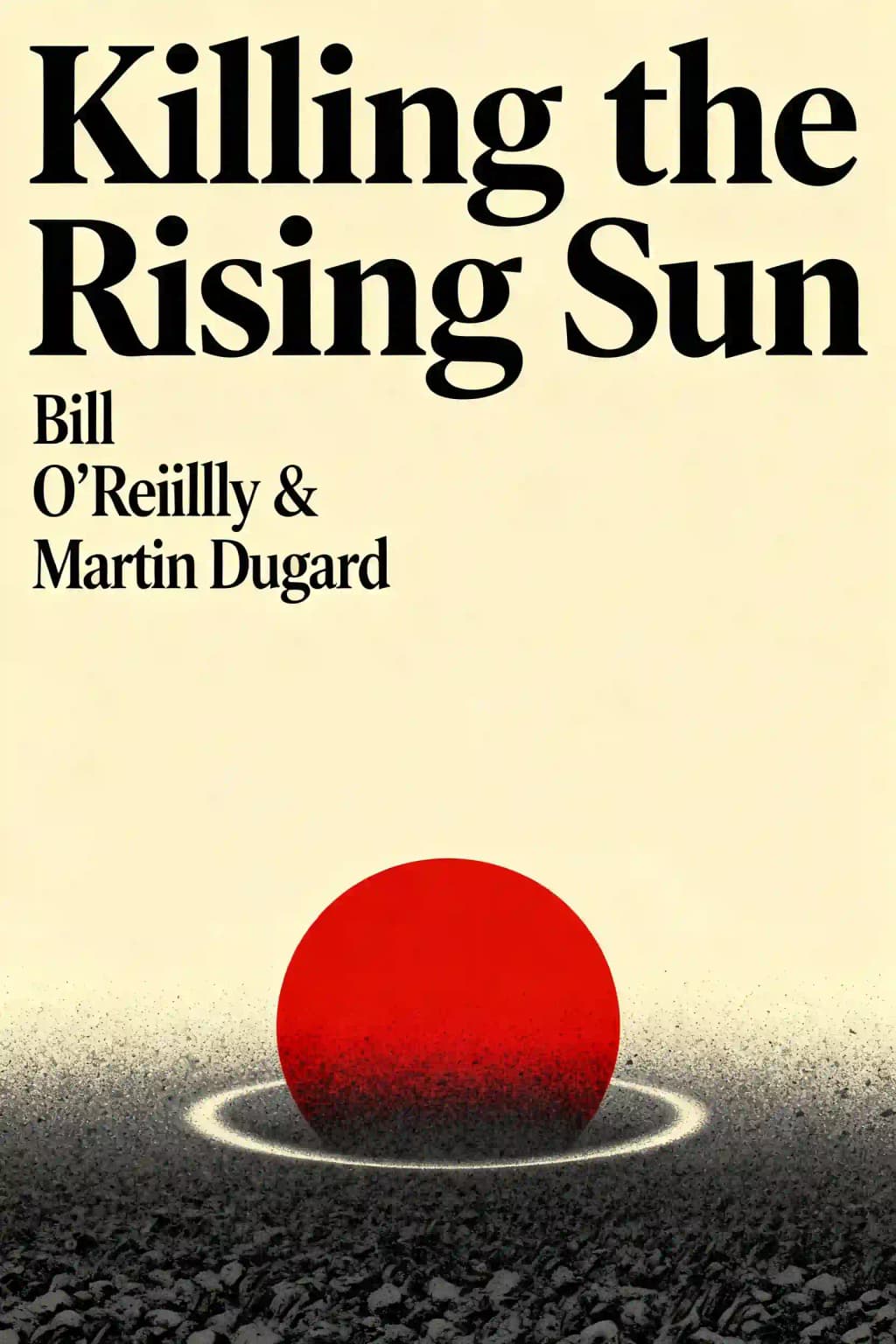
In the Oval Office on October 12, 1939, a nervous Alexander Sachs met with President Franklin Roosevelt carrying a letter that would change history. Written by Albert Einstein, it warned that Nazi Germany might develop "extremely powerful bombs of a new type" using nuclear chain reactions. Roosevelt immediately grasped the implications: "Alex, what you are after is to see that the Nazis don't blow us up." With those words and his decisive command to "Pa" Watson-"This requires action"-the atomic age began. This pivotal moment set in motion the development of the most destructive weapon mankind had ever known, one that would ultimately end World War II in the Pacific with devastating consequences that still reverberate today. Bill O'Reilly's "Killing the Rising Sun" has become a cultural touchstone, spending months on bestseller lists and praised by military historians for its unflinching examination of the moral complexities surrounding America's decision to use atomic weapons against Japan.
Глава 2
The Pacific Theater: A War Without Mercy
The Pacific War was unlike anything Americans had experienced before-a conflict where surrender was considered shameful and fighting to the death was expected. On Peleliu in September 1944, Marines faced Japanese defenders who had transformed the island into a death trap. Colonel Kunio Nakagawa had constructed elaborate defenses including hidden mortar launchers, artillery, mines, and camouflaged "spider traps." His strategy wasn't to win on the beaches but to lure Americans into the Umurbrogol highlands where thousands of elite troops waited in 500 hidden caves.
The Japanese soldiers lived by the samurai code of Bushido, which forbade surrender. "Do not survive in shame as a prisoner. Die, to ensure that you do not leave ignominy behind you," was their creed. This fanatical dedication to fight to the death was demonstrated when Corporal Lewis Bausell threw himself on a grenade to save his fellow Marines, becoming the first of many Medal of Honor recipients in this brutal campaign.
After two months of fighting that cost 6,500 Marine casualties, Colonel Nakagawa committed ritual suicide in his command post. The battle required 13 million bullets and 150,000 mortar rounds-about 1,500 rounds to kill a single Japanese soldier. This defensive style became the blueprint for future island invasions, raising a vital question: If Japan fought this determinedly for a small island, how many Americans would die invading the homeland?
Meanwhile, General Douglas MacArthur fulfilled his famous promise to return to the Philippines. After escaping the Japanese advance in 1942 while his troops endured the horrific Bataan Death March, MacArthur had vowed, "I shall return." In October 1944, he waded through knee-deep water at Red Beach on Leyte, proclaiming into a microphone, "People of the Philippines, I have returned!" With shaking hands betraying his excitement, the general soon returned to the safety of the USS Nashville. The Pacific campaign was slowly advancing toward Japan itself, but at a terrible cost.
Глава 3
The Emperor's War: Inside Japan's Imperial Ambitions
While Americans fought across the Pacific, Emperor Hirohito lived a surprisingly ordinary life despite his divine status. Standing just five feet five inches tall, the nearsighted, absentminded emperor rose at seven each morning for oatmeal and black bread. Though publicly deferring to military leaders, Hirohito had played a crucial role in the war, pronouncing himself "deeply satisfied" after the Nanking Massacre and doing nothing to stop the Pearl Harbor attack despite concerns about a "reckless war" with America.
Japan's military expansion began in 1937 when it invaded Manchuria, driven by the island nation's need for natural resources like oil and rubber. Fighting under the belief of hakko ichiu-that all Asia must unite under one emperor-Japanese forces overwhelmed China with superior training and aggressive tactics. The capture of Nanking in December 1937 unleashed horrifying atrocities: 90,000 Chinese soldiers were executed through stabbing, burning, and beheading; 80,000 women were systematically raped; and soldiers forced family members to violate each other. In total, half of Nanking's 600,000 citizens were murdered or defiled, while the Japanese public celebrated these victories.
When President Roosevelt embargoed oil sales to Japan in 1940 after their invasion of French Indochina, it inadvertently accelerated war plans. With only six months of fuel reserves, Japan developed an audacious strategy to simultaneously invade resource-rich territories across Asia. The plan targeted Pearl Harbor on a Sunday morning when sailors would be sleeping after a night out. On November 8, 1941, Hirohito received the specific details of this surprise attack and approved the plan with little deliberation.
By 1944, as American forces pushed closer to Japan, Emperor Hirohito took a more direct role in the war. Despite publicly appearing as a man of peace forced into conflict by military advisers, Hirohito had been deeply involved in war planning since before Pearl Harbor. Though knowing the war was lost, the emperor refused to seek peace, declaring his intention to "remain in this divine land and fight to the death."
Глава 4
A Presidency Thrust Upon Him: Truman's Sudden Burden
On April 12, 1945, Vice President Harry Truman was engaged in his usual evening ritual at Speaker Sam Rayburn's informal "Board of Education" happy hour, a regular gathering where congressional leaders discussed politics over bourbon and branch water. The casual atmosphere was shattered when an urgent call from the White House interrupted their conversation. Truman's hurried departure was so abrupt he didn't even pause to collect his hat from the cloakroom, a telling detail in an era when no gentleman went outdoors bareheaded.
Upon arrival at the White House, he encountered Eleanor Roosevelt, whose composure in the face of personal tragedy was remarkable. With characteristic grace, she delivered the news: "Harry, the president is dead." When Truman, still processing the magnitude of the moment, instinctively offered to help, Eleanor's response revealed her deep understanding of the burden about to fall on his shoulders: "Is there anything we can do for you? For you are the one in trouble now."
Franklin Roosevelt had succumbed to a cerebral hemorrhage while at his retreat in Warm Springs, Georgia, leaving Truman to inherit not just the presidency but the awesome responsibility of bringing World War II to its conclusion. The transition was swift and solemn. In the Cabinet Room, Chief Justice Harlan Stone administered the oath of office while Truman's hand rested on a Gideon Bible. In an unplanned gesture that revealed his deep emotional state, Truman spontaneously kissed the Bible after reciting the oath.
By April 24, Truman received his first detailed briefing about the Manhattan Project from Secretary of War Henry Stimson. The revelation that American scientists were close to testing a weapon capable of obliterating an entire city left him stunned. Despite this knowledge, he authorized preliminary plans for Operation Downfall, the proposed invasion of Japan's home islands, while recognizing that the atomic bomb might render such an invasion unnecessary. The weight of the final decision about using the atomic weapon would rest solely on his shoulders, influenced heavily by his determination to prevent further American casualties, which were estimated to reach up to a million if an invasion proved necessary.
Meanwhile, at Los Alamos, J. Robert Oppenheimer was driving the final phase of the atomic bomb's development with an intensity that was taking a visible toll on his health. As he celebrated his forty-first birthday on April 22, 1945, the brilliant physicist dubbed "the most dangerous man in the world" was barely recognizable from his earlier self. His weight had plummeted to 115 pounds, and his consumption of cigarettes had reached five packs daily, supplemented by a diet consisting largely of martinis and coffee. As the crucial "Trinity" test approached in New Mexico's Jornada del Muerto desert (appropriately named "Journey of Death"), Oppenheimer's awareness of the historical significance of his work manifested in his famous quotation from the Bhagavad Gita: "Now I am become death, the shatterer of worlds." This Sanskrit verse reflected both his scholarly breadth and his deep understanding of the terrible power he had helped unleash.
Глава 5
The Bloody Road to Japan's Doorstep
Five thousand miles from Los Alamos and just 400 miles from Tokyo, American marines battled for Okinawa in monsoon-soaked conditions. The mud-covered battlefield was a hellscape of constant shelling, rotting corpses, and maggot-infested terrain. As Private Eugene Sledge noted, attempts at humor "always faded away as we grew more weary."
The battle featured heroes like PFC Desmond Doss, a conscientious objector and medic who refused to carry a weapon but prayed with his men before they assaulted the Maeda Escarpment. After they successfully reached the summit, Doss stayed behind during a retreat to single-handedly rescue 75 wounded men, lowering them down the cliff using a special knot from his childhood. Despite Japanese fire, he repeatedly returned for "just one more" wounded soldier.
After 82 grueling days, Okinawa finally fell on June 23, 1945, with over 20,000 Americans dead and one-third of the half-million invasion force killed or wounded. The island became the staging ground for the planned invasion of Japan.
While the Okinawa battle raged, the world waited. Joseph Stalin watched carefully from Moscow, planning to move a million troops to attack Japanese-held Manchuria once the winter snows melted. In Washington, President Truman kept a wary eye on Stalin, ending the Lend-Lease program with Russia on May 11-the first indication America wouldn't tolerate Soviet ambitions.
In Manila, General MacArthur planned the invasion of Japan despite opposition from naval and air force leaders who believed a blockade would avoid massive casualties. Emperor Hirohito, though his nation starved and cities lay in ruins, still refused surrender, clinging to belief that Japan could repel an invasion with newly formed divisions and stockpiled weapons.
Глава 6
The Desperate Final Days: Japan's Refusal to Surrender
In the shadow of Mount Fuji, former Japanese prime minister Koki Hirota met Soviet ambassador Yakov Malik at the Gora Hotel on June 24, 1945. Desperate but trying not to appear so, Hirota sought Russian help in negotiating peace-but on Japan's terms. The fall of Okinawa, with its devastating toll of over 100,000 Japanese military and civilian casualties, had made Emperor Hirohito desperate for a diplomatic solution, though Japan wanted to avoid unconditional surrender and occupation. The military leadership, particularly War Minister Korechika Anami, still clung to the notion of fighting to the last man.
After initial diplomatic feints about trade agreements and cultural exchanges, Hirota finally admitted Japan "seeks an early peace"-an astounding statement overturning years of Japanese aggression and the national policy of hakko ichiu (world under one roof). Malik remained impassive, bluntly stating that "peace does not depend upon Russia." The meeting stretched past midnight, with Hirota making increasingly desperate appeals, but the Russians offered no help. Unknown to Hirota, Stalin had already promised at Yalta to enter the war against Japan within three months of Germany's defeat. Hirota returned to Tokyo knowing in his gut that Japan would not survive-and neither would he, as he'd hang for war crimes three years later at Sugamo Prison.
Meanwhile at the Trinity test site in Alamogordo, New Mexico, Robert Oppenheimer paced anxiously as the countdown reached "Zero minus twenty minutes." The gathered scientists had placed bets on the explosion's yield, ranging from zero to 45,000 tons of TNT. When the Trinity bomb detonated on July 16, 1945, it produced a brightness so intense it penetrated closed eyelids and temporarily blinded a soldier 10 miles away. A purple mushroom cloud hovered, radiating intense heat felt miles away. The explosion shattered windows 180 miles distant and created a crater 1,100 feet wide.
The Trinity test confirmed the bomb's devastating power, with scientists discovering the explosion created a 40,000-foot fireball and turned desert sand to green glass, later named "trinitite." The yield was estimated at 21 kilotons, far exceeding most predictions. When informed of the successful test, Truman's initial reaction was guarded, not yet fully grasping that Trinity had forever changed mankind's future. General Leslie Groves immediately began preparing for the weapon's deployment. Oppenheimer, however, recognized both the terrifying implications and potential lives saved, telling his wife in code: "You can change the sheets." Later, reflecting on the test, he would quote the Bhagavad Gita: "Now I am become Death, the destroyer of worlds."
Глава 7
The Indianapolis Tragedy: Delivering Death, Meeting Death
The USS Indianapolis departed San Francisco carrying a mysterious fifteen-foot crate and small cylinder, bound for Tinian Island. After delivering its secret atomic cargo on July 27, the cruiser steamed toward the Philippines. With no warning of enemy submarines in the area and no destroyer escort assigned, Captain Charles McVay had ceased the ship's defensive zigzag pattern and ordered hatches left open to cool the stifling quarters below.
Three hundred sailors slept on deck to escape the heat as McVay retired to his cabin, unaware that his ship had been detected. The Japanese submarine I-58, running low on fuel and desperate for a kill, had picked up the sound of "clinking dishes" from Indianapolis's galley thirteen miles away.
At 12:02 a.m. on July 30, Lieutenant Commander Mochitsura Hashimoto fired six torpedoes at the unsuspecting American cruiser. Minutes later, the sky turned bright orange as torpedoes struck Indianapolis, blasting a hole in her bow and detonating aviation fuel. Within minutes, Indianapolis listed severely. Captain McVay reluctantly ordered "abandon ship"-a command never properly conveyed. As the 10,000-ton cruiser sank in just twelve minutes, over 800 men made it into the oil-covered water with only a dozen life rafts.
The survivors, many burned and injured, drifted apart in small groups, confident of rescue. But their SOS was never received. No one knew Indianapolis had been sunk. And now, the sharks began to appear.
As Indianapolis survivors endured their fourth day at sea, they were blinded by sun, desperate for water, many burned or oil-coated. Dehydration caused hallucinations, while drinking seawater proved fatal. Despite American planes flying overhead, the sailors remained unseen.
Salvation came when Lieutenant Wilbur Gwinn accidentally spotted "many men in the water" while searching for submarines. Lieutenant Adrian Marks, dispatched in a PBY-5A Catalina, saw sharks openly attacking lone sailors. Despite regulations prohibiting landing in rough seas, Marks and his crew unanimously decided to attempt rescue. Their plane rescued fifty-six men before being damaged beyond repair, becoming a refuge from sharks until the USS Cecil J. Doyle arrived.
Of over 800 men who went into the water, only 317 survived. Twenty-three years later, unable to forget and considering himself responsible, Captain McVay would end his life with his service revolver.
Глава 8
The Atomic Decision: Truman's Fateful Choice
At the Potsdam Conference in July 1945, a visibly exhausted President Truman wrestled with what he called "the most terrible formula in the history of the world"-the atomic bomb. His personal journal entries reveal deep internal conflict, as he grappled with a decision that would forever change warfare. After extensive consultations with military advisers and British Prime Minister Winston Churchill, Truman authorized its use against Japan, believing that a conventional invasion could cost up to half a million American casualties. This decision came despite passionate objections from prominent scientists like Leo Szilard and military figures including General Dwight D. Eisenhower, who argued Japan was already essentially defeated.
The decision-making process revealed Truman's complex relationship with this unprecedented power. Rather than issuing a direct order for the bombing, he essentially allowed the military's existing plans to proceed, attempting to distance himself somewhat from the moral implications. In his communications, Truman insisted the weapon would target "military objectives and soldiers and sailors...not women and children," though the reality of atomic warfare would prove far more indiscriminate. The target selection process was equally fraught - Tokyo was excluded due to its existing devastation from conventional bombing, while Kyoto, Japan's cultural capital, was ultimately spared after Secretary of War Henry Stimson argued for its historical significance. Hiroshima, with its military headquarters and industrial capacity, became the primary target, with Nagasaki later replacing Kyoto on the list.
A particularly revealing moment occurred during the Potsdam negotiations with the Soviets. After a frustrating session discussing Eastern Europe, Truman casually mentioned to Stalin America's possession of a "new weapon of unusual destructive force." Stalin's response was masterfully understated: "I am glad to hear it" and "I hope you will make good use of it against the Japanese." This exchange masked a deeper reality - Soviet intelligence, through the spy ring of Klaus Fuchs and others, had already thoroughly penetrated the Manhattan Project. Stalin's apparent nonchalance concealed immediate panic, as evidenced by his urgent telegram to Soviet nuclear scientists: "Hurry with the job."
The compartmentalization of atomic information created strategic disconnects within American leadership. Perhaps most strikingly, General Douglas MacArthur - commander of over a million troops in the Pacific and architect of the planned invasion of Japan - remained completely outside the atomic circle. While MacArthur maintained his headquarters in Manila, living in relative comfort and planning Operation Olympic, he received increasingly troubling intelligence about Japanese defensive preparations. Instead of the expected 80,000 defenders on Kyushu island, reconnaissance revealed over 500,000 Japanese troops establishing elaborate defensive positions precisely where MacArthur intended to land his invasion force. This massive buildup, unknown to MacArthur, was actually one of the factors that helped convince Truman that an atomic solution, despite its moral implications, might ultimately save lives on both sides.
Глава 9
Hiroshima and Nagasaki: The Dawn of Nuclear Terror
B-29 bombers droned over Hiroshima on a heavily overcast morning of August 6, 1945. The "LeMay bombing leaflets" warned civilians to evacuate immediately, announcing that their city "has been listed for destruction by our powerful air force." Hiroshima was a perfect target-entirely flat and just above sea level, ensuring maximum blast effect. It housed Japan's Second Army headquarters with 25,000 soldiers, a massive armament depot, and served as a thriving port and communications hub.
Colonel Paul Tibbets piloted the Enola Gay, named after his fifty-four-year-old mother who had supported his flying career when his father opposed it. At 8:15:17 a.m., bombardier Thomas Ferebee released Little Boy over the Aioi Bridge. Forty-three seconds later, at 1,890 feet altitude, Little Boy detonated with the force of 20,000 tons of TNT.
The explosion created a fireball hotter than a million degrees, sending out blinding light and deadly gamma rays. Within seconds, 70,000 people were dead. Everyone within a mile radius vanished-people, buildings, animals. The mushroom cloud rose 50,000 feet, turning day into night.
Beyond the immediate blast zone, survivors suffered horrific burns, their skin hanging "like rugs." Many leapt into superheated water cisterns, boiling to death, while others drowned in rivers clogged with corpses. Sixteen-year-old Akira Onogi was haunted by memories of abandoning a trapped mother as fires approached, her daughter crying for help-an image he would later paint to process his trauma.
Despite this unprecedented destruction, Emperor Hirohito maintained silence when President Truman once again demanded unconditional surrender. Three days later, on August 9, Major Charles Sweeney piloted Bockscar toward Kokura, but after three failed bombing runs over the cloud-covered city, they redirected to the secondary target of Nagasaki. Though missing its intended target by two miles, Fat Man instantly killed approximately 45,000 people and severely injured 60,000 more.
After the bombings, Hirohito finally declared, "It is now necessary to bear the unbearable." On August 15, 1945, the Japanese people heard their emperor's voice for the first time, telling them to "endure the unavoidable" as their nation faced occupation. World War II was over, but the atomic age had just begun.
Глава 10
Legacy of the Rising Sun: From Enemies to Allies
General Douglas MacArthur arrived in Japan as supreme commander on August 30, 1945. Despite warnings of possible assassination, MacArthur ordered his staff to remove their sidearms, believing a show of fearlessness would impress the Japanese. Thirty thousand Japanese troops lined the route to Yokohama, standing with their backs to the road out of respect.
On September 2, the formal surrender ceremony took place aboard the USS Missouri in Tokyo Bay. MacArthur presided over the 23-minute ceremony where Japanese representatives signed the surrender documents, followed by Allied signatures. The emaciated former POWs General Wainwright and British General Percival stood prominently behind the table as silent reminders of Japanese atrocities.
On September 27, a nervous Emperor Hirohito arrived at the American embassy to meet General MacArthur. Dressed formally in contrast to MacArthur's simple khaki uniform, Hirohito bowed awkwardly as the general extended his hand. During their forty-minute conversation, MacArthur decided the emperor was vital to rebuilding Japan and resolved to protect him from prosecution.
Captain Gaetano Faillace captured the defining image of American occupation-the six-foot MacArthur towering casually over a stiffly standing Hirohito. MacArthur deliberately released this photo to Japanese newspapers, visually demonstrating the new power dynamic. Three months later, at MacArthur's urging, Hirohito publicly renounced his divine status, admitting he was not a god-a revelation that came far too late for millions dead across Asia.
By May 1946, the International Military Tribunal for the Far East began formal indictments in Tokyo. On December 22, 1948, seven Class A Japanese war criminals were executed at Tokyo's Sugamo Prison. In his final words, Tojo, once arrogant and bloodthirsty, simply expressed remorse-a broken man at the end.
Nearly three years after the war's end, Colonel Paul Tibbets and three other officers were summoned to the Oval Office. After a long silence, President Truman asked Tibbets, "What do you think?" Tibbets replied, "Mr. President, I think I did what I was told." Truman slapped his desk decisively: "You're damn right you did. And I'm the guy who sent you." The moral weight of the atomic decision would forever bind these men together in history.