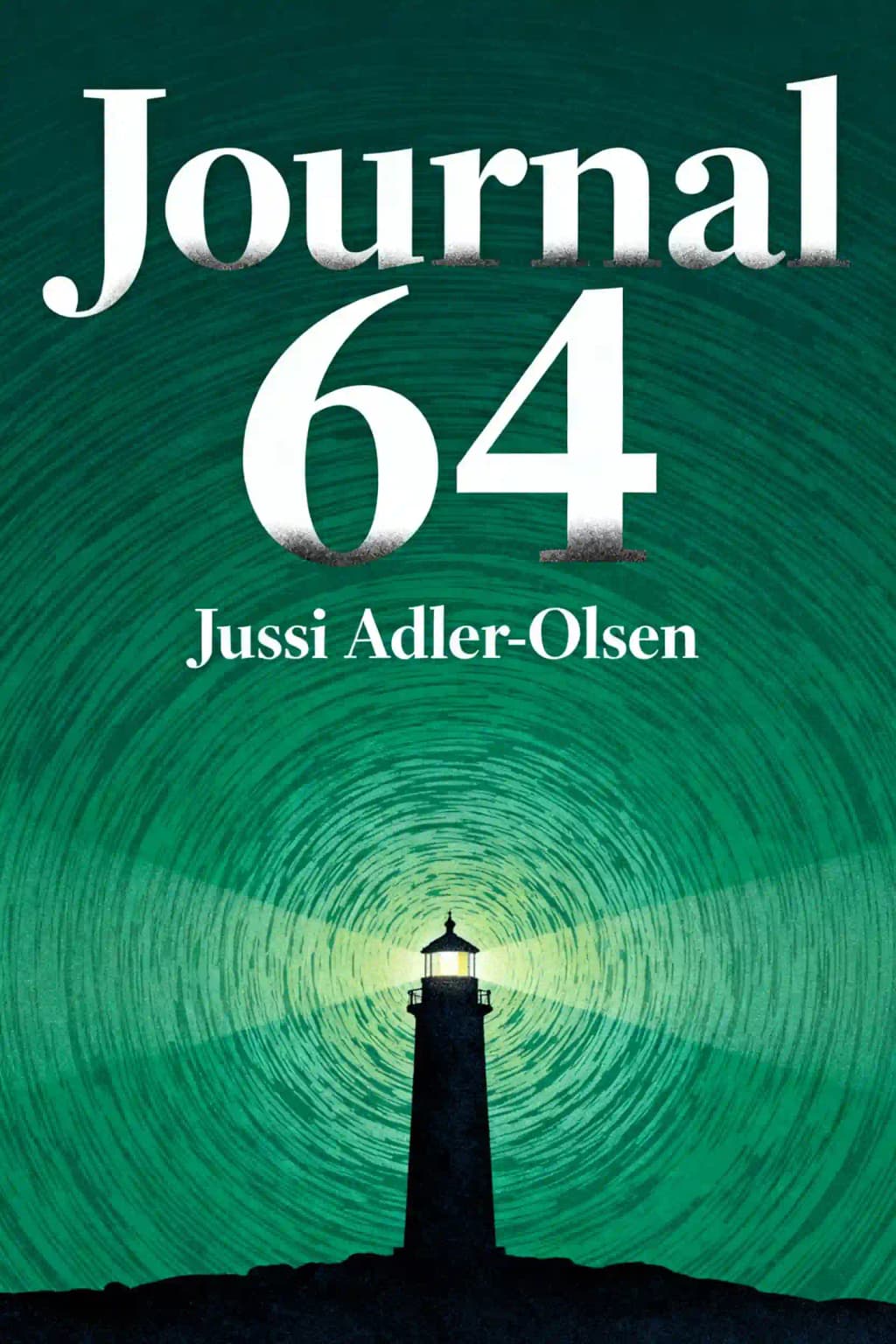
Denmark's award-winning "Journal 64" follows Detective Mrck's investigation of Nazi-inspired crimes that span generations. Winner of the prestigious Golden Laurels, this dark thriller became a multi-million-kroner film that asks: what twisted vengeance awaits when history's darkest chapters remain unfinished?
Carl Valdemar Jussi Henry Adler-Olsen is the bestselling Danish crime fiction author of Journal 64, the fourth novel in his internationally acclaimed Department Q series. Born in Copenhagen in 1950, Adler-Olsen brings unique psychological depth to Scandinavian noir, shaped by his childhood as the son of prominent psychiatrist Henry Olsen and his studies in medicine, sociology, and political science. Journal 64 explores dark historical themes including eugenics and institutional abuse, reflecting his deep understanding of how societal systems can fail vulnerable individuals.
Before writing the Department Q series, Adler-Olsen penned several international thrillers including The Alphabet House and The Washington Decree. His work has earned him the prestigious Glass Key Award, placing him alongside Nordic crime legends like Jo Nesbø and Henning Mankell. The Department Q novels have been adapted into successful Danish films starring Nikolaj Lie Kaas and Fares Fares.
Adler-Olsen's novels have sold over 25 million copies worldwide and been translated into more than 40 languages, with his books regularly topping The New York Times bestseller lists.
Journal 64 is a crime thriller following Detective Carl Mørck and his assistant Assad from Department Q as they investigate three mummified corpses discovered around a dining table in an old Copenhagen apartment. The case leads them to uncover dark secrets from Denmark's past, including historical abuses on Sprogø island where women deemed "immoral" were forcibly sterilized and controlled. The novel weaves together present-day investigation with haunting historical crimes involving eugenics and social control.
Journal 64 is ideal for fans of Scandinavian crime fiction, particularly readers who enjoy Nordic noir with historical depth and social commentary. The book appeals to those interested in detective procedurals with complex moral questions, historical injustices, and character-driven narratives. Readers of Jo Nesbø, Henning Mankell, and Stieg Larsson will appreciate Adler-Olsen's dark, atmospheric storytelling that combines police investigation with critique of institutional power and forgotten crimes against marginalized communities.
Journal 64 is the fourth installment in Jussi Adler-Olsen's Department Q series featuring Detective Carl Mørck, Assad, and Rose Knudsen. While the book can technically be read standalone as each case is self-contained, readers gain deeper appreciation for character relationships and development by starting with The Keeper of Lost Causes. The series follows Department Q, a basement unit tasked with investigating Copenhagen's cold cases, with each novel exploring different historical crimes and social issues.
Journal 64 is highly regarded as one of the strongest entries in the Department Q series, praised for its skillful blend of historical horror and contemporary investigation. Adler-Olsen's alternating timelines create mounting suspense while exposing real historical abuses in Denmark's welfare system. The novel's exploration of eugenics, forced sterilization, and institutional cruelty provides thought-provoking social commentary alongside gripping detective work, making it compelling both as entertainment and as examination of uncomfortable historical truths.
Journal 64 draws on the real history of Sprogø, a Danish island used during the 20th century to house and control women deemed "immoral" or mentally unfit by authorities. The novel explores Denmark's eugenics program, where women faced forced sterilization and social control measures under the guise of public welfare. Adler-Olsen uses this dark chapter to critique how seemingly benevolent welfare systems can enable discrimination and abuse of power against society's most vulnerable populations.
Carl Mørck leads Department Q as a cynical, troubled detective haunted by past trauma and family issues. His assistant Assad brings mysterious intelligence connections and willingness to bend rules, while Rose Knudsen, deeply invested in cold cases, connects emotionally to victims of injustice. The historical timeline centers on Nete Hermansen, a Sprogø survivor seeking revenge against those who destroyed her life, and Curt Wad, leader of the sinister Purity Party promoting eugenic ideologies.
Journal 64 examines justice versus vengeance as victims of historical abuse seek retribution against their oppressors. The novel critiques eugenics and social control, exposing how discriminatory ideologies operated within Denmark's welfare state. Adler-Olsen explores institutional abuse of power, showing how authorities weaponized medicine and law against marginalized women. The cyclical nature of violence, trust within partnerships, and society's treatment of those deemed "undesirable" create layered commentary on historical injustice and contemporary moral responsibility.
Sprogø island serves as the dark historical heart of Journal 64, representing Denmark's eugenic policies where women deemed morally or mentally "defective" were institutionalized and forcibly sterilized. Adler-Olsen uses this real location to expose systematic dehumanization masked as social progress. The island symbolizes how institutional power can destroy lives under the guise of public good, connecting past atrocities to present-day crimes as survivors seek justice for decades of abuse, isolation, and violated bodily autonomy.
Journal 64 concludes with Nete Hermansen's death at the hands of Gitte Charles, illustrating the tragic cycle of violence stemming from past abuse. The investigation exposes The Cause and its members, bringing decades-old eugenic crimes to light and achieving justice for Sprogø's victims. However, the ending leaves Department Q's future uncertain as Carl grapples with emotional toll and Assad's mysterious past, while several plot threads—including Herbert Sønderskov's fate—remain deliberately ambiguous.
Adler-Olsen employs alternating timelines between past and present to gradually unveil the central mystery while building suspense. Multiple character perspectives provide multifaceted views of events and motivations, particularly contrasting investigators' discovery process with historical victims' experiences. His cinematic prose reflects his film studies background, with tightly composed scenes that cut cleanly between action. The author incorporates social commentary on immigration, welfare systems, and marginalized groups, adding depth beyond standard crime procedural frameworks.
Journal 64 stands out for its historical depth, focusing on real institutional abuses rather than purely fictional crimes. The novel balances intimate character development with broader social critique more successfully than earlier entries. While maintaining the series' signature dark atmosphere and procedural investigation, this fourth installment explores Denmark's uncomfortable eugenic past with particular intensity. The emotional stakes feel higher as Rose connects personally to Sprogø victims, and Assad's mysterious capabilities raise unsettling questions that complicate Department Q's team dynamics.
Почувствуйте книгу через голос автора
Превратите знания в увлекательные, богатые примерами идеи
Захватите ключевые идеи мгновенно для быстрого обучения
Наслаждайтесь книгой в весёлой и увлекательной форме
She feels "almost like coming home."
"Hard as nails" and "a pure survivor."
The calculated coldness reveals the terrifying duality of his character.
The novel forces readers to confront uncomfortable questions.
Nete returns to Copenhagen with a single purpose.
Разбейте ключевые идеи The Purity of Vengeance: A Department Q Novel на понятные тезисы, чтобы понять, как инновационные команды создают, сотрудничают и растут.
Выделите из The Purity of Vengeance: A Department Q Novel быстрые подсказки для запоминания, подчёркивающие ключевые принципы открытости, командной работы и творческой устойчивости.

Погрузитесь в The Purity of Vengeance: A Department Q Novel через яркие истории, превращающие уроки инноваций в запоминающиеся и применимые моменты.
Задавайте любые вопросы, выбирайте голос и совместно создавайте идеи, которые действительно находят у вас отклик.

Создано выпускниками Колумбийского университета в Сан-Франциско
"Instead of endless scrolling, I just hit play on BeFreed. It saves me so much time."
"I never knew where to start with nonfiction—BeFreed’s book lists turned into podcasts gave me a clear path."
"Perfect balance between learning and entertainment. Finished ‘Thinking, Fast and Slow’ on my commute this week."
"Crazy how much I learned while walking the dog. BeFreed = small habits → big gains."
"Reading used to feel like a chore. Now it’s just part of my lifestyle."
"Feels effortless compared to reading. I’ve finished 6 books this month already."
"BeFreed turned my guilty doomscrolling into something that feels productive and inspiring."
"BeFreed turned my commute into learning time. 20-min podcasts are perfect for finishing books I never had time for."
"BeFreed replaced my podcast queue. Imagine Spotify for books — that’s it. 🙌"
"It is great for me to learn something from the book without reading it."
"The themed book list podcasts help me connect ideas across authors—like a guided audio journey."
"Makes me feel smarter every time before going to work"
Создано выпускниками Колумбийского университета в Сан-Франциско

Получите резюме книги «The Purity of Vengeance: A Department Q Novel» в формате PDF или EPUB бесплатно. Распечатайте или читайте офлайн в любое время.
In a quiet moment at a prestigious medical ceremony, Nete Rosen's carefully constructed life shatters when Curt Wad, a ghost from her past, publicly reveals her darkest secrets. This confrontation triggers a catastrophic chain of events ending with Nete grabbing her husband's steering wheel, sending them crashing through a hedge and into the sea. As water engulfs them, she feels "almost like coming home." This haunting scene sets the stage for a chilling exploration of Denmark's hidden history of eugenics and institutional abuse-practices that continued well into the 1970s. What happens when a nation's darkest secrets refuse to stay buried? And what lengths will people go to when justice has failed them completely?