Глава 1
When Identity Becomes a Wish Upon a Star
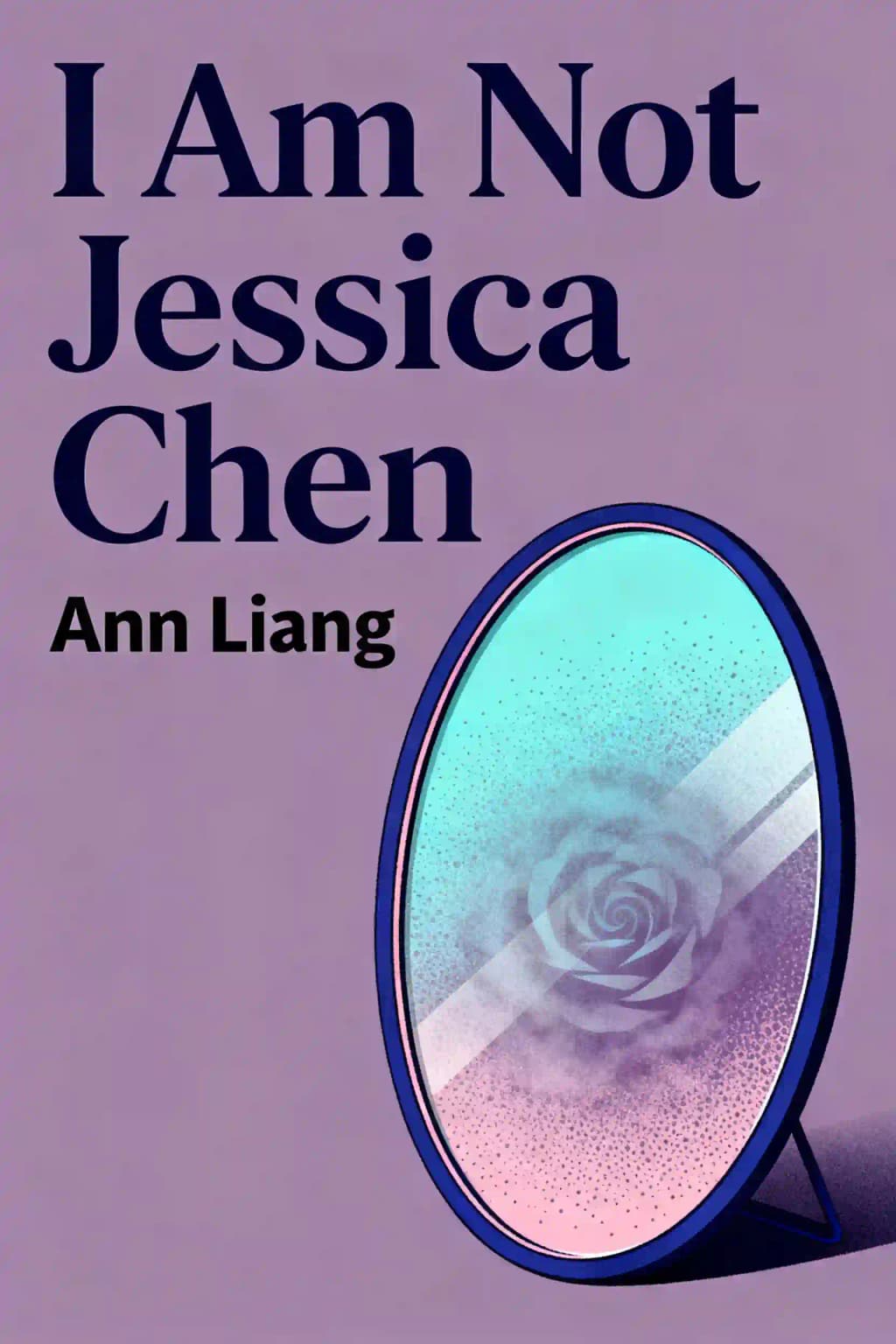
Have you ever looked at someone else's life and thought, "If only I could be them instead of me"? Ann Liang's captivating novel "I Am Not Jessica Chen" explores this universal fantasy with a magical twist. The story follows Jenna Chen, a high school senior devastated by her Harvard rejection, who makes an impulsive wish to become her perfect cousin Jessica-only to wake up the next morning in Jessica's body. This contemporary YA novel with a fantastical element has resonated deeply with readers, landing on the New York Times bestseller list within weeks of publication. Praised by Seventeen Magazine as "a poignant exploration of identity and self-worth," the book has become a TikTok sensation, with the hashtag #NotJessicaChen accumulating over 12 million views. Celebrities like Awkwafina have publicly recommended it, calling it "the book I wish I had as a teenager." But beyond its popularity, the novel asks a profound question: if you could become someone else, would you still want to once you've walked in their shoes?
Глава 2
The Crushing Weight of Expectations
Jenna Chen's world crumbles when she opens her Harvard rejection email. "I'm not good enough. Not as a student, daughter, or human," she thinks, devastated not just for herself but for her immigrant parents who sacrificed everything for her education. The contrast between Jenna's modest home and her cousin Jessica's mansion-ironically named "Magnolia Cottage"-couldn't be starker. While Jenna has been rejected from every Ivy League school, Jessica has been accepted to Harvard and five other prestigious universities.
The family dynamics are painfully evident during a dinner at Jessica's house. Jenna's mother fusses over bringing too many wontons, arguing with her father before they transform into smiles at the doorway-a performance of adequacy they've perfected. Meanwhile, Jessica appears in perfect arctic-blue cashmere, the embodiment of effortless success. Someone once described Jenna as the "dollar-store version" of Jessica Chen-her hair dull brown compared to Jessica's glossy black, her complexion sickly despite layers of foundation. The physical similarities between the cousins only highlight the gulf in their achievements and social standing.
The evening takes an unexpected turn when Aaron Cai, Jenna's childhood crush who's been studying medicine in Paris, appears with thoughtful gifts for everyone. When Jessica's Harvard acceptance is announced during dinner, the room erupts in celebration while Jenna sits frozen. Inevitably, her uncle asks about her Harvard decision, and all eyes turn expectantly to her. Unable to voice her failure, Jenna can only shake her head as silence falls over the table.
Later that night, standing alone in Jessica's lavender-scented backyard under the stars, Jenna makes a desperate wish when she sees a shooting star: "I wish I was Jessica Chen." In that moment of profound despair, the universe listens-and responds.
What makes this opening so compelling is how Liang grounds the fantasy element in the very real pressure faced by many students, particularly those from immigrant families. The expectations aren't just academic but existential-Jenna's father has already told all his colleagues about her Harvard application, hoping she'd secure the comfortable future he never had. When she fails, it's not just a personal disappointment but a public humiliation that threatens her family's standing in their community. This crushing weight of expectations creates the perfect emotional catalyst for Jenna's impulsive wish.
Глава 3
Waking Up in Someone Else's Life
The next morning, Jenna wakes to unexpected brightness and the scent of strawberries. Her room is usually dark, but sunlight streams through unfamiliar windows. Everything feels wrong-the blankets too soft, the pillows too high, and most shocking of all, there's a flower-shaped birthmark between her fingers that was never there before. Racing to the bathroom mirror, she discovers the impossible truth: she is Jessica Chen.
Jenna's surreal experience of navigating Jessica's life begins immediately. Jessica's mother offers cake for breakfast-an unimaginable luxury compared to Jenna's family's strict healthy diet-and hands over a thousand dollars for "lunch money." Outside, Jessica's friends Leela and Celine wait in a silver Mercedes. When they compliment "her" appearance and laugh uproariously at a joke about washing hair with "the tears of admirers," Jenna realizes they truly believe she is Jessica Chen.
At school, Jenna witnesses Jessica's social power firsthand. Students whisper as she passes, marveling at Jessica's beauty and wishing for her genes. When Celine mentions there's a fan club dedicated to Jessica, Jenna finally accepts this can't be a dream. The sensation of being admired feels like "breaking through water's surface into sunlight after being submerged my whole life."
But a terrifying question emerges: if Jenna is living Jessica's life, who's living hers? When she visits her actual home, her mother treats her like an outsider rather than her daughter, looking at her with a polite company smile. Even more disturbing, the self-portrait Jenna had angrily splattered with paint has changed-the violet paint has spread, now obscuring the entire top half of her face rather than just her eyes.
Liang brilliantly captures the disorienting experience of suddenly inhabiting someone else's life. The small details-the strawberry scent, the expensive breakfast options, the casual handling of large sums of money-effectively establish the stark contrast between Jessica's privileged existence and Jenna's more modest one. But beyond the material differences, Jenna discovers something even more intoxicating: the feeling of being seen, admired, and respected simply for existing. After a lifetime of struggling to be noticed, she finds herself at the center of attention without effort.
This section raises fascinating questions about identity. Is Jenna simply playing a role, or is she becoming Jessica? The changing self-portrait suggests something more sinister-that as Jenna lives Jessica's life, her own existence is literally being erased. This metaphor for losing oneself while trying to become someone else adds a layer of urgency and philosophical depth to what might otherwise be a simple body-swap story.
Глава 4
The Illusion of Perfection
As Jenna settles into Jessica's life, she discovers that being the "perfect" student comes with overwhelming pressures. Jessica has chosen the hardest subjects the school offers-chemistry, college-level statistics, and computer science-all opposite to Jenna's interests in history, geography, and art. The work piles up impossibly, and Jenna feels constantly chased, unable to slow down.
In Jessica's bedroom, Jenna finds perfect test papers with glowing teacher comments, but also something disturbing-Jessica's own harsh self-criticism written in the margins, berating herself for minor mistakes. Later, reading Jessica's journal, Jenna traces her cousin's evolution from genuine excitement about achievements to cool indifference as success became expected. Eventually, Jessica's tone shifts to anger and questioning the value of her sacrifices.
The facade of perfection cracks further during a politics test. Despite Jessica's impeccably organized, color-coded notes, Jenna scores only 91%-far below Jessica's usual perfect performance. Ms. Lewis pulls her aside, concerned that something must be wrong at home, reminding her that she's "the best student" and she'd "hate to be disappointed." The interaction reveals the relentless pressure Jessica faces to maintain her flawless record.
Even Jessica's friendships are complicated by her success. When Leela receives a poor grade on the same test, she breaks down crying in the hallway, confessing she feels like she's constantly struggling while everyone races ahead. Though Jenna tries to comfort her, their moment is ruined when another student interrupts to say Leela shouldn't be upset about Jessica beating her because "Jessica is basically a god" whom no one can compete with.
Perhaps most revealing is Jessica's relationship with her parents. When Jenna mentions getting 91% on the politics test, Jessica's mother becomes critical despite claiming not to be a "tiger parent." The tension reveals that Jessica's parents expect nothing less than perfection from their daughter.
Through these experiences, Jenna realizes that Jessica's seemingly perfect life comes with its own set of challenges and pressures. The constant expectation of excellence has robbed Jessica of the joy of learning and achievement. Success isn't celebrated but merely expected, while any deviation from perfection is treated as a crisis requiring explanation.
This section brilliantly deconstructs the myth of the perfect student. Jessica's life appears enviable from the outside, but living it reveals the isolation, pressure, and emptiness behind the accolades. By showing how Jessica's achievements have become a prison rather than a source of fulfillment, Liang offers a nuanced critique of achievement culture and the toll it takes on young people's mental health and sense of self-worth.
Глава 5
The Price of Envy
As Jenna continues living as Jessica, she confronts the darker side of her cousin's social position. During a horseback riding excursion with Celine and Leela, the girls begin ranking and evaluating their peers. When Jenna seizes the opportunity to ask about "my cousin Jenna," Celine's response is devastating: she describes Jenna as someone "ridiculously hardworking" but with a "lack of natural talent." Though Leela calls her mean, she doesn't disagree.
Celine continues, explaining that hard work alone isn't enough to get far in life, comparing Jenna unfavorably to natural prodigies. Her words trigger memories of childhood rejection and isolation-being left out of groups, uninvited to gatherings, and mocked for clumsiness. The conversation reveals how Jenna has been perceived by her peers all along: as someone worthy of pity rather than respect, someone trying too hard without the natural gifts to succeed.
This revelation is compounded when Jenna discovers threatening notes in Jessica's locker, giving her three days to "confess" before "everyone" is told something damaging. The mystery sender turns out to be Cathy Liu, who believes Jessica plagiarized her thesis. Cathy explains how she showed Jessica her entire essay outline hoping to impress her, only to have Jessica use her ideas. When their teacher noticed the similarities, he assumed Cathy had copied Jessica-"because how could someone like you cheat?"
Cathy's bitterness runs deeper; she was waitlisted at Harvard while Jessica got accepted everywhere. "You're headed off to my dream school, and you don't even need it," she cries, explaining she was skipped ahead two grades only to find herself perpetually second to Jessica. Though Jenna should be angry about the threatening messages, she understands Cathy's desperation.
These interactions reveal the complex social dynamics that surround high achievement. Jessica's position at the top of the social and academic hierarchy isn't just about her own success-it's built on the envy, resentment, and sometimes outright hostility of those around her. Her perfection makes others feel inadequate, creating a toxic environment where some, like Cathy, resort to underhanded tactics to level the playing field.
For Jenna, these discoveries are doubly painful. Not only does she learn how others have perceived her, but she also begins to question whether Jessica's success is entirely earned. The plagiarism accusation suggests that Jessica's perfect record might be built partly on deception, challenging Jenna's fundamental belief that her cousin is simply better than her in every way.
This section explores how envy can poison relationships from both directions-both for the person feeling envious and for the object of envy. Jenna's wish to become Jessica was born from envy, but now she discovers that Jessica's position as the envied one has isolated her and made her a target. By showing both sides of this dynamic, Liang creates a nuanced portrait of how comparison and competition can damage even the closest relationships.
Глава 6
Finding Aaron Again
Throughout Jenna's journey as Jessica, one relationship becomes increasingly significant: her connection with Aaron Cai, her childhood friend and secret crush. When Aaron returns from his medical program in Paris, he's the first to sense something different about "Jessica." During a mountain hike, he notices subtle changes in her behavior and mannerisms that others miss.
After Jenna falls from a horse during a riding excursion, Aaron tends to her injuries with professional care. While bandaging her scraped arm, he experiences a strange sense of deja vu, as if he's done this before. This triggers a flashback to when they were fifteen, hiking these same mountains, when Aaron tenderly cared for an injured Jenna, revealing the depth of their connection.
The turning point comes during a walk through a misty meadow after the riding accident. When Jenna shares her childhood dream of living in the countryside with a dog and garden, Aaron stops abruptly, staring at her intensely. "Jenna," he whispers, finally convinced of her true identity. He explains how he couldn't stop thinking about the differences between Jessica before and after his return from Paris, eventually concluding that something impossible had happened.
In a shocking revelation, Aaron confesses he never had feelings for Jessica-he's always been in love with Jenna. He explains he fled to Paris because of his overwhelming feelings for her, afraid she'd quickly lose interest in him once she discovered his flaws. Despite his attempt to escape, his feelings never faded. Though stunned by his confession, Jenna is trapped in Jessica's body, unable to properly respond.
This romantic subplot adds emotional depth to Jenna's identity crisis. Aaron represents someone who truly sees and values Jenna for who she is, not what she achieves. His ability to recognize her soul despite her changed appearance suggests a connection that transcends the physical-he knows her in ways that can't be explained by superficial observation.
Their relationship also highlights the theme of authenticity versus performance. While Jenna has been performing as Jessica, Aaron has been the one person who could see through the act to the authentic person beneath. His love for the real Jenna challenges her belief that she needs to become someone else to be worthy of love and admiration.
Perhaps most significantly, Aaron's confession forces Jenna to confront a difficult truth: in wishing to become Jessica, she may have sacrificed the possibility of a relationship with someone who loved her for exactly who she was. This realization adds urgency to her dilemma-the longer she remains Jessica, the more she risks losing the connections that made her life as Jenna meaningful.
Глава 7
The Fading Self
As Jenna's time as Jessica stretches on, disturbing signs suggest her original identity is literally disappearing. When she visits her old school's art exhibition, she discovers her self-portraits on display-but they're altered, with half her face erased in each one. When she asks the art teacher about them, Ms. Wilde has no idea who "Jenna Chen" is and plans to throw them away if unclaimed.
Checking her phone, Jenna sees the painting from her bedroom has deteriorated further, with more of her face disappearing. Even more alarming, people's memories of Jenna seem to be fading. When she asks about her whereabouts, people respond with vague, dreamlike answers about her being "away until further notice," unable to provide any specific details about this supposed trip.
The erasure extends beyond physical representations to relationships. When Jenna visits her parents as "Jessica," her mother treats her with polite formality rather than maternal warmth. Her father fails to remember that Jenna gave him his favorite hat years ago. These interactions suggest that not just Jenna's physical presence but the memory of her existence is gradually being erased from the world.
The crisis comes to a head when Aaron suddenly forgets everything about their shared experience. When Jenna mentions "the wish" about being Jessica Chen, he has no idea what she's talking about. When she desperately asks who he thinks she is, he replies, "You're Jessica Chen, of course." Despite her pleas for him to remember her as Jenna, his expression remains controlled and neutral: "I'm sorry, I really don't know what you're talking about, Jessica."
This progressive erasure creates a ticking clock element to the story. It's not just that Jenna is living someone else's life-her own existence is literally being overwritten, suggesting that if she doesn't find a way back to herself soon, there may be no "Jenna" left to return to. This raises the stakes dramatically: what began as a fantasy about escaping her problems has become a fight for her very existence.
The fading self also serves as a powerful metaphor for how we can lose ourselves when we try too hard to become someone else. By focusing all her energy on performing as Jessica, Jenna has neglected the connections and activities that defined her as Jenna-her art, her relationship with her parents, her friendship with Aaron. Without these anchors, her sense of self begins to dissolve.
This section creates a profound sense of existential horror. Beyond the practical problems of living someone else's life, Jenna faces the ultimate threat: complete erasure, as if she never existed at all. This transforms her journey from a cautionary tale about envy to a desperate fight to reclaim her identity before it's too late.
Глава 8
The Wish Reversed
Racing against time as her identity continues to fade, Jenna returns to the mountain where she made her original wish. With her deteriorating self-portrait in hand, she waits through the cold night for another shooting star. When the meteor finally appears, she begs to be Jenna again, overwhelmed by memories of all she's lost-her home, her parents, her art, even Aaron.
Despite her desperate pleas, nothing happens immediately, and she cries herself to sleep on the mountain, believing she's trapped as Jessica forever. But when she wakes at sunrise, she finds Jessica standing above her, wearing the clothes Jenna had on the day before. Looking at her hands, Jenna discovers the familiar calluses from years of painting-she's back in her own body.
Jessica explains she was suspended in her own mind the whole time, aware but not in control, finding it oddly freeing. They discuss the impossibility of what happened, concluding that "perhaps the cruelest trick the universe can play is giving exactly what we wish for." When Jessica asks if Jenna really wanted to be her that badly, Jenna laughs and says "not anymore."
Returning home, Jenna is met with her mother's furious scolding-a torrent of worry and anger she's never been happier to hear, finally back where she belongs. Her parents were terrified, thinking she'd been kidnapped. Overjoyed to be herself again, Jenna confirms with her mother that she's truly her daughter and requests wontons for dinner-a simple family tradition that now feels precious rather than ordinary.
Aaron appears at their house, confirming he remembers everything that happened. When he tries to leave, Jenna finally finds her courage, telling him she knows exactly what she wants now-including him. He turns and kisses her passionately, confessing, "Jenna, you're all I've ever wanted. It's always been you." In this moment, Jenna realizes with amazement that her life is beautiful, and she "can paint it any color I want."
This resolution avoids the simplistic moral that "you should be happy with what you have." Instead, it suggests that Jenna needed to experience Jessica's life to truly understand the value of her own. By walking in Jessica's shoes, she discovered that the perfect life she envied came with its own set of pressures, expectations, and loneliness. This experience didn't make her grateful for her "lesser" life-it helped her recognize that her life wasn't lesser at all, just different, with its own unique sources of meaning and joy.
The reconciliation with Aaron represents more than just a romantic happy ending. It symbolizes Jenna's acceptance of being loved for who she truly is, rather than for achievements or social status. Aaron's consistent love for Jenna-even when she was physically Jessica-affirms that her value as a person transcends her accomplishments or failures.
This section completes Jenna's character arc from someone who believed her worth depended entirely on achievement to someone who recognizes the intrinsic value of her unique perspective, relationships, and creative gifts. By returning to herself with new appreciation rather than resignation, Jenna transforms what could have been a cautionary tale into a story of genuine self-discovery and growth.
Глава 9
Reconciliation and New Beginnings
Life returns to normal for Jenna, but she experiences it differently now. She savors her mother's congee, appreciates the perfect blue sky, and reunites with her beloved art class. Small pleasures and everyday connections that she once took for granted now feel precious and meaningful.
When Leela hugs her, Jenna holds her tightly, treasuring their friendship. Interestingly, Leela suddenly remembers loving Jenna's self-portraits, though she'd forgotten about them briefly-suggesting that as Jenna reclaims her identity, others' memories of her are also being restored.
Jenna begins a new self-portrait-this one different from the others. Instead of looking ahead or up at something unattainable, she's smiling at someone over her shoulder, using softer colors. This artistic choice symbolizes her new perspective: rather than constantly striving for something beyond her reach, she's engaged with the present moment and the people around her.
The most significant reconciliation comes between Jenna and Jessica. When they meet again at Jessica's house, Jenna confesses that what bothered her most was how Jessica was proof that her failures were her own fault-Jessica came from the same family and achieved everything Jenna couldn't. "You were the standard I could never meet," she admits.
Jessica, in turn, reveals she was afraid to talk to Jenna, worried her cousin wouldn't want to be around her. They laugh about shared childhood memories and acknowledge they're each other's favorite cousins. In a surprising turn, Jessica reveals she's going to confess about plagiarizing Cathy's essay, even if Harvard revokes her acceptance, because she needs her integrity back.
This final conversation between the cousins reveals how their envy and resentment had created a mutual distance. Jessica wasn't just an object of Jenna's envy-she was also someone who felt isolated by her own success and feared rejection from her family. By finally speaking honestly about their feelings, they're able to reconnect as family rather than competitors.
Jessica's decision to confess about the plagiarism represents her own journey toward authenticity. Having experienced what it was like to be temporarily freed from her perfect image, she now chooses integrity over achievement, even at the cost of her Harvard acceptance. This suggests that Jessica, too, has been transformed by their shared experience.
The novel ends with a simple family dinner scene-Jessica's parents and Jenna's parents preparing food together while the cousins talk. Jenna realizes there's nothing else she'd wish for except this moment with her family. This ordinary scene of domestic harmony represents what Jenna has learned to value: not extraordinary achievements or social status, but genuine connection with the people who love her.
This conclusion avoids both the cynical message that "nothing ever changes" and the unrealistic suggestion that all problems have been solved. Instead, it offers a nuanced vision of growth: Jenna and Jessica have both learned to see beyond the narrow metrics of academic success to what truly matters in their lives. They haven't abandoned ambition, but they've gained perspective on its proper place in a well-lived life.
Глава 10
Finding Value Beyond Achievement
"I Am Not Jessica Chen" ultimately delivers a powerful message about identity, worth, and the dangers of defining ourselves solely through achievement. Through Jenna's journey, we see how the pressure to succeed-particularly in immigrant families where children often carry the weight of their parents' sacrifices-can distort our sense of self-worth and blind us to the value of our unique gifts and perspectives.
When Jenna initially wishes to become Jessica, she believes that academic success and social status are the only meaningful measures of a person's value. Her rejection from Harvard feels like a definitive judgment not just on her academic abilities but on her worth as a human being. By literally stepping into Jessica's shoes, Jenna discovers that even "perfect" achievement doesn't bring fulfillment when it's driven by external expectations rather than genuine passion.
The novel also explores how we project idealized versions onto others' lives. From the outside, Jessica seems to have everything-beauty, intelligence, wealth, and social status. Living as Jessica reveals the loneliness, pressure, and emptiness behind the perfect facade. This insight doesn't make Jenna grateful for her "lesser" life but helps her recognize that every life has its unique challenges and rewards.
Perhaps most importantly, the story challenges the notion that our value comes from what we achieve rather than who we are. Through Aaron's consistent love for Jenna-even when she's physically Jessica-we see that true connection comes from being known and valued for our authentic selves, not for our accomplishments or social position. When Jenna finally returns to herself, she doesn't resign herself to a life of mediocrity; instead, she embraces her unique perspective and talents with new appreciation.
By the end, both Jenna and Jessica have moved beyond seeing themselves as competitors in a zero-sum game where only one can be "the best." They recognize that they each have intrinsic value beyond their grades or college acceptances. This doesn't mean abandoning ambition or effort but placing them in proper perspective-as means to express our gifts rather than prove our worth.
In a culture increasingly defined by achievement metrics, social media comparisons, and performative success, "I Am Not Jessica Chen" offers a timely reminder that our humanity isn't measured by our accomplishments but by our capacity for authentic connection, creative expression, and genuine joy in the ordinary moments that make up a life.