Глава 1
The Final Year of Trump's Presidency: A Descent into Chaos
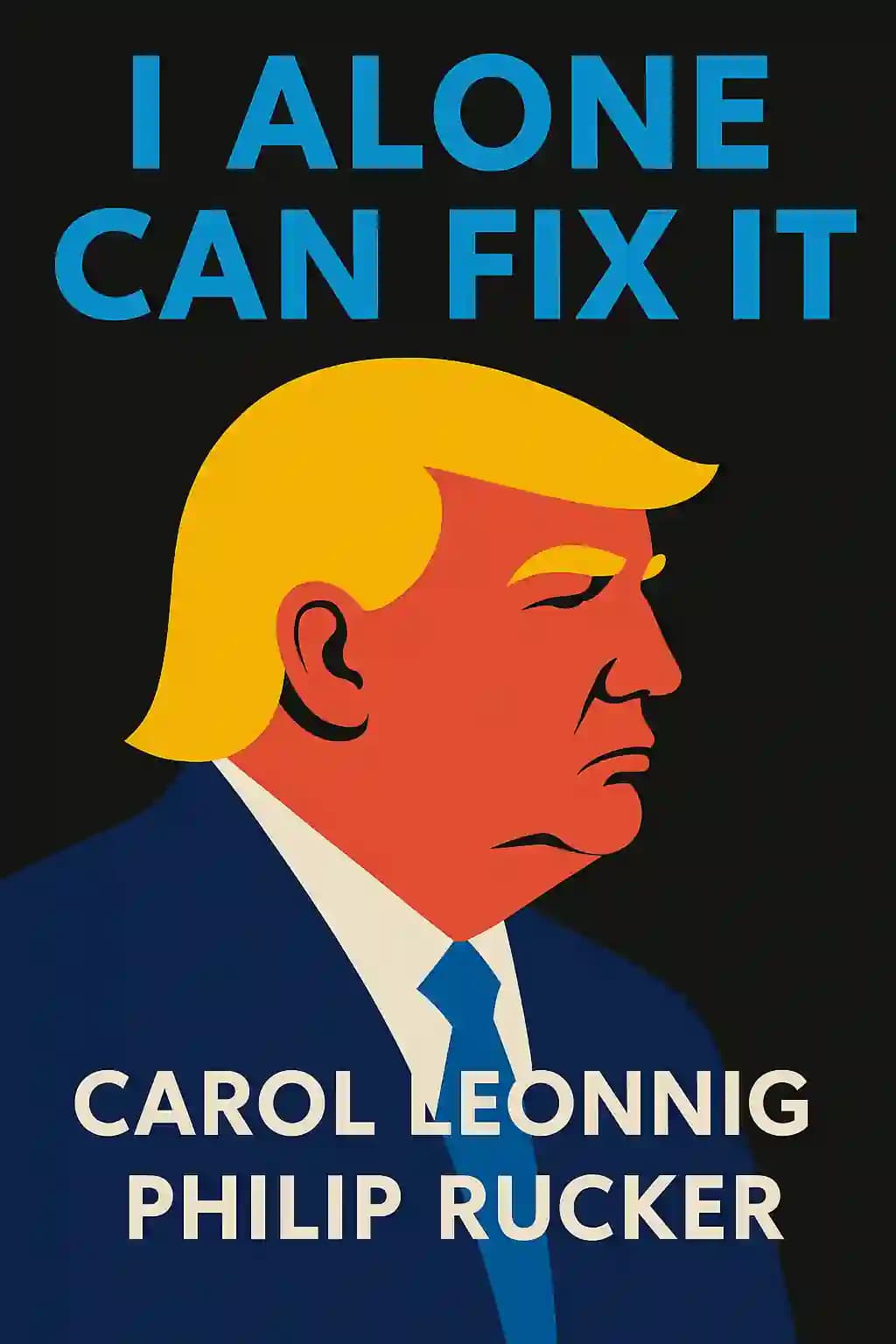
Donald Trump's "I Alone Can Fix It" chronicles a presidency that ended in unprecedented turmoil. Written by Pulitzer Prize-winning Washington Post reporters Carol Leonnig and Philip Rucker, this meticulously researched account draws from hundreds of hours of interviews with over 140 sources close to the administration. The book became an instant bestseller, praised by critics as "the definitive account" of Trump's catastrophic final year in office. Even Barack Obama included it on his 2021 summer reading list, noting its importance for understanding the fragility of democratic institutions. What makes this work particularly compelling is how it reveals, through firsthand accounts, the dangerous consequences of a president who prioritized personal loyalty and self-interest over national welfare during multiple overlapping crises.
Глава 2
A Pandemic Ignored: Early Warning Signs and Missed Opportunities
In January 2020, as the coronavirus threat emerged in China, Trump's attention remained fixed elsewhere. During a January 18 call with Health Secretary Alex Azar about the virus, Trump interrupted to ask, "What's a coronavirus?" before quickly changing the subject to vaping regulations. "I never should have done this vaping thing," Trump complained. "Everywhere I go, they're holding signs: 'I vape. I vote.'" This brief exchange perfectly encapsulated Trump's approach to governance - prioritizing political popularity over emerging threats.
Meanwhile, Chinese officials deliberately concealed critical information about human-to-human transmission while Trump hosted them in the East Room for a trade deal signing. He rambled for 48 minutes, praising Xi Jinping as "a very, very good friend" - the same day a Washington State man returned from China carrying what would become America's second known COVID case.
Behind the scenes, deputy national security adviser Matthew Pottinger tried raising alarms. After one intelligence briefing where Pottinger shared information from a doctor contact in China comparing the outbreak to the 1918 Spanish flu pandemic, acting Chief of Staff Mick Mulvaney confronted him: "That was totally inappropriate. You won't come to another one of these." The administration's pattern of sidelining experts who delivered unwelcome news was already taking shape.
By late January, CDC Director Robert Redfield had seen enough evidence of human-to-human transmission to support travel restrictions from China. When Azar and others called Trump to discuss evacuating Americans from China, the president initially refused: "We're not letting them come back. You risk increasing my numbers." Only after they appealed to his "America First" brand did Trump reluctantly agree. His focus remained on optics rather than public health.
This early period revealed Trump's fundamental approach to the pandemic - denial, distraction, and prioritizing political considerations over expert advice. While intelligence agencies and health officials tried to sound alarms, Trump's administration wasted critical weeks that could have been used preparing for the inevitable spread.
Глава 3
Magical Thinking: Trump's War Against Reality
As COVID-19 spread across America, Trump's response increasingly relied on wishful thinking rather than scientific guidance. In March, he told reporters the virus would "disappear" like "a miracle," while privately telling journalist Bob Woodward he knew it was "deadly stuff." This pattern of public deception while privately acknowledging the danger became a hallmark of his pandemic response.
Trump's magical thinking extended to treatments. He became fixated on hydroxychloroquine after seeing positive mentions on Fox News, despite limited evidence of efficacy. When experts expressed skepticism, Trump and his allies attacked them. White House trade adviser Peter Navarro confronted Dr. Anthony Fauci with unverified studies, accusing him of having "blood on your hands" for not endorsing the drug. The FDA would later caution against hydroxychloroquine and revoke its emergency authorization.
Perhaps the most damaging example came when DHS scientist William Bryan presented findings about sunlight's effect on the virus. Trump mused on live television about injecting disinfectants into the body: "And then I see the disinfectant, where it knocks it out in a minute. One minute. And is there a way we can do something like that, by injection inside or almost a cleaning?" Dr. Deborah Birx sat mortified but silent as Trump's dangerous speculation went viral worldwide.
Trump's resistance to masks became another battleground between science and politics. When pollsters showed 70% of battleground voters supported mask mandates, Jared Kushner urged Trump to embrace them: "To me, this is a no-brainer. Just do it." But Mark Meadows countered, "He can't do it. The base will go against him." Trump sided with Meadows, explaining, "People tell me it makes me look weak...it doesn't look presidential."
Instead, Trump embraced Dr. Scott Atlas, a neuroradiologist with no infectious disease expertise who had caught Trump's attention on Fox News. Atlas quickly became Trump's primary COVID advisor, sidelining Fauci and Birx while promoting controversial "herd immunity" strategies. When Birx and CDC Director Redfield challenged Atlas's claim that only 30% infection was needed for herd immunity (experts estimated 60-70%), Atlas remained unmoved, providing Trump the "happy talk" about the virus that the president preferred.
This rejection of expertise extended to vaccine development. When FDA Commissioner Stephen Hahn required 60-day monitoring of vaccine trial participants (effectively ensuring no approval before the election), Mark Meadows berated Azar over the phone: "This is a political hit job!" Later, when Pfizer announced its successful vaccine results after the election, Trump called Hahn to accuse him of conspiring with Pfizer to delay the announcement, despite Hahn's explanation that "they made a scientific decision."
Trump's war against reality created a deadly information vacuum, leaving Americans confused about basic safety measures during a pandemic that would ultimately claim over 400,000 lives during his presidency.
Глава 4
The Lafayette Square Moment: A Presidency Unmasked
On June 1, 2020, as protests against police brutality spread nationwide following George Floyd's murder, Trump summoned top officials to the Oval Office. Furious about his retreat to a White House bunker during protests and subsequent media mockery, Trump demanded military intervention against demonstrators.
What followed became one of the most shocking moments of Trump's presidency. After declaring himself "president of law and order" in a Rose Garden speech, Trump led an entourage including Defense Secretary Mark Esper, Chairman of the Joint Chiefs Mark Milley, and Attorney General Bill Barr across Lafayette Square, which had just been violently cleared of peaceful protesters with tear gas and rubber bullets.
As they walked, Milley (in battle camouflage) realized this was a political photo op and broke away, thinking "This is fucked up." At St. John's Church, Trump awkwardly held up a Bible but didn't pray or inspect the fire damage inside. The clergy who had been distributing water to protesters were horrified. One seminarian texted: "Did we just get fucking tear gas for a fucking photo op?"
For the military leaders who walked with Trump, Lafayette Square was a wake-up call. Esper told confidants "We were played," while Milley declared to aides: "He burned me. Fuck these guys. I'm not playing political games." Days later, Milley took the extraordinary step of apologizing for his presence: "I should not have been there. My presence in that moment and in that environment created a perception of the military involved in domestic politics."
The incident sparked unprecedented criticism from military leaders. Admiral Mike Mullen, former chairman of the Joint Chiefs, wrote that he was "sickened" by events at Lafayette Square, while former Defense Secretary James Mattis denounced Trump as "the first president in my lifetime who does not try to unite the American people." The backlash revealed growing concern among military leaders about Trump's willingness to use armed forces against American citizens for political purposes.
This pivotal moment exposed Trump's authoritarian instincts and willingness to sacrifice democratic norms for personal image. It also revealed the growing resistance within his own administration to actions that threatened constitutional boundaries.
Глава 5
The Tulsa Disaster: Hubris Meets Reality
By June 2020, Trump was desperate to restart his campaign rallies despite the pandemic's continued threat. When he witnessed thousands marching in Black Lives Matter protests across America, he immediately called campaign manager Brad Parscale: "Why can't we do rallies if they do these protests?" Though Parscale proposed safer alternatives like outdoor venues with social distancing protocols and drive-in rallies similar to those Biden would later hold, Trump adamantly insisted on packed indoor crowds: "They'll show up for me. They're not going to believe this virus stuff. My people are different."
The June 20 Tulsa rally became a perfect encapsulation of Trump's pandemic approach - prioritizing politics over public health, wishful thinking over scientific reality. Campaign staff actively worked to undermine safety measures, removing social distancing stickers that the arena management had carefully placed on seats. They even halted COVID testing to avoid discovering positive cases that might generate negative publicity. Masks were made optional and largely discouraged. The campaign boasted of distributing over a million tickets, with Parscale tweeting about the "biggest data haul and rally signup of all time."
When Trump arrived at the BOK Center to find only 6,200 attendees in an arena that seated 19,000, his fury was volcanic. The sea of empty blue seats created an optics disaster that dominated news coverage. The health consequences proved equally severe. Within a week, Tulsa County experienced an unprecedented spike in COVID cases, with daily numbers more than doubling from 76-96 to 200-260. The impact reached Trump's inner circle as several Secret Service agents had to self-isolate. High-profile attendees Herman Cain and Oklahoma Governor Kevin Stitt both contracted COVID. Cain, who had been photographed proudly maskless at the rally, died on July 30, though his family never directly blamed the event.
The rally's failure was compounded when the campaign discovered they had been strategically undermined by TikTok users and K-pop fans, who coordinated a campaign to reserve tickets with no intention of attending. This digital activism, unprecedented in American political history, left Trump's team blindsided. Trump's relationship with Parscale, already strained, completely ruptured. "You fucked it up!" Trump raged at his campaign manager. "You fucked me! You fucked up the whole campaign!" Parscale would be demoted within weeks.
By late June, with COVID cases surging particularly in red states and his campaign struggling to find its footing, Trump displayed rare moments of doubt. He confided to senior advisor Kellyanne Conway, "There's no way we can win." Former New Jersey Governor Chris Christie attempted to intervene, telling Trump he was losing because he was running "the 2016 campaign again" and needed to focus on the future rather than past grievances. But Trump seemed constitutionally incapable of adapting his approach or message, even as mounting evidence suggested his handling of the pandemic was becoming politically catastrophic. The Tulsa rally marked the beginning of a downward spiral from which his reelection campaign would never fully recover.
Глава 6
"Nobody's Immune": The President Contracts COVID
On October 1, Hope Hicks tested positive for COVID-19 after traveling with Trump to Minnesota. Despite this diagnosis and his own hoarseness, Trump proceeded with a scheduled fundraiser at his Bedminster golf club in New Jersey - a decision that violated CDC protocols. At Bedminster, he hosted an intimate indoor gathering with major donors, many elderly and without masks, potentially exposing them to the virus.
That evening, in a recorded message for the Alfred E. Smith Memorial Foundation Dinner, Trump declared "the end of the pandemic is in sight." Behind the scenes, the White House was quietly contacting the FDA about compassionate use approval for monoclonal antibodies for a "high-level White House individual" - not for Hicks, as initially assumed, but for Trump himself.
By the next morning, Trump's condition had worsened dramatically. His blood oxygen level dropped below 94 percent, and despite his resistance, Dr. Sean Conley administered supplemental oxygen. At Walter Reed, Trump received aggressive treatment including Regeneron's experimental monoclonal antibody cocktail, remdesivir, and dexamethasone - a combination that concerned some medical experts as potentially excessive.
Throughout Trump's hospitalization, Conley presented an overly optimistic assessment of the president's condition to the public, later admitting he was "trying to reflect the upbeat attitude" desired by Trump. Meanwhile, Meadows contradicted this rosy outlook, telling reporters Trump's vitals were "very concerning."
Against medical advice, Trump orchestrated a joy ride past supporters in an SUV with two Secret Service agents, alarming medical professionals who called it dangerous "political theater." He then insisted on leaving the hospital early, determined to project strength. His dramatic White House return featured him removing his mask on the balcony for a campaign propaganda video, followed by a tweet telling Americans: "Don't be afraid of Covid. Don't let it dominate your life."
Trump rejected advisers' suggestions to use his illness to connect with COVID sufferers, instead focusing solely on projecting strength. His experience with the virus, which might have humanized him and changed his approach to the pandemic, instead reinforced his worst tendencies - prioritizing image over substance, politics over public health.
Глава 7
The Big Lie: Seeds of Insurrection
As Election Day approached, Trump laid groundwork for rejecting unfavorable results. He repeatedly attacked mail-in voting as fraudulent despite evidence to the contrary. When pollster Tony Fabrizio presented data showing Biden leading in key states, Trump erupted: "THEY'RE tired? THEY'RE fatigued? Well, I'M fucking fatigued, too."
On election night, despite several states remaining too close to call, Trump claimed victory in a 2:00 a.m. East Room speech. He rattled off states he had won and falsely claimed to be winning others with substantial leads, declaring "This is a fraud on the American public" and announcing his intention to go to the Supreme Court to stop vote counting. Mitt Romney watched heartsick from California, concerned about the impact on global democracy, while Nancy Pelosi viewed the speech with horror, calling it "a complete, total manifestation of insanity."
The day after the election, Trump surprised aides by suddenly sounding defeatist despite his public bravado, asking "How did we lose to Joe Biden?" and "Can we still win?" But his campaign quickly mobilized a defiant strategy, with Trump tweeting "STOP THE COUNT!" and claiming widespread voter fraud.
When campaign professionals like Bill Stepien and Justin Clark candidly explained Trump's minuscule chances of overturning the results - perhaps 5-10% - Trump didn't rage but simply said they'd "give it a shot." As Rudy Giuliani gained influence, repeatedly telling Trump "They stole this thing," the legal strategy deteriorated into increasingly outlandish conspiracy theories.
Giuliani's November 19 news conference at RNC headquarters became a turning point. As black hair dye mixed with sweat dripped down his face, Giuliani and Sidney Powell claimed without evidence that a broad conspiracy with roots in Venezuela had rigged the U.S. election through Dominion voting machines programmed to "flip" votes from Trump to Biden. White House staffers were humiliated, with one calling it "just like a freak show." Senator Lindsey Graham, who had previously supported Trump, called it the lowest point of the year.
Despite over fifty failed lawsuits across multiple states, Trump continued believing the Supreme Court would intervene, publicly pressuring his appointed justices for "courage" to "do what everybody in this country knows is right." When the Court quickly dismissed his challenges, Trump's team falsely claimed they "dodged" and "hid behind procedure."
By December, Trump's rhetoric had grown increasingly dangerous. His tweets promoting January 6 as a day of action deeply worried military leaders, with Milley comparing the president's language to Orwell's 1984: "Lies are truth. Division is unity. Evil is good." What most concerned Milley was Trump's call to action: "January 6th. See you in D.C.," the president tweeted, promoting the event like a boxing match with messages like "Be there, will be wild."
Глава 8
January 6th: Democracy Under Siege
As thousands of Trump supporters descended on Washington, security concerns mounted across federal agencies. At his January 6 "Stop the Steal" rally near the White House Ellipse, Trump told supporters to march to the Capitol and "fight like hell," following weeks of increasingly inflammatory rhetoric on social media. The subsequent assault on the Capitol would become the worst attack on the seat of American democracy since the British burned it during the War of 1812.
The mob overwhelmed Capitol Police barricades around 1:00 p.m., with initial breaches occurring at multiple entry points. Rioters wielded bear spray, metal poles, and improvised weapons, while some carried zip ties and tactical gear. Inside the White House dining room, Trump watched the events unfold on television, reportedly expressing approval of supporters who were "fighting for him." Despite desperate pleas from advisers, Republican lawmakers including Kevin McCarthy, and his daughter Ivanka to intervene, Trump remained passive for over three hours.
The siege resulted in five deaths, including Capitol Police officer Brian Sicknick, who died after being sprayed with chemical irritants. Over 140 officers sustained injuries ranging from broken ribs to concussions. Rioters came within 40 feet of encountering Vice President Pence, who had been evacuated from the Senate chamber just moments before. In nearby offices, congressional staffers used furniture to barricade doors, applying active shooter training while lawmakers donned emergency gas masks. Some called loved ones, fearing they wouldn't survive.
When Trump finally released a video message at 4:17 p.m., he began by reiterating baseless election fraud claims before telling supporters "we love you, you're very special" and asking them to go home. This response prompted immediate resignations, including White House Deputy Press Secretary Sarah Matthews and Transportation Secretary Elaine Chao, who cited the president's failure to condemn the violence.
That evening, despite the day's unprecedented assault, six Republican senators and between 121-138 House Republicans still objected to certifying various states' electoral votes. House Speaker Nancy Pelosi later assessed these lawmakers were either "afraid of Trump, agreed with him, or were just in a cult." After hours of delay, at 3:24 a.m., Congress completed its constitutional duty certifying Biden's victory, with Vice President Pence formally declaring Biden the next president.
The aftermath brought profound unease to Washington's corridors of power. Three senior officials - Chairman of the Joint Chiefs Mark Milley, Chief of Staff Mark Meadows, and Secretary of State Mike Pompeo - instituted daily coordination calls to "land this bad boy" and ensure a peaceful transfer of power. At the Pentagon, officials quietly reviewed protocols regarding presidential nuclear authority, confirming that while Trump retained legal authority to launch strikes against imminent threats, the military chain of command could potentially block non-imminent strike orders through procedural delays or legal objections. The FBI launched its largest investigation in history, eventually charging over 700 individuals with crimes related to the attack.
Глава 9
Legacy of Chaos: A Presidency Defined by Crisis
Seventy days after departing the White House, Trump held court at Mar-a-Lago like an exiled monarch, hosting a rotating cast of loyalists, political aspirants, and media figures. During extensive interviews with the book's authors, he displayed an almost obsessive focus on the 2020 election, interrupting other topics to return to his claims of fraud. His influence over the Republican Party remained substantial - he cited specific examples of candidates who won primaries with his endorsement in Ohio, Pennsylvania, and North Carolina, while those who opposed him faced primary defeats.
Trump's bitterness toward former allies was particularly striking. He labeled Bill Barr a "disappointment" who "caved to pressure," despite Barr's earlier loyalty in handling the Mueller report. His anger toward Mike Pence was especially visceral, calling his former vice president "weak" for refusing to reject electoral votes. Trump's Supreme Court appointees became targets of his ire, with Brett Kavanaugh singled out for particular scorn. "I saved his life. He was dead. He was finished," Trump declared, referencing his support during Kavanaugh's contentious confirmation hearings.
When discussing January 6th, Trump consistently attempted to reframe the narrative, focusing obsessively on crowd size estimates and claiming he requested National Guard troops that were rejected - a claim contradicted by multiple officials. He dismissed video evidence of officers being beaten with flagpoles and sprayed with chemical irritants, instead insisting it was "peaceful" and "patriotic." His alternative reality extended to specific claims about Pennsylvania nursing homes, Georgia ballot drops, and Michigan counting centers, all thoroughly debunked by election officials and courts.
His grievances extended to Republican leadership, particularly targeting Mitch McConnell with personal insults about his "lack of fight" and "terrible leadership." He expressed particular contempt for Republican governors in Georgia and Arizona who certified Biden's victory, calling them "RINOs" and "cowards" who "betrayed the party." When pressed about his administration's COVID-19 response, Trump cited Operation Warp Speed while dismissing the death toll, claiming "we did better than anyone else" despite America's high mortality rate.
The final chapter of Trump's presidency revealed deep fissures in American democracy. His actions strained institutional guardrails, from pressuring state officials to "find" votes to encouraging supporters to "fight like hell" before the Capitol riot. Career officials described an administration increasingly untethered from reality, with Trump rejecting intelligence briefings that contradicted his preferred narratives. As one senior military officer noted, "We came dangerously close to a constitutional crisis."
The aftermath continues to shape American politics, with Trump's false election claims becoming a loyalty test for Republican candidates and his confrontational style reshaping political discourse. While institutions ultimately preserved the peaceful transfer of power, the events of 2020-2021 exposed vulnerabilities in America's democratic safeguards that persist today, raising serious questions about the stability of future elections and the resilience of constitutional norms.