Глава 1
The Smart Machine Age Revolution: Why Humility is the New Competitive Edge
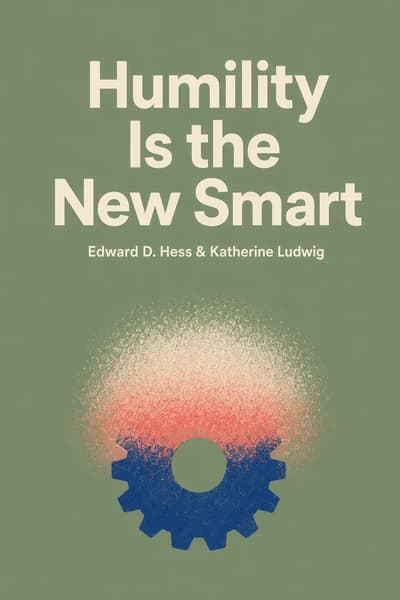
What if I told you that within the next decade, up to 47 percent of all U.S. jobs could be automated? This isn't science fiction-it's the sobering prediction from Oxford University researchers studying the impact of artificial intelligence, robotics, and deep learning technologies. Humility Is the New Smart, championed by business leaders like Ray Dalio of Bridgewater Associates and embraced by innovative powerhouses like Google and Pixar, offers a revolutionary framework for thriving in this new reality. The book has become required reading in Silicon Valley boardrooms and top business schools, with tech CEOs citing it as the antidote to the "move fast and break things" mentality that dominated the early digital age. As machines increasingly outperform us at routine cognitive tasks, our competitive advantage lies not in knowing more than others but in thinking better, learning faster, and connecting more deeply-skills that paradoxically require us to embrace our limitations rather than deny them.
Глава 2
The Technology Tsunami: Understanding the Smart Machine Age
We stand at the precipice of a technological revolution as significant as the Industrial Revolution. Advances in artificial intelligence, robotics, nanotechnology, and deep learning are creating what Edward Hess and Katherine Ludwig call the "Smart Machine Age" (SMA). Unlike previous technological shifts that primarily replaced routine manual labor, today's smart technologies are beginning to replace knowledge workers-accountants, managers, doctors, lawyers, journalists, researchers, architects, teachers, and consultants.
The evidence of this transformation surrounds us. Smart machines now draft sports columns, analyze legal documents, drive cars, and interact with customers. Through advances in automated perception, sensors, and robotics, machines handle nonroutine manual jobs in hospitals, hotels, and malls. In cognitive work, machines now manage data analytics, pattern recognition, and deductive reasoning-outperforming Wharton graduates at portfolio investment theory and Sloan-Kettering doctors at diagnostics.
Perhaps most striking was Google's DeepMind AI program AlphaGo defeating Go master Lee Se-dol four matches to one in 2016-a feat experts predicted would take another decade to achieve. As Jeff Bezos notes, AI's impact over the next 20 years will be profound, while Stanford's Andrew Ng warns of labor displacement comparable to the 1930s.
The economic impacts are already visible. While technology has driven GDP growth, median worker income has decreased since 1999, with average workers earning 13 percent less than in 1973 despite productivity growing 107 percent. Income inequality has reached levels not seen since 1929, and contingent workers now comprise 40 percent of the workforce.
What's left for humans? We will be needed primarily for skills that complement technology or that machines can't yet master: critical thinking, innovation, creativity, and emotional engagement. Most workers will need to think and behave more like scientists, entrepreneurs, and artists while better engaging socially and emotionally with others. These are collectively called the SMA Skills.
The challenge is that most of us haven't been trained to develop these skills. Most adults have had no formal training in how to think effectively, listen, learn through inquiry, manage emotions, or collaborate. American society has favored high grades over mastery, competitiveness over collaboration, and avoiding failure over experimentation-all hindering optimal thinking, creating, relating, and learning.
Глава 3
Our Human Limitations: Why SMA Skills Challenge Our Nature
While SMA Skills are increasingly essential, they run counter to our natural cognitive and emotional tendencies. Nobel Prize winner Daniel Kahneman's research reveals we have two thinking systems: System 1 (fast, automatic, subconscious) and System 2 (slow, deliberate, effortful). Our reactive System 1 evolved first for survival but creates cognitive biases that compromise thinking.
Even when using System 2, our thinking remains biased, distorted, and influenced by subconscious perceptions, beliefs, and experiences. As Kahneman explains, we suffer from "excessive confidence in what we believe we know, and our apparent inability to acknowledge the full extent of our ignorance." We can be "blind to the obvious" and "blind to our blindness."
Our memories and judgments are heavily influenced by ease of recall, emotions, and our comfort with coherence that leads to overconfidence. Kahneman notes: "laziness is built deep into our nature" and "it is much easier, as well as far more enjoyable, to identify and label the mistakes of others than to recognize our own."
The separation of reason from emotion is also a myth. Recent psychological and neuroscientific discoveries confirm that cognitive and emotional processes are inextricably intertwined. Learning, attention, memory, and decision making are profoundly affected by emotion. Positive emotions correlate with broader attention and more flexible thinking, while negative emotions like stress, anger, and anxiety impede decision making and problem solving.
Our prehistoric brains still respond to any stress as if it threatens our survival, triggering the amygdala to bypass our reasoning prefrontal cortex with a cascade of hormones causing fight-flee-or-freeze responses. Our fear of uncertainty compounds this problem-research shows we prefer definite negative outcomes over uncertain ones. Yet the SMA demands we embrace uncertainty, experimentation, and learning from failure.
We typically perceive the world in a self-protective, inwardly focused manner. We're cognitively blind, confirmation-seeking, emotionally defensive and reflexive thinkers, operating more like closed systems than systems open to disconfirming information or new perspectives. Yet excelling at SMA Skills requires becoming more outwardly focused and open to others' help.
Perhaps most problematically, our outdated quantity-based definition of "smart"-knowing more than others and making fewer mistakes-is a legacy of the Industrial Revolution's need for error-free workers. This Old Smart mindset discourages experimentation and risk-taking, inhibiting the iterative learning essential for innovation and creativity.
Глава 4
NewSmart: Redefining Intelligence for the Age of AI
The Smart Machine Age requires updating our mental model of intelligence. NewSmart is defined as excelling at the highest level of thinking, learning, and emotionally engaging with others that one is capable of doing. It's a measure not of what or how much you know, but of the quality of your thinking, listening, collaborating, and learning.
This concept emerged from studying Greek philosophy, scientific method, psychological science, behavioral economics, critical thinking experts, and innovative businesses like Pixar and Bridgewater Associates. It represents a profound shift from defining ourselves by our answers to defining ourselves by our questions and thinking processes.
While Old Smart says "I know" and "I tell," NewSmart says "I'm good at not knowing" and "I ask." It builds on Paul and Elder's admonition to not identify with our beliefs, recognizing that our mental models are merely subjective interpretations of reality. As Ed Catmull of Pixar explains: "You are not your idea, and if you identify too closely with your ideas, you will take offense when they are challenged."
This principle makes it easier to be open-minded, treat beliefs as hypotheses to be tested, and view idea failures as learning opportunities rather than personal failures. Good scientists approach inquiry with truly open minds, treating beliefs as hypotheses to test and modify with better data. This contrasts with Kahneman's observation of our "excessive confidence in what we believe we know" and our inability to acknowledge uncertainty.
The concept of acknowledging one's ignorance traces back thousands of years to Socrates ("I know nothing except the fact of my ignorance") and Confucius. Columbia professor Stuart Firestein explains that scientists concentrate not on what they know but on what they don't know. For those not trained in hard sciences, learning to think "if this, then maybe that" rather than making definitive conclusions is the first step toward embracing ignorance and thinking scientifically.
Innovation, creativity, and entrepreneurship emerge from iterative trial-and-error processes that inevitably involve failure. Innovative companies report failure rates as high as 90% on small experiments. As Steven Johnson explains, "The history of being spectacularly right has a shadow history lurking behind it: a much longer history of being spectacularly wrong."
Unfortunately, many people fear making mistakes due to Old Smart conditioning. Researcher Brene Brown found that perfectionism and fear of shame often prevent people from facing uncertainty or experimenting. Perfectionism correlates with depression, anxiety, addiction, and missed opportunities. It's fundamentally about seeking approval, with perfectionists often adopting the belief: "I am what I accomplish and how well I accomplish it."
Глава 5
Humility: The Gateway to Human Excellence
Humility, often misunderstood as meekness or submissiveness, is actually a powerful mindset for thriving in the Smart Machine Age. It's defined not as thinking less of yourself, but thinking about yourself less-a mindset that is open-minded, self-accurate, and "not all about me," enabling one to embrace the world as it "is" in pursuit of human excellence.
Our fast-paced, competitive modern world has fostered a culture of "big me" with alarming increases in clinical narcissism. Many of us feel compelled to constantly be right, self-enhance, self-promote, and conceal weaknesses-behaviors that drive ego defensiveness and impede higher-level thinking. Research shows self-enhancement bias is common; most people reflexively take credit for successes while blaming others for failures.
Intellectual humility has been viewed as the path to learning since ancient times. Socrates, through his method of hypothesis and questioning, believed learning occurs only by continually testing beliefs against facts. Similarly, Confucius considered humility "the solid foundation of all virtues."
Psychological research increasingly correlates humility with higher physical and psychological well-being, particularly in intellectual concerns, metacognitive abilities, leadership, and relationship building. Carol Dweck found a positive connection between intellectual humility and learning goals as well as actual achievement.
In the Smart Machine Age, success belongs to those who are less self-absorbed and more outwardly focused. Adam Grant's research shows that "giving" predicts higher profitability, productivity, customer satisfaction, and lower costs. Jim Collins found that leaders of "good to great" companies demonstrated "a paradoxical blend of personal humility and professional will."
Companies like Bridgewater Associates practice "Radical Transparency" where Ray Dalio subjects himself to the same humbling feedback as employees. Intuit's leaders emphasize the importance of "not knowing" to fuel innovation. Google identifies humility as a top hiring requirement, operating as an idea meritocracy where data, not the "highest-paid person's opinion," drives decisions. Even elite military special forces like Navy SEALs emphasize that leadership "requires checking your ego and operating with a high degree of humility."
Глава 6
The Four NewSmart Behaviors: A Framework for Excellence
The four foundational behaviors that underlie SMA Skills are Quieting Ego, Managing Self, Reflective Listening, and Otherness. Adopting the NewSmart definition and Humility mindset enables these behaviors, which require daily, thoughtful choices and consistent practice until they become automatic and intrinsically rewarding.
Quieting Ego is the foundational NewSmart behavior that reduces reflexive emotional defensiveness and enables empathy, open-mindedness, and Reflective Listening. The most effective way to quiet our ego is through mindfulness-paying attention purposefully, in the present moment, and nonjudgmentally. Scientific studies show mindfulness meditation changes brain structure, improves cognitive functioning, enhances working memory and attention, and helps regulate emotions.
As Mark Williams explains, "In mindfulness, we start to see the world as it is, not as we expect it to be, how we want it to be, or what we fear it might become." This practice develops cognitive clarity and reduces our habitual confirmatory thinking, allowing us to have a "beginner's mind"-being open even when we have expertise.
Beyond meditation, simple daily practices can help quiet the ego. One executive began signing emails as lowercase "ed" instead of "Ed" as a reminder that "it's not all about me" and that he's "just a little player in a big world." Before meetings, he developed a ritual of taking deep breaths and repeating mantras like "I am not my ideas" and "My mental models are not reality."
Practicing gratitude offers another powerful approach to Quieting Ego. Research shows gratitude provides wide-ranging physical and psychological benefits including improved immune function, lower blood pressure, increased positivity, and decreased stress and anxiety. Unlike the "selfish side of gratitude" that merely acknowledges personal good fortune, thanking others verbally or in writing helps shift focus outward, lessening self-absorption.
Managing Self-our emotions and thinking-enables the higher-level thinking and behavior required by SMA Skills. Counterintuitively, slowing down is fundamental to managing ourselves effectively. This doesn't mean being lazy or inefficient-it means being mindful enough to override our reflexive cognitive and emotional patterns.
Physical cues provide an early warning system for when we need to slow down: increased heart rate, rising body temperature, muscle tension, stomach tightness, rapid breathing, or feelings of stress and threat. By paying attention to these bodily signals, we gain opportunities to manage our thinking and emotions more effectively.
While countless books cover various thinking methodologies, the fundamental principle is learning to manage "how you think" by treating beliefs (not values) as hypotheses subject to testing and modification with better data. As Jeff Bezos reportedly said, good leaders frequently stress-test what's working to determine if underlying assumptions remain valid.
Negative emotions like stress, anger, and anxiety trigger our fight-flee-or-freeze response, undermining critical thinking and creativity. The first step in managing emotions is deliberate breathing-inhaling slowly for four seconds and exhaling for four seconds, repeated four times-which quickly induces calm. This simple exercise takes less than a minute but can significantly improve your mental state.
After slowing down with breathing, engage your cognitive processes to manage emotions using techniques like psychological distancing (imagining yourself as "a fly on the wall"), reframing (transforming perceived negative situations into positive ones), recalling positive memories, using positive self-talk, and creating if-then implementation plans for anticipated stressful situations.
Глава 7
The Art of Reflective Listening and Emotional Connection
Reflective Listening underlies all SMA Skills because our thinking is limited by cognitive biases, emotional defensiveness, ego, and fear. We need thinking partners who challenge our biases, which requires truly listening to them. Most people overestimate their listening abilities, often interrupting others, mentally preparing responses while others speak, or viewing conversations as transactions to accomplish personal objectives.
True Reflective Listening requires being totally focused on the speaker with an open mind, listening nonjudgmentally with the goal of understanding before responding. It involves asking clarifying questions and "trying on" others' ideas to see how they feel-essentially "System 2 listening" that demands deliberate effort and inner stillness.
Listening and humility are deeply connected-being a good listener both requires and enables humility. William Isaacs explains that dialogue requires "slowing down" and developing "inner silence"-precisely what mindfulness aims for. This kind of System 2 listening takes deliberate effort, especially considering we can cognitively process up to 600 words per minute while most people speak at only 100-150 words per minute.
In our culture of "telling" rather than "asking," shifting to Reflective Listening requires comfort with asking questions. Telling conveys hierarchy in conversation-if you go into telling mode before fully listening, you implicitly claim superiority. According to Isaacs, about 40 percent of questions are actually statements in disguise, another 40 percent are judgments, and only a small percentage genuinely seek understanding.
A helpful checklist for priming oneself for Reflective Listening before conversations includes: checking if your mind is clear (if not, take several deep breaths); ensuring emotional calmness; and repeating mantras like "I am not my ideas," "It's not all about me," "Don't be defensive," "Ask questions before telling," "Don't interrupt," "Stay focused," "Critique ideas, not people," and "Listen to understand, not to confirm."
Otherness-emotionally connecting and relating to others-is the final NewSmart behavior. To thrive in the Smart Machine Age, we need others because we can't think, innovate, or relate at our best alone. Building trusting relationships enables the highest level of human engagement, which is critical for excellence.
Building trust requires genuine caring, not false modesty. Research shows we easily detect insincerity from those who always need to win, view others as competition, or become defensive when challenged. Meaningful relationships require escaping self-absorption and investing in others' well-being without self-interest.
Simple language changes can transform how we connect with others. Saying "Yes, and..." instead of "Yes, but..." makes conversations less judgmental and reduces defensiveness. Avoiding false dichotomies recognizes most things exist on a continuum. Using "want to" instead of "have to" and "won't" instead of "can't" emphasizes personal choice. Saying "I believe" instead of "I think" acknowledges our beliefs require testing. And expressing gratitude frequently strengthens connections.
Глава 8
Creating NewSmart Organizations for the AI Era
The organization of the future will require environments that enable humans to excel at the four SMA Skills and reach their highest potential. Despite technology reducing employee numbers, organizations will need to become more humanized for remaining workers. Future organizations will likely combine smart robots, thinking machines, and humans, with humans handling tasks that complement technology or that technology can't perform well.
Technology will drive operational excellence, making innovation the primary differentiator. Organizations' competitive advantage will depend on learning and adapting faster than competitors, making human development a strategic imperative. The most successful companies will excel at helping humans overcome confirmation bias, emotional defensiveness, and ego-driven thinking.
Three psychological concepts form the foundation for future organizations: Positivity, Self-Determination Theory, and Psychological Safety. Research by cognitive, social, and positive psychologists has demonstrated that positive emotions enhance cognitive processing, innovative thinking, creativity, and decision making, while negative emotions-especially fear and anxiety-have the opposite effect.
Self-Determination Theory (SDT), developed by psychologists Edward Deci and Richard Ryan, explains that intrinsic motivation thrives when three innate human needs are met: autonomy (experiencing volition and initiative), relatedness (establishing mutual respect with others), and competence (succeeding at challenging tasks). Decades of research show that high employee engagement correlates with high performance, and engagement increases when these Self-Determination needs are satisfied in the workplace.
Psychological Safety requires more than permission to speak freely-it must be emotionally rewarded publicly. Leaders must embrace NewSmart and the Humility mindset, role-modeling behaviors like Quieting Ego and Reflective Listening. Overbearing, all-knowing leaders will struggle in this environment.
Google, founded in 1998 with $75 billion in revenue by 2015, has intentionally designed an innovation system maximizing human performance. The company seeks "smart creatives" who are independent thinkers, valuing humility as a key hiring attribute while avoiding arrogant, self-centered candidates. Google creates an empowering "yes" environment where it's psychologically safe to fail, disagree, and take risks. Employees have an obligation to dissent, and decisions are driven by data, not hierarchy (HiPPO - "highest paid person's opinion").
At Pixar, everyone has a voice and candid feedback is encouraged in a psychologically safe environment. Their unique Braintrust process allows senior leaders to provide candid critique of creative work without wielding authority-it's purely advisory, leaving teams to decide what feedback to implement. Pixar maintains an emotionally positive learning environment through transparency, permission to speak freely regardless of rank, and embracing failure as a necessary step toward excellence.
The best NewSmart organizations understand that well-designed processes are essential for enabling desired behaviors. Whether it's Pixar's unique feedback system, Bridgewater's Radical Transparency, or Intuit's Rapid Experimentation, these processes help people overcome automatic cognitive and emotional tendencies, reduce ego and fear, and avoid reverting to system 1 thinking.
Глава 9
The Path Forward: Embracing a New Definition of Human Excellence
As Aristotle said, "Excellence is not an act, but a habit." By breaking the chains of automaticity, quieting ego, listening reflectively, managing thinking and emotions, and connecting with others, we can reach our full human potential in the Smart Machine Age. This transformation requires consistent practice and dedication to developing new mental habits and interpersonal capabilities.
The coming technological advances in robotics, AI, biomedical engineering, and more will challenge our humanity and organizations in unprecedented ways. We're already seeing this with AI systems that can diagnose diseases, write creative content, and solve complex mathematical problems. Creating a humanistic, emotionally positive, collaborative environment where individual learning drives value creation will be essential for thriving in this new reality. Organizations that prioritize human development alongside technological advancement will have a distinct advantage.
Our competitive advantage as humans will not come from knowing more than machines-an increasingly impossible task-but from thinking better, learning faster, and connecting more deeply with others. For example, while AI can process vast amounts of data, humans excel at contextual understanding, emotional intelligence, and creative problem-solving. These uniquely human capabilities become more valuable as routine tasks become automated. Paradoxically, these abilities require us to embrace our limitations rather than deny them, to quiet our egos rather than inflate them, and to open ourselves to others' perspectives rather than defending our own.
The Smart Machine Age presents both unprecedented challenges and extraordinary opportunities. Consider how automation has already transformed industries like manufacturing, retail, and customer service. Yet in each case, new roles have emerged that require distinctly human skills like empathy, creativity, and complex decision-making. By adopting the NewSmart mindset and behaviors, we can transform ourselves and our organizations to not just survive but thrive in a world increasingly dominated by artificial intelligence and automation. This includes developing skills like adaptive learning, emotional intelligence, and collaborative problem-solving.
The future belongs not to those who know the most, but to those who can learn, adapt, and collaborate most effectively. Success will come to individuals and organizations that can maintain their humanity while leveraging technology, those who can build strong relationships while utilizing digital tools, and those who can combine machine efficiency with human creativity and wisdom. This requires a fundamental shift in how we think about education, professional development, and organizational culture.
To prepare for this future, organizations must invest in developing their people's capacity for continuous learning, emotional intelligence, and collaborative innovation. Leaders need to create environments that encourage experimentation, welcome diverse perspectives, and value human connection alongside technological advancement. Individual professionals must commit to lifelong learning, cultivating self-awareness, and building strong relationships across traditional boundaries.