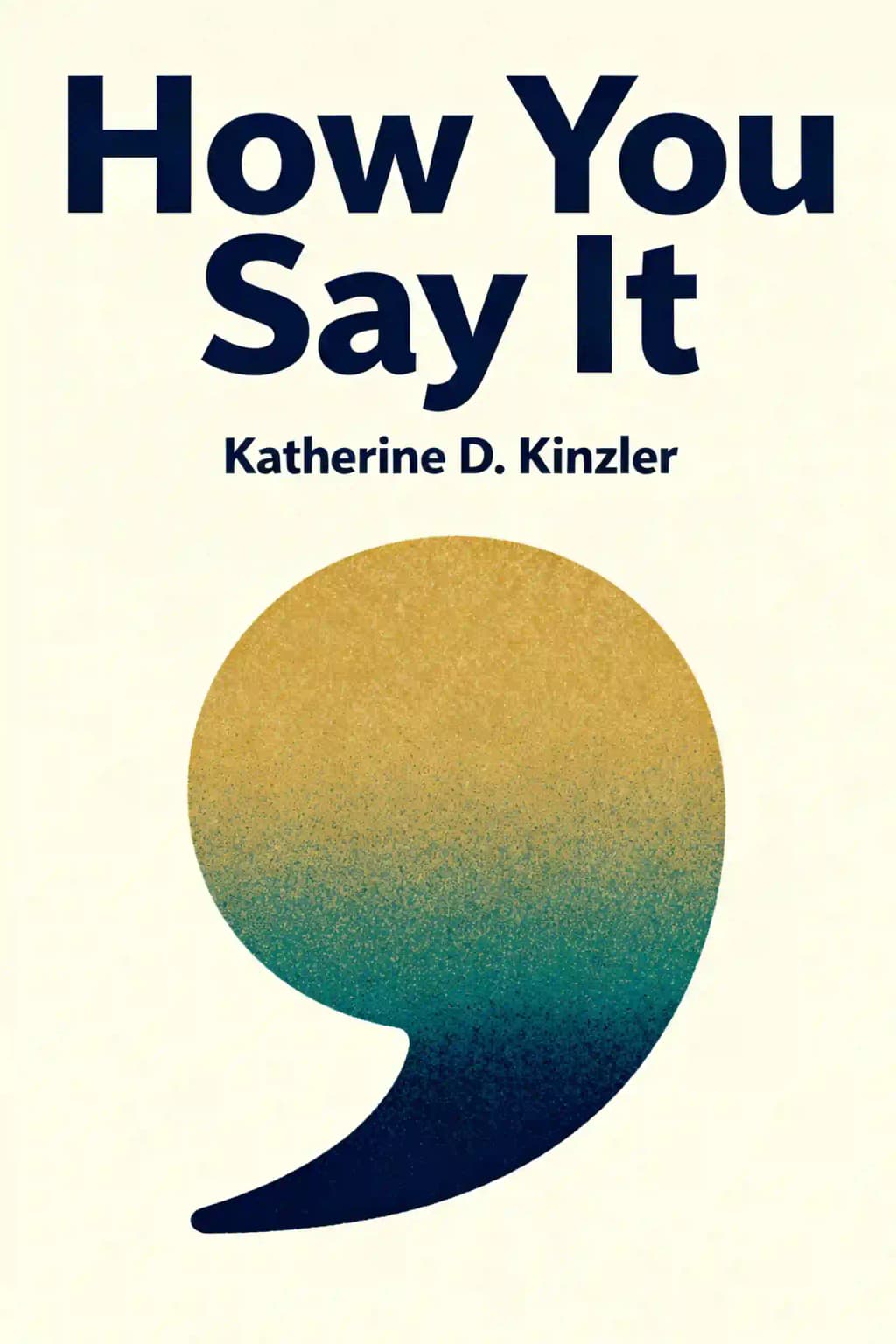
Ever wonder why your accent triggers instant judgments? "How You Say It" reveals the hidden power of speech patterns in shaping our social world. Praised by linguists and psychologists alike, Kinzler's groundbreaking research shows how language bias silently influences everything from job interviews to classroom success.
Почувствуйте книгу через голос автора
Превратите знания в увлекательные, богатые примерами идеи
Захватите ключевые идеи мгновенно для быстрого обучения
Наслаждайтесь книгой в весёлой и увлекательной форме
The way we speak-not just what we say-fundamentally shapes our identity and social connections.
Разбейте ключевые идеи How You Say It на понятные тезисы, чтобы понять, как инновационные команды создают, сотрудничают и растут.
Выделите из How You Say It быстрые подсказки для запоминания, подчёркивающие ключевые принципы открытости, командной работы и творческой устойчивости.

Погрузитесь в How You Say It через яркие истории, превращающие уроки инноваций в запоминающиеся и применимые моменты.
Задавайте любые вопросы, выбирайте голос и совместно создавайте идеи, которые действительно находят у вас отклик.

Создано выпускниками Колумбийского университета в Сан-Франциско
"Instead of endless scrolling, I just hit play on BeFreed. It saves me so much time."
"I never knew where to start with nonfiction—BeFreed’s book lists turned into podcasts gave me a clear path."
"Perfect balance between learning and entertainment. Finished ‘Thinking, Fast and Slow’ on my commute this week."
"Crazy how much I learned while walking the dog. BeFreed = small habits → big gains."
"Reading used to feel like a chore. Now it’s just part of my lifestyle."
"Feels effortless compared to reading. I’ve finished 6 books this month already."
"BeFreed turned my guilty doomscrolling into something that feels productive and inspiring."
"BeFreed turned my commute into learning time. 20-min podcasts are perfect for finishing books I never had time for."
"BeFreed replaced my podcast queue. Imagine Spotify for books — that’s it. 🙌"
"It is great for me to learn something from the book without reading it."
"The themed book list podcasts help me connect ideas across authors—like a guided audio journey."
"Makes me feel smarter every time before going to work"
Создано выпускниками Колумбийского университета в Сан-Франциско

Получите резюме книги «How You Say It» в формате PDF или EPUB бесплатно. Распечатайте или читайте офлайн в любое время.
Imagine walking into a room and being immediately judged-not by your appearance or credentials-but by the way you pronounce your words. This invisible force shapes our lives more profoundly than we realize. Our accents function as social badges that signal belonging or otherness in ways more powerful than visible markers like clothing or appearance. While psychologists have extensively studied how race and gender create social divisions, they've largely overlooked something we use every day: our speech patterns. This linguistic dimension of identity affects everything from who gets hired to whose testimony is believed in court. Perhaps most remarkably, even babies make social judgments based on accent before they can speak themselves. Unlike racial discrimination, linguistic bias remains socially acceptable, with people openly expressing preferences for certain speech patterns without fear of censure. Having the "wrong" accent can lead to discrimination in employment, housing, education, and legal settings-often with little legal recourse. When Manuel Fragante, a Filipino American who scored highest on a civil service exam, was rejected for a DMV position solely because of his accent, the courts sided with the employer, ruling they could legally reject him based on "communication skills." Language doesn't just affect how others perceive us-it fundamentally shapes how we think. Bilingual people often report feeling like different versions of themselves when switching languages. When presented with moral dilemmas in their second language, people become more utilitarian and less emotional in their decision-making. As one Romanian-American participant noted, he'd be less likely to make the utilitarian choice in a moral dilemma when using Romanian rather than English.