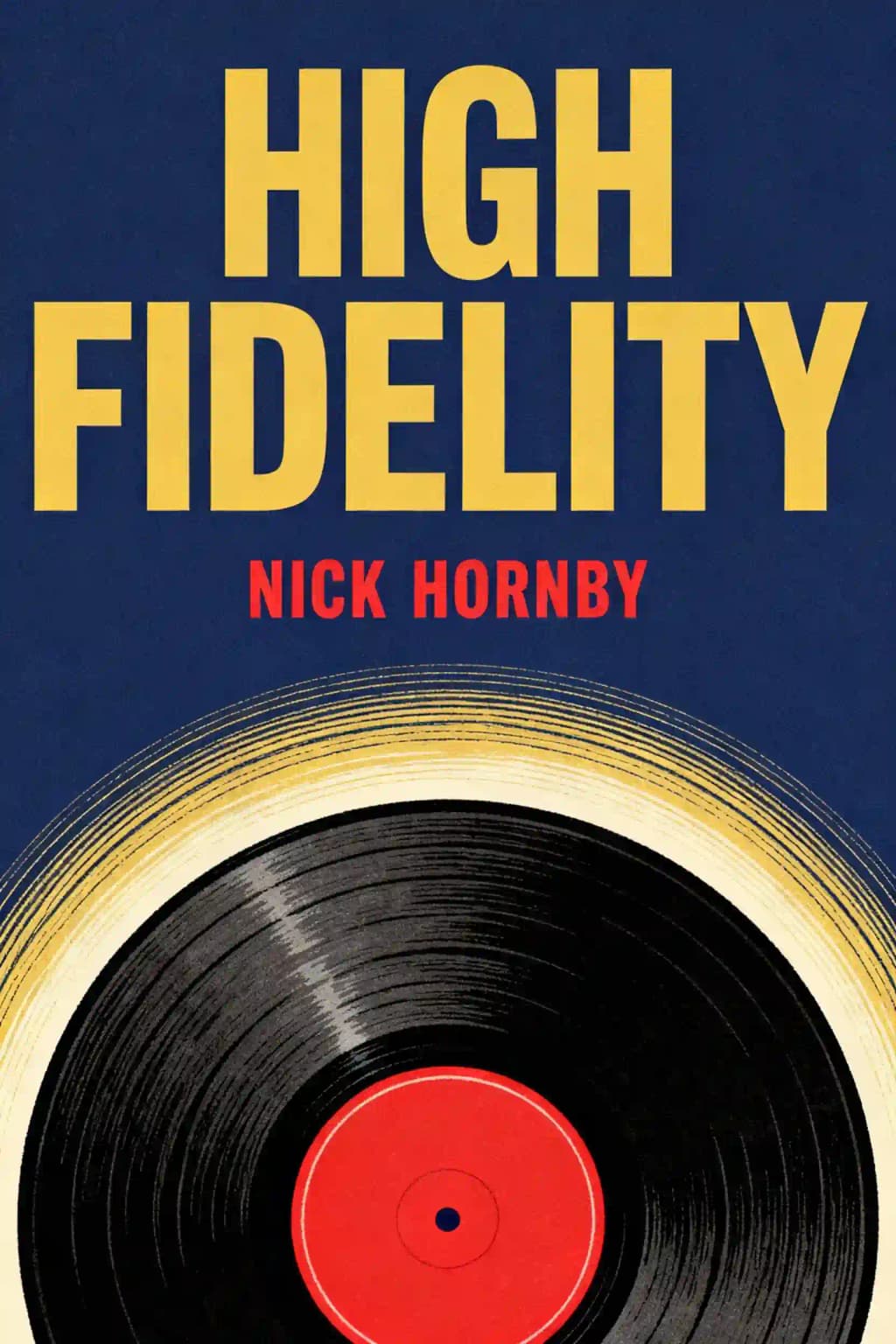
Record store owner Rob's heartbreak and music obsessions captivated over 1 million readers, spawning a hit film with John Cusack, a Broadway musical, and a Hulu series. Can your "top five" breakup stories match Hornby's cultural phenomenon?
Nicholas Peter John Hornby is the bestselling author of High Fidelity and an acclaimed British novelist known for his sharply comedic, pop culture-infused explorations of modern relationships and obsessive fandom. Born in 1957 in Surrey, England, Hornby studied English literature at Cambridge University before working as a teacher and music critic for The New Yorker, bringing authentic insight to High Fidelity's portrayal of a neurotic record store owner navigating love and music snobbery in contemporary London.
His books have sold over 5 million copies worldwide, with High Fidelity becoming a cultural phenomenon adapted into a 2000 film starring John Cusack, a 2006 Broadway musical, and a 2020 television series.
Hornby's other celebrated works include About a Boy, Fever Pitch, and Juliet Naked, all exploring themes of reluctant maturation and the redemptive power of art. He has received two Academy Award nominations for Best Adapted Screenplay for An Education and Brooklyn, and was named the 29th most influential person in British culture by the BBC in 2004.
High Fidelity by Nick Hornby follows Rob Fleming, a 35-year-old record shop owner in London, who grapples with his recent breakup from girlfriend Laura. The novel chronicles Rob's journey of self-discovery as he creates a list of his "top five most memorable breakups" and reconnects with ex-girlfriends to understand where he went wrong in relationships. Through humor and music culture, the story explores themes of commitment-phobia, emotional maturity, and personal growth.
High Fidelity appeals to readers who appreciate character-driven stories about emotional growth, music enthusiasts who connect with pop culture references, and anyone navigating relationship challenges. The novel resonates particularly with readers in their thirties experiencing quarterlife crises or commitment issues. Nick Hornby's blend of humor, introspection, and realistic portrayals of modern romance makes this book ideal for fans of social realism and contemporary literary fiction.
High Fidelity is worth reading for its sharp, self-deprecating humor and authentic portrayal of male emotional immaturity. The novel has sold over a million copies and earned a spot on BBC's The Big Read survey in 2003. Nick Hornby's caustic inner monologue captures the confused voice of someone who never took time to understand his romantic partners, making the story both relatable and transformative. Its cultural impact, including adaptations into film, Broadway, and television, demonstrates its enduring relevance.
Commitment-phobia dominates High Fidelity, as Rob struggles between wanting freedom and desiring deeper relationships. Rob attributes his inability to commit to his fear of death, which he believes causes his habitual cheating and constant search for new infatuations. Music and mix tapes serve as emotional expression and Rob's primary way of organizing his life. Personal growth emerges as Rob learns that his insecurity and self-absorption have sabotaged his relationships, particularly with Laura.
Music serves as both a coping mechanism and a lens through which Rob Fleming views his entire life in High Fidelity. Rob and his employees Dick and Barry spend hours constructing "top five" lists and debating mix-tape aesthetics, using music knowledge to assert superiority and avoid emotional vulnerability. Nick Hornby captures how specific songs can trigger profound emotional responses at unexpected moments, making music the novel's central organizing principle. Rob's commitment to Laura is ultimately solidified through a specially constructed mix tape.
Rob Fleming begins High Fidelity as an emotionally immature "man-child" who hasn't grown since his late teens, acting as an elitist music snob while avoiding relationship responsibility. Through examining his top five breakups and confronting ex-girlfriends, Rob realizes he contributed destructive behaviors that caused relationships to fail. His jealousy over Laura's new boyfriend forces him to become more dependable and accountable. By the novel's end, Rob makes a genuine commitment to Laura and revives his disc jockey career, representing purposefulness and growth.
Rob Fleming's "top five most memorable breakups" list in High Fidelity includes Alison Ashworth, Penny Hardwick, Jackie Allen, Charlie Nicholson, and Sarah Kendrew. This ranking system reflects Rob's habit of organizing life through lists rather than confronting genuine emotions. By reconnecting with these ex-girlfriends, Rob discovers patterns in his behavior—fear of commitment, emotional unavailability, and self-absorption—that consistently sabotaged his relationships. The list becomes a catalyst for self-examination rather than mere nostalgia.
High Fidelity presents a brutally honest portrayal of male emotional avoidance through Rob Fleming's character development. Nick Hornby shows how Rob replaces genuine feelings with pop culture lists and music snobbery, creating distance from authentic connection. Rob's journey illustrates how men often fail to "work hard enough" to preserve relationships, preferring infatuation's excitement over commitment's deeper challenges. The novel suggests that emotional maturity requires vulnerability, introspection, and accepting responsibility rather than blaming external factors or fear of death.
Laura serves as both catalyst and mirror in High Fidelity, forcing Rob Fleming to confront his patterns of relationship failure. Her departure plunges Rob's comfortable but lazy life into disarray, initiating his journey of self-discovery. When Laura's father dies, Rob demonstrates his personal growth by supporting her, leading to their reconciliation. Laura represents the possibility of genuine commitment if Rob can overcome his insecurities and fear of emotional vulnerability.
Championship Vinyl, Rob Fleming's record shop in London, functions as both refuge and prison in High Fidelity. The store represents Rob's arrested development—a space where he and employees Dick and Barry can endlessly debate music trivia while avoiding adult responsibilities. Nick Hornby uses the shop to illustrate how Rob commits deeply to music and Arsenal Football Club while failing to commit to relationships. The record store's intimate environment allows Hornby to explore how male friendships often revolve around shared interests rather than emotional openness.
High Fidelity established Nick Hornby's signature style of examining male emotional life through pop culture obsessions, a approach he refined in later novels like About a Boy and Fever Pitch. While High Fidelity focuses specifically on romantic relationships and commitment issues, his broader body of work explores masculinity, fandom, and reluctant personal growth with similar humor and honesty. The novel's commercial success—over one million copies sold—cemented Hornby's reputation for capturing contemporary British male psychology with authenticity and wit.
High Fidelity critiques how some men prioritize superficial compatibility over emotional labor in relationships. Rob Fleming initially believes his music knowledge and "low-key attitude" should compensate for his unreliability and lack of ambition. Nick Hornby exposes the self-absorption inherent in Rob's belief that he only needs to change when his behavior impacts him personally, not when it hurts his partner. The novel challenges the romanticization of the "lovable slacker" by showing how Rob's elitism, insecurity, and commitment-phobia actively damage the women who love him.
Почувствуйте книгу через голос автора
Превратите знания в увлекательные, богатые примерами идеи
Захватите ключевые идеи мгновенно для быстрого обучения
Наслаждайтесь книгой в весёлой и увлекательной форме
What came first, the music or the misery? People worry about kids playing with guns, and teenagers watching violent videos; we are scared that some sort of culture of violence will take them over. Nobody worries about kids listening to thousands – literally thousands – of songs about broken hearts and rejection and pain and misery and loss.
It's no good pretending that any relationship has a future if your record collections disagree violently or if your favorite films wouldn't even speak to each other.
Desire often evaporates once the chase ends.
Trying to control the uncontrollable.
Has my obsession with records...prevented me from growing up?
Разбейте ключевые идеи High Fidelity на понятные тезисы, чтобы понять, как инновационные команды создают, сотрудничают и растут.
Погрузитесь в High Fidelity через яркие истории, превращающие уроки инноваций в запоминающиеся и применимые моменты.
Задавайте любые вопросы, выбирайте свой стиль обучения и создавайте идеи, которые действительно вам подходят.

Создано выпускниками Колумбийского университета в Сан-Франциско
"Instead of endless scrolling, I just hit play on BeFreed. It saves me so much time."
"I never knew where to start with nonfiction—BeFreed’s book lists turned into podcasts gave me a clear path."
"Perfect balance between learning and entertainment. Finished ‘Thinking, Fast and Slow’ on my commute this week."
"Crazy how much I learned while walking the dog. BeFreed = small habits → big gains."
"Reading used to feel like a chore. Now it’s just part of my lifestyle."
"Feels effortless compared to reading. I’ve finished 6 books this month already."
"BeFreed turned my guilty doomscrolling into something that feels productive and inspiring."
"BeFreed turned my commute into learning time. 20-min podcasts are perfect for finishing books I never had time for."
"BeFreed replaced my podcast queue. Imagine Spotify for books — that’s it. 🙌"
"It is great for me to learn something from the book without reading it."
"The themed book list podcasts help me connect ideas across authors—like a guided audio journey."
"Makes me feel smarter every time before going to work"
Создано выпускниками Колумбийского университета в Сан-Франциско

Получите резюме книги «High Fidelity» в формате PDF или EPUB бесплатно. Распечатайте или читайте офлайн в любое время.
Rob Fleming's life is measured in vinyl and heartbreak. As the owner of Championship Vinyl, a failing record shop in North London, he processes the world through top-five lists and carefully curated playlists-especially when it comes to romantic disappointments. When his girlfriend Laura walks out on him, Rob doesn't just mourn; he methodically catalogs this latest heartbreak alongside his previous romantic disasters, wondering where it ranks in his "desert-island, all-time top five most memorable split-ups." His obsession with ranking everything from breakups to B-sides reveals a man who's spent his life collecting experiences rather than living them, curating soundtracks rather than dancing to them. But as the needle lifts from the record of his past relationships, Rob begins to wonder if he's been playing the wrong songs all along.
Rob's romantic history unfolds as a progression of painful episodes. It begins with Alison Ashworth, a brief teenage relationship ending behind bike sheds, establishing a pattern of betrayal. Next was Penny Hardwick, whom he dumped for withholding physical intimacy-only to learn later his rejection damaged her future relationships. Then came Jackie Allen, whom Rob deliberately pursued while she dated his friend, losing interest once he "won" her. Charlie Nicholson represents Rob's greatest heartbreak-a sophisticated design student who left him for someone more successful, confirming his deepest insecurities. Finally, Sarah Kendrew embodies a cynical "marriage of convenience" with someone Rob thought unlikely to attract others-making her departure especially crushing. These aren't mere memories but Rob's emotional framework. By cataloging relationships like records in his shop, he shields himself from vulnerability. Each failed connection becomes another track on his compilation of disappointment-preserved but never processed.
The record shop isn't just Rob's workplace-it's his fortress against adulthood. Inside this dusty sanctuary, Rob and employees Dick and Barry engage in endless debates about obscure musical categories, using their encyclopedic knowledge as armor against real-world disappointments. They've substituted knowing about life for actually living it. The shop attracts distinct customers: vinyl addicts who panic-buy after browsing; nostalgic seekers replacing worn-out favorites; and those hunting specific songs haunting their minds. One customer spent years searching for a reggae record he'd only heard in a dream, making Rob feel "like a midwife to something transcendental rather than just a shop owner." This microcosm reveals how Rob has built his identity around cultural consumption rather than creation. When a businessman enters, Rob feels childish by comparison, his extensive knowledge of The Velvet Underground suddenly seeming inadequate. Despite understanding love songs better than "professionals who probably never listened to Al Green," his love life remains a disaster-the shop's isolation mirroring his emotional stagnation.
Laura Lydon functions as the mirror reflecting Rob's self-deceptions with "uncanny precision." Their relationship began when she requested a Solomon Burke song while he was DJing, prompting him to craft her a meticulous compilation tape following "all the unwritten rules about track sequencing" - his version of a love letter. Initially a legal aid lawyer with "spiky hair and a motorcycle jacket," Laura later took a high-paying City law firm job that Rob resented, viewing her new style and professional attitude as betrayals. Yet he depended on her stability, borrowing money when his shop struggled. Laura refuses to be a simple character in Rob's narrative. When he complains they've "grown apart," she counters that she's merely changed jobs while he hasn't changed at all. She challenges his complaints about her transformation, arguing that "professional requirements and increased confidence shouldn't threaten our relationship." Her intelligence consistently outmatches Rob's self-deception. When he can't explain why his hypothetical success would differ from her career advancement, she argues that "long-term relationships must accommodate personal growth."
Music isn't just Rob's hobby - it's his fundamental lens for interpreting reality. He constantly wonders whether melancholic music shaped his personality or if his inherent melancholy drew him to these songs, a chicken-or-egg dilemma central to his identity search. For Rob, musical taste serves as both moral compass and character indicator. He dismisses Paul and Miranda's mainstream Beatles and Eagles collection with religious fervor. When Laura challenges his tolerance of their "horrific" taste, Rob confronts an uncomfortable truth: perhaps "it's not what you like but what you're like that's important" - a revelation threatening his entire value system. The compilation tape episode perfectly illustrates this. Rob's carefully curated mixtape for Caroline, a journalism student, represents emotional infidelity to Laura. In Rob's world, compilation tapes are intimate artifacts where song selections carry deep meaning. Rob's career aspirations reveal a man trapped in musical amber. His dream jobs - NME journalist (1976-1979), Atlantic Records producer (1964-1971) - show how he uses nostalgia as a shield against the present, with Laura noting these historically impossible choices expose his escapist fantasy.
At thirty-six, Rob has the emotional maturity of a teenager. He still organizes his life around adolescent musical taste rather than adult responsibilities. His record shop serves as both sanctuary and prison, letting him avoid maturity while maintaining an illusion of expertise. Visiting his parents, Rob spots "The Most Pathetic Man In The World" - a bucktoothed man in his late twenties also with his parents - who gives him "a smile of recognition." This becomes one of Rob's "all-time top-five low points," realizing relationships primarily offer escape from permanent singlehood with parents. Rob's commitment issues stem from his fear of death. At Laura's father's funeral, he finally understands that fearing dependence on someone who will inevitably die has kept him from committing. It seems "safer to hop from woman to woman than face that kind of loss." Laura confronts his stagnation, warning he's "thirty-six with no children, missing life while waiting for it to change." She accuses him of getting lost in hypothetical options while actually closing them off, his sulky response to her restarting his old club revealing his deeper fear of commitment.
Rob's emotional growth begins when he stops seeing relationships as competitions. His habit of ranking experiences has prevented genuine connection. Visiting Sarah, he witnesses her devastation after Tom left her-at thirty-five, she believes her future holds nothing "more than pizza with an ex-boyfriend she never much liked." Though they agree "pairing off shouldn't matter so much," the reality of "Sunday mornings and loneliness makes this hard to believe." Connection appears unexpectedly. Dick's relationship with Anna works despite her liking Simple Minds, a band on their "Musicians Who Will Have to Be Shot" list. When meeting Laura's sophisticated friends he'd previously dismissed, Rob is surprised to find himself "completely accepted." The breakthrough comes during their club night. Everyone dances together-"Dick with Anna, Marie with T-Bone, Laura with Liz." When Rob plays the Solomon Burke song that began his relationship with Laura, she "grins and gives me thumbs-up signs." This moment of connection without analysis represents Rob's transformation: "For the first time ever, I can sort of see how it's done."