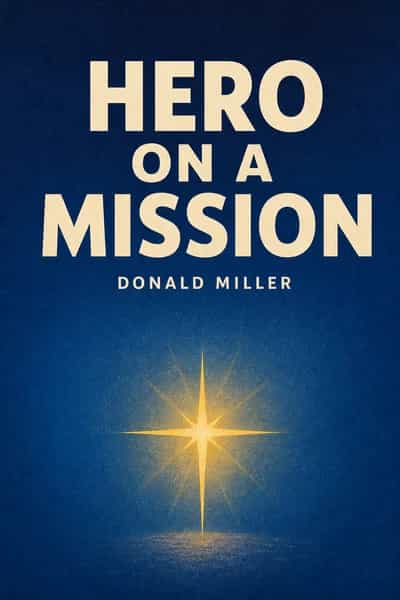

Обзор книги Hero on a Mission
Transform your life story from victim to hero with Donald Miller's archetypal guide. Drawing on Viktor Frankl's therapeutic methods, this book reveals why industry leaders embrace purposeful living. Are you writing your story - or letting it write you?
- Become the hero of your story by embracing challenges and daily growth
- Replace victim mindset with heroic action to reclaim life agency
- Donald Miller's life plan method brings clarity to personal goals
- Heroes transform pain into purpose through courageous, incremental progress
- Shift from villain behaviors by leading through service, not dominance
- Craft a legacy-focused eulogy to guide present-day heroic decisions
- Internal locus of control turns life obstacles into hero opportunities
- Mentors accelerate hero journeys by sharing hard-won wisdom and frameworks
- Meaning emerges when stories balance heroic missions with guide roles
- Avoid passive victimhood by writing personal agency into every chapter
- Heroic narratives require embracing struggle as proof of transformation
- Define 1-year, 5-year, and 10-year visions to maintain mission alignment
Об авторе книги Hero on a Mission
Donald Miller is the New York Times bestselling author of Hero on a Mission and a leading voice in personal growth and purposeful storytelling.
A self-help expert and founder of the StoryBrand marketing framework, Miller blends memoir, philosophy, and practical guidance to help readers craft meaningful life narratives. His bestselling works—including Blue Like Jazz (a spiritual memoir) and A Million Miles in a Thousand Years (on life-editing)—have sold millions of copies, resonating with audiences seeking authenticity and intentional living.
Miller’s insights stem from his own journey overcoming fatherlessness, chronicled in Father Fiction, and his work as CEO of StoryBrand, where he advises businesses on clear communication. A sought-after speaker featured on NPR, PBS, and TEDx stages, he also founded The Mentoring Project to support fatherless youth.
Hero on a Mission builds on his signature theme: using story principles to transform chaos into purpose. His books are required reading in leadership programs and creative writing courses worldwide.
Часто задаваемые вопросы о Hero on a Mission
What is Hero on a Mission by Donald Miller about?
Hero on a Mission is a guide to transforming your life by embracing the role of a hero in your own story. Donald Miller uses storytelling principles to help readers identify whether they’re acting as a victim, villain, hero, or guide, and provides actionable exercises like journaling prompts to craft a meaningful life plan.
Who should read Hero on a Mission?
This book is ideal for anyone feeling stuck or seeking purpose, professionals aiming to boost productivity, and fans of Miller’s earlier work like Building a StoryBrand. It’s also valuable for writers exploring character roles in storytelling.
Is Hero on a Mission worth reading?
Yes—readers praise its practical framework for reframing life challenges as heroic missions, combined with Miller’s candid personal anecdotes about overcoming victimhood. The exercises help turn abstract concepts into actionable goals.
What are the four character types in Hero on a Mission?
Miller identifies:
- Hero: Pursues goals despite challenges.
- Victim: Feels powerless to external circumstances.
- Villain: Sabotages themselves or others.
- Guide: Supports others’ growth (e.g., mentors)
How does Hero on a Mission use storytelling principles?
Miller applies narrative structure to real life, arguing that viewing life as a story helps identify meaningful missions. This mirrors his business book Building a StoryBrand, where customers are heroes and brands act as guides.
What is the “internal locus of control” in Hero on a Mission?
This psychological concept distinguishes heroes (who believe they control their outcomes) from victims (who blame external factors). Miller ties it to proactive decision-making, like his shift from aimlessness to authorship.
Can Hero on a Mission help with career challenges?
Yes—the book’s “heroic missions” framework helps reframe career hurdles as growth opportunities. By defining clear goals and embracing resilience, readers can navigate setbacks like job changes or stagnation.
How do you create a life plan in Hero on a Mission?
Miller’s steps include:
- Identifying which character you’re currently playing.
- Defining 3–5 “missions” (meaningful goals).
- Implementing daily practices like gratitude journaling.
What are the main criticisms of Hero on a Mission?
Some readers find the storytelling metaphor oversimplified for complex life challenges. Others note overlap with Miller’s previous work, though the focus on personal (vs. business) growth is new.
How does Hero on a Mission compare to Atomic Habits?
While Atomic Habits focuses on incremental behavior change, Hero on a Mission emphasizes identity shifts through narrative. Both provide actionable systems, but Miller’s approach leans on purpose over habits.
What does “heroic mission” mean in the book?
A heroic mission is a meaningful challenge requiring growth, such as rebuilding relationships or launching a business. These missions foster fulfillment by aligning actions with core values.
In Hero on a Mission, how does Miller define a “guide”?
Guides are wise figures who help heroes succeed, like mentors or parents. Miller urges readers to transition from hero to guide by sharing hard-won wisdom, creating legacies beyond personal achievements.
Почувствуйте книгу через голос автора
Превратите знания в увлекательные, богатые примерами идеи
Захватите ключевые идеи мгновенно для быстрого обучения
Наслаждайтесь книгой в весёлой и увлекательной форме
Персонажи в Hero on a Mission
- Donald MillerAuthor who transformed his life to find meaning
Ключевые темы в Hero on a Mission
- narrative identity
- internal locus of control
- victim mentality
- meaningful living
- character archetypes
Цитаты из Hero on a Mission
Two lead to meaning, two to misery.
Victims believe they're doomed by circumstances beyond their control.
Villains make others small to feel big themselves.
Heroes feel fear but act anyway.
Life has meaning when you accept your agency.
Исследуйте Свой Способ Обучения
 Режим Краткое резюме
Прочитайте или прослушайте краткое содержание Hero on a Mission за 8 минут
Разбейте ключевые идеи Hero on a Mission на понятные тезисы, чтобы понять, как инновационные команды создают, сотрудничают и растут.

 Режим Развлекательно
Уроки из Hero on a Mission в 22-минутных историях
Погрузитесь в Hero on a Mission через яркие истории, превращающие уроки инноваций в запоминающиеся и применимые моменты.
 Режим Персонализация
Изучайте Hero on a Mission в своем собственном стиле обучения
Задавайте любые вопросы, выбирайте свой стиль обучения и создавайте идеи, которые действительно вам подходят.
Создано выпускниками Колумбийского университета в Сан-Франциско
"Instead of endless scrolling, I just hit play on BeFreed. It saves me so much time."


"I never knew where to start with nonfiction—BeFreed’s book lists turned into podcasts gave me a clear path."


"Perfect balance between learning and entertainment. Finished ‘Thinking, Fast and Slow’ on my commute this week."
"Crazy how much I learned while walking the dog. BeFreed = small habits → big gains."
"Reading used to feel like a chore. Now it’s just part of my lifestyle."

"Feels effortless compared to reading. I’ve finished 6 books this month already."
"BeFreed turned my guilty doomscrolling into something that feels productive and inspiring."

"BeFreed turned my commute into learning time. 20-min podcasts are perfect for finishing books I never had time for."
"BeFreed replaced my podcast queue. Imagine Spotify for books — that’s it. 🙌"

"It is great for me to learn something from the book without reading it."
"The themed book list podcasts help me connect ideas across authors—like a guided audio journey."
"Makes me feel smarter every time before going to work"
Создано выпускниками Колумбийского университета в Сан-Франциско
"Instead of endless scrolling, I just hit play on BeFreed. It saves me so much time."
"I never knew where to start with nonfiction—BeFreed’s book lists turned into podcasts gave me a clear path."
"Perfect balance between learning and entertainment. Finished ‘Thinking, Fast and Slow’ on my commute this week."
"Crazy how much I learned while walking the dog. BeFreed = small habits → big gains."
"Reading used to feel like a chore. Now it’s just part of my lifestyle."
"Feels effortless compared to reading. I’ve finished 6 books this month already."
"BeFreed turned my guilty doomscrolling into something that feels productive and inspiring."
"BeFreed turned my commute into learning time. 20-min podcasts are perfect for finishing books I never had time for."
"BeFreed replaced my podcast queue. Imagine Spotify for books — that’s it. 🙌"
"It is great for me to learn something from the book without reading it."
"The themed book list podcasts help me connect ideas across authors—like a guided audio journey."
"Makes me feel smarter every time before going to work"
"Instead of endless scrolling, I just hit play on BeFreed. It saves me so much time."
"I never knew where to start with nonfiction—BeFreed’s book lists turned into podcasts gave me a clear path."
"Perfect balance between learning and entertainment. Finished ‘Thinking, Fast and Slow’ on my commute this week."
"Crazy how much I learned while walking the dog. BeFreed = small habits → big gains."
"Reading used to feel like a chore. Now it’s just part of my lifestyle."
"Feels effortless compared to reading. I’ve finished 6 books this month already."
"BeFreed turned my guilty doomscrolling into something that feels productive and inspiring."
"BeFreed turned my commute into learning time. 20-min podcasts are perfect for finishing books I never had time for."
"BeFreed replaced my podcast queue. Imagine Spotify for books — that’s it. 🙌"
"It is great for me to learn something from the book without reading it."
"The themed book list podcasts help me connect ideas across authors—like a guided audio journey."
"Makes me feel smarter every time before going to work"
"Instead of endless scrolling, I just hit play on BeFreed. It saves me so much time."
"I never knew where to start with nonfiction—BeFreed’s book lists turned into podcasts gave me a clear path."
"Perfect balance between learning and entertainment. Finished ‘Thinking, Fast and Slow’ on my commute this week."
"Crazy how much I learned while walking the dog. BeFreed = small habits → big gains."
"Reading used to feel like a chore. Now it’s just part of my lifestyle."
"Feels effortless compared to reading. I’ve finished 6 books this month already."
"BeFreed turned my guilty doomscrolling into something that feels productive and inspiring."
"BeFreed turned my commute into learning time. 20-min podcasts are perfect for finishing books I never had time for."
"BeFreed replaced my podcast queue. Imagine Spotify for books — that’s it. 🙌"
"It is great for me to learn something from the book without reading it."
"The themed book list podcasts help me connect ideas across authors—like a guided audio journey."
"Makes me feel smarter every time before going to work"

Скачать резюме книги «Hero on a Mission»
Получите резюме книги «Hero on a Mission» в формате PDF или EPUB бесплатно. Распечатайте или читайте офлайн в любое время.


