Глава 1
From Publicity Stunts to Growth Engines: The Marketing Revolution You Can't Ignore
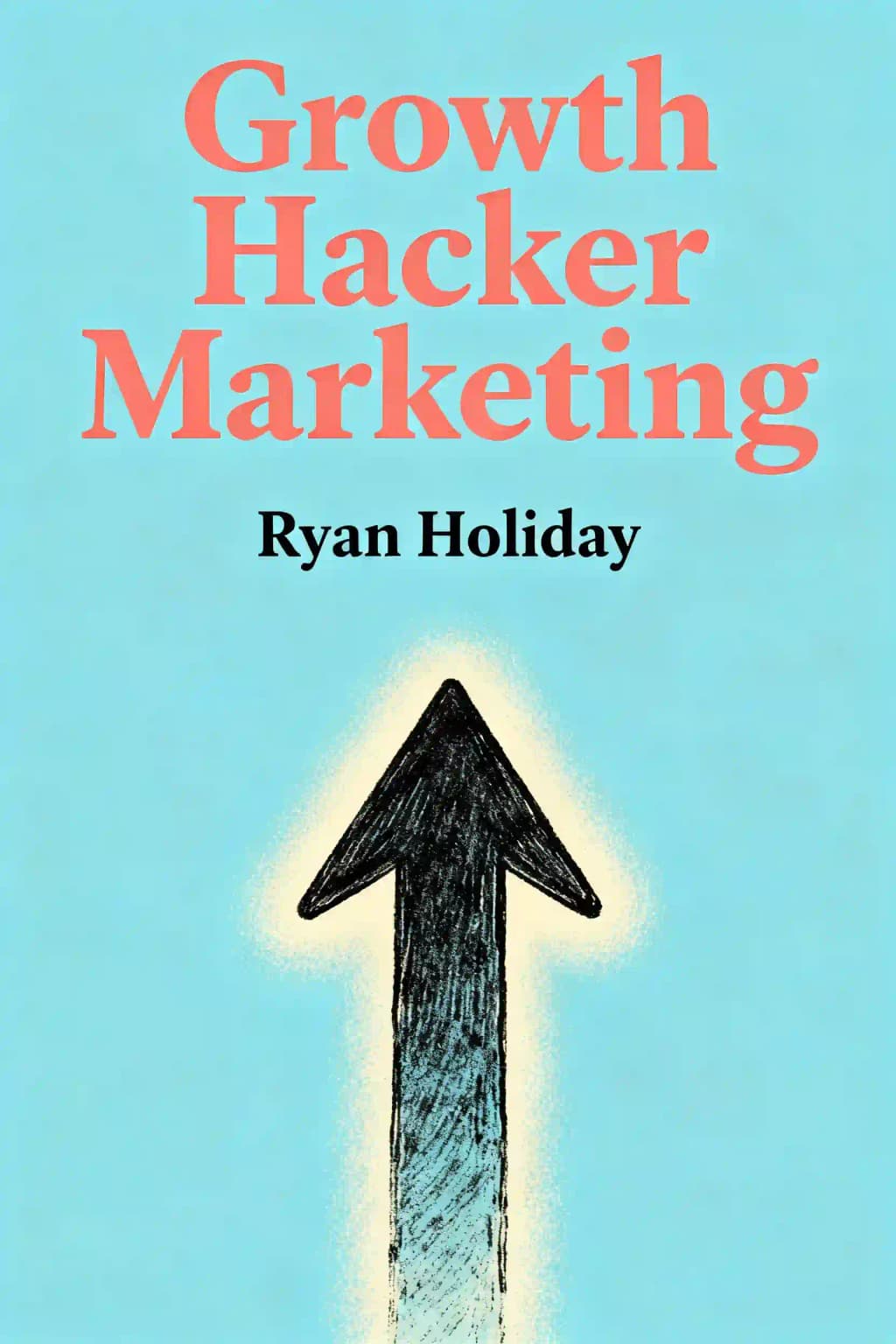
Ever wondered why some apps go from zero to millions of users without traditional marketing? Ryan Holiday's "Growth Hacker Marketing" isn't just another marketing book-it's a manifesto that has fundamentally changed how the world's most innovative companies approach growth. As a former director of marketing at American Apparel and apprentice to Robert Greene, Holiday experienced firsthand the seismic shift happening in marketing when he encountered Andrew Chen's provocative article declaring that "the growth hacker is the new VP of marketing." This revelation shook his professional identity to the core.
The book has become required reading in business schools globally, with tech giants like Twitter, YouTube, and Google studying its principles. What makes it particularly fascinating is how it dismantles the Hollywood-inspired approach to marketing that has dominated for decades. Even Tim Ferriss, whose "4-Hour" empire was built largely through growth hacking techniques, credits these strategies for his success. In a world where startups with minimal budgets routinely outperform established companies with massive marketing departments, understanding growth hacking isn't optional-it's essential for survival in today's digital landscape.
Глава 2
The Death of Traditional Marketing: Why Big Budgets No Longer Win
Traditional marketing has long been modeled after the entertainment industry, with its obsession with splashy launches, red carpets, and enormous budgets. We've been conditioned to believe that successful product launches require massive customer acquisition in the shortest time possible-like a summer blockbuster rather than an indie film that builds audience gradually. This mindset has led companies to pour millions into Super Bowl advertisements, celebrity endorsements, and nationwide billboard campaigns, often with diminishing returns. But this approach is fundamentally flawed, especially when you consider that most big-budget films actually fail despite their marketing blitzes, with some studies showing that up to 80% of movies never break even.
The crucial difference? Movie studios can absorb failures because they operate at such scale, spreading risk across multiple productions annually. Major studios like Disney or Warner Bros. can weather $100 million losses on failed blockbusters because their successful franchises generate billions. Startups and entrepreneurs, however, don't have that luxury-they need efficient, sustainable growth or they perish. This is where growth hacking emerged as a revolutionary approach, focusing on lean, data-driven methods rather than expensive gambles.
Consider Hotmail's 1996 breakthrough. When investor Tim Draper suggested adding "P.S. I love you. Get your free email at Hotmail" to every email sent through their platform, they transformed every message into an effective advertisement. This simple tagline leveraged existing user behavior and created a viral loop where each email sent naturally promoted the service. The results were staggering: one million users within six months, doubled to two million just five weeks later. Microsoft eventually acquired Hotmail for $400 million after just 30 months, with Hotmail having spent only $300,000 on marketing-an amount large companies might blow on a single launch party. Similar viral strategies were later adopted by LinkedIn, PayPal, and Dropbox, each achieving massive growth through user referrals rather than traditional advertising.
This shift represents more than just clever tactics; it's a fundamental reimagining of how products spread. Growth hackers approach marketing with an analytical mindset, using email, data, and social platforms to create exponential growth. They meticulously track metrics like customer acquisition cost (CAC), lifetime value (LTV), and viral coefficients. They've become the rock stars of Silicon Valley, featured prominently in publications like TechCrunch and Fast Company. Unlike traditional marketers who often view themselves as creative artists (and consequently maintain some apathy toward metrics), growth hackers are data scientists obsessed with ROI and measurable outcomes, often running hundreds of A/B tests simultaneously to optimize every aspect of user acquisition.
What would you rather have: a beautiful, award-winning marketing campaign that generates minimal sales, or an unglamorous approach that consistently delivers new customers? Growth hacking chooses results over aesthetics every time. Companies like Airbnb, which famously grew by cross-posting listings on Craigslist, or Pinterest, which utilized invitation-only signups to create exclusivity, demonstrate how innovative thinking combined with data-driven execution can outperform traditional marketing budgets by orders of magnitude.
Глава 3
Product Market Fit: The Foundation No Marketing Budget Can Fix
The worst marketing decision you can make is promoting a product nobody wants. For years, traditional marketers accepted this as an inevitable part of the job, resigning themselves to "we have to work with the product we have, not the one we wish we had." What sets growth hacking apart is its rejection of this premise. Instead, growth hackers insist that products, companies, and business models must be modified until they generate meaningful reactions from a defined group of people.
Imagine spending millions on advertising a smartphone that overheats and has terrible battery life. No amount of clever marketing can overcome fundamental product flaws. The best marketing strategy is having a product that genuinely satisfies real needs, regardless of how many changes are required to achieve this.
Product Market Fit (PMF) isn't some mystical concept-it's intensely practical. Think of book publishing: unsuccessful authors often write in isolation for months without feedback, while successful ones test ideas on blogs, analyze reader responses, and adjust their content based on actual demand. PMF requires the humility to constantly modify your product based on real data, not assumptions.
Marc Andreessen, Netscape's founder, argues that companies must do "whatever it takes" to adapt their products to market needs, including personnel changes, product redesigns, or even pivoting to an entirely different sector. This adaptability is essential because the market doesn't care about your original vision-it only responds to what actually solves its problems.
Evernote exemplifies this approach. They decided not to spend a single dollar on marketing during their early years, focusing exclusively on developing the best possible product. This strategy initially slowed their growth but proved wise in the long run, as they created an application so good it practically sells itself. Without PMF, traditional marketing becomes an expensive exercise in futility.
How do you achieve PMF? Use tools like surveys, behavior analysis, and the Socratic method to question every assumption about your product. Ask yourself: Would users be disappointed if your product disappeared tomorrow? If less than 40% say yes, you haven't reached PMF yet. This process isn't spontaneous-it results from weeks or months of adapting your product to real market needs.
Глава 4
Finding Your Growth Engine: Targeted Precision Over Mass Appeal
Once you've established Product Market Fit, it's time to activate your growth engine. But growth hackers don't rely on expensive, inefficient methods of the past. You no longer need to advertise on the front page of the New York Times; instead, you need to attract a specific group of loyal users who will champion your product.
Consider Dropbox's approach. Rather than spending millions on traditional advertising, they created a simple, homemade video targeted at tech enthusiasts on Digg and Hacker News. The results were extraordinary-their waitlist jumped from 5,000 to 75,000 users in a single day. Today, they have over 100 million users worldwide. This success wasn't accidental; it came from understanding exactly who their early adopters would be and where to find them.
While traditional marketing aims to capture as many customers as possible, growth hackers prefer focusing on early adopters-people eager to try technological innovations. The primary goal is to connect with and convince a group of loyal, interested users who will ensure subsequent growth. If these users are tech enthusiasts, you'll find them on TechCrunch or Reddit; if they're fashion-forward, they'll be on blogs like Lookbook.nu.
Uber exemplifies this mentality perfectly. They offered free services during the SXSW Conference, targeting young tech professionals with significant disposable income. To locate your first users, you might target specific websites, post on platforms like Hacker News, write guest posts on relevant blogs, use Kickstarter, or even search for them one by one.
Growth hackers apply creative technical solutions to attract customers. Airbnb programmed tools that allowed cross-posting listings to Craigslist, gaining free distribution on one of the world's most popular websites. As Andrew Chen noted, a traditional marketer wouldn't even have imagined this integration was possible. The goal isn't to build a brand but an army of passionate, loyal users.
Sean Ellis argues that focusing on customer acquisition before "awareness building" requires discipline, and that working on branding during the first or second year wastes money. Growth hacking rejects both the idea of the advertising "home run" and the belief that "if you build it, they will come." It's about placing precise information in the right places for the right people.
Have you ever wondered why some products seem to spread organically while others languish despite massive advertising budgets? The difference often lies not in the size of the marketing budget but in how strategically the growth engine is designed and implemented.
Глава 5
Engineering Virality: The Science Behind Explosive Growth
Virality isn't accidental or magical-it's a science with concrete formulas. For a product to spread virally, it must be worth sharing and make it easy for users to spread the word. You can't just cross your arms and wait for it to happen; you must design mechanisms that incentivize sharing. When you decide not to pay for advertising, you're relying on your users to propagate your message, but this requires strategic work.
Jonah Berger explains that for something to spread virally, it must be observable. "Making things more observable makes them easier to imitate, which makes them more likely to become popular." That's why many startups leverage major platforms: each Facebook user has 150 friends on average, multiplying the potential reach. Spotify achieved enormous success thanks to its Facebook integration (though having Sean Parker as an investor in both helped).
Other strategies include Dropbox offering additional storage for linking social accounts, or Apple and BlackBerry turning every email into advertising with phrases like "Sent from my iPhone." Even Apple's white earbuds function as free mobile advertising-a subtle but effective way to make the product visible in public spaces.
Dropbox discovered that traditional advertising cost them between $233-388 for each new subscriber. Instead of continuing down that path, they implemented a viral program offering 500MB of free space for each friend invited. The results were impressive: registrations increased by 60%, they generated 2.8 million direct invitations, and 35% of their users came through referrals. This strategy demonstrates that virality isn't accidental but engineered.
For viral growth to work, you must offer real incentives, provide suitable platforms for sharing, and constantly analyze statistics to redefine and optimize the process until you achieve the best possible results. Think about it: when was the last time you shared a product or service with friends? What motivated you to do so? Was it exceptional quality, a reward for sharing, or simply how easy it was to tell others?
The most effective viral campaigns combine all three elements: a remarkable product, tangible benefits for sharing, and frictionless sharing mechanisms. When properly executed, this creates a self-perpetuating growth machine where each user brings in more users, dramatically reducing customer acquisition costs while accelerating growth.
Глава 6
Closing the Loop: Retention as the Ultimate Growth Strategy
The Growth Hacking process concludes where traditional marketing doesn't even reach: retention and optimization. While conventional marketing limits itself to acquiring customers, growth hackers understand they must convert them into loyal, satisfied users. What's the point of attracting new customers if they quickly disappear? In today's digital environment, we can measure the "conversion ratio" and constantly optimize it.
As Aaron Ginn points out, even a growth hacker can't grow a "broken product." Beyond product-market fit, thousands of areas require constant improvement. Sean Beausoleil of Mailbox explains it clearly: "Regardless of your business state, improvement is always possible." Growth hackers constantly seek to apply new changes, whether optimizing landing pages, capturing more email addresses, or reducing shopping cart abandonment. The rule is to optimize incoming traffic, focusing on improving retention rather than increasing the advertising budget when growth slows.
Customer retention can be scaled without individual contact. Uber exemplifies this perfectly: after initially registering without using the service, I received a $50 gift card at a conference a year later. This experience converted me into an active user, especially when Uber asked me to rate the driver and sent additional coupons. According to Bain & Company, a 5% improvement in retention implies a 30% increase in profits, and Market Metrics indicates that the probability of selling to an existing customer is 60-70%, compared to 5-20% with new customers. As Bronson Taylor summarizes: "Retention trumps acquisition."
Growth hacking is about maximizing ROI by dedicating efforts to the most effective tasks: leveraging the existing database and converting potential users into active customers. Have you ever wondered why companies like Amazon invest so heavily in the post-purchase experience? They understand that keeping existing customers happy is far more profitable than constantly chasing new ones.
Consider the math: if it costs you $50 to acquire a new customer who makes a $100 purchase, you've made $50 profit. But if that same customer returns five more times without additional acquisition costs, you've made $500 in profit. This simple calculation explains why retention-focused companies consistently outperform acquisition-focused ones in the long run.
Глава 7
From Theory to Practice: A Real-World Growth Hacking Case Study
Ryan Holiday's fascination with Growth Hacking began after reading Andrew Chen's article that showed him how the marketing industry was changing. The opportunity to apply these principles came when he worked with Tim Ferriss to promote "The 4-Hour Chef," facing the challenge that almost all bookstores refused to sell the book because it was published by Amazon. With less than 60 days and without access to traditional channels, they treated the book as a startup and applied growth hacking principles, achieving placement on all bestseller lists and selling more than 60,000 print copies in the first week.
Instead of creating a generic book, Tim designed each chapter as an independent element aimed at specific communities, ensuring that any randomly opened page offered value to the reader. The editing was based on data, not instinct: they used SurveyMonkey and Wufoo to consult with friends and followers about what content they considered most important, even submitting the back cover and subtitle to community opinion. The result was a book shaped by readers, designed to generate reactions and be shared by those who had participated in its creation.
Rather than investing in traditional advertising, they worked strategically with bloggers who had at least 100,000 monthly visitors, identified using tools like Compete, Quantcast, and Alexa. The result was numerous mentions in online media such as Lifehacker, The Art of Manliness, AskMen, and Epic Meal Time, scheduled to coincide with the launch. These mentions converted into trackable sales through specific links. Additionally, they leveraged the platform Tim had built over five years by publishing content, which provided an audience already interested in his work.
The campaign's greatest achievement was its virality. Forced to innovate, they partnered with BitTorrent, where Matt Manson had recently started working. They created 700 megabytes of free content based on the book for BitTorrent's 170 million users, following a "try before you buy" strategy with a link to purchase the book at a 40% discount. The results were impressive: 2 million downloads, 1.2 million pages visited, 880,000 visits to Amazon, and 327,000 visits to Tim Ferriss's website. This promotion generated approximately 250,000 book sales, demonstrating that even traditionally non-viral products can become viral with the right strategies.
Глава 8
The Future of Marketing: Data-Driven, Iterative, and Integrated
If something as conservative as the publishing industry can be renewed with Growth Hacking, any other sector can do it too. The transformation of traditional publishing through platforms like Amazon Kindle Direct Publishing and Medium demonstrates this potential. It's no longer necessary to rely on intuition or pay third parties for their contacts. Instead, businesses can leverage data analytics, A/B testing, and direct customer feedback to inform their growth strategies. Now we can grow businesses through iterations, tracking results, and optimizing products according to customer needs. The definition of marketing expands: anything that grows a business is marketing, from user interface improvements to customer service protocols.
Startups like Hotmail, Airbnb, Groupon, and Spotify grew thanks to tactics that traditionally wouldn't be considered marketing. Hotmail's simple email signature promotion created viral growth, while Airbnb's integration with Craigslist revolutionized customer acquisition. Spotify's social sharing features and collaborative playlists turned users into marketers. The most important aspect was the mindset behind these tactics: they combined marketing with product development, abandoned traditional approaches, added viral elements, and constantly optimized based on data. Each of these companies built growth mechanisms directly into their products, creating self-perpetuating marketing machines.
Growth Hacking reduces the cost of mistakes and allows experimentation, offering more effective and scalable results than traditional methods. Companies can test multiple approaches simultaneously, quickly abandon what doesn't work, and double down on successful strategies. For example, Netflix saves an estimated $1 billion annually through its recommendation algorithm, which is both a product feature and a marketing tool.
What does this mean for the future of marketing? First, the lines between marketing, product development, and data science will continue to blur. Tomorrow's most successful marketers will need skills across all these domains, including programming, statistical analysis, and user experience design. Second, marketing will become increasingly integrated into the product itself rather than functioning as a separate activity that happens after development. Features like social sharing, referral programs, and user-generated content will be fundamental to product design. Third, the emphasis will shift from creative campaigns to measurable results and continuous optimization, with AI and machine learning playing increasingly important roles.
For businesses, this represents both a challenge and an opportunity. Those who cling to traditional marketing approaches will find themselves outmaneuvered by more agile competitors who embrace data-driven growth strategies. Companies like Blockbuster and Borders serve as cautionary tales of what happens when organizations fail to adapt. However, those who adopt growth hacking principles can achieve remarkable results with smaller budgets by focusing on what actually works rather than what looks or feels like good marketing. Companies like Dollar Shave Club have demonstrated how clever growth strategies can challenge even established industry giants.
The ultimate lesson of growth hacking isn't about specific tactics-it's about adopting a mindset of constant experimentation, measurement, and optimization. This approach requires organizations to develop new capabilities in data analysis, rapid testing, and cross-functional collaboration. In a world where consumer attention is increasingly fragmented and traditional marketing channels are losing effectiveness, this approach isn't just advantageous-it's essential for survival and success in the digital age. The future belongs to organizations that can quickly adapt, learn from their data, and create seamless connections between their product, marketing, and customer experience.
Глава 9
Resources for Becoming a Growth Hacker: Your Next Steps
This book serves as just an introduction to changing your mindset and showcasing a new work system. The best way to deepen your understanding is to work directly with real growth hackers in startups. For those without that possibility, there are numerous resources to continue learning, ranging from online platforms to in-person events and communities.
Following industry experts is invaluable for staying current with growth hacking trends and strategies. Andrew Chen, known for his work at Uber and his influential newsletter, provides deep insights into user acquisition and retention. Noah Kagan, founder of AppSumo, shares practical case studies from his experience growing multiple eight-figure businesses. Patrick Vlaskovits, Sean Ellis (who coined the term "growth hacking"), and Paul Graham offer unique perspectives through their blogs, social media presence, and Quora answers. Aaron Ginn and Josh Elman contribute valuable insights about product-led growth and viral marketing techniques. These experts regularly share both strategic frameworks and tactical advice about what's working right now in the field.
Essential readings form the theoretical foundation of growth hacking. "The Lean Startup" by Eric Ries introduces the build-measure-learn feedback loop and minimum viable product concepts, crucial for any growth hacker's toolkit. "The Lean Entrepreneur" by Cooper and Vlaskovits expands these ideas with practical implementation strategies. "Founders at Work" by Jessica Livingston presents invaluable case studies from companies like Hotmail and PayPal, showing early growth strategies that led to massive success. "Viral Loop" by Adam Penenberg dissects how companies like Facebook and Twitter achieved exponential growth through viral mechanics. "Contagious" by Jonah Berger provides a scientific framework for why certain ideas spread while others don't. "Lean Startup Marketing" by Sean Ellis bridges the gap between lean methodology and practical marketing execution.
For hands-on learners, numerous interactive resources provide practical experience. Growth Hacker TV offers interviews with successful practitioners sharing their playbooks and failures. SlideShare hosts comprehensive decks on topics ranging from A/B testing to user psychology. Platforms like General Assembly and Udemy offer structured courses teaching both fundamentals and advanced techniques. Case study repositories document real-world examples from companies like Airbnb, Dropbox, and LinkedIn, showing how growth principles apply across different business models and industries. The annual Growth Hackers Conference has become the premier event for networking and learning about cutting-edge strategies, featuring speakers from the fastest-growing companies in tech.
What makes growth hacking particularly exciting is that it's still evolving at a rapid pace. Unlike traditional marketing with its established playbooks, growth hacking remains a dynamic frontier where innovation happens daily. New platforms, technologies, and user behaviors constantly create opportunities for novel growth strategies. By immersing yourself in these resources and communities, you'll not only learn established tactics but also participate in shaping the future of digital growth. Active participation in growth hacking communities on platforms like GrowthHackers.com, Reddit's r/GrowthHacking, and various Slack channels allows you to exchange ideas with fellow practitioners and stay ahead of emerging trends.