Глава 4
Fungi as Metaphor: The Unseen Networks
Halle brilliantly uses mycology (the study of fungi) as both plot device and metaphor throughout the novel. Fungi operate as nature's hidden network, connecting living things underground through vast mycelial systems - much like the secret operations beneath Madrona's surface. This parallel becomes increasingly significant as the story unfolds, revealing how the natural world's most enigmatic kingdom mirrors humanity's hidden connections and dormant potential.
The fictional Amanita excandesco becomes the centerpiece of the foundation's research, its bioluminescent properties making it both beautiful and eerily otherworldly. Initially presented as a breakthrough for treating neurological disorders including Alzheimer's, Parkinson's, and ADHD, it later reveals its true power: the ability to create new neural pathways that can resurrect the dead. This scientific premise, while fictional, builds on actual research about fungi's remarkable properties - from their ability to break down toxic waste to their potential in treating depression - making the horror elements feel unnervingly plausible. The author draws particularly on recent discoveries about fungi's role in forest communication networks, often called the "Wood Wide Web," to lend scientific credibility to the supernatural elements.
The novel's most disturbing imagery comes from fungi's ability to colonize and transform living tissue. Sydney encounters animals partially decomposed yet animated by fungal networks - a wolf with a beating heart covered in white fuzz that begs "Release me," and a cougar whose memories she briefly experiences through a supernatural connection. These creatures represent the foundation's failed experiments, discarded test subjects that haunt the surrounding forest like living cautionary tales. Each encounter reveals more about the foundation's ruthless pursuit of breakthrough research, regardless of ethical consequences.
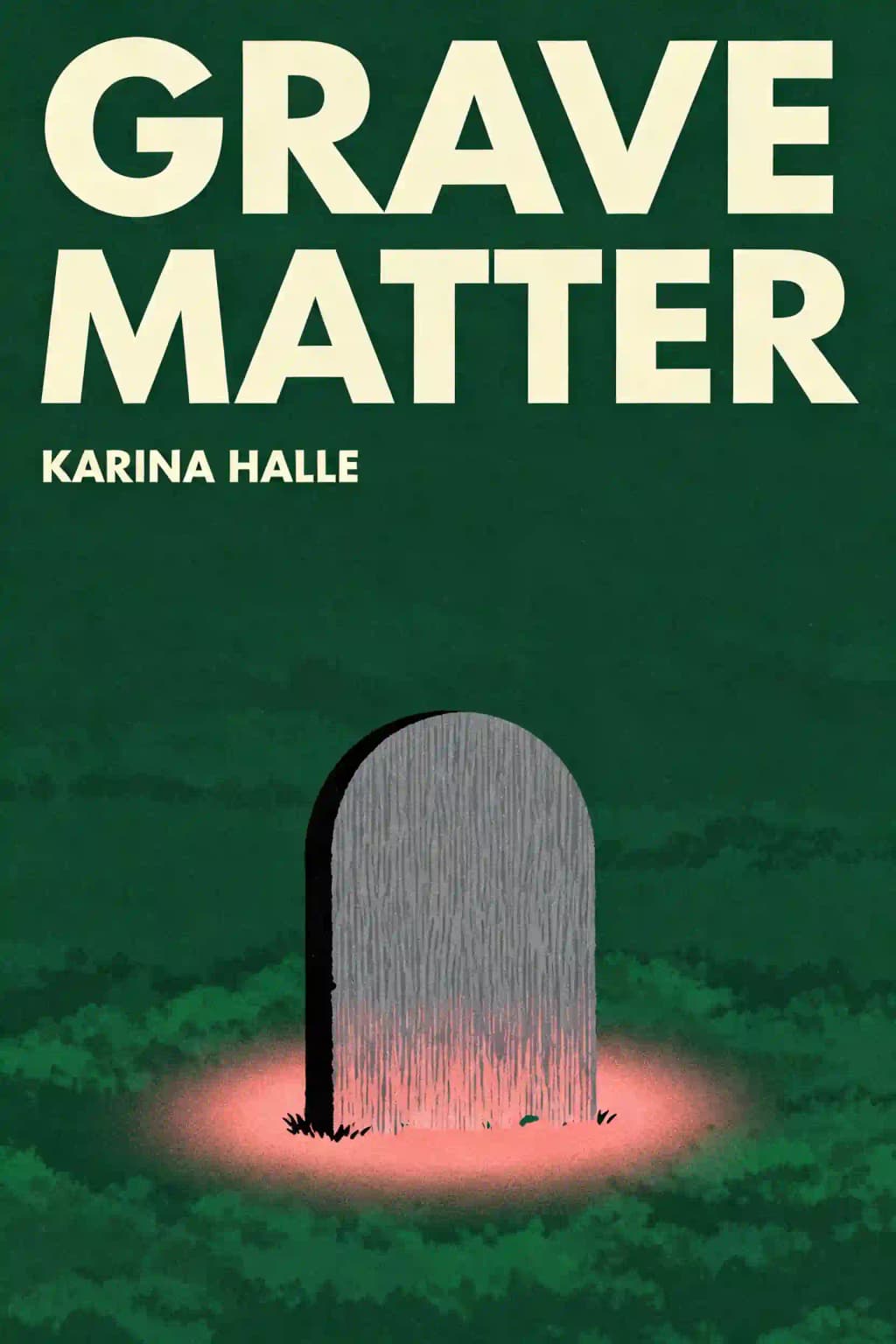
The grave covered in white mushrooms with bright orange gills that Sydney and Lauren discover becomes symbolic of the foundation's work - new life emerging from death, but in a perverted, unnatural form. The description of the mushrooms' vivid colors and their placement around human remains creates a powerful image of nature reclaiming death, but with sinister undertones. When Sydney later experiences mycelia growing from her own mouth and fingernails, the horror becomes personal, suggesting the fungi are colonizing her from within - a violation that represents both transformation and invasion.
Fungi also represent the novel's theme of interconnection on multiple levels. Just as mycelia create vast underground networks connecting seemingly separate organisms, the characters at Madrona are connected in ways Sydney only gradually discovers. Her visions of Farida's ghost, her telepathic communication with Clayton, and her recovered memories of Wes all suggest connections that transcend normal human experience - connections made possible by the fungi that have altered their biology. These supernatural links mirror the way fungal networks in nature can transfer nutrients and information between trees, creating a complex web of relationships beneath the visible surface. The author uses this biological reality to explore questions about consciousness, memory, and the boundaries between individual minds.
Глава 5
The Ethics of Memory and Identity
The novel's most profound philosophical questions center on memory's relationship to identity, exploring the intricate web between our past experiences and who we fundamentally are. When Sydney discovers she died and was resurrected, she must grapple with existential questions that challenge our basic understanding of personhood: Is she the same person without her memories? Does erasing memory change who someone essentially is? These questions echo ancient philosophical debates about the nature of consciousness and continuity of self.
The foundation's experiments reveal that while resurrection was technically successful, it fundamentally altered Sydney's core personality traits - most notably eliminating her ADHD along with her brilliant but morally ambiguous drive for scientific advancement. This "new" Sydney exhibits markedly different behaviors: falling for Wes with unexpected speed, becoming consumed by romantic attachment rather than maintaining her characteristic focus on groundbreaking research. This transformation raises crucial questions about neurodiversity and identity. It suggests that neurological differences like ADHD aren't simply medical conditions to be "cured" but rather integral aspects of identity that fundamentally shape an individual's values, priorities, and unique capabilities. The loss of these traits effectively creates a different person, even if the physical form remains the same.
Sydney's memory loss creates layers of dramatic irony throughout the narrative, with readers discovering alongside her that what she believes is her first time at Madrona Institute is actually one of multiple "resets" following previous resurrections. The discovery of the Polaroid dated Christmas 2023 - when Sydney believes it's still 2022 - becomes not just a plot point but a devastating piece of evidence that shatters her understanding of reality. The shoebox she uncovers, filled with photos documenting three years of memories she doesn't possess - intimate moments with Wes (whom she previously called by his first name), casual interactions with Dr. Wu (Janet), friendships with Everly, and even connections with Amani - creates a profound sense of identity disruption. Each photograph represents a life lived but lost, memories erased but leaving ghostly imprints in the physical world.
The ethics of consent emerge as a central pillar of this theme. Sydney never gave permission for her memories to be erased or to be "reset" multiple times - a violation made more complex by the revelation that her original self participated in similar ethical breaches against others. This creates a disturbing cycle of ethical compromise, suggesting how easily moral boundaries can erode when scientific ambition and the pursuit of breakthrough discoveries take precedence over human dignity and autonomy.
Wes's moral predicament adds another complex dimension to these ethical questions. His initial resistance to bringing Sydney back, followed by his ultimate inability to live without her, creates an impossible situation where he must pretend to be a stranger to someone he deeply loves. His dilemma raises profound questions about love, loss, and the limits of scientific intervention - is it more ethical to accept the permanence of death, or to bring someone back in an altered state? The answer becomes even more complicated when considering that the "new" Sydney, while different, is still capable of forming genuine connections and experiencing authentic emotions.
Глава 6
Power Dynamics and Control
Power imbalances permeate every relationship at Madrona Lodge. The foundation's structure is hierarchical, with Everly and Michael at the top, researchers like Kincaid in the middle, and students at the bottom. This hierarchy enables exploitation, with students becoming potential test subjects rather than collaborators.
The most explicit power dynamic exists between Sydney and Kincaid. As both her professor and mandatory psychologist, he holds multiple forms of authority over her. Their sexual relationship, while consensual and passionate, begins in his office during a counseling session-a clear ethical violation that he acknowledges but cannot resist. Their dynamic includes BDSM elements, with Kincaid taking dominant roles that mirror his institutional power.
Yet the novel complicates this dynamic. Sydney finds empowerment in her sexuality, noting that breaking through Kincaid's professional restraint gives her a sense of power. Their relationship evolves from purely physical to deeply emotional, with Kincaid ultimately risking everything to save Sydney from the foundation's experiments.
Control extends beyond interpersonal relationships to institutional structures. The foundation controls information (what students know about the research), movement (restricted access to certain areas), communication (no phones or internet), and even perception (gaslighting Sydney about what she witnesses). This totalitarian environment allows the unethical experiments to continue unchallenged.
Language becomes a tool of control throughout the novel. When Sydney questions whether people with ADHD need "curing," she challenges the foundation's fundamental assumption that neurological differences are defects rather than variations. Similarly, the foundation's use of scientific terminology ("reset" instead of "memory erasure") masks the violence of their actions behind clinical language.
The novel's resolution hinges on wresting control from the foundation through exposure. Wes's recording of Everly and Michael's admissions becomes powerful evidence, suggesting that transparency is the antidote to abuse of power. The epilogue confirms this, showing Everly facing legal consequences while the survivors rebuild their lives on their own terms.
Глава 7
The Horror of Scientific Exploitation
The true horror of "Grave Matter" lies not in supernatural elements but in scientific exploitation. The Madrona Foundation represents the darkest potential of scientific research when divorced from ethical oversight and accountability - a chilling reflection of real-world scientific abuses throughout history, from the Tuskegee experiments to unauthorized medical testing on vulnerable populations.
The foundation's exploitation manifests in multiple, interconnected layers. They exploit indigenous land without fair compensation to the Quatsino First Nations, building their facility on sacred burial grounds while dismissing traditional knowledge and rights. They exploit wildlife for experiments, creating the zombie-like creatures that haunt the surrounding forest - deer with glowing eyes, birds that fly in impossible patterns, and small mammals that seem to operate with a hive mind. Most disturbingly, they exploit vulnerable students and researchers, selecting those who are "broken and alone" - people whose disappearance would raise minimal alarm. Their recruitment process specifically targets individuals with financial troubles, family estrangements, or mental health struggles.
Sydney herself embodies the perfect subject: brilliant but isolated, having lost her scholarship and desperate for a second chance. Her ADHD makes her both valuable and vulnerable - her creative thinking and ability to see unusual connections make her scientifically useful, while her struggles with emotional regulation and impulsivity make her easily manipulated. The foundation's psychological profiling of candidates reveals their predatory approach, as they specifically seek out those whose personal circumstances make them less likely to question authority or reach out for help.
Clayton's fate serves as the most horrific example of this exploitation. Shot and repeatedly resurrected through the foundation's experimental procedures, he becomes a living testament to the organization's complete disregard for human dignity. His telepathic plea to Sydney - "They keep killing me" - reveals both the physical and psychological torture of being trapped in an endless cycle of death and resurrection. His experience mirrors historical cases of unethical human experimentation, where subjects became mere data points rather than human beings.
The underground labs physically manifest this exploitation through their architectural design. Hidden beneath the teaching facility's pristine surface - where students perform carefully crafted busywork - the real research happens in sterile, windowless chambers. This spatial arrangement perfectly mirrors the foundation's approach: presenting a benevolent academic facade while conducting horrific experiments below. The contrast between the upper levels' warm wood paneling and natural light versus the clinical white walls and artificial illumination below emphasizes this duality.
What makes this exploitation particularly disturbing is Sydney's gradual complicity before her death. The revelation that she suggested experimenting on Farida after her suicide shows how easily scientific ambition can override ethical considerations. Her transformation from an idealistic student to someone willing to experiment on her dead friend demonstrates the insidious nature of institutional corruption. This forces readers to consider whether the "mad scientist" archetype that fascinated Sydney as a child contains an uncomfortable truth: that scientific genius without moral restraint becomes monstrous, not through sudden madness, but through small, incremental compromises of conscience.
Глава 8
Love as Redemption and Complication
Amidst the horror and scientific exploitation, the novel presents love as both redemptive force and complicating factor. The relationship between Sydney and Wes evolves from physical attraction to profound connection, ultimately saving both characters from the foundation's corruption.
Their initial encounters are charged with forbidden desire. Sydney's explicit sexual dreams about Kincaid reveal her subconscious attraction, while their first physical encounter in his office-where he commands her to crawl to his desk and places a pencil in her mouth to muffle her sounds-establishes their dynamic of dominance and submission. Yet even in these early encounters, there's an emotional undercurrent that suggests something deeper than physical attraction.
As Sydney's memories gradually return, she recalls their genuine first meeting and how she initially resisted her attraction, having been burned by Professor Edwards at Stanford. Only months later did she let her guard down, eventually falling deeply in love. They kept their relationship secret, meeting on his boat or in hidden places, creating an intimate world apart from the foundation's corruption.
Love becomes redemptive when Wes chooses Sydney over his career and the foundation. When he demands Sydney be put on the next flight out with him accompanying her, knowing this means his resignation, he demonstrates that his priorities have shifted from scientific advancement to protecting the woman he loves. This choice represents a moral awakening, rejecting the foundation's "ends justify the means" philosophy.
Yet love also complicates ethical decisions. Wes's inability to let Sydney stay dead after her accident leads to her resurrection without consent. While motivated by love, this decision perpetuates the cycle of exploitation. Similarly, Sydney's original rejection of Wes in favor of career ambition (influenced by Everly's manipulation) shows how love can become collateral damage in the pursuit of professional success.
The epilogue reveals that Sydney and Wes ultimately find balance, marrying and sailing around the world while continuing their research ethically. This suggests that love and scientific pursuit can coexist when neither is sacrificed for the other.
Глава 9
The Thin Line Between Life and Death
"Grave Matter" ultimately explores the boundary between life and death, questioning whether this line should ever be crossed. The Madrona Foundation's experiments with Amanita excandesco allow them to resurrect the dead, but the results are morally and existentially troubling.
The resurrected beings exist in an uncanny valley-alive but fundamentally changed. Clayton returns with telepathic abilities, while Sydney loses her ADHD and aspects of her personality. The animals become grotesque hybrids, partially decomposed yet animated by fungal networks. These outcomes suggest that resurrection creates not restoration but transformation into something neither fully alive nor dead.
Sydney's ability to see Farida's ghost represents this blurred boundary. Having died herself, Sydney gains a connection to death that allows her to perceive what others cannot. The raven tattoo that Wes explains represents "the keeper of secrets" takes on additional significance when Sydney adds that ravens are psychopomps-mediators between life and death. This symbolism reflects both characters' positions as travelers between worlds.
The novel poses profound questions about whether death should be final. When Sydney discovers she was resurrected without consent, she must grapple with whether Wes's decision was an act of love or violation. Similarly, her original self's willingness to experiment on the dead reveals how scientific curiosity can override cultural and ethical taboos surrounding death.
The grave covered in mushrooms becomes the novel's central symbol-new life emerging from death in a process that is simultaneously natural (fungi decomposing organic matter) and unnatural (when manipulated by human intervention). This image captures the novel's central tension between scientific possibility and ethical limitation.
In the end, the novel suggests that while understanding death is a worthy scientific pursuit, attempting to reverse it crosses a boundary with consequences beyond our comprehension. The foundation's experiments don't conquer death but create a disturbing liminal state that serves neither the living nor the dead.
Глава 10
Finding Purpose in the Aftermath of Horror
The epilogue provides resolution while maintaining the novel's complex moral landscape. Set two years after the Madrona Lodge burned down, it shows the survivors rebuilding their lives while seeking justice for the foundation's crimes.
Sydney and Wes, now married, sail around the world while Wes works with Doctors Without Borders. This nomadic lifestyle represents freedom from the isolation they experienced at Madrona, while their continued scientific work suggests they haven't abandoned their intellectual pursuits despite the trauma they endured.
The legal proceedings against Everly Johnstone focus specifically on the illegal experiments on wild animals rather than human resurrection. This pragmatic approach acknowledges that revealing Sydney's resurrection would create complications beyond what the legal system could handle. It also suggests that some truths remain too disturbing for public consumption, requiring those who experienced them to find private resolution.
Sydney's relationship with her research evolves rather than disappears. When Wes presents her with the shoebox containing all her work on Amanita excandesco, she recognizes its potential to cure Alzheimer's and other neurological diseases. Rather than rejecting this research entirely, she chooses to pursue it ethically alongside Wes. His promise that her work will "someday save the world" suggests that scientific ambition can be channeled constructively when guided by moral principles.
The novel's conclusion suggests that purpose after trauma comes not from forgetting the past but from integrating it into a new understanding of oneself. Sydney must reconcile who she was with who she is now-accepting her brilliance while rejecting her former ethical compromises. This integration allows her to continue her scientific work without sacrificing her humanity.
The final image of Sydney and Wes sailing around the world offers hope without naivety. They carry their experiences at Madrona with them, but refuse to be defined by them. Their journey represents both literal and figurative movement forward-not escaping the past, but navigating with the wisdom it has painfully provided.