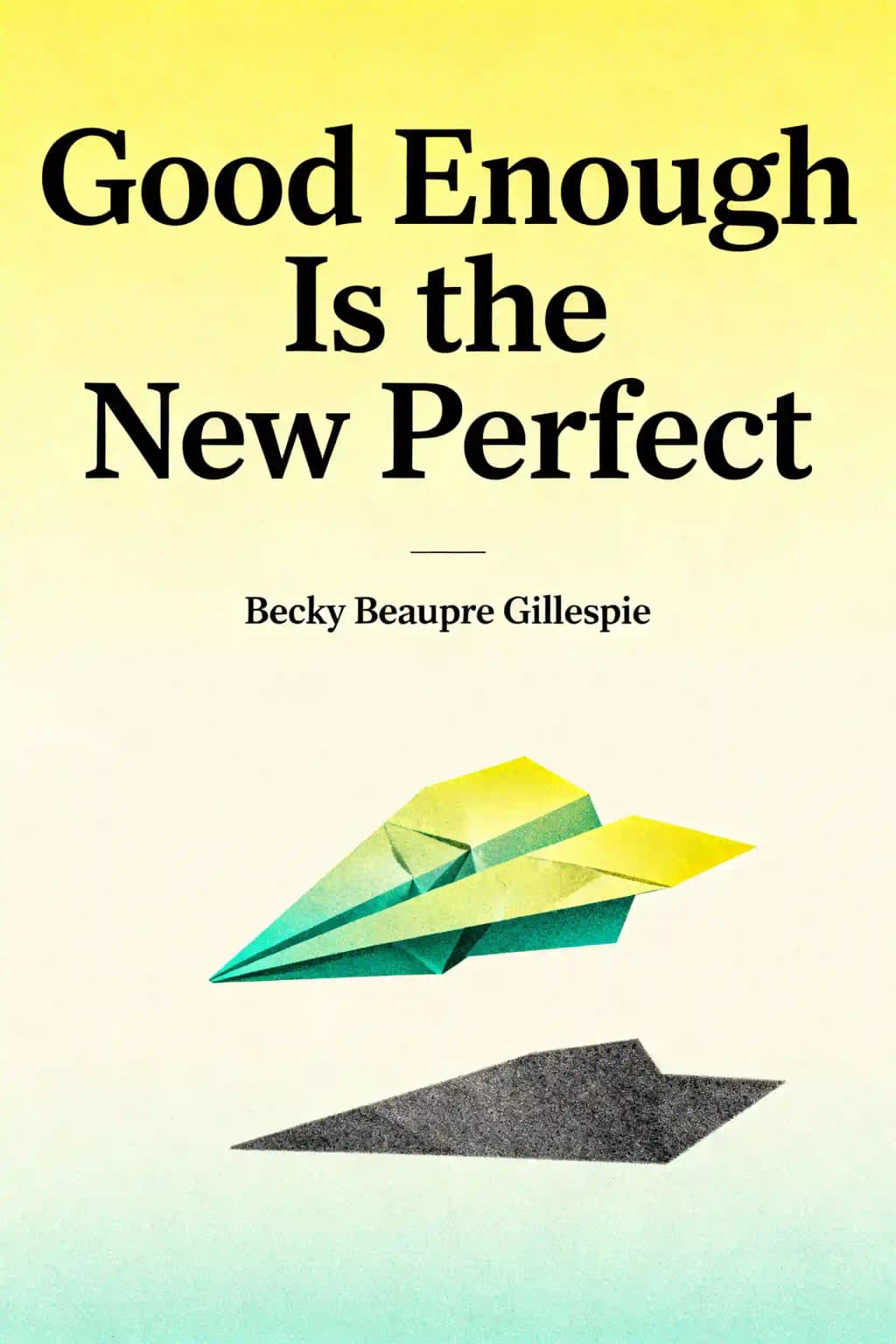
Good Enough Is the New Perfect
Ditch the Worry and Love the Mom You Already Are
Обзор книги Good Enough Is the New Perfect
Ditch the "perfect mom" myth. "Good Enough Is the New Perfect" reveals groundbreaking research showing happier mothers embrace balance over perfection. Ten years after publication, this cultural touchstone still empowers women to redefine success on their own terms. Ready to exhale?
Ключевые темы в Good Enough Is the New Perfect
- perfectionism recovery
- work-life integration
- unrealistic expectations
- self-compassion
- comparison trap
Цитаты из Good Enough Is the New Perfect
No one wins when you compare.
Good enough is not a compromise; it's a liberation.
Your best is good enough, and that's something to celebrate.
Персонажи в Good Enough Is the New Perfect
- Becky Beaupre GillespieAuthor and narrator sharing her journey
- Jessica N. TurnerAuthor of The Fringe Hours and case study
Скачать резюме книги «Good Enough Is the New Perfect»
Получите резюме книги «Good Enough Is the New Perfect» в формате PDF или EPUB бесплатно. Распечатайте или читайте офлайн в любое время.
Часто задаваемые вопросы об этой книге
Good Enough Is the New Perfect by Becky Beaupre Gillespie and Hollee Schwartz Temple explores modern motherhood and work-life balance, advocating for redefining success beyond traditional perfectionism. Drawing from interviews with mothers and the authors’ own experiences, it emphasizes prioritizing meaningful goals over societal expectations. The book offers strategies to navigate career ambitions while maintaining family well-being, challenging the myth of "having it all".
This book is ideal for working mothers, career-driven women, and anyone struggling to balance professional and personal responsibilities. It resonates with readers seeking actionable advice on rejecting burnout culture, redefining success, and embracing flexibility. Professionals in high-pressure fields (e.g., law, corporate roles) will find its insights particularly relevant.
Yes, for its practical framework to achieve sustainable work-life harmony. Gillespie and Temple combine research, personal anecdotes, and actionable steps to help readers overcome guilt and embrace flexibility. Critics note its focus on privileged demographics, but its core message remains valuable for rethinking perfectionism in modern careers.
Key ideas include:
- The “New Perfect”: Customizing success instead of chasing unattainable ideals.
- Guilt-free prioritization: Focusing on what matters most, not societal benchmarks.
- Strategic compromise: Letting go of non-essential tasks to preserve energy.
- Partner equity: Encouraging shared household and childcare responsibilities.
The book highlights how technology and workplace demands intensify pressure on mothers. It argues against the “always on” mindset, offering case studies of women who achieved balance by setting boundaries, outsourcing tasks, and renegotiating work arrangements. Templates for goal-setting and communication are included.
Some reviewers argue the book’s advice primarily applies to white-collar professionals with financial flexibility. It’s less accessible for low-income or single parents facing systemic barriers. However, its core philosophy—rejecting perfectionism—still offers universal relevance.
While Lean In focuses on advancing women’s leadership, Good Enough prioritizes personal fulfillment over traditional career climbing. Gillespie and Temple emphasize flexibility and self-defined metrics of success, whereas Sandberg advocates for systemic change within existing structures.
Interviews include:
- A lawyer who reduced her hours to spend mornings with her children.
- An entrepreneur who built a hybrid career around school schedules.
- Corporate executives who renegotiated remote-work policies pre-pandemic.
Steps include:
- Identifying non-negotiable personal and professional priorities.
- Auditing time commitments to eliminate “perfection traps.”
- Communicating boundaries clearly at work and home.
- Embracing incremental progress over flawless execution.
Its themes align with post-pandemic shifts toward flexible work, mental health awareness, and gender equity in domestic labor. The book’s emphasis on customizable success remains critical as AI and automation reshape workplace demands.
Notable lines include:
- “Perfection is the enemy of the possible.”
- “Your best isn’t a fixed target—it’s what works for your family today.”
These reinforce the book’s call to reject rigid standards.
The authors’ blog (TheNewPerfect.com) and ABA Journal columns provide updated strategies. Gillespie’s later work explores paternal involvement in caregiving, complementing the original text.