Глава 1
The Ghetto's Enduring Legacy: From Venice to Harlem
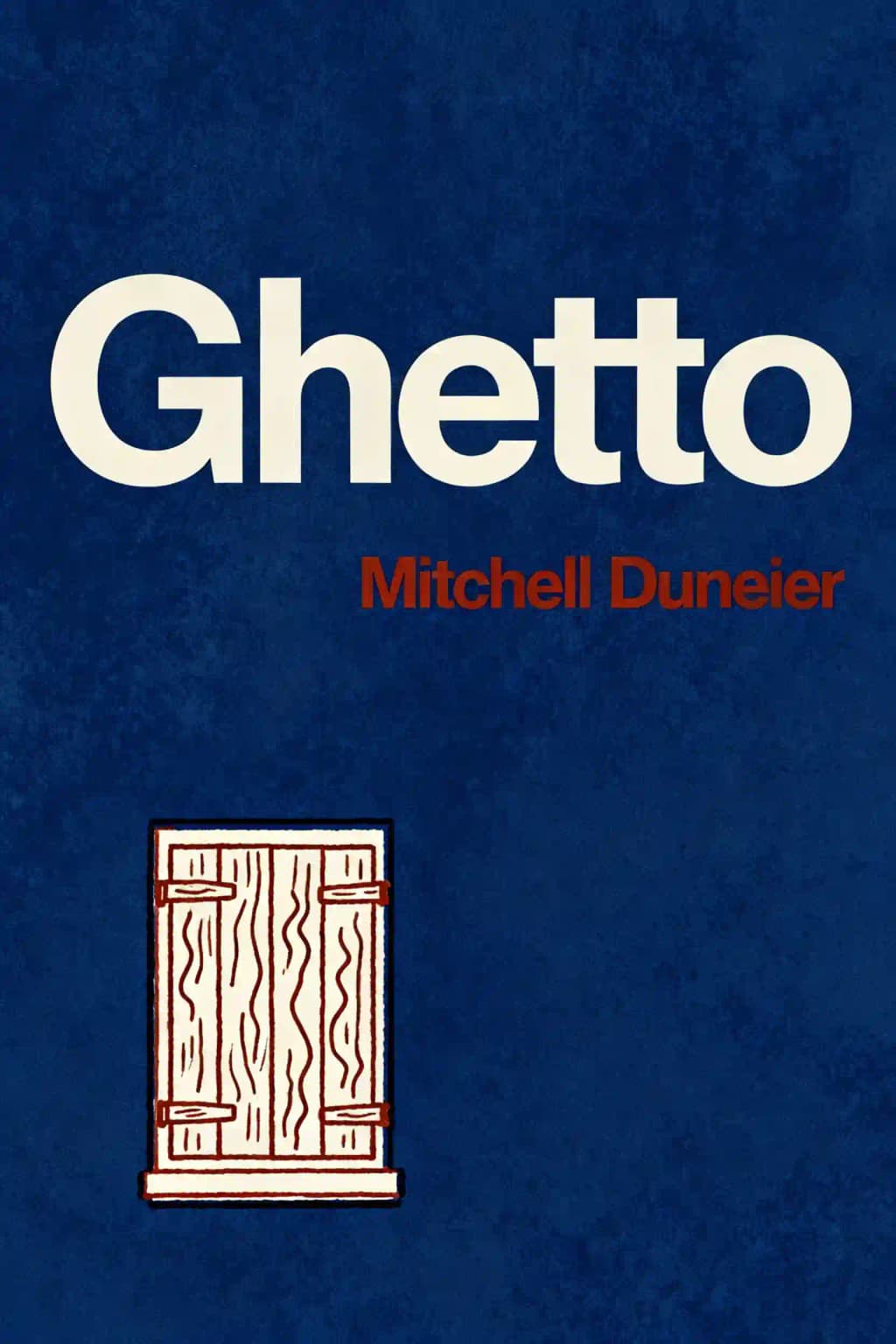
In 1516, Venetian authorities confined Jews to an island called "Ghetto Nuovo," establishing a pattern of segregation that would echo across centuries. Five hundred years later, this concept remains both controversial and essential for understanding racial inequality in America. Mitchell Duneier's exploration of the ghetto traces its evolution from medieval Europe through Nazi Germany to American cities, challenging us to reconsider what we think we know about segregated spaces. The book has garnered praise from figures ranging from Ta-Nehisi Coates to sociologist William Julius Wilson, who called it "a landmark contribution to our understanding of inequality." Its examination of how controlled spaces can simultaneously oppress and nurture community has made it required reading in urban studies programs nationwide. Through the stories of brilliant scholars who studied these spaces firsthand-many of whom faced exclusion from the very academic institutions analyzing their communities-we discover how the ghetto concept illuminates America's unresolved struggle with race and power.
Глава 2
The Ghetto's Origins: From Venice to Nazi Deception
The term "ghetto" originated in Venice in 1516, when Jewish refugees fleeing war settled throughout the city, alarming many Venetians who prided themselves on having "a most Catholic city." The Senate passed legislation requiring all Jews to live on an island in Cannaregio already known as Ghetto Nuovo (New Ghetto) for its previous association with a copper foundry. Gates were erected with Christian guards who opened them at sunrise and closed them at sunset, with limited exceptions for doctors and merchants.
Though Jews initially resisted moving there, the ghetto represented a compromise that legitimized their presence while controlling it. The Jews' right to stay in Venice remained tenuous, based on renewable five-year charters for moneylending. Despite these restrictions, the ghetto created a completely Jewish space with internal autonomy, allowing for a certain flourishing within the larger Christian city.
Within a short time, "ghetto" came to define enclosed Jewish residential areas across Italy. The Roman ghetto, established in 1555 by Pope Paul IV's bull "Cum nimis absurdum," forced Jews who had lived freely in Rome for generations into a small strip of land along the Tiber prone to flooding. The papal decree aimed officially to pressure Jews into conversion, but it primarily created a mechanism separating "us" from "them."
Despite physical separation, daily contact between Jews and Christians continued. When gates were open, Christians could enter the ghetto while Jews could leave to work outside. Culturally, Jews never stopped being Romans-they spoke Italian (albeit a Judeo-Romanesco variant) and remained knowledgeable about Italian culture. The ghetto presented a paradox: while creating disadvantages, it also allowed Jewish institutional life to continue and sometimes flourish.
Napoleon was the first to attempt demolishing Italy's ghettos. In 1797, his troops tore down the gates of Ancona's ghetto and posted declarations renaming ghetto streets as "Via della Liberta." Most Western European ghettos fell slowly but steadily. Rome's was among the slowest to disappear, as the papacy resisted Jewish integration. Only on September 20, 1870, when Italian troops entered Rome to complete Italy's unification, was the ghetto finally abolished and its residents granted full equality.
By the early twentieth century, "ghetto" acquired a new meaning - high-density neighborhoods inhabited voluntarily by Jews in cities like Warsaw, Prague, and New York's Lower East Side. Though not legally mandated, these ghettos still isolated residents from wider society.
When Hitler rose to power in 1933, he cynically justified his anti-Jewish policies by claiming he was merely reviving Church practices: "The Catholic Church considered the Jews pestilent for fifteen hundred years, put them in ghettos... I am moving back toward the time in which a fifteen-hundred-year-long tradition was implemented."
The Nazi ghetto represented unprecedented segregation. Unlike historical ghettos allowing daytime movement, Nazi ghettos trapped inhabitants day and night behind barbed wire. Those attempting escape were shot. The Nazis turned these spaces into spectacles, with soldiers bringing coaches of visitors through "as though it were a zoo," often striking inhabitants with whips and staging degrading scenes. Unlike religious justification for earlier ghettos, Nazi segregation was purely racial.
When Hitler likened his plans to Catholic tradition, he deliberately misrepresented history. Even Nazi intellectuals acknowledged the medieval ghetto "was in essence a voluntary community" with business contacts between Jews and non-Jews. The Nazi ghetto demanded "total segregation" without any possibility of contact. Unlike historical ghettos where conversion offered escape, Nazi ghettos offered no way out.
Ironically, when "ghetto" entered widespread use to describe Black neighborhoods in the 1940s, it was the Nazi ghetto, not the sixteenth-century version, that provided the reference point. For many Black Americans after World War II, the Nazi ghetto became a powerful metaphor for their own experience, despite profound differences between Nazi Warsaw and places like Harlem or Chicago's South Side.
Глава 3
Chicago's Black Belt: Horace Cayton's Pioneering Research
In October 1944, when Virginia Dobbins bought a house in a white Chicago neighborhood, neighbors destroyed the plumbing and torched the property while police refused protection. This incident exemplified the violence facing blacks who attempted to move beyond Chicago's overcrowded black areas.
Horace Cayton was no ordinary graduate student addressing the AME church gathering about this violence. Grandson of the first black U.S. Senator Hiram Revels, raised in Seattle where his parents published a newspaper, Cayton had experienced remarkable highs and lows-from living with a servant in a white suburb to jail time for violating segregation laws.
Beyond the bombings and police inaction, Cayton exposed the sophisticated legal device of race restrictive covenants that effectively sealed hundreds of thousands of blacks into tiny sections of Chicago's South Side. Unlike the Nazi's visible barbed wire, these private agreements among white property owners stipulated that properties couldn't be occupied, leased or sold to blacks. Though appearing grassroots, these covenants were actually enforced by powerful national organizations like the National Association of Real Estate Boards.
Housing patterns for blacks varied significantly across America. While Chicago had 86 percent of blacks living in majority-black neighborhoods and New York had 70 percent in Harlem, Philadelphia showed only 55 percent segregation and Boston just 37 percent. Despite these variations, a demographic study concluded that "a high degree of residential segregation typified every city with a sizable Negro population."
Ten blocks from where Cayton condemned racial covenants stood the University of Chicago, whose renowned sociology department was led by Robert E. Park. After working as a newspaper reporter, earning a doctorate in Heidelberg, and serving as Booker T. Washington's assistant at Tuskegee, Park developed an approach that sent students into Chicago's ethnic neighborhoods for firsthand observation. His students produced classic works like "The Gold Coast and the Slum" and "The Taxi Dance Hall."
As an undergraduate at the University of Washington, Cayton aspired to study under Park. When they first met in 1930, Park dismissively claimed that "Negroes didn't have any history." Incensed, Cayton retorted, "Everything has a history, even the chair I am sitting in," and walked out. Despite this confrontation, Cayton eventually applied to Chicago's doctoral program and was warmly welcomed by Park, beginning a lifelong friendship.
Under Warner's guidance, Cayton directed a massive Works Project Administration study that began as research on juvenile delinquency but expanded to examine the entire social structure of Chicago's black community. Leading a team of 150-200 interviewers supervised by twenty graduate students, they operated from a church basement on the South Side. The researchers, primarily local residents studying their own communities, conducted nearly ten thousand interviews while documenting both lower-class life in public spaces and upper-class activities at fraternity and sorority dances.
Louis Wirth, Cayton's other mentor and an early protege of Park, wrote his influential dissertation "The Ghetto" in 1928. Wirth argued that while ghettos were instruments of control and isolation, they also offered toleration and refuge for minorities. He appreciated the religious and cultural vigor of Jewish ghettos, noting how they fostered "ideals, aspirations, and passions" alongside strong family life and achievements in commerce, literature, music, and philosophy. Yet Wirth remained deeply ambivalent, fearing ghettos "aroused the worst passions of non-Jewish demagogues" and hindered assimilation.
Cayton discovered the University of Chicago was actively supporting restrictive housing covenants that enclosed Chicago's Black Belt, contributing to the very conditions his research documented. The university financially backed the Woodlawn Property Owners Association, which boasted of completely excluding blacks from the university district. Association president T. L. Lusk declared, "We must refuse to sell to colored people, regardless of whether covenants are valid or invalid," suggesting they would make life "unbearable" for any who moved in.
Whatever validity there might have been to the idea that Jewish ghettos and other ethnic neighborhoods in Chicago developed through natural economic and social forces-itself highly contested-Chicago's black communities were demonstrably not natural formations. When Wirth and Park first developed their theories about "natural areas," the black ghetto barely existed. Black neighborhoods were historically less overwhelmingly black and were typically confined through intimidation and violence. Restrictive covenants that eventually created the ghetto only appeared in Chicago in 1927-28, when Wirth's book was likely already in press.
Глава 4
Kenneth Clark's Dark Ghetto: Exposing Northern Segregation
During the civil rights era, the black ghetto gained greater prominence in social science, with Kenneth Clark emerging as a crucial figure. After restrictive covenants ended, attention had shifted away from the ghetto but returned in the 1960s as the urban North became the next crucial civil rights battleground.
Born to Jamaican parents in Panama, Clark moved to Harlem at age five and later attended Howard University, where scholars like E. Franklin Frazier and Alain Locke inspired his pursuit of racial justice through systematic study. As senior editor of the school newspaper in 1934, Clark wrote an editorial condemning segregation in Capitol restaurants that launched his civil rights career decades before the 1960s movement.
When Clark and fellow Howard students picketed the Capitol, they were arrested but unexpectedly released by a sympathetic Irish police captain who declared they "should be praised, not arrested." Their protest made the front page of The Washington Post, but Howard's president, fearing the loss of congressional funding, wanted Clark denied his diploma. Political scientist Ralph Bunche, a young faculty star who would later win the Nobel Peace Prize, threatened to resign if any students were expelled, beginning a lifelong friendship between Bunche and Clark.
Though Myrdal initially found Clark's papers "sloppy," Clark's persistence and Otto Klineberg's intervention secured him a staff position on Myrdal's research team. Working with Klineberg, Clark contributed research on race and intelligence that helped discredit theories supporting Southern racial caste systems, demonstrating there were no innate intellectual differences between blacks and whites.
At City College, Clark taught future intellectual luminaries like Irving Kristol, Daniel Bell, Daniel Patrick Moynihan, and Nathan Glazer while continuing his research on prejudice in young children. His studies showing black children preferring white dolls became crucial evidence in Brown v. Board of Education, with the Supreme Court citing both his work and Myrdal's "An American Dilemma."
As a lifelong New Yorker, Clark recognized early that Northern black urban problems differed fundamentally from Southern civil rights issues. Housing segregation, slumlords, and police abuse couldn't be solved by desegregating lunch counters. Growing impatient with Northside's limited impact, Clark established Harlem Youth Opportunities Unlimited (HARYOU) in 1961 to secure federal funding for community improvement through "action research."
Before leaving HARYOU due to power struggles with Congressman Adam Clayton Powell Jr., Clark directed a massive research project published as "Youth in the Ghetto," which described Harlem as a "powerless colony" controlled by outside forces. This analysis, comparing ghetto residents to colonized peoples, would later influence the Black Power movement despite Clark's personal opposition to black separatism.
Despite Clark's prominence and Columbia University's location near his work at City College, there's no evidence Columbia ever seriously considered hiring this distinguished alumnus whose research focused on their shared community. Instead, in 1964, Columbia hired Herbert Gans, a refugee from Nazi Germany who had studied under one of Park's proteges.
The civil rights era brought profound changes to how scholars understood the ghetto. While Drake and Cayton had viewed the ghetto primarily as a residential space where people suffered from external labor market discrimination, post-1965 Watts riots analysis transformed this understanding.
Harvard economist John F. Kain's groundbreaking 1964 paper first identified the spatial mismatch between where jobs were located and where poor people lived. Fifteen years of postwar suburban expansion had dramatically shifted job distribution-by the mid-1960s, nearly half of retail jobs and 50% of manufacturing jobs in major metropolitan areas had moved to the periphery. This spatial mismatch created a fundamentally new problem. Unlike whites who could choose housing based on workplace location or transportation access, blacks faced discriminatory housing practices that trapped them in areas increasingly disconnected from employment opportunities.
In March 1965, Daniel Patrick Moynihan emerged as another influential voice on ghetto issues with his controversial report "The Negro Family: The Case for National Action." Despite limited training in social sciences and minimal contact with black communities, Moynihan declared that family breakdown was the fundamental source of weakness in ghetto neighborhoods. He traced this to slavery's lingering effects, which had "vitiated family life" and hindered the emergence of strong father figures.
Clark's Dark Ghetto, published in 1965, broke twenty years of silence in major social science books on the U.S. ghetto. Moving beyond his earlier psychological experiments with dolls, Clark confronted Northern de facto segregation, arguing it produced the same psychological damage as legally mandated Southern segregation. Drawing on his lifelong experiences in Harlem, Clark rejected "cool, objective" approaches, comparing himself to Holocaust scholars like Bettelheim and Frankl who refused emotional detachment when studying concentration camps.
Unlike Drake and Cayton's earlier portrayal of semi-flourishing Bronzeville, Clark's ghetto showed no community spirit or upward mobility. Instead, it represented the "institutionalization of powerlessness." Clark rejected Wirth's notion that ghettos were partly voluntary, arguing that when Blacks preferred living apart, it reflected segregation's cruelest effect: victims seeking respite from others' denigration ultimately internalized their inferiority.
Глава 5
William Julius Wilson: Race, Class, and the Urban Underclass
On February 28, 1978, relatively unknown University of Chicago sociologist William Julius Wilson published "Poor Blacks' Future" in The New York Times, summarizing his controversial book The Declining Significance of Race. Wilson argued that economic transformation had made class increasingly more important than race in determining black life chances. In the new economy, educated blacks benefited from affirmative action and corporate opportunities, while those lacking education faced limited prospects, unemployment, and welfare dependency.
Wilson's The Declining Significance of Race expanded on colleague Milton Gordon's concept of "ethclass" - the intersection of ethnicity and social class creating distinct social spaces. Beyond the simplistic race-versus-class debate it sparked, Wilson's book offered a sweeping historical analysis from the Civil War to the present. He argued that economic conflict between blacks and whites had shifted to sociopolitical spheres, with working-class whites no longer threatened by black labor but competing politically over crime, schools, and housing.
Wilson's claims provoked fierce opposition, particularly from Kenneth Clark, who emerged from retirement to publish "No. No. Race, Not Class, Is Still at the Wheel" in The New York Times. Clark insisted race remained the dominant factor in black life chances, arguing that middle-class blacks still faced tokenism in management positions and depended on white goodwill through special programs.
By the late 1970s, black communities had transformed dramatically. Rather than the predicted continued ghettoization, large numbers of middle-class blacks were moving to mixed-race neighborhoods and suburbs, leaving behind increasingly isolated poor blacks. Meanwhile, cities like Washington D.C., Detroit, and Atlanta developed substantial middle-class black communities. Following the Voting Rights Act, many cities elected their first black mayors and city councils, meaning ghetto authorities were now also black.
What went largely unchallenged in Wilson's work was his use of the term "underclass" to describe poorly educated ghetto residents dependent on welfare or menial jobs. This concept, previously used by Gunnar Myrdal in Sweden, had gained currency through a recent Time magazine cover story depicting "unreachable and antagonistic poor blacks." Wilson gave scientific authority to this label, describing the underclass in behavioral terms as disconnected from wider society's norms.
Charles Murray, a Harvard-educated political scientist with a background in counterinsurgency work, emerged as a conservative voice on ghetto poverty. Murray argued that welfare programs had rationally incentivized ghetto residents to reject work. He claimed this was a community-wide response affecting entire generations, and speculated poor whites would behave similarly under the same conditions, though liberal policymakers held lower expectations for blacks.
In 1987, MacArthur "genius" grant recipient William Julius Wilson published "The Truly Disadvantaged," building on his earlier work by examining how racial and class demographics expressed themselves spatially. Wilson argued that ghetto joblessness stemmed primarily from economic factors and spatial mismatch between available jobs and workers' skills. Unlike his earlier work, he no longer claimed blacks rejected low-wage work, instead advocating for universal economic programs that would disproportionately help blacks.
Wilson introduced the "male marriageable pool index" to counter Murray's welfare dependency arguments, attributing family structure changes to male joblessness rather than welfare benefits. His concept of "concentration effects" explained how middle-class flight left poor blacks without social buffers, creating isolated ecological niches with severely restricted opportunities compared to poor whites who rarely lived in such concentrated poverty.
Massey and Denton's "American Apartheid" (1993) challenged Wilson by reasserting that racial segregation, not middle-class flight, was the ghetto's defining feature. They argued segregation resulted from ongoing racist forces, not just historical discrimination, and that welfare policies only harmed segregated communities by concentrating recipients in areas where dependency became normalized.
By the time Wilson published his employer interviews, he'd shifted from arguing that employers required unfairly high education levels to accepting their hiring practices as reasonable. His theory in "When Work Disappears" presented a complex vicious cycle: ghetto residents became ill-suited for available jobs due to social isolation, poor schools, and a culture of nonwork. Black men, resentful of dehumanizing low-paid work, developed attitudes that reinforced employers' negative perceptions, especially during economic downturns.
Глава 6
Geoffrey Canada's Harlem Children's Zone: A New Approach
While previous approaches to addressing ghetto problems had proven discouraging, Geoffrey Canada emerged during the neoliberal moment with a compelling new vision. Unlike social scientists debating whether the ghetto was a problem of unemployment, welfare dependency, or racial segregation, Canada saw the ghetto as a self-contained entity that could be addressed directly through integrated services.
Canada's outlook was shaped by his coming-of-age in the South Bronx during the civil rights era. Growing up in a violent neighborhood in the late 1950s, young Geoffrey learned the importance of self-defense and proving himself through "fair ones" - fistfights governed by unwritten rules. His memoir "Fist Stick Knife Gun" describes a childhood where status derived from fearlessness and "being cold," concealing one's humanity while navigating a hierarchy that constantly shifted as one moved from elementary to junior high to high school.
After earning degrees from Bowdoin and Harvard, Canada worked at Boston's Robert White School for emotionally disturbed boys, where he gained crucial insights about controlling violence. He discovered that a few "program busters" could undermine any environment if left unchecked, and that many intimidating boys only fought when adults were present to intervene. As director, he transformed the school culture by offering to take fighting boys to an unsupervised location - given this choice, they invariably chose to return to class instead.
While 1980s social scientists like Wilson focused primarily on improving job prospects for adults in the ghetto, Canada concentrated on helping children in violent neighborhoods. He joined the Rheedlen Centers for Children and Families in Harlem on the condition he could establish a martial arts school, having earned a black belt in tae kwon do. The Chang Moo Kwan Tae Kwon Do Club was born, though ironically, between Canada's departure for college in the early 1970s and his return to New York in the early 1980s, guns had largely replaced physical ability as the primary means of self-defense.
Canada recognized that street norms had fundamentally changed. The "natural checks and balances" that once prevented minor conflicts from becoming deadly had disappeared with the proliferation of guns. Previously, youth faced deterrents like possibly losing a fight or retaliation from an opponent's friends. Now armed teenagers felt invincible - they could scatter threatening groups with bullets. The only check on behavior became one's own death.
Influenced by Malcolm Gladwell's "Tipping Point" theory, Canada realized his programs needed greater scale to transform Harlem. He concluded that children in his programs were still overwhelmed by negative social cues from those outside the program. If enough children participated, however, positive behaviors could spread "like a virus" - the idea of college attendance would "seep into your pores." With backing from billionaire Stanley Druckenmiller, who was impressed by Canada's willingness to adopt corporate measuring standards, the Rheedlen Center expanded from a $6 million to a $58 million budget and became the Harlem Children's Zone, covering 24 blocks with comprehensive services from infancy through adolescence, including "Baby College" for parents of infants.
Despite creating integrated services, Canada struggled to influence children's regular school hours until Mayor Bloomberg appointed Joel Klein as schools chancellor. With the administration's support, Canada established Promise Academy charter school in 2004, starting with kindergarten and sixth grade. Paul Tough of The New York Times documented this experiment, witnessing the emotional lottery night when 359 students applied for admission. Canada promised parents: "If your child gets into our school, that child is going to succeed."
However, reality proved harsh - incoming sixth graders tested 2-3 years below grade level in math, and by year-end, some students tested worse than before. When confronted with these disappointing results, Canada faced pressure from his wealthy board members, including billionaires Stanley Druckenmiller and Kenneth Langone, who suggested removing "bad apples" and adopting stricter behavioral models used by other successful charter schools.
Despite his $400,000 salary and board pressure, Canada initially resisted approaches that stigmatized poor Black students. His billionaire funders viewed students like stock picks, wanting to protect the Harlem Children's Zone brand by selecting only motivated children who could demonstrate success. With limited time to prove his vision, Canada became a tough executive - firing principal Terri Grey who doubted his college-for-all promise, hiring Glen Pinder as replacement, and watching as the superintendent and a dozen teachers quit.
When Canada faced devastated students and parents, he took full responsibility rather than blaming the children. This failure marked a shift in Canada's approach - he now focused on reaching children much earlier, aligning with Oscar Lewis's controversial 1960s view that intervention after age six or seven comes too late. This contradicted William Julius Wilson's belief that opportunity structures, not cultural values, should be the focus.
During his 2007-2008 presidential campaign, Barack Obama pledged to replicate the Harlem Children's Zone in twenty cities nationwide, promising federal funding for half the costs. "We can't afford not to," he insisted, comparing the $46 million annual cost to save a generation of children against the equivalent of four hours of Iraq War spending. However, the economic recession Obama inherited made it impossible to commit billions to such programs. Instead, in 2010, his administration launched a more modest Promise Neighborhoods initiative, awarding planning grants to 21 communities and later implementing grants of about $25 million to selected areas.
Глава 7
The Forgotten Ghetto: Contemporary Realities and Historical Parallels
The Black ghetto has transformed from a place of semi-flourishing despite segregation to one with increased external control. In early ghettos, Black men worked servile jobs but returned to communities with less police presence than today. Drake and Cayton barely mentioned police in their studies. Since the 1960s, the War on Drugs has dramatically increased policing and incarceration rates in Black communities - nearly 20% of Black men in their thirties have served prison time, rising to 60% among high school dropouts.
The black ghetto concept remains crucial for understanding poor Black communities today. Its defining characteristics include: restricted residential space based on race and wealth; a mechanism that perpetuates prejudice without harming the dominant population; a site of vicious cycles where spatial inequality becomes rationalized as inherent to Black life; differences of kind rather than degree from other poor neighborhoods; creation and ongoing control by outside institutions; continuous oppression through exploitation by landlords and economic exclusion; complex internal social dynamics where residents distinguish themselves morally despite external prejudice; a population struggling for decency against great odds while many successfully escape; and fundamentally, an intergenerational phenomenon that persists across time.
Drake and Cayton's deliberate use of "ghetto" in Black Metropolis highlighted that Black concentration in Chicago's blighted areas wasn't natural but resulted from white power restricting Black mobility. Kenneth Clark, one of Myrdal's assistants, later argued in Dark Ghetto that these neighborhoods faced epidemic problems requiring more than civil rights boycotts or sit-ins to solve. Clark viewed ghettos as powerless colonies where Blacks felt routinely demeaned, though he maintained Myrdal's belief in America's cognitive dissonance between ideals and violations.
William Julius Wilson shifted the discourse in 1978, arguing class factors were overtaking race in determining Black life chances. As the Black middle class escaped ghettos, they left behind an isolated, destitute population. This created a new form of ghetto characterized by geographic, social, and economic isolation. Wilson proposed fighting for race-neutral policies benefiting all poor Americans rather than race-specific initiatives, drawing criticism from those who saw this as legitimizing America's retreat from racial justice.
Despite scholarly attention and the War on Poverty, America largely failed to address ghetto conditions. By the 1990s, when budget surpluses might have funded a second War on Poverty, the nation instead pursued wars abroad. Meanwhile, young whites and "honorary whites" moved into former ghetto neighborhoods, investing in real estate while separating their children in private or charter schools. Geoffrey Canada's Harlem approach relied on billionaire philanthropy rather than systemic change, revealing how Americans compartmentalize moral dissonance-protecting their own families' welfare above all else-which remains the foundation of the forgotten ghetto.
Глава 8
The Ghetto's Enduring Relevance
The concept of the ghetto has evolved dramatically over five centuries, from Venice's Jewish quarter to Nazi concentration camps to America's segregated neighborhoods. Yet throughout these transformations, certain patterns persist: the creation of bounded spaces that simultaneously control and nurture, the tension between external restrictions and internal flourishing, and the way segregated spaces become both reflections and reinforcers of broader social attitudes.
What makes the ghetto concept uniquely valuable is its ability to illuminate the relationship between space and power. Unlike terms like "slum" or "poor neighborhood" that describe physical conditions, "ghetto" captures how spatial arrangements express and reinforce social hierarchies. The ghetto is never merely a residential pattern but always a manifestation of power relationships between dominant and subordinate groups.
The scholars who developed our understanding of the ghetto-from Horace Cayton and St. Clair Drake to Kenneth Clark and William Julius Wilson-often experienced firsthand the tension between academic study and lived experience. Their work reminds us that the ghetto is not merely an academic concept but a lived reality with profound consequences for those within its boundaries.
As American cities continue to transform through gentrification, mass incarceration, and economic restructuring, the ghetto concept remains essential for understanding how racial inequality persists despite formal legal equality. By recovering the rich intellectual history of the ghetto, we gain crucial insights into both historical patterns of segregation and contemporary challenges of achieving genuine integration and equality in American society.