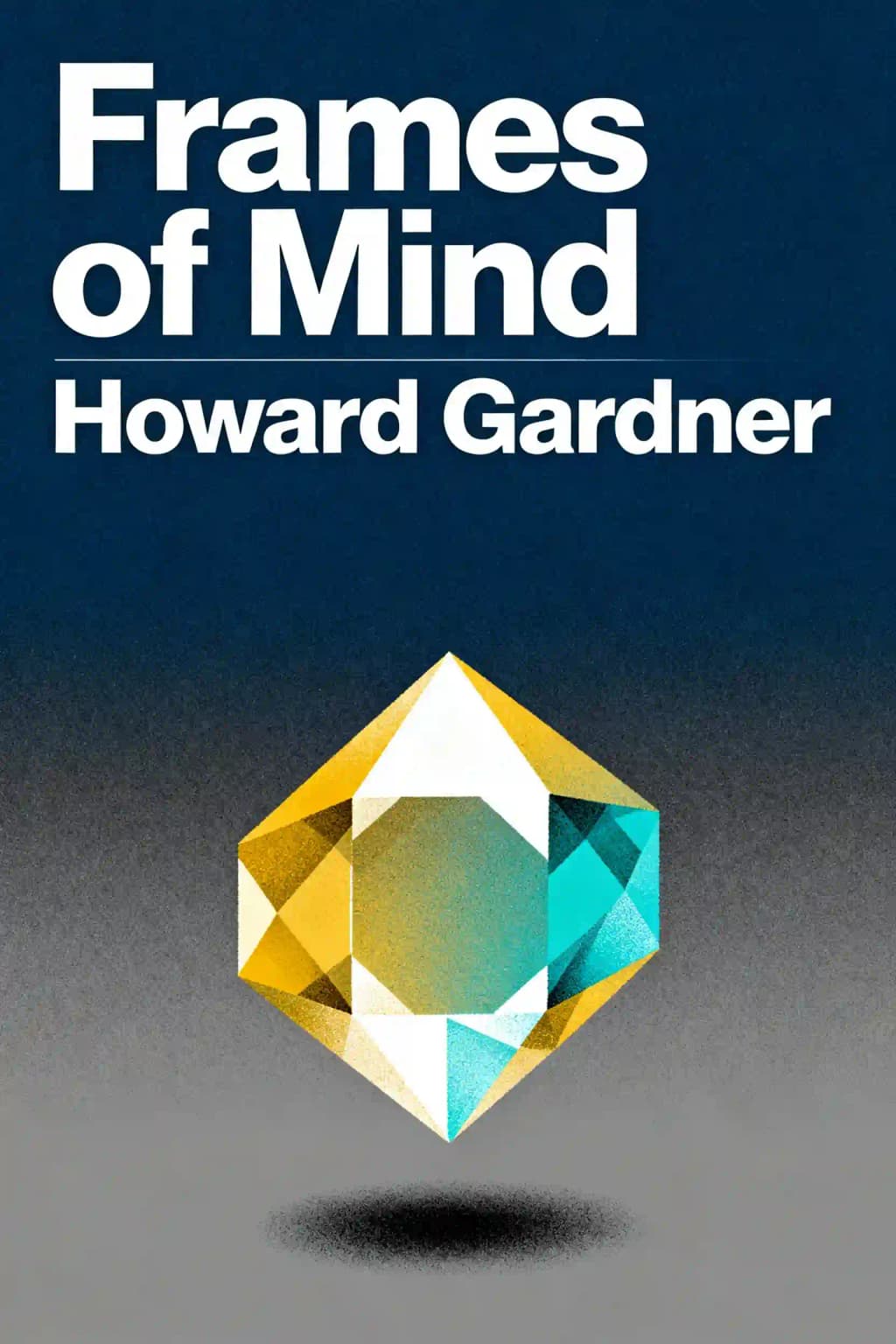
Обзор: Краткое содержание «Структуры разума»
Революционный труд Гарднера «Структуры разума» разрушает миф о едином интеллекте, предлагая восемь различных его типов. Эта знаковая работа 1983 года дала толчок глобальной реформе образования, бросив вызов традиционным тестам IQ и вдохновив на создание подходов к персонализированному обучению. Как признание ваших уникальных когнитивных способностей может преобразить ваш потенциал?
Ключевые темы: Краткое содержание «Структуры разума»
- multiple intelligences theory
- cognitive modularity
- human potential diversity
- intelligence testing critique
- neuropsychological brain function
Лучшие цитаты — Краткое содержание «Структуры разума»
It is of the utmost importance that we recognize and nurture all of the varied human intelligences, and all of the combinations of intelligences.
We are all so different largely because we all have different combinations of intelligences.
Intelligence isn't fixed or singular—we all possess multiple pathways to competence and contribution.
The resulting "IQ" became treated as a fixed, innate quality.
Learning itself involves altering the strength of existing synaptic connections.
Персонажи: Краткое содержание «Структуры разума»
- Howard GardnerAuthor and psychologist who proposed the theory
- Charles SpearmanPsychologist who pioneered the 'g factor' theory
- Alfred BinetDesigner of the first intelligence tests
Скачать резюме книги «Структуры разума»
Получите резюме книги «Структуры разума» в формате PDF или EPUB бесплатно. Распечатайте или читайте офлайн в любое время.