Глава 1
A Family of Killers: When Murder Runs in the Blood
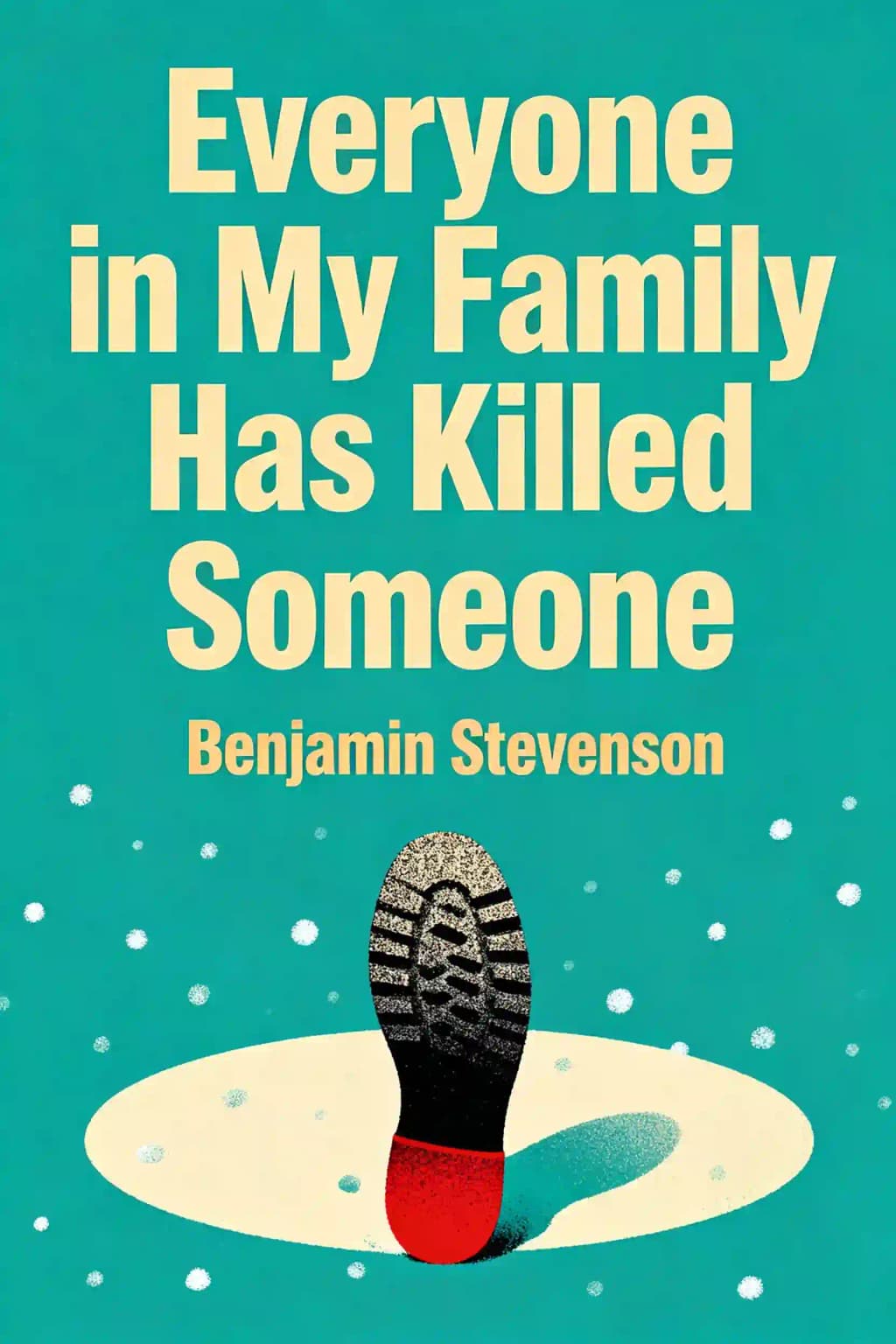
When Ernest Cunningham says everyone in his family has killed someone, he means it literally. This wickedly clever murder mystery by Benjamin Stevenson has captivated readers worldwide with its blend of classic whodunit elements and modern psychological depth. Earning comparisons to both Agatha Christie and the hit film "Knives Out," the novel has become a favorite among mystery enthusiasts and caught the attention of celebrities like Reese Witherspoon, who featured it in her book club. The story's unique premise-a family reunion where every member has blood on their hands-offers a refreshing twist on the locked-room mystery genre, making it one of the most discussed crime novels in recent years.
Глава 2
The Reliable Narrator's Promise
"I'll be a reliable narrator - everything I tell you will be the truth, or at least the truth as I knew it at the time."
Ernest Cunningham opens his story with a startling confession: everyone in his family has killed someone, and he's no exception. As a writer of how-to guides for aspiring authors, Ernest understands the importance of playing fair with readers. He promises no tricks, no unreliable narration - just the unvarnished truth about his dysfunctional family and the murders that connect them. This commitment to honesty sets him apart from traditional mystery narrators who often withhold crucial information or deliberately mislead readers.
Ernest's narrative style is refreshingly direct, combining self-awareness with meticulous attention to detail. He even helpfully lists the chapters where deaths occur, breaking the fourth wall occasionally to ensure readers are following the complex web of relationships and motives. His commentary includes specific page numbers for important revelations and gentle warnings about upcoming plot twists. This meta-awareness of murder mystery conventions becomes both a storytelling device and a character trait - Ernest's analytical mind constantly references the rules of detective fiction even as he's living through one.
The precision of Ernest's narration extends to his explanation of family dynamics. He carefully introduces each family member, their relationships, and their potential motives, creating a comprehensive family tree of suspects. His background as a writing guide author shows in how he structures the narrative, dropping subtle clues while maintaining transparency about the story's direction.
The story begins three years before the main events, when Ernest's brother Michael arrives at his doorstep with a dying man in his car and $267,000 in cash. That fateful night - with its rain-slicked streets and desperate decisions - sets in motion a chain of events that will culminate in a deadly family reunion at an isolated mountain resort called Sky Lodge. Ernest's subsequent decision to testify against his brother creates the central family rift that the upcoming reunion must somehow bridge - if they can survive it. This choice between family loyalty and moral obligation becomes the emotional cornerstone of the narrative.
Throughout the story, Ernest maintains his promise of reliability while acknowledging the complexity of truth and memory. He frequently reminds readers of his commitment to honesty, even when revealing uncomfortable truths about himself or his loved ones. His role as both participant and chronicler creates a unique perspective, allowing him to analyze events both as they unfold and in retrospect, providing both immediate tension and thoughtful reflection.
Глава 3
A Reunion Doomed From the Start
The Cunningham/Garcia family reunion at Sky Lodge Mountain Retreat is orchestrated with obsessive precision by Ernest's Aunt Katherine, whose organizational zeal manifests in color-coded Excel spreadsheets detailing everything from meal preferences to sleeping arrangements. Ernest, displaying his characteristic sarcasm, responds to the registration form by listing "spreadsheets" and "excessive planning" under his allergies, alongside a deliberately passive-aggressive note about his aunt's controlling nature. The setting is quintessential murder mystery territory - an isolated ski resort whose modernist chalets are scattered like "shark's teeth" across a pristine snow-covered valley, with the nearest town forty minutes away and an approaching blizzard threatening to seal them off completely.
The family tensions are palpable from the first moment. Ernest arrives to find his stepsister Sofia huddled against the bitter mountain wind, chain-smoking on the wraparound porch. Her warning that "it's worse inside" proves prophetic. With dark humor that masks deeper anxieties, she presents Ernest with meticulously crafted Reunion Bingo cards. The squares feature painfully accurate predictions of family behavior: "Ernest ruins something," "Aunt Katherine corrects someone's table manners," "Mom drinks before noon," and the disturbingly prescient "Broken Bone (OR Someone Dies)" - complete with an unsettling smiley face that seems more menacing than cheerful.
The assembled cast reads like a playbill of barely contained hostilities. There's Ernest's mother Audrey, who maintains a frost-bitten silence toward her son, communicating only through pointed glares and third parties. His stepfather Marcelo attempts to play peacemaker while nursing his own hidden resentments. Aunt Katherine bustles about with clipboard in hand, her efficiency masking deeper family concerns. Uncle Andy drinks too much and says too little. Michael's ex-wife Lucy arrives with a new engagement ring and old grievances, while Ernest's estranged wife Erin appears with suspicious last-minute schedule changes and a burner phone she thinks no one notices.
When Ernest asks when they all last saw each other, his mother's response - "The trial" - falls like an axe, splitting the gathering's forced civility. The words reference Michael's conviction, a event that divided the family into camps of loyalty and betrayal, with Ernest firmly cast as the latter.
Michael's arrival transforms the already charged atmosphere. Instead of showing the expected prison pallor, he appears remarkably renewed - clean-shaven, clear-eyed, wearing an expensive-looking cashmere sweater that no one can quite explain. His suggestion to Ernest about sharing a quiet beer carries undertones that could be either reconciliation or revenge. But before any private conversation can occur, the discovery of a body in the pristine snow transforms their family reunion into something far darker - a sealed-room mystery where every family member becomes both suspect and potential victim.
Глава 4
Buried Secrets and Family Trauma
The Cunningham family's history of killing begins with Ernest's father Robert, a police officer who turned criminal. The official story was that he died attempting to rob a gas station while high on drugs, shot by responding officers. This event branded the Cunninghams as outcasts-the family of a cop-killer-and taught them to close ranks against the outside world.
But as the story unfolds, we learn this version of events was a carefully constructed lie. Robert Cunningham had actually infiltrated a criminal group called the Sabres, working as an informant against corrupt police officers. His death wasn't a robbery gone wrong but a targeted hit because he was about to report witnessing the murder of a child named Rebecca McAuley.
Ernest's mother Audrey carries her own dark history. While working as a bank teller, she shot a robber with a beanbag round, breaking four of his ribs but not killing him. The true tragedy occurred that same day when her three young sons were forgotten in a roasting car. Ernest's younger brother Jeremy died in that car while Ernest sat beside him, a trauma so severe that Ernest has "huge black patches" in his memory of that day.
Or so everyone believed. In the novel's most shocking revelation, we discover that Jeremy didn't die that day at all-he was kidnapped by the Sabres as leverage to obtain photographs Robert had taken. Audrey kept this secret for decades, letting everyone believe Jeremy died in the car to protect her remaining sons. The "Officer Crawford" investigating the murder at Sky Lodge is actually Jeremy Cunningham, returned from the dead and seeking answers about his past.
Глава 5
Murder in the Snow
The discovery of a frozen body on the resort's golf course initially seems unconnected to the family drama. The dead man, nicknamed "Green Boots" by Ernest, appears to have died from exposure. But Sofia, a surgeon with a troubled past, quickly identifies something more sinister-the blackening on his face isn't frostbite but ash clogged in his windpipes and lungs. Despite being found in snow with no signs of melting nearby, the man somehow "died in a fire."
Sofia recognizes the signature of the notorious "Black Tongue" serial killer, who suffocates victims by forcing them to inhale ash. The killer's method is particularly gruesome-victims are zip-tied in enclosed spaces with ash blown in, creating a slow, torturous death where they essentially drown in air. The black residue left on their tongues serves no purpose beyond announcing the killer's presence.
When Officer Crawford reveals it's a murder investigation, tensions escalate. Crawford identifies Michael and announces he's under arrest, revealing that Michael was released from prison yesterday, not today as the family believed. Rather than providing an alibi, Michael chooses to cooperate with Crawford, who decides to detain him in the resort's Drying Room. In a stunning move, Michael points to Ernest and declares, "He is my lawyer," rejecting Marcelo's representation.
The plot thickens when Michael is found dead the next morning-suffocated with ash in the same manner as Green Boots despite supposedly being under guard. Lucy, Michael's ex-wife, spirals into accusatory rage, targeting everyone in turn before ultimately taking her own life by jumping from the resort's roof.
Глава 6
The Money Trail and Hidden Photographs
The $267,000 that Ernest has been hiding for three years becomes a pivotal thread in the complex tapestry of deception and family secrets. This cache of bills, meticulously preserved in vacuum-sealed bags and stored in a hidden compartment beneath Ernest's cabin floor, represents more than just currency - it's a tangible link to their father's shadowy past. Michael's revelation that it was "our money" carries deep significance, as he explains how these funds were originally part of their father's elaborate network of undercover operations. The money trail leads directly to Alan Holton, a detective whose badge concealed years of corruption and ultimately connected to their father's violent death on a rain-slicked highway fifteen years earlier.
The investigation takes a macabre turn when Ernest discovers Michael and Erin's nocturnal grave-robbing expedition on the eve of the family reunion. In the bed of Michael's mud-spattered pickup truck lies a weather-worn coffin, its lid bearing a carefully carved infinity symbol - the final resting place of Alan Holton's former partner, the same policeman Ernest's father had shot in self-defense decades ago. The discovery becomes even more dramatic when the truck, during a heated pursuit, crashes through the brittle surface of Mason Lake. The ice splinters like spider webs, nearly claiming Ernest's life as the frigid waters swallow both vehicle and coffin, leaving crucial evidence suspended in the murky depths.
Ernest's subsequent investigation reveals Michael's role as an intermediary in a decades-old tragedy involving the McAuley family. Their daughter Rebecca's kidnapping and murder had remained unsolved for twenty-seven years, driving the wealthy family to desperate measures. They had paid $400,000 for what they believed were photographic evidence of Rebecca's burial site and her killer's identity. These crucial images were ingeniously concealed as microdots - a sophisticated espionage technique where photographs are miniaturized to microscopic size, each no larger than a punctuation mark - hidden within the mechanism of Robert Cunningham's platinum Rolex Submariner.
The watch's journey proves equally intricate. Sofia, demonstrating remarkable cunning, had orchestrated its theft during Marcelo's shoulder surgery, executing a perfect switch with a convincing counterfeit. The authentic timepiece made its way through various hands in the underground market before reaching Alan Holton, who immediately recognized its true significance. This explains the fateful meeting three years earlier when Michael confronted Holton with a briefcase full of cash - a transaction that would set in motion a chain of events leading to their present crisis. The watch, worth far more than its considerable market value, became a silent witness to decades of buried secrets and unsolved crimes.
Глава 7
Betrayal and Redemption
As the story reaches its devastating climax, the Sky Lodge resort becomes an inferno, forcing the survivors to huddle together in the biting mountain snow. The once-pristine resort-a symbol of luxury and escape-transforms into a blazing tomb. Jeremy, having sustained critical injuries while trying to escape the fire, shares a poignant final conversation with Ernest. His last words are barely audible over the crackling flames and howling wind before he seemingly succumbs to his injuries. Ernest, his voice thick with emotion, announces his brother's death to the group and urgently insists they evacuate before the fire spreads further.
In the weeks following the tragedy, Ernest's life unravels systematically. He sells his house-unable to face the memories it contains-and initiates divorce proceedings with Erin, their marriage having crumbled under the weight of recent events. The contrast between the funerals is stark: Michael's is an intimate gathering of just a handful of mourners, while Lucy's draws hundreds, highlighting the cruel irony of their respective fates. Sofia begins the slow process of recovery from her burns, finding unexpected solace in Katherine's unwavering support and daily visits. Despite the horror they've all endured, Ernest maintains tentative but healing relationships with both Marcelo and Audrey-a testament to human resilience in the face of shared trauma.
The truth reveals itself in an unexpected moment of quiet investigation. While sorting through his old suitcase, Ernest discovers Sofia's seemingly innocuous bingo card, complete with Michael's peculiar edit: "Ernest fixes something." The period Michael added catches Ernest's attention, and using a magnifying app on his phone, he uncovers an astounding secret-sixteen microscopic photographs meticulously hidden within that tiny dot. These images show Edgar McAuley and an unidentified accomplice moving what appears to be Lucy's lifeless body, finally providing the missing piece to the murder puzzle that has haunted them all.
The McAuley case's full complexity comes into sharp focus: Rebecca McAuley had been murdered before the elaborate kidnapping hoax was ever staged-the entire kidnapping narrative serving as an intricate smokescreen to conceal the true crime. Alan, ever the opportunist, had been using these damning photographs to blackmail the McAuleys. His initial strategy involved approaching Jeremy Williams, hoping to extract money without direct confrontation with the McAuleys. When this approach proved unsuccessful, he recruited Michael as an unwitting buffer-a decision that would ultimately lead to tragic consequences for all involved. The revelation transforms their understanding of past events, casting every interaction and decision in a new, darker light.
Глава 8
The Rules of Detection and Family Loyalty
Throughout the narrative, Ernest meticulously references the rules of detective fiction - particularly Ronald Knox's "Ten Commandments" for mystery writers. He repeatedly promises to play fair with readers, avoiding the cheap tricks and deus ex machina solutions that make mysteries functionally unsolvable. Knox's rules, which include principles like "no twins unless explicitly established" and "no supernatural elements," serve as both guideposts and points of metacommentary. This self-aware approach creates a unique reading experience where Ernest is simultaneously living through events and analyzing the conventions of the murder mystery genre, often pausing to note when reality adheres to or defies these literary expectations.
The novel deeply explores the tension between truth and family loyalty - a conflict that shapes every major character's decisions. Ernest's choice to testify against Michael three years earlier made him an outcast in a family that values closing ranks above all else. The Pickett family operates under an unwritten code where protecting their own supersedes all other moral obligations. This manifests in various ways: from Mark's careful management of family secrets to Patricia's elaborate deceptions to protect her children. Yet Ernest's unwavering commitment to truth - his insistence on being a "reliable narrator" - ultimately helps uncover the complex web of deception surrounding his father's death and Jeremy's disappearance. His dedication to honesty comes at great personal cost, isolating him from the warmth and protection of family bonds.
When Ernest asks Marcelo how he distinguishes between heroes and villains as a lawyer, Marcelo's deliberate deflection suggests the fundamental complexity of moral judgment. This theme is physically embodied in the medal "FOR GALLANTRY" displayed above the fireplace at Sky Lodge - a constant reminder that not all killing is equal. Some acts of violence are deemed heroic while others are criminal, often separated only by context and motivation. This moral ambiguity extends to every family member's "kill," with each death carrying different circumstances and ethical implications. From war-time casualties to accidents to premeditated murder, the novel presents a spectrum of violence that defies simple categorization.
The intersection of detective fiction conventions with family dynamics creates a unique tension throughout the narrative. While classic mysteries typically end with clear resolution and justice, the Pickett family's complicated relationships and shared secrets make such neat conclusions impossible. Ernest's role as both family member and detective forces him to navigate between the clean logic of Knox's rules and the messy reality of family loyalty - ultimately suggesting that truth and justice may not always align with traditional detective story endings.
Глава 9
The Weight of Family History
"Everyone in my family has killed someone. It's just that not all of them killed other people."
This haunting opening line encapsulates the novel's central exploration of how death - both literal and metaphorical - ripples through family relationships across generations. The story weaves together different forms of "killing," from direct violence to the subtle ways family members wound each other through actions, choices, and secrets.
Lucy's suicide represents the most obvious self-directed violence, but the novel frames it as a choice that killed not just herself but also pieces of those left behind. Her death creates lasting trauma for her siblings, particularly Ernest, who discovers her body. Erin's belief that she "killed" her mother in childbirth reveals how guilt can take root even in completely natural events - a burden Ernest tries to help her shed by emphasizing her blamelessness. Sofia's accidental surgical error that may have led to a patient's death shows how professional actions can haunt personal relationships.
The novel meticulously examines how family histories become both anchor and albatross. Ernest's desperate attempts to escape his father's shadow manifest in his career choice and relationship patterns, while his brother Michael's obsession with vengeance transforms him into someone their father might have recognized. Jeremy's kidnapping and subsequent adoption creates a complex dual identity - his original self effectively "killed" when he was given a new name and family. This erasure of identity echoes throughout his adult relationships and sense of belonging.
Audrey emerges as a particularly complex figure, her protective instincts leading her to maintain devastating secrets. Her choices - meant to shield her children - instead create fault lines in the family's foundation. The web of lies she weaves ultimately proves unsustainable, destroying the very relationships she sought to preserve. The revelation of these secrets forces each family member to reevaluate their understanding of both past and present.
The story builds toward Ernest's crucial realization about the nature of family bonds. His relationship with his stepsister Sofia demonstrates how chosen family can prove stronger than blood ties. Despite their complicated history, his mother and stepfather's efforts to hold their blended family together reveal how love can survive even terrible mistakes. Ernest's ultimate challenge becomes determining how to carry his family legacy - acknowledging the past without being defined by it, understanding that while everyone in his family may have "killed" someone, the nature and weight of those acts vary dramatically. This nuanced exploration of guilt, responsibility, and redemption transforms a simple statement about killing into a profound meditation on family bonds.
Глава 10
A Masterclass in Mystery Construction
Benjamin Stevenson's novel stands as a brilliant homage to classic detective fiction while simultaneously subverting its conventions. By making his narrator hyper-aware of these conventions, Stevenson creates a puzzle box of a story that constantly comments on its own construction. Ernest's direct references to Ronald Knox's "Ten Commandments of Detective Fiction" and his meticulous attention to the rules of fair play mystery writing demonstrate both reverence for and playful manipulation of the genre's foundations.
The isolated setting-a snowbound mountain resort-and the gathering of suspects deliberately echo Agatha Christie's most famous works, particularly "And Then There Were None" and "The Mousetrap." Yet the psychological depth and family drama elevate the story beyond mere pastiche. Each character is fully realized, with motivations that extend beyond the immediate mystery. Michael's gambling addiction, Martie's protective maternal instincts, and Sofia's complex relationship with truth all create layers of tension that transcend the whodunit framework.
The novel's innovative structure-with Ernest helpfully listing chapters where deaths occur and explicitly pointing out clues-creates a uniquely playful relationship with readers. We're invited to solve the puzzle alongside Ernest, armed with the same information he possesses. This transparency makes the eventual revelations all the more satisfying, as they arise not from withheld information but from reinterpreting what we already know. The author masterfully plants clues in plain sight, following the tradition of classic detective fiction while adding modern psychological complexity.
Stevenson's careful attention to pacing reveals itself in the strategic placement of revelations and red herrings. Each chapter builds upon the last, creating mounting tension while maintaining narrative clarity. The author's background in comedy writing shows in the dark humor that punctuates even the most serious moments, providing necessary relief while never undermining the gravity of the central mysteries.
In the end, "Everyone In My Family Has Killed Someone" delivers on its provocative title with a story that's both a gripping murder mystery and a profound exploration of family loyalty, trauma, and the weight of secrets. The novel examines how families construct their own narratives and how truth can become malleable in service of protecting loved ones. Ernest Cunningham may be an unreliable family member, but as a narrator, he keeps his promise to play fair-guiding readers through a labyrinth of deception to a truth more complex than anyone could have imagined. The resolution satisfies both as a clever puzzle solution and as an emotionally resonant family drama, proving that contemporary mystery fiction can honor its roots while breaking new ground.