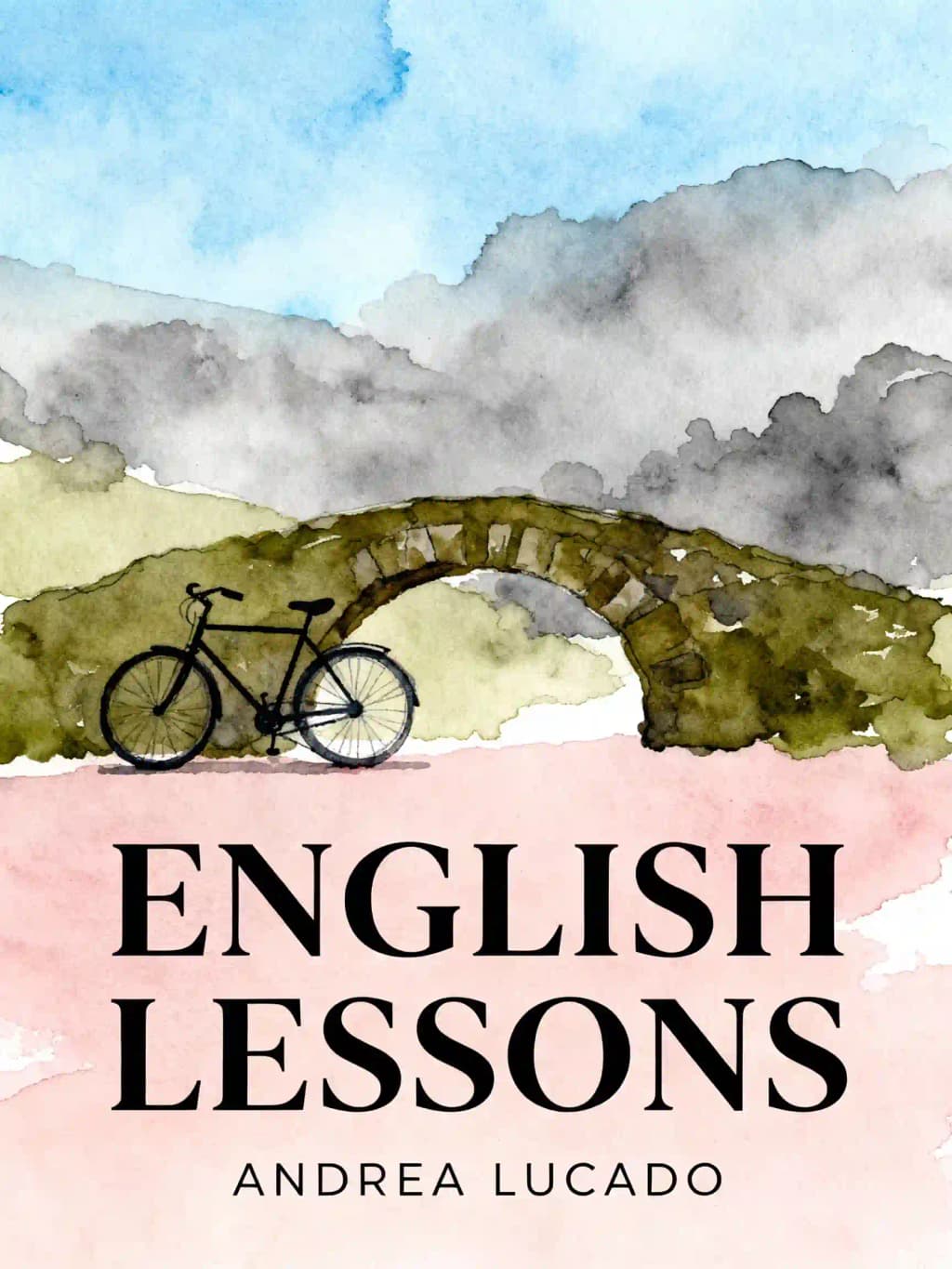
English Lessons
The Crooked Path of Growing Toward Faith
Обзор книги English Lessons
Andrea Lucado's memoir chronicles her faith journey through Oxford's secular academia, where doubt became growth. Ann Voskamp praised its "luminous patience," while Lysa TerKeurst noted how it leaves hearts "comforted and understood." What happens when familiar beliefs face unfamiliar questions?

Ключевые темы в English Lessons
- deconstructing inherited faith
- pastors' children experiences
- spiritual identity crisis
- cultural displacement
- faith through doubt
Цитаты из English Lessons
Everything will still be here when you get back. It is you who will have changed.
Church wasn't just part of my childhood-it was my childhood.
How could I own my last name more than I already do?
The leaves and the streets and the buildings, though lovely, turned out to be lousy friends.
Sometimes the world feels like a long and spread out Tower of Babel.
Персонажи в English Lessons
- Andrea LucadoThe author and protagonist navigating her faith
- MacA classmate who helps Andrea overcome loneliness
Скачать резюме книги «English Lessons»
Получите резюме книги «English Lessons» в формате PDF или EPUB бесплатно. Распечатайте или читайте офлайн в любое время.
Часто задаваемые вопросы об этой книге
English Lessons chronicles Andrea Lucado’s year in Oxford as a graduate student grappling with cultural shock, spiritual doubt, and the evolution of her faith. Through pub conversations, encounters with atheists, and solitary reflections along the Thames, she reevaluates her beliefs while navigating loneliness, romance, and the tension between her Texan evangelical upbringing and a secular environment.
This memoir resonates with readers exploring faith transitions, cultural adaptation, or spiritual identity. Ideal for fans of candid memoirs like Eat Pray Love or those questioning rigid religious frameworks, it offers solace to anyone confronting doubt or seeking a relatable story of personal growth amid uncertainty.
Yes, particularly for its lyrical prose and vulnerable exploration of doubt. Lucado’s vivid descriptions of Oxford and honest wrestling with God’s presence—or perceived absence—provide fresh insights into faith resilience. Critics praise its “promising” narrative of young adulthood and its refusal to offer pat answers.
Lucado portrays doubt as a catalyst for deeper faith, not a failure. She questions God’s existence during sleepless nights but finds clarity through friendships and embracing uncertainty. A pivotal moment involves an atheist friend whose kindness challenges her assumptions about secular morality.
Oxford acts as both setting and character—its foggy streets, ancient pubs, and intellectual rigor push Lucado beyond her comfort zone. The city’s secular climate forces her to defend her beliefs independently, while the Thames River symbolizes her evolving spiritual journey.
Her prose blends lush imagery (e.g., personifying the Thames) with conversational honesty. Chapters read like essays, balancing witty observations about British culture with poignant reflections on loneliness and grace.
Some note early sections focus excessively on cultural adjustments (e.g., missing microwaves or coffee), which risk overshadowing deeper spiritual themes. However, the narrative gains depth as Lucado shifts to introspection.
Unlike her father’s theological teachings, Andrea’s memoir is introspective and narrative-driven. It emphasizes personal struggle over doctrine, appealing to readers seeking raw, experiential faith stories rather than prescriptive advice.
- “Sometimes faith comes naturally…sometimes everything we’ve ever believed is thrust under a microscope.”
This encapsulates Lucado’s acceptance of doubt as integral to faith growth. - “I looked for the God of my childhood…but it wasn’t there.”
Highlights her journey toward a more mature, individualized spirituality.
Lucado humorously contrasts Texan and British norms—from tea vs. coffee preferences to casual vs. formal church practices. These contrasts underscore her broader theme of finding faith beyond cultural trappings.
Its themes of spiritual deconstruction and rebuilding resonate amid rising secularism. Readers navigating post-pandemic faith shifts or global mobility will relate to Lucado’s quest for authenticity beyond tradition.
While not included in the book, natural discussion topics include:
- How environments shape faith.
- Balancing doubt and conviction.
- The role of community in spiritual growth.
Lucado returns to Texas with a softer, more resilient faith, recognizing God’s presence in questions rather than certainty. The closing chapters reflect on friendship, loss, and embracing life’s “crooked paths”.