Глава 1
When Spiritual Energy Awakens: The Transformative Power of Kundalini
Imagine waking up one morning to find your body shaking uncontrollably, waves of electricity coursing through your spine, your mind flooded with visions of brilliant light, and overwhelming emotions surging through you without warning. For thousands of people worldwide, this isn't a nightmare-it's the beginning of a profound spiritual transformation known as Kundalini awakening. This phenomenon, once confined to Eastern spiritual traditions, has become increasingly common in the West as meditation and yoga practices have gained popularity. Celebrities like Russell Brand and Sting have spoken openly about their own Kundalini experiences, while scientific researchers like Dr. Lee Sannella and Itzhak Bentov have pioneered studies into the physiological aspects of this mysterious process. Though often misunderstood or pathologized by conventional medicine, Kundalini awakening represents what may be humanity's most ancient and consistent path to expanded consciousness-a process that appears across cultures and throughout history, from Hildegard of Bingen's medieval visions to modern practitioners experiencing spontaneous awakenings in yoga classes across America.
Глава 2
The Sacred Serpent: Understanding Kundalini's Essence
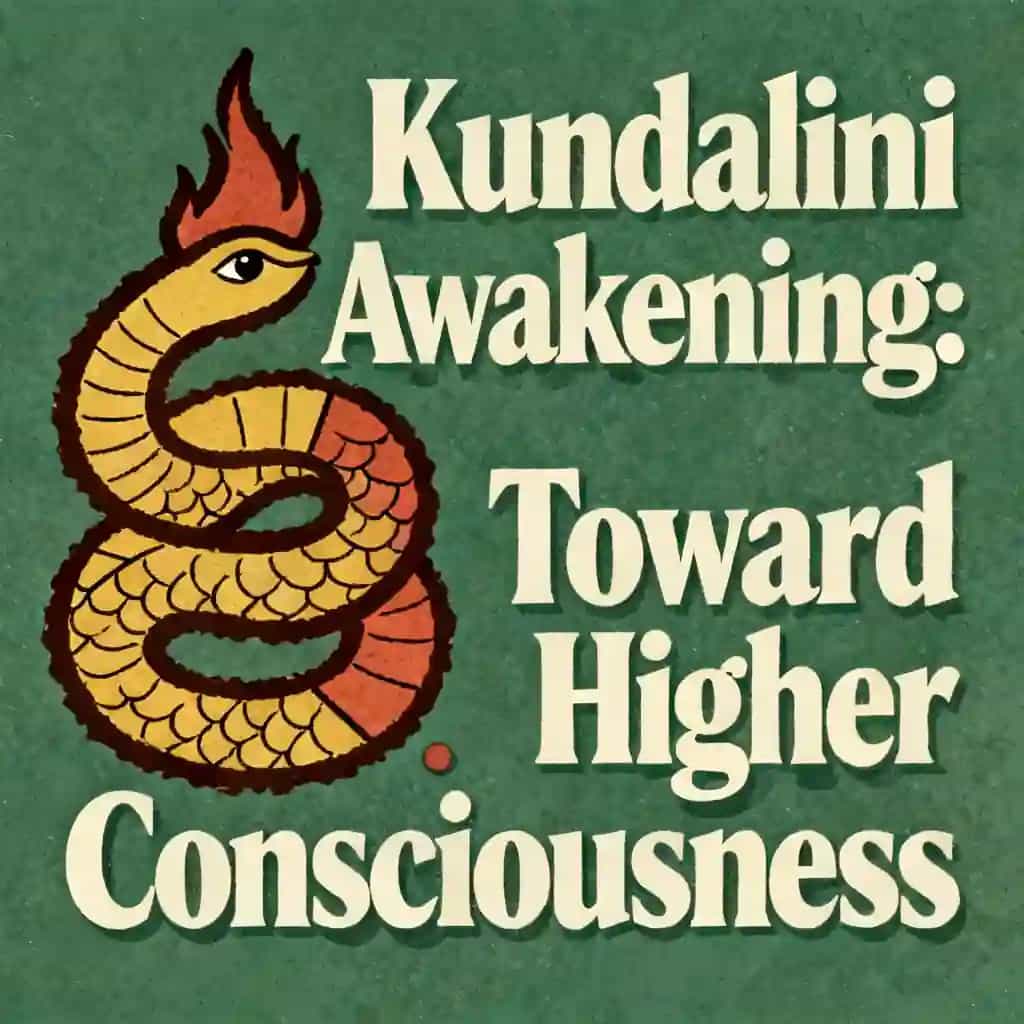
Kundalini, often depicted as a coiled serpent at the base of the spine, represents a profound evolutionary force that carries consciousness beyond ordinary boundaries. This serpentine energy, described in ancient texts as "the divine power of becoming," lies dormant in most humans until awakened through specific practices or spontaneous activation. When awakened, this energy moves through the body and psyche with apparent intentionality, potentially transforming a person at the cellular level and initiating significant physical, psychological, and spiritual changes. According to ancient Indian scriptures, Kundalini connects individuals with sat-chit-ananda-existence, cosmic intelligence, and ecstatic bliss-the essential nature of existence itself.
Though most commonly associated with yogic traditions, evidence of transformative energy work exists across numerous cultures-Assyrian, Egyptian, Celtic, Greek, Taoist, Tibetan, Judaic, and various indigenous traditions. The serpent symbolism appears consistently: the caduceus of Hermes, the Uraeus of Egyptian pharaohs, and the Norse World Serpent Jormungandr all point to this universal concept. The Cabala indicates 22 graphs used as Hebrew letters that designate different states of cosmic energy, while the Gnostic Gospels included secret mystic texts describing visions and ecstatic experiences remarkably similar to Kundalini phenomena. Christian mystics like Hildegard of Bingen described experiences correlating with yogic definitions-visions of "a most quiet light" with "flashing fire" similar to the blue pearl vision described by modern yogis. Teresa of Avila's "interior castle" parallels the chakra system in remarkable ways.
In ancient yogic texts like The Laksmi Tantra, Kundalini appears as the Great Goddess herself-a supra-metaphysical principle and creator of all form. In a dialogue with the devotee Sakra, Laksmi reveals herself as "the life-principle of the universe and the potent force behind all creation," whose nature is "supreme bliss." She creates the means for souls to experience liberation while instilling the inclination to seek freedom. The Upanishads further describe this energy as "finer than the finest" and "the source of all manifest powers."
This energy creates a template that activates us as unique individuals with varied thought-forms, energies, mental and emotional characteristics, and physical potentials. In eastern theory, this manifestation operates through nadis (invisible energy flows) and five kosas (sheaths) contained in three subtle bodies: the physical (annamaya), astral (pranamaya), and causal (manomaya). These sheaths progressively refine consciousness from gross matter to subtle energy. The eastern view of Self transcends the western psychological concept, seeing it as the single source of all existence rather than merely an aspect of the psyche.
Today's spiritual seekers are creating a new model that integrates Eastern wisdom with Western experimentation, combining ancient practices with modern understanding of neuroscience and psychology. This synthesis provides groundwork for the future emergence of widespread spiritual consciousness-paradoxically returning to humanity's most ancient and consistent experiences. Contemporary researchers are documenting physiological changes in Kundalini practitioners, including altered brain wave patterns, hormonal changes, and enhanced immune function, bridging the gap between mystical experience and scientific observation.
Глава 3
The Symphony of Symptoms: How Kundalini Manifests
Kundalini awakening triggers life-changing physiological, emotional, and spiritual experiences that can be painful, humorous, and ecstatic-often simultaneously. Each individual demonstrates a unique pattern that varies in intensity and duration. For some, symptoms primarily occur at night when defenses are down; others experience painful physical problems that defy diagnosis or overwhelming emotions and physical sensations throughout their day.
The most common physical manifestations include intense involuntary body movements called kriyas-shaking, vibrations, jerking, or sensations of electricity coursing through the body. The body may bend and flow into unusual postures, representing what yogic texts call "the power of assuming any and every form." Many experience internal heat or burning sensations, with some reporting temperatures so high they can't be touched, while others develop extreme cold in their extremities.
Physiological problems often emerge that puzzle medical professionals-apparent heart problems, gastrointestinal disorders, nervous system disruptions, eating disorders, and pains in various parts of the body, especially along the spine and head. These physical problems are invariably difficult to diagnose and treat through conventional medicine, as they represent energetic rather than pathological processes.
Perhaps most surprising are spontaneous yogic phenomena-the body may involuntarily perform yoga postures (asanas) or hand movements (mudras) never before seen by the subject. The psyche may produce geometrical images, chants, Sanskrit words, or specific tones commonly recorded in yogic tradition, even when the person has no prior knowledge of these practices.
Psychological upheaval typically accompanies these physical symptoms, intensifying unresolved issues, triggering fear of death or insanity, causing mood swings, and generating waves of anxiety, anger, guilt, or depression. Yet paradoxically, this same process can bring profound compassion, unconditional love, and heightened sensitivity to others' emotional states.
Many report extrasensory experiences-seeing lights, symbols, entities, apparent past-life memories, and visions. Auditory experiences might include hearing voices, music, phrases or continual inner sounds, while olfactory sensations like the scent of sandalwood, perfume or incense may appear without external source.
Parapsychological phenomena frequently emerge-precognition, healing abilities, mind reading, unusual synchronicities, electrical sensitivity, and psychokinesis are commonly reported. Perhaps most profound are samadhi or satori experiences-states involving absorption of consciousness into unitive awareness, bringing sensations of deep peace, wisdom, and sometimes experiences of brilliant light.
Western medicine struggles to connect these body symptoms with mysticism, despite clear evidence that Christian mystics endured similar dramatic physical problems. An unhealthy lifestyle with stress, alcohol, drugs, or unnatural diet leaves toxins in the body that are released during the Kundalini process, potentially intensifying symptoms. The relationship with Kundalini involves an "otherness" within oneself that demonstrates its own intentionality-a force that seems to know exactly what's needed to release energy blocks and transform consciousness.
Глава 4
The Brain on Fire: Neurological Dimensions of Awakening
The physical body carries the impact of Kundalini, even when the process initiates in the subtle body. Understanding physical responses helps differentiate them from similar symptoms in conditions like seizure disorders, Parkinson's disease, and brain tumors. Research into right-brain and temporal-lobe activity suggests several possibilities: increased pranic activity may pump energy into the brain or change brain chemicals; spiritual practices may stimulate production of chemicals affecting emotions; certain consciousness states may promote waves through the brain triggering physiological responses; and non-linear practices may stimulate right-brain activity, expanding creative potential.
Itzhak Bentov, a biomedical equipment inventor who reportedly experienced Kundalini personally, defined the "physio-kundalini syndrome" after studying meditators using ballistocardiography. He discovered that certain mechanical vibrations, electromagnetic waves or sounds could trigger brain wave responses in non-meditators similar to those produced through meditation.
Bentov related symptom severity to stress held in the body, noting that Kundalini becomes troublesome only when it encounters these stress areas. The physio-kundalini syndrome typically begins with tingling or cramps in the left foot or toes, progressing up the left leg to the hip (sometimes causing paralysis or loss of sensation), then up the spine to the head, where severe pressure-like headaches may develop.
His observation of activity in the left toe correlates with yogic practices focusing on the right toe to raise fire in the body. In the Siva Sutras, a contemplation method teaches dissolution of identification with gross, subtle and causal bodies by visualizing burning up the entire subtle body system, beginning with the right toe where the deity Kalagni Rudra resides.
Brain chemistry profoundly influences these spiritual experiences. Neurotransmitters, enzymes, and neuropeptides interact to create moods and behaviors. Endorphins-natural opiates produced during meditation, running, and pleasurable activities-create euphoria and well-being. They may explain yogis' capacity to detach from relationships and the emotional fluctuations during spiritual awakening.
Acetylcholine, when concentrated in certain brain areas, can trigger spontaneous orgasms-a phenomenon frequently reported in Kundalini awakenings. While correlations between drug experiences and mystical states have been consistently documented, much remains unknown about the exact relationship between chemically-produced states and spiritually-stimulated experiences.
While laboratory experiments show rats become addicted to stimulation of brain pleasure centers, Kundalini-related bliss appears far more complex and varied. Scriptures mention 27 varieties of bliss accompanying awakening, ranging from localized sensations in particular body parts to complete dissolution of bodily awareness, from heart energy radiating outward to vibrations like a harpist plucking strings through the body. These experiences vary tremendously in quality, intensity and duration-from momentary flashes to days of ecstasy-suggesting they cannot be reduced to a single brain center or mechanism.
Глава 5
The Subtle Anatomy: Yogic Understanding of Energy Systems
Those experiencing Kundalini awakening often see internal images representing energy movement in their bodies, appearing like charts mapping the path Kundalini follows-showing upward movement through the spine, awakening chakras, body organ conditions, colored lights, and sometimes energy extending beyond the physical body into indescribable astral dimensions.
According to Vedic scriptures, Kundalini represents the fundamental power of creation and primary consciousness of the universe-a universal cosmic energy/consciousness manifesting from all-pervasive Brahman. This energy creates and then conceals itself as static residual energy at the center of individual beings, coiled until awakened to reverse its path back to source.
In creating human life, this force creates three bodies: the causal body (containing bliss and consciousness), the subtle body (containing potentiality for mind, ego, energy, emotion and senses), and the gross body (physical). Once established, residual energy coils at the base of the spine, which when awakened rises like a serpent, transforming the six chakras in its path before moving through the crown to enable enlightenment.
While some scholars use "prana" and "Kundalini" interchangeably, this is only correct in the most general sense. Prana is an electrical-like energy flow in the body that is more gross and accessible than Kundalini, keeping the entire system functioning even while Kundalini lies dormant. It could be considered a stepped-down vibration of the more powerful Kundalini force. The Chinese concepts of "chi" or "ki" more closely resemble prana than Kundalini.
Understanding the subtle anatomy of chakras is crucial for comprehending Kundalini awakening. Chakras are energy centers that link the causal, subtle and gross bodies, forming at various points in the body as concentrations of pranic force. Each governs specific organs and psychological functions, with physical symptoms during awakening often correlating with chakra locations.
The seven major chakras each have distinct qualities: muladhara (base of spine) relates to security and survival; svadhisthana (sacral region) governs creativity and sexuality; manipura (solar plexus) controls personal power and self-assertion; anahata (heart) manages compassion and love; visuddha (throat) governs expression and creativity; ajna (third eye) relates to intuition and insight; and sahasrara (crown) connects to spiritual consciousness and enlightenment.
The intensification of consciousness during Kundalini awakening puts tremendous stress on the chakra system. When Kundalini awakens through all chakras, occult abilities called siddhis may develop. These include powers to alter one's body size or weight, create desired objects, influence others, and experience God-vision at will. However, these powers often become obstacles to Self-realization, particularly when used for personal glorification.
Yogic and tantric literature provide a comprehensive framework for understanding pranic energy distribution, breathing techniques, and Kundalini awakening. These traditions demonstrate connections between body, mind, and universal consciousness beyond Western medical models. Though challenging to accept literally, this metaphysical system works like a mathematical formula, providing a useful model for mapping and interpreting the elusive waves and processes of Kundalini experience.
Глава 6
The Living Testimony: Stories of Awakening
Understanding Kundalini reveals new dimensions in the writings of prophets, poets and biographers across history. From ancient Indian saints to modern Western practitioners, the experiences show remarkable consistency despite vast cultural differences.
Caitanya, born in 1486, founded the last great Vaisnava sect in India after experiencing dramatic spiritual awakening. His ecstatic trances disrupted his teaching career as he would fall into lengthy discourses on Krishna, often rolling on the ground, shaking and crying. He experienced extreme emotional states and was recognized by spiritual leaders as experiencing "maha-bhakti-yoga" rather than madness.
Anandamayi Ma, born in 1896 in India, showed strange phenomena from childhood. After marriage at age 12, she experienced trances between ages 17-25, her body becoming stiff while chanting divine names. Witnesses reported seeing images of deities emanating from her body. She spontaneously performed yogic postures without training and underwent periods of silence lasting months.
In modern times, Gopi Krishna documented his difficult Kundalini awakening, describing a "stream of liquid light" entering his brain through his spine during meditation. Afterward, he suffered severe physical and psychological disturbances: mental confusion, loss of appetite, digestive problems, insomnia, and extreme mood swings. His narrative reveals the physical discomfort, fear, visions and life changes that unfold over years.
Western practitioners have increasingly experienced similar awakenings. Brugh Joy, an American physician, experienced a spontaneous Kundalini awakening after just months of meditation practice. His awakening began with powerful vibrations that literally shook his bed, initially making him think an earthquake was occurring. The culmination came one night when the vibrations intensified "like a diesel truck" shaking both him and his bed, accompanied by "superbrilliant light" more intense than looking at the sun.
Sarah, born in 1918, experienced her awakening during a seminar where she visualized triangles connecting her chakras. When the visualization reached her base chakra, energy exploded upward through her body "like a tremendous whole body orgasm," leaving her feeling "unhinged," diffuse, and intensely energized for days. Following her awakening, she received guidance from an inner spiritual guide and created spontaneous artwork featuring spiritual symbols.
Beth, born in 1951, experienced a terrifying awakening at age 21 when she was suddenly paralyzed and felt "electrocuted" in bed. Unable to move or call for help, she felt "two giant hands squeezing my chest." For six weeks, energy episodes struck several times daily-while driving, working, or walking. Her body changed dramatically: racing pulse, pounding heart, insatiable hunger despite losing weight. She developed psychic abilities, saw intensified colors, heard celestial music, and felt invisible presences.
These diverse accounts demonstrate that Kundalini awakening transcends cultural boundaries, religious traditions, and historical periods. Whether occurring in a Hindu ashram, a Zen monastery, or a suburban American home, the core experience shows remarkable consistency-a powerful energy that transforms consciousness and restructures the individual's relationship with reality itself.
Глава 7
Navigating the Storm: Integration and Support
The transformative nature of Kundalini awakening affects every dimension of being-physical, emotional, mental and spiritual. Successfully navigating this process requires learning to sustain and channel high energy levels while developing acceptance of the experience.
The most distressing aspect of Kundalini symptoms is the anxiety they provoke-fears of insanity or serious disease. Understanding that these experiences have been documented for thousands of years provides crucial relief. Physical disruptions occur as higher energy rushes through biological and neurological systems, causing spontaneous reactions that typically pass without treatment.
Grounding practices are essential for those experiencing mystical states to maintain connection with physical reality. These can include holding or stomping the feet, walking in nature, hugging trees, gardening, working with clay, athletic activities, or simply sharing tea with someone while discussing integration of experiences. Building a strong physical and psychological container allows spiritual insights to be expressed in daily life, preventing disorientation and inflation.
Managing Kundalini energy presents challenges for Westerners accustomed to undisciplined lifestyles and material attachments. Recommended approaches include yoga practice, self-discipline, moderate eating, avoiding stimulants and meat, limiting negative relationships, reducing excessive stimulation, and maintaining mental tranquility. Bodywork and self-expression help release blockages.
Understanding breath's relationship to Kundalini is crucial. Different nostril breathing produces specific effects-left nostril breathing cools the body and calms emotions, while right nostril breathing heats the body and raises emotions. Properly directed breath can cleanse the physical system, free it from disturbances, regulate temperature, and stimulate equanimity.
Dietary challenges often accompany Kundalini awakening. Dr. Gabriel Cousens recommends a "Rainbow diet" of colored plants that provide energetic balance to the chakra system, suggesting 80% alkaline-forming foods (vegetables and fruits high in minerals) and 20% acid-forming foods (proteins). For those experiencing active Kundalini energy, complex carbohydrates provide needed glucose, while honey can act as a "pranic shock absorber" to calm excessive energy.
Creating a relationship with the energy-treating it as an ally-can transform painful sensations into blissful ones, similar to relaxing into rather than contracting against orgasmic experience. During difficult phases, companionship is crucial-even silent, non-judgmental presence provides immense reassurance.
Глава 8
The Emotional Crucible: Psychological Dimensions of Awakening
When spiritual awakening occurs, immense emotional turmoil may overwhelm the individual as their world perspective shifts dramatically. Old values, beliefs and attachments begin slipping away, sometimes feeling irrelevant or empty. Paradoxically, waves of bliss and unitive awareness may alternate with existential darkness, creating a massive struggle for integration.
Da Free John advises that "heartfelt release of fear is the secret of passing through the spiritual process without going mad." Fear limits experience and prevents surrender to the process. The emotional problem of self-division-being contracted against divine experience-is the root of suffering. Those with unresolved identity issues or from negative spiritual traditions may fear the energy as an evil force, especially when unexpected phenomena like sexual sensations arise during prayer.
Many meditators are surprised when experiences of bliss and peace give way to moodiness, doubts, anxiety and depression. As spiritual commitment deepens, ordinary consciousness may split away as connection forms with the inner Self, making previous activities unsatisfying. Alienation from friends who don't understand the process may occur, creating a sense of isolation while the practitioner navigates between their former identity and emerging spiritual self.
Love becomes another challenging emotion during Kundalini awakening, often manifesting as irrational projections onto teachers, therapists, or others. Heart openings produce intense loving energy that mystics learn to channel toward God, nature, or service to humanity. Richard Moss describes unconditional love as the essential force for transmuting negative energies, achieved not through thinking but through intense introspection-sitting with negative energy until it transforms into a deep feeling of well-being emanating from the chest.
Visions and images commonly accompany Kundalini awakening and shouldn't be mistaken for psychosis. These images, extensively used in yogic and tantric traditions, represent forces the psyche must encounter and integrate. Jung interpreted many as archetypes linking to the collective unconscious. In early awakening stages, visions may be imagination or representations of psychic changes, while in later stages they may provide guidance from another plane of consciousness.
Spontaneous past life memories during Kundalini awakening can provide insight into spiritual processes and personality patterns. These memories may help convert tendencies in the present life, especially when multiple past lives emerge within a short period. Finding the common connections between these memories and applying their lessons represents significant spiritual progress.
Глава 9
Beyond Awakening: The New Human Potential
Kundalini awakening confronts our fundamental view of reality with earthquake-like intensity, leaving the psyche to sort through the rubble. Those unprepared for this experience may seek to cool it down through emotional work, balanced eating, secular goals, and avoiding meditation. While temporary openings might abate, genuine Kundalini awakenings are difficult to suppress.
For those cooperating with the opening, various processes can help break down blocks and surrender to this natural force. Learning to differentiate between inner experiences and outer consciousness is essential to avoid mental problems. Kundalini works on personality impurities, drawing one toward introversion and spiritual practices while revealing life's unity.
Traditional spiritual paths have followed distinct archetypal responses: the guru who teaches others, the hermit who withdraws from society, and the devotee practicing bhakti. As Westerners pursue spiritual development, new archetypal possibilities may emerge-more creative, interactive, and environmentally respectful ways of living that balance human and divine aspects without arrogance.
Many mystics suggest the increasing reports of Kundalini awakening indicate a universal planetary movement occurring as we approach global upheaval. From political transformations to environmental threats, these shifts mirror the Kundalini process. Individuals experiencing spiritual awakening may be prototypes for planetary consciousness evolution-purifying destructive unconscious patterns, recognizing our shared humanity and resources, reconnecting with spiritual source experiences, and embracing sustainable living.
Kundalini awakening represents consciousness of the energy that can heal, transform and evolve higher awareness. The author cautions that this awakening doesn't guarantee wisdom, as human shadows persist and spiritual ideals can be corrupted. Nevertheless, these processes deserve serious study rather than rejection by psychology, philosophy, science or religion, as they may represent humanity's collective journey toward transformation.
As we face unprecedented global challenges, the integration of this ancient wisdom with modern understanding may offer crucial insights for navigating our collective future. The experiences of those undergoing Kundalini awakening-their struggles, insights, and transformations-provide a living laboratory for understanding human potential beyond our current limitations, pointing toward possibilities of consciousness that might help address the profound challenges of our time.